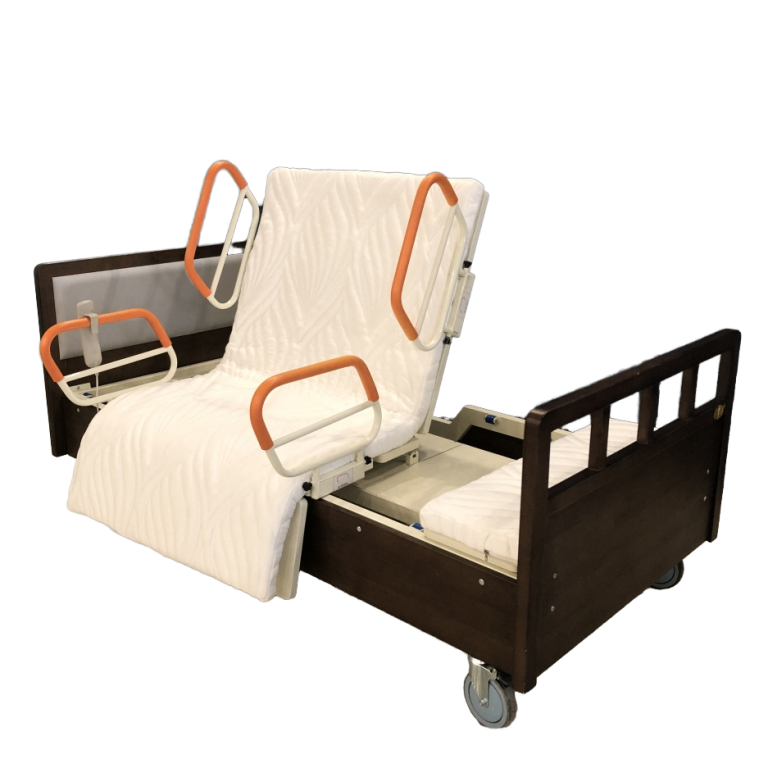
Post-Surgery Home Care Beds: Features for Recovery Patients
Post-Surgery Home Care Beds: Features for Recovery Patients
Recovering from surgery at home requires more than just rest; it demands an environment that actively supports healing, prevents complications, and reduces the physical burden on caregivers. A standard sleeping surface often fails to meet these specific medical needs, potentially leading to pressure sores, respiratory issues, or difficulty in mobility. This is where specialized post-surgery home care beds become essential. As the medical equipment landscape evolves, manufacturers like HJIM (Hengshui Chengen Medical Equipment Co., Ltd) are producing beds designed to bridge the gap between hospital-grade functionality and home comfort [K1].
For healthcare procurement officers, facility managers, and families navigating the complexities of home care, understanding the technical specifications and functional benefits of these beds is critical. This guide explores the essential features that define a high-quality recovery bed, drawing on industry standards and current manufacturing capabilities to help you make informed decisions.
Why Adjustable Positioning is Critical for Recovery
The ability to change a patient’s position is the single most important feature of a post-surgery bed. After abdominal, orthopedic, or cardiac surgery, lying flat can exacerbate pain, hinder breathing, or strain surgical sites. An adjustable bed allows for precise positioning that promotes circulation and reduces pressure on vulnerable areas.
Backrest and Knee Rest Mechanics
Modern electric care beds offer segmented adjustment. The backrest elevation is particularly vital for patients with respiratory conditions or those recovering from abdominal procedures. According to technical data from HJIM, high-quality electric beds allow for backrest adjustment ranging from 0 to 75 degrees with a tolerance of ±2% [K2][K3]. This precision ensures that the patient can be raised to a semi-Fowler’s or high-Fowler’s position to facilitate easier breathing and eating without slumping.
Complementing the backrest is the knee rest (or leg section). Elevating the knees helps reduce lower back strain and prevents the patient from sliding down the bed, which can cause friction injuries. HJIM’s specifications indicate a knee rest adjustment range of 0 to 45 degrees with similar ±2% accuracy [K2][K3]. This dual-action capability—raising the upper body while supporting the legs—is a hallmark of professional-grade recovery equipment.
Height Adjustment for Safety and Access
Bed height is not merely about comfort; it is a safety feature for both the patient and the caregiver. A bed that is too low makes it difficult for a patient to stand up, increasing the risk of falls. Conversely, a bed that is too high can be dangerous if the patient rolls over. Furthermore, caregivers need the bed at waist level to perform tasks like changing linens or assisting with hygiene without straining their backs.
Electric home care beds typically offer a significant height range. For instance, HJIM’s three-function medical beds provide an overall lifting range of 430 to 750mm [K2][K3]. This wide range accommodates patients of different statures and allows caregivers to adjust the working height dynamically. Some models, like the MD-E102 and MD-E103, are specifically designed for home use with these ergonomic height adjustments in mind [K5].
Weight Capacity and Structural Integrity
When sourcing medical beds, weight capacity is a non-negotiable specification. It determines the safety margin for the patient and influences the durability of the bed frame over time. Underestimating this requirement can lead to mechanical failure or sagging, which compromises patient safety.
Industrial standards for home care beds vary, but robust models are designed to handle significant loads. HJIM’s three-function medical beds, often used in wholesale and institutional settings, boast a weight capacity of 250kg [K2][K3]. Even their manual single-rocking nursing beds are rated for 225kg [K3]. These figures exceed the average adult weight significantly, providing a safety buffer that is crucial for bariatric patients or situations where caregivers may need to lean on the bed rails during assistance.
The structural integrity is usually achieved through the use of cold-rolled steel [K3]. This material offers high tensile strength and resistance to deformation, ensuring that the bed remains stable even after years of daily adjustment and use. For procurement professionals, verifying the material grade and welding quality is as important as checking the weight rating.
Manual vs. Electric Beds: A Comparative Analysis
Choosing between manual and electric beds depends on the patient’s condition, the caregiver’s physical capability, and the budget. Manual beds rely on hand cranks to adjust positions, while electric beds use motors controlled by a hand pendant. Below is a comparison based on current market offerings, including data from HJIM’s product lines [K2][K5].
| Feature | Manual Nursing Bed | Electric Care Bed |
|---|---|---|
| Adjustment Mechanism | Hand crank (mechanical) | Electric motors (remote control) |
| Backrest Range | 0-75° (approx.) | 0-75° (±2% tolerance) |
| Height Adjustment | Limited or Manual | 430-750mm (Electric) |
| Weight Capacity | ~225kg | ~250kg |
| Caregiver Effort | High (physical turning required) | Low (button press) |
| Best Use Case | Budget-conscious, stable patients | Post-surgery, mobility-impaired, frequent repositioning |
| Price Point | Lower | Higher (includes motors and electronics) |
For post-surgery patients who require frequent position changes to prevent pneumonia or bedsores, the electric option is generally superior. The ease of use ensures that caregivers can adjust the bed without fatigue, encouraging more frequent repositioning throughout the day.
Safety Features and Patient Security
A recovery bed must be a safe haven. Features that prevent accidental movement and ensure stability are paramount. One critical component often overlooked is the braking system.
Central Control Braking
Standard configuration on many professional beds, including HJIM’s three-function models, includes a central control brake [K3]. This system allows the caregiver to lock all wheels simultaneously with a single pedal press, preventing the bed from rolling during patient transfers or medical procedures. This is a significant safety upgrade over individual wheel locks, which can be time-consuming to engage and disengage.
Side Rails and Fall Prevention
While not always explicitly detailed in basic spec sheets, side rails are integral to post-surgery care. They provide leverage for patients to reposition themselves and act as a barrier against falling out of bed, especially if the patient is confused or sedated. When evaluating beds, ensure the rails are sturdy and can be raised and lowered easily without pinching hazards.
Caregiver Ergonomics and Long-Term Viability
Home care is physically demanding. A bed that does not support the caregiver can lead to chronic back injuries, reducing the quality of care provided. Ergonomics in medical bed design focuses on reducing the strain on the human body during caregiving tasks.
The height adjustment range of 450-715mm found in HJIM’s electric beds [K2] allows the bed surface to align with the caregiver’s hips, minimizing bending. Additionally, features like the electric whee
Procurement Considerations: Warranty and Compliance
When sourcing these beds, whether for a single home or a bulk purchase, the commercial terms are as important as the technical specs. Reliability is key, and this is often reflected in the warranty and compliance standards.
Warranty and Support
A robust warranty indicates manufacturer confidence in product durability. HJIM offers a 5-year warranty on their products [K2][K3]. For a piece of equipment that undergoes daily mechanical stress, this long-term coverage provides peace of mind regarding motor longevity and frame integrity. It also suggests that the manufacturer has a stable supply chain for spare parts.
Certifications and Standards
Medical devices are subject to rigorous regulatory oversight. Manufacturers often claim compliance with international standards to assure quality. HJIM states adherence to ISO 13485, MDR, CE, and FDA standards [K3][K4]. However, procurement officers should note that while these claims are made, independent verification or certificate numbers should be requested during the due diligence process [K4]. Compliance with CE and ISO standards generally ensures that the electrical components are safe and the manufacturing process meets quality management requirements.
For urgent recovery needs, delivery speed matters. Sample delivery cycles are typically 15-20 days after EXW, FCA, and FOB are standard [K2][K3]. Understanding these terms is vital for ca
Conclusion
Selecting the right post-surgery home care bed is an investment in patient safety and caregiver well-being. The ideal bed combines precise adjustability—such as the 0-75° backrest and 0-45° knee rest—to aid medical recovery, with robust structural features like a 250kg weight capacity and central braking for safety. Brands like HJIM (Hengshui Chengen Medical Equipment Co., Ltd) demonstrate that hospital-grade features, including electric height adjustment and long-term warranties, are increasingly accessible for home use [K1][K2].
By prioritizing features that support both the clinical needs of the patient and the physical limits of the caregiver, families and procurement managers can create a home environment that truly fosters healing. Always verify specific technical parameters and compliance documentation directly with the manufacturer to ensure the equipment meets your specific regulatory and medical requirements.
Frequently Asked Questions
What is the weight capacity of standard three-function medical beds?
Most robust three-function medical beds, such as those offered by HJIM, have a weight capacity of 250kg [K2][K3]. This high capacity ensures safety for a wide range of patient sizes and provides a structural buffer for caregivers assisting with transfers. Manual models typically have a slightly lower rating, around 225kg [K3].
How precise are the angle adjustments on electric care beds?
High-quality electric beds offer precise positioning to ensure patient comfort and medical efficacy. For example, the backrest can typically be adjusted from 0 to 75 degrees, and the knee rest from 0 to 45 degrees. These adjustments usually come with a tolerance of ±2%, ensuring that the set position is accurate and consistent [K2][K3].
What is the typical warranty period for medical home care beds?
Reputable manufacturers often provide extended warranties to cover mechanical and electrical components. HJIM, for instance, provides a 5-year warranty on their medical beds [K2][K3]. This coverage is critical for electric beds, as it protects against motor failure and structural issues over the long term.
How long does it take to receive a sample order for testing?
For buyers looking to test the quality and functionality of the beds before a bulk purchase, the sample delivery cycle is typically 15 to 20 days after