Home Care Bed Buying Mistakes: 5 Common Errors and How to Avoid Them | Hospital Procurement Guide #7
Home Care Bed Buying Mistakes: 5 Common Errors and How to Avoid Them
The global medical nursing bed market is valued at approximately USD 4.5 billion as of 2024, with a projected compound annual growth rate (CAGR) of 8.5% through 2027 [K1]. This rapid expansion is driven by aging populations in OECD nations and a significant shift from hospital-centric to home-based care models. However, for healthcare procurement officers, facility managers, and families navigating this complex landscape, the sheer volume of options can lead to costly procurement errors. Selecting the wrong home care bed is not merely a financial loss; it can compromise patient safety, increase caregiver strain, and result in premature equipment replacement.
As an industry expert, I have observed that most buying mistakes stem from a misunderstanding of the underlying technology, specifically the transition from manual to electric systems, and a lack of attention to critical component specifications. Whether you are outfitting a nursing home in Southeast Asia or a private residence in North America, understanding the technical nuances of linear actuators, weight capacity, and smart integration is essential. This article outlines five common errors in home care bed procurement and provides actionable strategies to avoid them, ensuring you select equipment that aligns with both clinical needs and budgetary constraints.
Confusing Budget Constraints with Long-Term Value
One of the most pervasive mistakes in healthcare procurement is prioritizing the initial purchase price over the total cost of ownership. Buyers often default to manual nursing beds simply because they have a lower upfront cost, typically ranging from $80 to $150 in emerging markets [K1]. While it is true that manual beds utilize mechanical摇杆 (rocker) mechanisms that require no electricity and have a simpler structure, this assumption ignores the hidden costs of labor and patient comfort.
Manual nursing beds are still the主力产品 (mainstream product) in regions with unstable power grids, such as parts of Africa and Southeast Asia [K1]. In these specific contexts, the lack of reliance on electricity makes them a rational choice. However, in developed markets or stable environments, relying on a manual bed for a patient with limited mobility creates a significant burden on caregivers. Every adjustment of the backrest or knee gatch requires physical effort, which can lead to caregiver fatigue and potential back injuries over time.
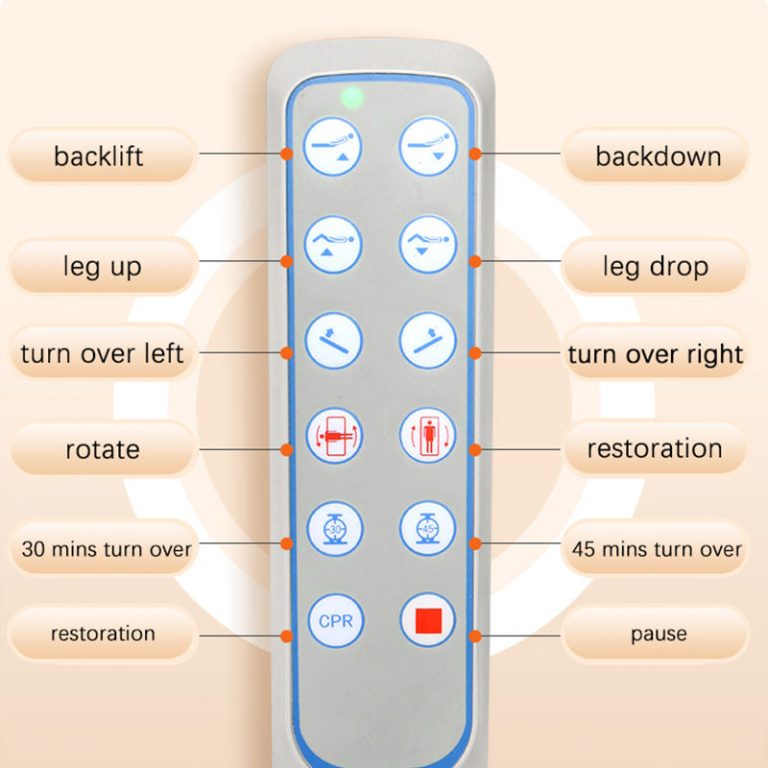
How to Avoid This Mistake: Conduct a total cost analysis that includes labor intensity. Electric nursing beds use linear actuators to adjust the bed面 angles via a remote control, reducing caregiver labor intensity by over 70% [K2]. While the initial investment is higher, the reduction in physical strain and the improvement in patient positioning (which can prevent secondary complications like pressure u
Neglecting the Quality of Linear Actuators
The heart of any electric nursing bed is the linear actuator. This electromechanical device converts rotational motion from a motor into linear push/pull motion to raise and lower bed sections [K2]. A common error is purchasing beds without verifying the brand or specifications of these actuators. Cheap, unbranded actuators often suffer from inconsistent noise levels, premature failure, and poor load handling.
Top-tier brands like Linak (Denmark) and Dewert (Germany) set the industry standard for a reason [K2]. These actuators offer silent operation (typically under 45dB), which is crucial for patient rest, and possess water resistance ratings (e.g., IPX4) that protect against spills and cleaning agents. Key technical specifications to look for include a stroke length of 150-300mm and a force output of 4000-8000N [K2]. Ignoring these specs can result in a bed that struggles to lift heavier patients or makes disruptive noises during adjustment.
How to Avoid This Mistake: Always request the bill of materials or a component specification sheet from the manufacturer. Specifically, ask for the motor brand and the duty cycle rating. A high-quality bed should specify a duty cycle of at least 10% at full load, ensuring the motors do not overheat during extended use. Brands like HJIM (Hengshui Chengen Medical Equipment Co., Ltd) often specify these components clearly in their product documentation, allowing buyers to verify quality before procurement [K2].
Overlooking Smart Features and IoT Integration
The definition of a “standard” nursing bed is rapidly evolving. A significant mistake is purchasing “dumb” beds that lack connectivity in an era where IoT integration is becoming a key technology trend [K2]. Modern healthcare facilities are moving towards data-driven care, where remote monitoring of patient vitals, bed position, and weight is essential for efficient workflow. Buying a bed that cannot communicate with a central nursing station or smart home system creates data silos and reduces the efficiency of patient care.
Advanced beds now feature Smart Anti-fall systems with AI-powered false positive reduction, which alert staff immediately if a patient attempts to exit the bed unsafely [K2]. Furthermore, integration with voice control systems like Alexa or Google Home allows patients with limited mobility to adjust their bed position independently, enhancing their sense of autonomy [K2]. Ignoring these capabilities means missing out on critical safety nets and quality-of-life improvements.
How to Avoid This Mistake: Evaluate the connectivity options of the bed. Does it support WiFi or 4G for remote monitoring? Does it have an API for integration with hospital management systems? For home care, check if the bed is compatible with existing smart home ecosystems. If you are procuring for a facility, prioritize beds that offer Predictive Maintenance via sensor data, which can alert technicians to motor health issues before a breakdown occurs [K2].
Misjudging Weight Capacity and Dimensions
Physical specifications are often treated as secondary considerations, but they are fundamental to patient safety and equipment longevity. A common procurement error is assuming that a “standard” bed fits all patients. In reality, weight capacity and dimensions vary significantly. For instance, the HJIM MD-A12 Electric Nursing Bed is designed with a maximum load capacity of 220kg [K2]. Purchasing a bed with a lower capacity for a bariatric patient not only risks structural failure but also voids warranties and compromises safety.
Additionally, dimensions must be measured not just for the patient, but for the room. A bed with a wide frame might not fit through standard doorways or allow enough space for caregivers to move around the patient effectively. This is particularly important in caregiver ergonomics; if the bed is too wide, caregivers may have to overreach to perform tasks, increasing the risk of injury.
How to Avoid This Mistake: Always measure the patient’s weight and add a safety margin of at least 20%. Verify the bed’s dimensions against the room layout, ensuring there is adequate clearance on all sides for nursing access. When reviewing product specs, look for the “max load” rating explicitly. For example, the HJIM MD-A12 specifies a 220kg limit, which is suitable for most adult patients, but bariatric models may require higher ratings [K2].
Ignoring Regulatory Compliance and Certifications
In the medical device industry, compliance is not optional. A critical mistake is purchasing beds that lack proper medical certification. Whether you are importing into the EU, the US, or other regions, the equipment must meet local safety and quality standards. Beds that lack CE marking, ISO 13485 certification, or FDA clearance may be seized at customs, or worse, used in a clinical setting where they pose a liability risk.
Certifications ensure that the bed has been tested for electrical safety, mechanical stability, and biocompatibility of materials. For example, ISO 13485 is a specific standard for quality management systems in the design and manufacture of medical devices. Buying from a manufacturer that cannot provide these documents is a high-risk strategy that can lead to legal and safety repercussions.
How to Avoid This Mistake: Before finalizing any purchase order, request copies of all relevant certifications. Verify that the manufacturer has a valid Quality Management System (QMS) in place. Reputable manufacturers like HJIM typically adhere to these international standards to ensure their products are accepted in global markets. Always cross-reference the certification numbers with the issuing body to ensure authenticity.
Comparison: Manual vs. Electric Nursing Beds
To help clarify the decision-making process, the following table compares the key characteristics of manual and electric nursing beds based on industry data.
| Feature | Manual Nursing Bed | Electric Nursing Bed |
|---|---|---|
| Adjustment Mechanism | Mechanical摇杆 (Rocker) | Electric Linear Actuators |
| Power Requirement | None | Electricity (Battery backup optional) |
| Caregiver Effort | High (Physical cranking) | Low (Button control) |
| Typical Price Range | $80 – $150 [K1] | Higher (Varies by features) |
| Best Application | Power-unstable regions, budget-limited settings | Hospitals, home care, rehabilitation centers |
| Key Component | Steel Gearbox | Linak/Dewert Motors [K2] |
Conclusion
Procuring home care beds requires a balanced approach that considers immediate budget constraints against long-term patient outcomes and operational efficiency. By avoiding the common pitfalls of ignoring actuator quality, overlooking smart features, and neglecting regulatory compliance, buyers can ensure they are investing in equipment that truly supports patient care and caregiver ergonomics. Whether you choose a manual bed for a specific regional need or an advanced electric model with IoT capabilities, the key is to base your decision on verified technical specifications and reputable manufacturing standards. As the market continues to grow, staying informed about these technical nuances will empower you to make procurement decisions that are both safe and sustainable.
Frequently Asked Questions
What are the top brands for linear actuators used in nursing beds?
The industry standards for linear actuators in medical beds are Linak (Denmark) and Dewert (Germany) [K2]. These brands are preferred for their silent operation (typically under 45dB) and durability, with features like IPX4 water resistance that protect against moisture and cleaning agents.
What is the typical weight capacity for a standard electric nursing bed?
While capacities vary by model, a standard high-quality electric nursing bed like the HJIM MD-A12 is designed to support a maximum load of 220kg [K2]. It is crucial to verify this specification against the patient’s weight, adding a safety margin to ensure structural integrity.
Are manual nursing beds still relevant in the current market?
Yes, manual nursing beds remain relevant, particularly in regions with unstable power grids such as parts of Africa and Southeast Asia [K1]. They are also a cost-effective solution for budget-limited settings where electrical dependency is a risk, although they require more physical effort from caregivers to adjust.
What smart features should I look for in a modern nursing bed?
Modern nursing beds should ideally offer IoT Integration for remote monitoring of vitals and bed position [K2]. Other valuable features include Smart Anti-fall alarms with AI reduction to prevent false alerts, and Voice Control compatibility with systems like Alexa or Google Home to enhance patient independence [K2].