How Much Does a Hospital Bed Cost? Price Guide for Bulk Buyers | Home Care Applications
How Much Does a Hospital Bed Cost? Price Guide for Bulk Buyers
When procuring medical furniture for hospitals, clinics, or long-term care facilities, understanding the true cost of a hospital bed goes far beyond the sticker price. For bulk buyers, the decision involves balancing initial capital expenditure with long-term operational efficiency, patient safety, and regulatory compliance. Whether you are outfitting a new wing in a developing region or upgrading a homecare portfolio in a mature market, the price variance between a basic manual unit and a fully integrated electric system can be tenfold.
At HJIM (Hengshui Chengen Medical Equipment Co., Ltd), we understand that procurement decisions are driven by specific clinical needs and budget constraints. This guide breaks down the pricing landscape for nursing beds, analyzing the technical drivers behind the costs, the impact of medical certifications, and the strategic differences between market tiers. By examining real-world specifications and industry data, bulk buyers can make informed decisions that optimize both patient care and caregiver ergonomics.
Understanding the Three Major Price Tiers
The global nursing bed market is segmented into three distinct tiers, each serving different infrastructure capabilities and budget levels. Recognizing where a specific model fits within this landscape is the first step in accurate budgeting.
The Budget Tier: Manual Nursing Beds
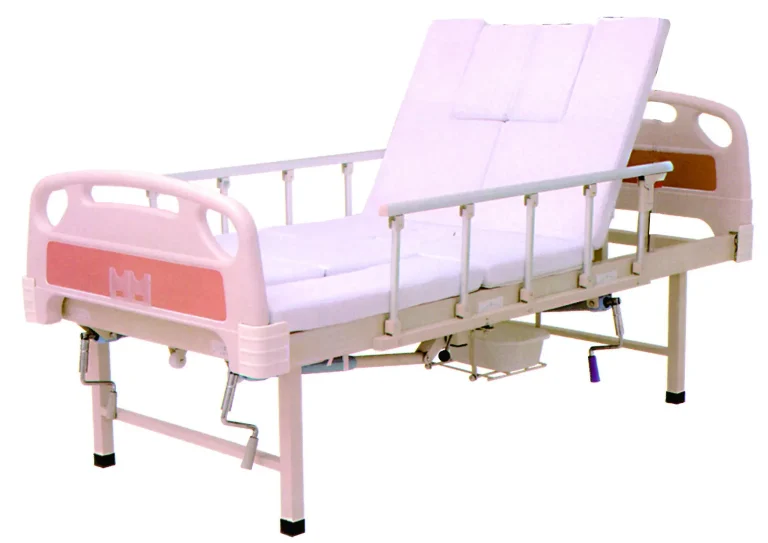
Manual nursing beds represent the most economical entry point for healthcare facilities. These units utilize a mechanical摇杆 (crank) system to adjust the bed height and backrest angle, eliminating the need for electric motors or power supplies. In markets where electricity is unstable or budgets are extremely tight, such as parts of Africa and Southeast Asia, manual beds remain the主力 product (mainstream product). The industry price range for these units typically falls between $80 and $150 per unit [K1]. While cost-effective, they require significant physical effort from caregivers to adjust patient positioning, which can lead to higher long-term labor costs and potential ergonomic injuries for nursing staff.
The Mid-Tier: Standard Electric Nursing Beds
The mid-tier is where the majority of modern healthcare procurement occurs. These beds replace mechanical cranks with electric linear actuators, allowing patients or caregivers to adjust the bed via a handheld remote or side-panel controls. A prime example is the HJIM MD-A12 Electric Nursing Bed, which features 3 functions: backrest elevation (0-80°), leg rest elevation (0-45°), and overall height adjustment. These beds are designed to solve the core problem of patient immobility, allowing for easy position changes to prevent pressure u$300 to $600, depending on the motor brand (e.g., LINAK, Dewert, or high-quality domestic alternatives) and the level of certification.
The Premium Tier: Integrated Smart Systems
At the top of the market are premium beds offered by brands like Hill-Rom (USA), Paramount Bed (Japan), and Invacare (USA). These units command higher prices due to their extensive service networks, advanced smart monitoring integration, and robust brand reputation. Premium beds often include features like integrated scales, bed exit alarms, and IoT connectivity for nurse call systems. While the upfront cost is significantly higher, the total cost of ownership may be justified in high-acuity environments like ICUs where data integration and reliability are critical [K1].
Key Cost Drivers in Nursing Bed Manufacturing
For bulk buyers, understanding the bill of materials helps in negotiating better terms and selecting the right specification for your facility. Several technical components directly influence the final unit price.
Motor Systems and Actuation
The heart of an electric nursing bed is the linear actuator system. High-quality motors ensure smooth, quiet operation and long-term durability. Beds equipped with imported motors (such as LINAK from Denmark) will carry a premium compared to those using domestic Chinese motors. However, the cost gap is narrowing as Chinese manufacturers achieve CE and FDA certifications, offering cost advantages while closing the quality gap [K1]. For homecare applications, where noise levels impact patient rest, investing in low-noise motors is a critical specification to consider.
Materials: The Shift to ABS
Traditional hospital beds often used steel or wood for headboards and footboards. Modern procurement trends favor ABS (Acrylonitrile Butadiene Styrene) panels. ABS headboards are blow-molded, making them impact-resistant, acid-resistant, and easy to disinfect. A key feature of ABS panels is the quick-release latch for CPR access, allowing medical staff to remove the board instantly in an emergency. This material is not only more hygienic but also lighter, reducing
Safety Mechanisms: Central Brake Systems
Patient safety is non-negotiable, and the braking system is a critical cost factor. High-quality beds feature a Central Brake System, where a single foot pedal locks all four casters simultaneously. This dual-mode system (directional lock + full lock) provides greater stability than individual wheel brakes, significantly reducing the risk of falls during patient transfers. While adding a marginal cost to the unit, this feature is essential for compliance with safety standards in elderly care and rehabilitation centers [K1].
Market Segments and Growth Dynamics
Procurement strategies should align with broader market trends. The demand for different types of beds varies significantly by region and care setting.
| Segment | Growth Rate (CAGR) | Key Drivers |
|---|---|---|
| Hospital Beds (Electric) | 6% | ICU expansion, smart monitoring integration |
| Homecare Beds | 18% | Silver economy, government subsidies, aging-in-place trends |
| Manual Beds (Developing Markets) | 3% | Budget constraints, infrastructure gaps in Africa/SE Asia |
The Homecare segment is experiencing the most rapid growth at 18% CAGR, driven by the global aging population and government incentives for aging-in-place. This shift requires beds that are not only functional but also aesthetically pleasing to blend into residential environments. Conversely, the Hospital Electric segment grows steadily at 6%, fueled by the need for ICU expansion and the integration of smart monitoring technologies that connect bed data to hospital information systems [K2].
The True Cost of Medical Certification
For international bulk buyers, the price of the bed is only part of the equation. Regulatory compliance adds significant cost and time to the procurement timeline. Different markets require different certifications, and these costs must be factored into the total budget.
| Market | Required Certification | Typical Timeline | Cost Range |
|---|---|---|---|
| EU | CE MDR 2017/745 + ISO 13485 | 6-12 months | €15,000-30,000 |
| USA | FDA 510(k) + ISO 13485 | 3-12 months | $20,000-50,000 |
| Middle East | CE or GSO | 3-6 months | $5,000-15,000 |
| Africa | Varies by country | 1-3 months | $2,000-8,000 |
Entering the European Union requires compliance with the Medical Device Regulation (MDR) 2017/745, a rigorous process that can take up to a year and cost between €15,000 and €30,000. The USA market demands FDA 510(k) clearance, which is similarly costly and time-consuming. In contrast, markets in Africa and the Middle East often accept CE certification or have more flexible local requirements, reducing both the financial barrier and the timeline for deployment [K3]. Bulk buyers targeting emerging markets should verify specific country-level registration requirements to avoid customs delays.
Strategic Procurement Recommendations
When selecting a supplier, look beyond the unit price. The competitive landscape shows that while unbranded OEMs offer the most cost-effectives, they often operate on margins below 8%, which can compromise quality control and after-sales support [K1]. Mid-tier manufacturers with CE/FDA certifications offer the best balance of cost and reliability. They provide the necessary medical device compliance without the premium markup of Western brands.
For HJIM clients, we recommend focusing on the total lifecycle cost. A slightly more expensive electric bed with a central brake system and ABS panels will reduce caregiver injury claims, lower maintenance costs, and improve patient satisfaction scores. Additionally, consider the warranty terms and the availability of spare parts, such as remote controls and actuators, which are critical for maintaining operational continuity in large facilities.
Conclusion
Choosing the right hospital bed is a strategic decision that impacts patient outcomes, staff efficiency, and operational budgets. Manual beds remain a viable, low-cost option for infrastructure-limited regions, while electric beds are becoming the standard for modern care due to their ergonomic benefits and patient autonomy features. As the homecare market surges, buyers must also consider the aesthetic and residential suitability of their equipment. By understanding the cost drivers—motors, materials, and certifications—procurement professionals can navigate the market effectively. Whether sourcing for a large hospital network or a homecare distributor, partnering with a certified manufacturer like HJIM ensures that you receive products that meet global safety standards while delivering value for money.
Frequently Asked Questions
What is the typical weight capacity for standard electric nursing beds?
Most standard electric nursing beds, including models like the HJIM MD-A12, are designed to support a safe working load of 250 kg (550 lbs). This capacity ensures stability for a wide range of patient sizes while maintaining the structural integrity of the frame and the reliability of the lifting mechanisms during height adjustments.
How long does it take to obtain FDA certification for hospital beds?
According to industry data, obtaining FDA 510(k) clearance for medical beds in the USA typically takes between 3 to 12 months. This timeline depends on the complexity of the device and the completeness of the submission. The associated cost for this certification process generally ranges from $20,000 to $50,000, which is an investment that manufacturers pass on to ensure market access and safety compliance.
What are the advantages of a central brake system over individual wheel locks?
A central brake system allows a single foot pedal to lock all four casters simultaneously, providing superior stability compared to individual wheel locks. This feature is critical for patient safety during transfers, as it eliminates the risk of the bed shifting unexpectedly. It also reduces the physical effort required by caregivers to secure the bed, enhancing overall caregiver ergonomics.
Why are ABS headboards preferred over steel or wood in modern nursing beds?
ABS (Acrylonitrile Butadiene Styrene) headboards are preferred because they are lightweight, durable, and highly resistant to chemicals and acids used in disinfection. Unlike steel, they do not rust, and unlike wood, they do not harbor bacteria in cracks. Additionally, ABS panels often feature quick-release latches for CPR access, allowing medical staff to remove the board instantly in emergency situations without tools.