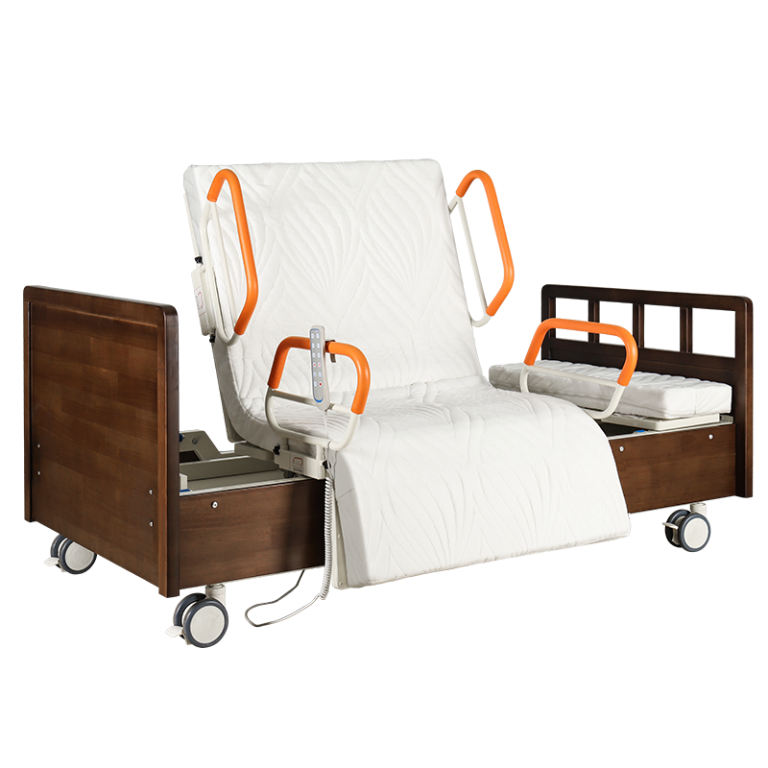
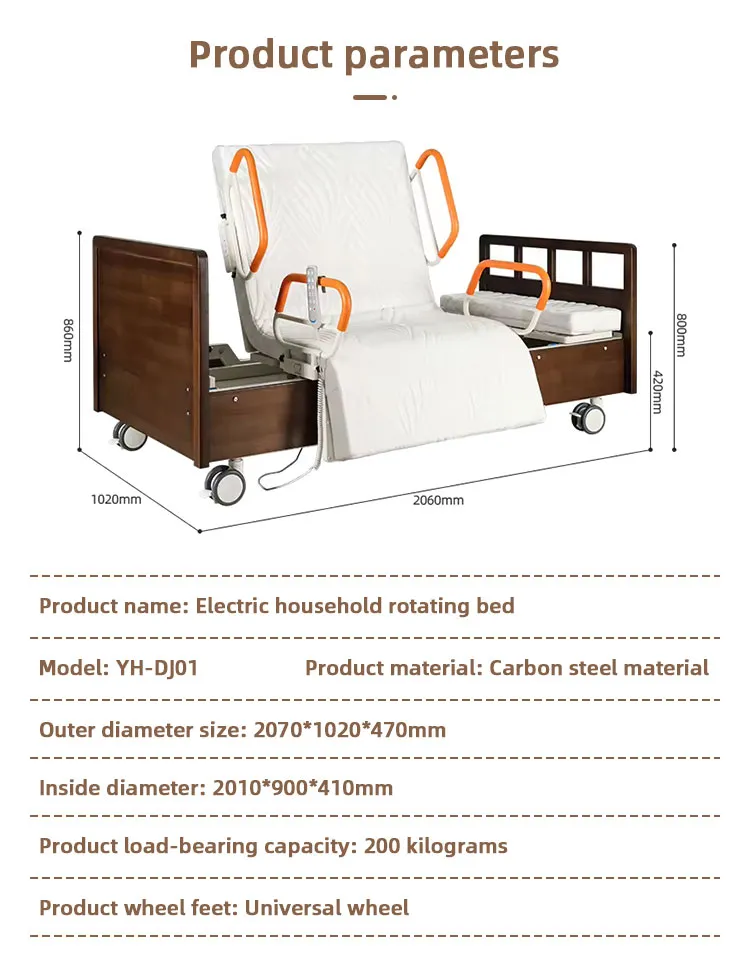
Patient Turning Bed vs Standard Nursing Bed: Comparison | Importer Selection Guide #6
Patient Turning Bed vs Standard Nursing Bed: Comparison
When selecting medical furniture for patient care, understanding the functional distinctions between specialized turning beds and standard nursing beds is critical for optimizing clinical outcomes and operational efficiency. This comparison examines both bed types through the lens of technical specifications, clinical applications, and procurement considerations, drawing on industry data from HJIM (Hengshui Chengen Medical Equipment Co., Ltd) and global market analysis.
Core Functional Differences
Standard nursing beds typically provide basic elevation adjustments through manual crank mechanisms or single-motor electric systems, primarily enabling head and foot section positioning. In contrast, patient turning beds incorporate advanced multi-axis movement capabilities, often featuring 3-5 motor configurations that enable synchronized backrest, knee, and lateral tilt adjustments [K2]. The HJIM MD-A12 electric nursing bed exemplifies this evolution with its 3-function system achieving backrest angles of 0-80° and leg elevation up to 45° [K2].
Manual nursing beds remain relevant in specific markets due to their mechanical simplicity and lower cost ($80-150 range), particularly in regions with unstable power infrastructure [K1]. However, electric models have become the new baseline in developed healthcare systems, reducing caregiver physical strain by over 70% during patient repositioning [K2].
Clinical Applications and Use Cases
Standard nursing beds serve well in general ward settings where patients retain some mobility or require minimal position adjustments. Their primary applications include post-operative recovery rooms and long-term care facilities with stable patient populations [K1]. Patient turning beds excel in specialized environments such as ICU units, rehabilitation centers, and home healthcare scenarios requiring frequent position changes to prevent complications like pressure u
The clinical significance of precise positioning becomes evident when considering Fowler’s position requirements (45-60° upper body elevation), which standard beds can achieve but turning beds execute with greater precision and patient comfort [K3]. For patients with limited mobility, the ability to independently adjust bed positions via remote control significantly enhances dignity and reduces caregiver dependency.
Cost and Maintenance Considerations
Initial procurement costs show significant variation: manual beds average $100-200, basic electric models range $500-1,200, while advanced turning beds with IoT capabilities reach $2,000-3,500. However, total cost of ownership analysis reveals important nuances. Manual beds require minimal maintenance but have shorter operational lifespans (5-7 years) due to mechanical wear, whereas quality electric beds with LINAK or Dewert motors typically last 10-15 years with proper maintenance [K2].
Modern electric beds increasingly incorporate predictive maintenance features using sensor data to monitor actuator health, reducing unexpected downtime by 40% compared to traditional models [K2]. For healthcare facilities managing large bed inventories, this reliability translates to substantial operational savings despite higher upfront investments.
Patient Comfort and Safety Features
Advanced turning beds integrate multiple safety systems absent in standard models. These include smart anti-fall alarms with AI-powered false positive reduction, bed exit monitoring, and automatic position memory functions that restore preferred configurations after temporary adjustments [K2]. The HJIM MD-A12 demonstrates these principles with its ABS removable headboard and 220kg weight capacity, accommodating diverse patient needs while maintaining structural integrity.
For patients requiring frequent position changes, the difference in comfort is measurable. Electric turning beds enable smooth, quiet transitions (noise levels below 45dB) that minimize sleep disruption, while manual adjustments often cause jarring movements that can aggravate pain conditions or disturb rest [K1].
| Feature | Standard Nursing Bed | Patient Turning Bed |
|---|---|---|
| Adjustment Mechanism | Manual crank or single motor | Multi-motor synchronized system |
| Positioning Range | Basic head/foot elevation | Full-body articulation including lateral tilt |
| Caregiver Effort | High (manual) to moderate (electric) | Minimal (remote control operation) |
| Typical Applications | General wards, budget-conscious facilities | ICU, rehabilitation, home healthcare |
| Price Range | $100-1,200 | $1,500-3,500 |
| Key Certifications | ISO 13485, CE Mark | ISO 13485, CE Mark, FDA 510(k) |
Global Market Context and Future Trends
The global medical nursing bed market, valued at $4.5 billion in 2024, projects 8.5% CAGR through 2027 driven by aging populations and home healthcare expansion [K3]. This growth particularly favors advanced turning beds as healthcare systems shift from hospital-centric to home-based care models. IoT integration represents the fastest-growing feature segment, with remote patient monitoring capabilities becoming standard in new installations [K2].
Manufacturers like HJIM are responding to these trends by developing beds with built-in vital sign monitoring and voice control compatibility with smart home systems [K2]. These innovations transform nursing beds from passive furniture into active components of comprehensive patient care ecosystems.
Procurement Decision Framework
When evaluating bed options, healthcare procurement teams should consider four critical factors: patient acuity levels, caregiver workflow requirements, facility infrastructure capabilities, and total cost of ownership projections. For facilities serving predominantly ambulatory patients, standard beds may suffice, while those managing complex cases should prioritize turning bed capabilities.
Regulatory compliance requirements vary by region but generally mandate ISO 13485 certification for all medical beds, with FDA 510(k) clearance necessary for U.S. market entry [K2]. Warranty terms typically range from 2-5 years for standard models to 5-7 years for premium turning beds, reflecting manufacturers’ confidence in component durability.
Conclusion
The choice between patient turning beds and standard nursing beds ultimately depends on specific clinical needs and operational constraints. While standard beds remain cost-effective solutions for basic care requirements, advanced turning beds deliver superior patient outcomes through precise positioning, reduced caregiver strain, and integrated safety features. As healthcare continues its shift toward personalized, home-based care models, investment in versatile turning bed technology positions facilities to meet evolving patient needs while improving operational efficiency.
Frequently Asked Questions
What motor types are commonly used in electric nursing beds?
High-quality electric nursing beds typically utilize linear actuators from established manufacturers like LINAK or Dewert, though cost-effective alternatives use domestic Chinese motors. These systems provide smooth, quiet operation with load capacities ranging from 180kg to 250kg depending on model specifications [K2].
What certifications should healthcare facilities verify when purchasing nursing beds?
Essential certifications include ISO 13485 for medical device quality management, CE marking for European market compliance, and FDA 510(k) clearance for U.S. operations. Additional regional certifications may be required depending on local regulatory frameworks [K2].
How does weight capacity affect bed selection for different patient populations?
Standard beds typically support 150-200kg, while bariatric models reach 450kg capacity. Facilities should select beds with 20-30% weight margin above maximum expected patient weights to ensure safety and longevity. The HJIM MD-A12 exemplifies balanced design with its 220kg capacity suitable for most clinical scenarios [K2].
What maintenance requirements differentiate manual and electric nursing beds?
Manual beds require periodic lubrication of mechanical components and crank mechanism inspection, while electric beds need motor system checks and electronic component testing. Modern electric beds with predictive maintenance features can reduce service interventions by 40% through early fault detection [K2].