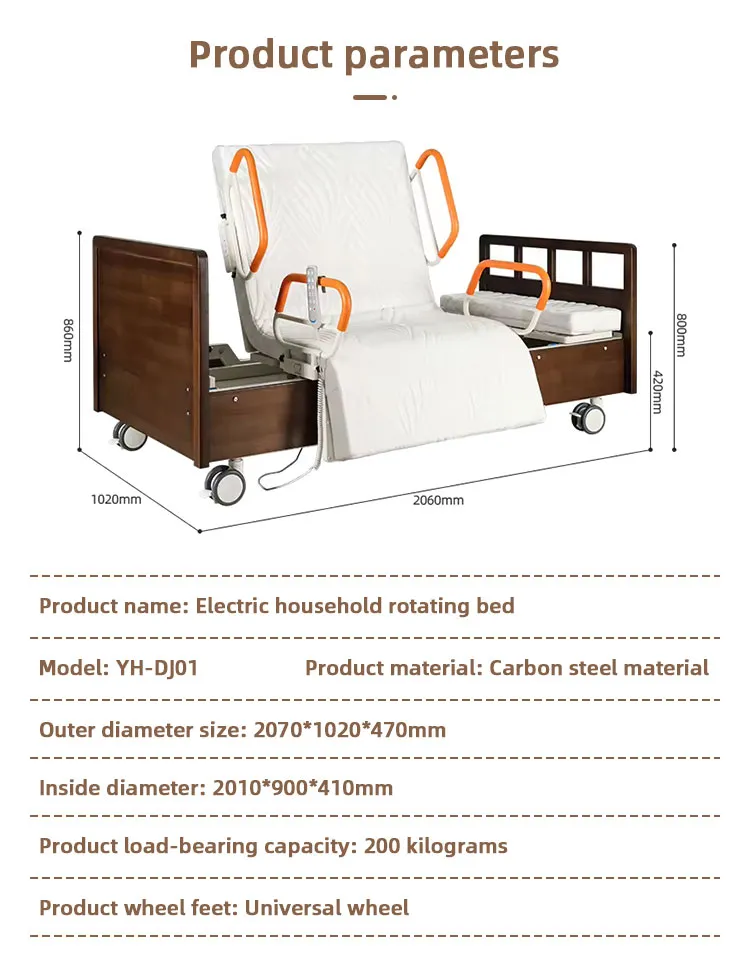
Top 5 Features to Look for in an Electric Nursing Bed
Top 5 Features to Look for in an Electric Nursing Bed
Choosing the right electric nursing bed is a critical decision that directly impacts patient comfort, caregiver efficiency, and long-term healthcare outcomes. As the global medical nursing bed market reaches approximately USD 4.5 billion with an 8.5% CAGR through 2027, driven by aging populations and home healthcare expansion [K2], understanding key technical specifications becomes essential for healthcare procurement professionals and family caregivers alike. This guide examines the five most important features to evaluate when selecting an electric nursing bed, with specific reference to industry standards and real-world applications.
1. Motor Quality and Actuator Technology
The heart of any electric nursing bed lies in its linear actuator system, which converts electrical energy into precise mechanical movement. Premium models utilize linear actuators from established manufacturers like Linak (Denmark) or Dewert (Germany), which offer silent operation below 45dB and IPX4 water resistance for medical environments [K1]. These high-quality actuators typically provide stroke lengths of 150-300mm with force capacities between 4000-8000N, ensuring smooth adjustments even under maximum load conditions [K1].
When evaluating motor systems, consider the duty cycle specifications—professional-grade actuators maintain a 10% duty cycle at full load, meaning they can operate continuously for 6 minutes followed by 54 minutes of cooling time. This prevents overheating during frequent adjustments common in intensive care settings. HJIM’s MD-A12 electric nursing bed exemplifies this standard with its 3-function configuration featuring backrest adjustment (0-75°), knee elevation (0-45°), and overall height variation [K1].
2. Multi-Position Adjustability Range
Effective patient care requires versatile positioning capabilities that accommodate various medical needs and comfort requirements. Look for beds offering at least three independent adjustment functions: backrest elevation, knee section articulation, and total bed height modulation. The HJIM MD-A12 demonstrates optimal range specifications with backrest movement from 0-75° (supporting Fowler position for respiratory care) and knee section from 0-45° (preventing sliding and improving circulation) [K1].
Advanced models may include additional features such as Trendelenburg positioning (head-down tilt for shock management) and reverse Trendelenburg (head-up tilt for gastric reflux prevention). Each adjustment function should operate independently via intuitive remote controls or wall-mounted panels, allowing caregivers to make precise changes without disturbing the patient. The ability to achieve zero-gravity positioning—where the body forms a slight “Z” shape—significantly reduces pressure points and enhances comfort during extended bed rest.
3. Weight Capacity and Structural Integrity
Weight capacity represents a fundamental safety consideration that directly affects patient protection and equipment longevity. Professional-grade electric nursing beds typically support maximum loads between 200-300kg, with the HJIM MD-A12 rated at 220kg continuous capacity [K1]. This specification must account for both patient weight and additional equipment such as mattresses, IV poles, and monitoring devices that contribute to total load.
Structural integrity depends on frame construction quality—look for reinforced steel frames with powder-coated finishes that resist corrosion in humid healthcare environments. The bed base should feature heavy-duty casters with locking mechanisms that provide stability during adjustments while allowing easy repositioning when needed. Weight distribution systems should prevent frame flexing during extreme positioning, which could compromise patient safety and accelerate mechanical wear.
4. Medical Certifications and Compliance Standards
Regulatory compliance ensures that electric nursing beds meet stringent safety and performance requirements for healthcare applications. Essential certifications include CE marking (European conformity), ISO 13485 (medical device quality management), and FDA 510(k) clearance for US market access. These certifications verify that products undergo rigorous testing for electrical safety, mechanical reliability, and biocompatibility of patient-contact materials.
Additional compliance considerations involve electromagnetic compatibility (EMC) testing to prevent interference with other medical equipment, and fire safety standards for upholstery materials. Reputable manufacturers like HJIM maintain comprehensive documentation of all certifications and provide technical files supporting regulatory submissions. For healthcare procurement teams, verifying current certification status through official databases prevents acquisition of non-compliant equipment that could create liability exposures.
5. User Interface and Caregiver Ergonomics
The human-machine interface significantly impacts daily operational efficiency and error prevention in clinical settings. Modern electric nursing beds feature intuitive control systems with clearly labeled buttons, tactile feedback, and visual indicators showing current position status. Remote controls should be waterproof (IPX4 rated minimum) and include emergency stop functions for immediate bed immobilization during patient transfers or medical emergencies.
Advanced models incorporate smart features such as preset position memory, allowing caregivers to recall frequently used configurations with single-button activation. Some systems integrate with hospital information systems for automated documentation of positioning changes, supporting quality assurance protocols. Caregiver ergonomics extend to maintenance accessibility—designs with tool-free panel removal and clearly marked service points reduce downtime during routine maintenance or repairs.
Comparison: Electric vs. Manual Nursing Beds
| Feature | Electric Nursing Bed | Manual Nursing Bed |
|---|---|---|
| Operation Method | Electric linear actuators with remote control | Hand-crank mechanical adjustment |
| Caregiver Effort Reduction | 70%+ labor intensity decrease [K1] | Requires physical effort for each adjustment |
| Market Growth (2024-2027) | 6% CAGR (hospital), 18% CAGR (homecare) [K1] | 3% CAGR (developing markets) [K1] |
| Price Range | $1,200-$3,500 | $80-$150 [K2] |
| Primary Applications | Hospitals, homecare, rehabilitation centers | Resource-limited settings, developing regions [K2] |
Conclusion
Selecting an electric nursing bed requires careful evaluation of technical specifications against actual care requirements and operational constraints. The five features examined—motor quality, adjustability range, weight capacity, certifications, and user interface—collectively determine equipment performance, safety, and total cost of ownership. As the healthcare industry continues shifting toward home-based care models with 18% CAGR growth in homecare beds [K1], investing in properly specified electric nursing beds delivers measurable returns through reduced caregiver strain, improved patient outcomes, and lower long-term maintenance costs.
For procurement decisions, prioritize models from manufacturers with established medical device compliance histories and comprehensive after-sales support networks. HJIM (Hengshui Chengen Medical Equipment Co., Ltd) exemplifies this approach with their MD-A12 model combining premium Linak actuators, 220kg capacity, and full CE/ISO certifications [K1]. Always request demonstration units for hands-on evaluation before finalizing bulk purchases, and maintain detailed records of all equipment specifications for warranty claims and regulatory audits.
Frequently Asked Questions
What type of linear actuators are used in professional electric nursing beds?
Professional electric nursing beds typically utilize linear actuators from specialized manufacturers like Linak (Denmark) or Dewert (Germany). These actuators convert rotational motor motion into precise linear movement for bed adjustments, offering specifications including 150-300mm stroke length, 4000-8000N force capacity, and IPX4 water resistance for medical environment durability [K1]. The duty cycle rating of 10% at full load ensures reliable operation during frequent adjustments while preventing overheating.
What weight capacity should I look for in an electric nursing bed?
Professional electric nursing beds should support minimum weight capacities of 200kg, with many models rated for 220-300kg continuous load. The HJIM MD-A12 model, for example, provides 220kg capacity [K1], which accounts for patient weight plus additional equipment such as mattresses, IV poles, and monitoring devices. Always verify that the specified capacity includes appropriate safety margins (typically 20-25% above maximum expected load) to ensure long-term structural integrity.
Which medical certifications are essential for electric nursing beds?
Essential certifications include CE marking (European conformity), ISO 13485 (medical device quality management system), and FDA 510(k) clearance for US market access. These certifications verify compliance with electrical safety standards (IEC 60601), electromagnetic compatibility requirements, and biocompatibility testing for patient-contact materials. Additional considerations include fire safety certifications for upholstery materials and regional regulatory approvals specific to your market [K1].
How do I determine the appropriate adjustment functions for my needs?
Selection should be based on patient population characteristics and care protocols. Minimum requirements include backrest elevation (0-75° for respiratory care), knee section articulation (0-45° for circulation support), and total height adjustment (for caregiver ergonomics and patient transfers) [K1]. Advanced applications may require Trendelenburg positioning for shock management or zero-gravity configurations for pressure u