EXW, FCA, or FOB? Choosing the Right Trade Term for Medical Equipment Import | Safety Standards & Compliance #15
EXW, FCA, or FOB? Choosing the Right Trade Term for Medical Equipment Import
Global trade in medical equipment is expanding rapidly, driven by aging populations and the shift toward home-based care models. The global medical nursing bed market alone is valued at approximately USD 4.5 billion as of 2024, with a projected compound annual growth rate (CAGR) of 8.5% through 2027 [K1 Market Overview]. For healthcare procurement officers and distributors, navigating this growth requires more than just selecting the right product; it demands a strategic understanding of international logistics and trade terms. When importing medical devices such as nursing beds, the choice between EXW (Ex Works), FCA (Free Carrier), and FOB (Free On Board) can significantly impact cost, risk, and compliance.
At HJIM (Hengshui Chengen Medical Equipment Co., Ltd), we understand that the logistics of medical equipment differ fundamentally from general consumer goods. Nursing beds are bulky, often require specialized
Understanding the Logistics Landscape for Medical Devices
Medical equipment importation involves unique challenges compared to standard freight. Unlike consumer electronics, hospital beds and nursing furniture often exceed standard container dimensions when packed, requiring careful load planning. Furthermore, the rise of smart medical devices introduces sensitivity to environmental conditions during
When evaluating trade terms, buyers must consider the total landed cost, which includes the unit price, inland freight, export customs clearance, ocean or air freight, insurance, and import duties. A lower unit price under an EXW term might be offset by higher logistics management costs if the buyer lacks experience in the supplier’s local market. Conversely, a higher FOB price might include valuable logistics support that reduces administrative burden.
EXW vs. FCA vs. FOB – A Practical Breakdown
Each Incoterm defines a different point where responsibility shifts from the seller to the buyer. Understanding these distinctions is vital for healthcare procurement teams managing budgets and supply chain reliability.
EXW (Ex Works): Maximum Buyer Control
Under EXW terms, the seller makes the goods available at their premises, and the buyer bears all costs and risks involved in transporting the goods from there to the destination. This term is often attractive for buyers who have established freight forwarding relationships in the supplier’s country. However, for medical equipment, EXW requires the buyer to handle export customs clearance in the supplier’s country, which can be complex if local regulations require specific medical device export licenses.
For example, if you are importing manual nursing beds, which are mechanically simple and robust, EXW might be manageable. Manual beds use mechanical rod mechanisms to adjust bed angles and do not require complex electrical safety testing during transit [K1 Manual Nursing Bed]. However, if you are importing high-value electric beds with linear actuators, the risk of damage during the initial pickup phase lies entirely with you under EXW terms.
FCA (Free Carrier): Balanced Responsibility
FCA is often the preferred term for modern logistics, especially when using containerized freight. The seller delivers the goods, cleared for export, to a carrier nominated by the buyer at the seller’s premises or another named place. This term alleviates the buyer from handling export customs clearance, which is a significant advantage when importing regulated medical devices.
For HJIM products, FCA ensures that the nursing beds are properly packaged and handed over to the logistics provider in compliance with Chinese export regulations. This is particularly relevant for electric beds that may contain lithium batteries in remote controls or backup systems, which have specific
FOB (Free On Board): Traditional Sea Freight Standard
FOB remains common in sea freight transactions. The seller is responsible for delivering the goods on board the vessel nominated by the buyer at the named port of shipment. Once the goods are on the vessel, risk transfers to the buyer. FOB is useful when buyers want the seller to handle inland freight to the port and export clearance but wish to control the main ocean freight and insurance.
However, FOB can be risky if the goods are damaged while being loaded onto the vessel. Given that nursing beds are heavy and awkward to handle, ensuring proper loading procedures is essential to prevent structural damage to the bed frames or motor housings.
Product Value and Complexity Drive the Decision
The type of medical equipment being imported should heavily influence the choice of trade term. The nursing bed market is segmented into hospital beds, homecare beds, and manual beds, each with different value propositions and logistics requirements [K2 Market Segments].
Manual Nursing Beds
Manual nursing beds are the most economical choice, often priced between $80 and $150 in markets like Africa and Southeast Asia [K1 Manual Nursing Bed]. They are structurally simple, lacking electric motors or complex electronics. For these products, the risk of transit damage is lower. Buyers with strong logistics networks might opt for EXW to minimize costs, as the primary concern is weight and volume rather than electronic sensitivity. However, buyers should note that manual beds are being逐步替代 (gradually replaced) in some markets as electric bed costs decline, so procurement strategies should align with long-term market trends [K1 Manual Nursing Bed].
Electric Nursing Beds
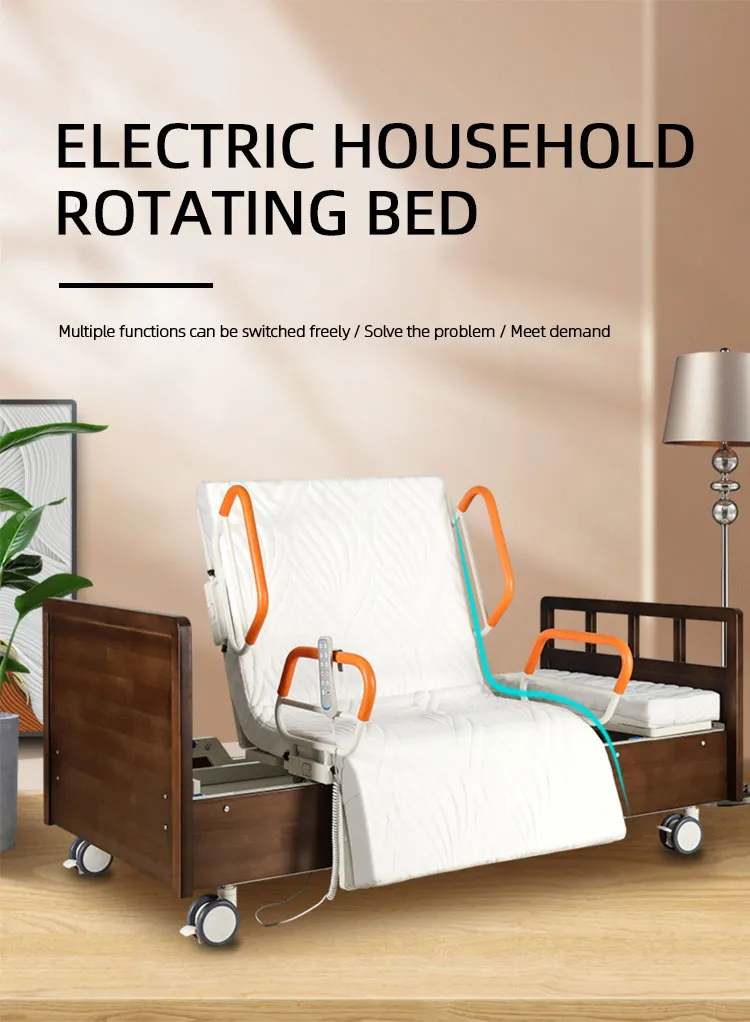
Electric nursing beds represent a higher value investment and carry more complex logistics risks. These beds use electric linear actuators to replace manual cranks, allowing for precise adjustment of the backrest and leg sections [K2 Electric Nursing Bed]. High-quality models often utilize premium actuators from brands like Linak (Denmark) or Dewert (Germany), which offer silent operation below 45dB and water resistance ratings like IPX4 [K1 Linear Actuator].
Because these components are sensitive and expensive, buyers should consider terms that ensure the seller handles export
Regulatory and Compliance Considerations
Medical equipment importation is heavily regulated. Buyers must ensure that the trade term aligns with compliance requirements. For instance, importing beds intended for hospital use often requires CE marking, ISO 13485 certification, or FDA clearance depending on the destination market. While the trade term itself does not dictate compliance, the party responsible for export documentation matters.
Under EXW, the buyer is technically responsible for export documentation, which can be problematic if the local authority requires the exporter of record to be a licensed medical device manufacturer. HJIM, as a manufacturer, holds necessary certifications, and terms like FCA or FOB allow them to act as the exporter of record, simplifying the compliance chain for the buyer. This is crucial for maintaining the integrity of the supply chain and ensuring that medical device compliance documentation travels with the goods correctly.
Cost Implications Beyond the Unit Price
When comparing quotes from suppliers, it is essential to look beyond the unit price. A lower price under EXW might seem attractive, but it excludes inland freight, export clearance, and port handling fees. A comprehensive cost analysis should include:
- Inland Freight: Cost to move goods from the factory to the port or carrier.
- Export Clearance: Fees and administrative costs for clearing goods out of the supplier’s country.
- Insurance: Coverage for the goods during transit. Under EXW, the buyer must arrange this from the factory gate.
- Port Handling: Charges at the origin port for loading and documentation.
For homecare beds, which are growing at an 18% CAGR due to aging-in-place trends [K2 Market Segments], volume shipments are common. Consolidating multiple orders into a single container can reduce per-unit logistics costs. In such cases, FCA allows the buyer to consolidate shipments from different suppliers at a single forwarder’s warehouse before
Comparative Analysis of Trade Terms for Nursing Beds
The following table summarizes the key considerations for each trade term when importing nursing beds from manufacturers like HJIM.
| Trade Term | Risk Transfer Point | Export Clearance | Best For | Risk Level |
|---|---|---|---|---|
| EXW | At seller’s factory | Buyer | Experienced importers with local agents | High |
| FCA | At named carrier location | Seller | Containerized freight, mixed shipments | Medium |
| FOB | On board the vessel | Seller | Traditional sea freight, single port shipments | Medium |
For most healthcare distributors importing electric nursing beds with smart features like voice control or predictive maintenance sensors [K3 Technology Trends], FCA offers the best balance. It ensures the seller handles export compliance while giving the buyer control over the main freight and insurance, allowing for better risk management of high-value electronic components.
Conclusion
Choosing between EXW, FCA, and FOB is not merely a logistical decision; it is a strategic procurement choice that affects cost, risk, and compliance. For manual nursing beds, where value is lower and durability is higher, EXW can be cost-effective for experienced buyers. However, for electric nursing beds featuring advanced linear actuators and IoT capabilities, FCA or FOB provides necessary protection during the early stages of transit.
As the global market shifts toward home-based care and smart monitoring, the complexity of medical equipment imports will only increase. Buyers should partner with manufacturers like HJIM who understand these nuances and can provide transparent pricing across different trade terms. By aligning the trade term with the specific product characteristics and destination requirements, importers can ensure a smoother supply chain and better patient care outcomes.
Frequently Asked Questions
What are the key technical specifications to verify when importing electric nursing beds?
When importing electric nursing beds, buyers should verify the specifications of the linear actuators, as these determine the bed’s performance and durability. Key specs include stroke length (typically 150-300mm), force capacity (4000-8000N), and duty cycle (often 10% at full load) [K1 Linear Actuator]. Additionally, check the noise level, which should be below 45dB for patient comfort, and the water resistance rating, such as IPX4, to ensure safety in clinical environments [K1 Linear Actuator].
How does the choice of trade term affect the warranty coverage for medical equipment?
The trade term determines when risk transfers from the seller to the buyer, which can impact warranty claims. If goods are damaged after the risk transfer point (e.g., after loading on the vessel under FOB), the buyer is responsible, and warranty claims may be complicated. It is advisable to choose terms like FCA where the seller handles export clearance and initial transit, ensuring the goods are in compliant condition before handover. Always confirm warranty terms regarding transit damage with the manufacturer, such as HJIM, before finalizing the contract.
What market trends should influence the procurement of nursing beds in 2024?
Procurement strategies should align with the projected 8.5% CAGR of the global nursing bed market through 2027 [K1 Market Overview]. Specifically, homecare beds are experiencing an 18% CAGR, driven by government subsidies and aging-in-place trends [K2 Market Segments]. Buyers should consider stocking electric beds with smart features like IoT integration and remote monitoring, as these are becoming standard in developed markets, while manual beds remain relevant for budget-constrained regions in Africa and Southeast Asia [K1 Manual Nursing Bed].
Are there specific compliance standards required for importing nursing beds into OECD nations?
Yes, importing nursing beds into OECD nations typically requires adherence to strict regulatory standards. Manufacturers should provide evidence of CE marking for European markets and FDA clearance for the United States. Additionally, ISO 13485 certification is often required to demonstrate quality management systems specific to medical devices. When selecting a trade term, ensure the supplier can provide all necessary documentation for export clearance, as buyers under EXW terms may face challenges obtaining these documents independently.