How to Test Nursing Bed Quality Before Bulk Ordering | Importer Selection Guide
How to Test Nursing Bed Quality Before Bulk Ordering
When procuring nursing beds for hospitals, care facilities, or distribution networks, quality validation is not optional—it is a strategic imperative. The global medical nursing bed market, valued at approximately USD 4.5 billion in 2024 with an 8.5% projected CAGR through 2027, reflects growing demand driven by aging populations and home healthcare expansion [K1]. Yet, not all beds meet the same standards of durability, safety, or functionality. Before committing to a bulk order, buyers must conduct rigorous quality assessments that align with clinical needs, regulatory requirements, and long-term operational costs.
Understanding Nursing Bed Types and Their Use Cases
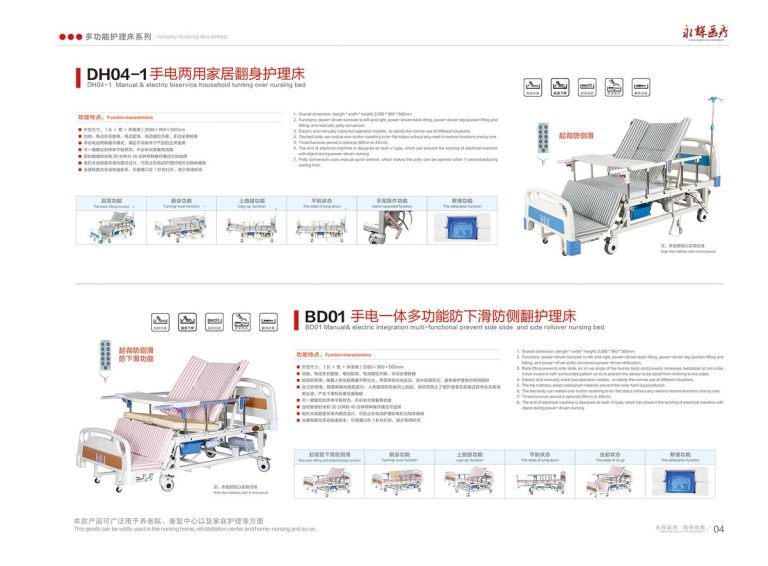
Nursing beds fall into two primary categories: manual and electric. Each serves distinct market segments and operational contexts. Manual nursing beds rely on mechanical crank handles to adjust bed positions, making them cost-effective for budget-constrained environments like rural clinics or developing regions [K1]. They require physical effort from caregivers but remain viable in areas with unstable power infrastructure. In contrast, electric nursing beds use linear actuators (typically 2–5 motors) to enable remote-controlled adjustments, reducing caregiver strain by over 70% [K2]. Models like the HJIM MD-A12 offer three functions—backrest (0–80°), knee (0–45°), and height adjustment—with a 220kg weight capacity, catering to hospitals and home care settings where patient mobility is limited [K2].
Key Quality Indicators for Bulk Procurement
Quality assessment begins with verifying technical specifications against real-world demands. Critical parameters include:
- Weight Capacity: Ensure the bed supports at least 220kg for bariatric patients, as seen in HJIM’s models [K2].
- Motor Quality: Electric beds should use reputable brands like LINAK or Dewert for durability and quiet operation [K2].
- Safety Features: Look for lockable casters, side rails with anti-slip surfaces, and emergency manual override systems.
- Material Durability: Steel frames with powder-coated finishes resist corrosion, while ABS plastic headboards simplify cleaning.
Physical Testing Protocols for Pre-Order Validation
Before finalizing a bulk order, request sample units for hands-on testing. Key steps include:
- Adjustment Cycle Testing: Operate the bed’s motors or cranks 50+ times to check for smoothness and noise. Electric beds should complete adjustments in under 30 seconds.
- Load-Bearing Stress Test: Place weights equivalent to 120% of the stated capacity (e.g., 264kg for a 220kg bed) for 24 hours to assess frame stability.
- Electrical Safety Check: For electric beds, verify insulation resistance and grounding compliance with IEC 60601 standards.
- Accessory Compatibility: Test mattress compatibility, IV pole attachments, and trapeze bar integration.
OEM/ODM Considerations for Custom Orders
For buyers seeking branded solutions, understanding OEM/ODM structures is critical. OEM manufacturing involves producing beds to the buyer’s design, with margins typically at 5–10% [K3]. ODM partnerships allow buyers to leverage the manufacturer’s existing designs, with margins of 10–15% [K3]. When engaging with suppliers like HJIM (Hengshui Chengen Medical Equipment Co., Ltd), clarify whether customization impacts warranty terms or certification validity. Always request documentation for CE, ISO 13485, or FDA compliance, as these are non-negotiable for regulatory approval in most markets.
Regulatory and Certification Requirements
Nursing beds must comply with regional medical device regulations. Key certifications include:
- CE Marking: Mandatory for European markets, confirming adherence to EU Medical Device Regulation (MDR).
- ISO 13485: Validates quality management systems for medical device manufacturers.
- FDA 510(k) Clearance: Required for U.S. market entry, demonstrating substantial equivalence to predicate devices.
Suppliers should provide test reports from accredited labs (e.g., TÜV, SGS) to substantiate claims. For IoT-enabled beds, data security compliance (e.g., HIPAA for U.S. healthcare data) is increasingly relevant.
Cost vs. Value: Avoiding False Economies
While manual beds cost $80–150 in markets like Africa and Southeast Asia [K1], electric models range from $500–$1,500 depending on features. However, cheaper options often lack critical safeguards, leading to higher lifetime costs through frequent repairs or patient injuries. Prioritize suppliers offering warranties of 2–5 years and responsive after-sales support. For example, HJIM’s electric beds include ABS headboards and remote controls designed for 10,000+ actuation cycles [K2].
Comparison: Manual vs. Electric Nursing Beds
| Feature | Manual Nursing Bed | Electric Nursing Bed |
|---|---|---|
| Adjustment Mechanism | Hand crank | Electric linear actuators |
| Typical Cost | $80–150 | $500–1,500 |
| Caregiver Effort | High (physical labor) | Low (button-controlled) |
| Best Use Case | Power-limited regions | Hospitals, home care |
| Weight Capacity | 150–200kg | Up to 220kg (HJIM MD-A12) |
Final Checklist for Bulk Order Approval
Before signing contracts, confirm:
- Sample units passed stress and safety tests.
- Supplier provides verifiable certifications (CE, ISO 13485).
- Warranty covers motors, electronics, and structural components.
- Post-purchase support includes spare parts and technical training.
Conclusion
Testing nursing bed quality before bulk ordering is a multifaceted process that balances technical specs, regulatory compliance, and real-world usability. By prioritizing suppliers like HJIM that offer transparent documentation, robust warranties, and clinically validated designs, buyers can mitigate risks and ensure long-term value. Remember: the most affordable bed today may become the most costly liability tomorrow.
Frequently Asked Questions
What motor brands are used in HJIM electric nursing beds?
HJIM electric nursing beds typically use LINAK or Dewert linear actuators, known for reliability and quiet operation [K2]. These motors support smooth adjustments for backrest, knee, and height functions.
What is the maximum weight capacity for HJIM nursing beds?
The HJIM MD-A12 electric nursing bed supports up to 220kg, making it suitable for bariatric patients [K2]. Manual models generally have lower capacities, often around 150–200kg.
Do HJIM nursing beds comply with international safety standards?
Yes, HJIM products meet CE, ISO 13485, and FDA requirements, ensuring compliance with global medical device regulations. Certifications should be verified via test reports from accredited labs.
What warranty terms apply to bulk orders of HJIM nursing beds?
HJIM typically offers 2–5 year warranties covering motors, electronics, and structural components. Terms may vary for OEM/ODM orders, so clarify specifics during procurement negotiations.