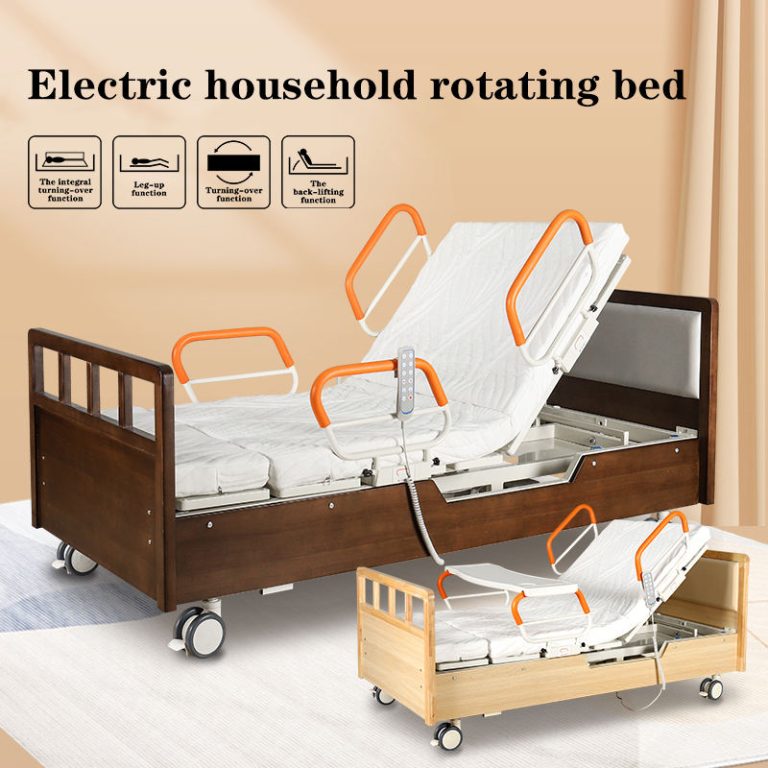
Nursing Bed Backrest Angle 0-75°: Is It Sufficient for All Patients?
Nursing Bed Backrest Angle 0-75°: Is It Sufficient for All Patients?
In the complex landscape of healthcare procurement and patient care, few specifications generate as much debate as the adjustable backrest angle on a nursing bed. For facility managers, hospital administrators, and home care providers, the question is not merely about comfort—it is about clinical efficacy, caregiver safety, and long-term operational costs. The industry standard often cites a backrest adjustment range of 0 to 75 degrees. But does this range truly cover the spectrum of patient needs, from acute respiratory distress to daily rehabilitation?
As the global medical nursing bed market continues to expand, projected to reach significant growth through 2027 driven by aging populations and the shift toward home-based care models, understanding the nuance behind these angles is critical. This article explores the clinical implications of the 0-75° range, compares manual and electric mechanisms, and evaluates whether this standard meets the demands of modern medical device compliance and patient safety.
The Clinical Significance of Backrest Angles
The primary function of an adjustable backrest is to facilitate specific therapeutic positions that aid in recovery and prevent complications. The most fundamental of these is known as Fowler’s Position. In clinical practice, Fowler’s Position typically involves elevating the head and back to an angle between 45 and 60 degrees. This specific range is not arbitrary; it is designed to reduce cardiac preload, improve chest expansion for easier breathing, and prevent aspiration pneumonia during feeding.
When a nursing bed offers a 0-75° range, it comfortably encompasses the standard Fowler’s range. However, the upper limit of 75 degrees is where the utility becomes more specialized. An angle of 75 degrees places the patient in a near-sitting position, which is essential for patients who need to interact with visitors, use a tablet, or perform light upper-body exercises without fully sitting up on the edge of the bed. For patients with severe respiratory issues or those recovering from abdominal surgery, the ability to lock the bed at a higher angle can significantly reduce the work of breathing.
Conversely, the lower limit of 0 degrees is equally important. A flat position is necessary for procedures requiring supine positioning, such as catheterization or certain diagnostic imaging. Therefore, a 0-75° range provides a continuous spectrum of motion that covers the vast majority of clinical scenarios, from flat rest to a near-upright seated posture.
Manual Versus Electric Mechanisms: The Operational Divide
While the angle range defines the capability of the bed, the mechanism defines the usability. The market is broadly divided into manual nursing beds and electric nursing beds, each serving distinct economic and operational niches.
Manual Nursing Beds
Manual nursing beds rely on mechanical hand cranks to adjust the bed frame. These systems are simple, robust, and significantly cheaper, often ranging between $80 and $150 in emerging markets. They are the dominant choice in regions with unstable power grids or in budget-constrained facilities, such as certain clinics in Africa and Southeast Asia. The underlying logic here is economic: in environments where electricity is unreliable or procurement budgets are tight, the manual bed remains the most viable option.
However, the operational cost of manual beds is hidden in labor. Adjusting the backrest requires physical effort from the caregiver. For a patient who needs frequent position changes to prevent pressure u
Electric Nursing Beds
Electric nursing beds replace the hand crank with electric linear actuators. This shift is not merely about luxury; it is a fundamental change in caregiver ergonomics. An electric bed allows the caregiver to adjust the backrest, knee, and height with the press of a button. Industry data suggests that electric beds can reduce caregiver labor intensity by over 70% compared to manual equivalents.
For the patient, the benefit is autonomy. Many electric models come with a patient-side remote, allowing the individual to adjust their own comfort level without calling for assistance. This psychological benefit cannot be overstated in long-term care settings. Furthermore, as the cost of electric components like LINAK or Dewert motors has decreased, electric beds are transitioning from “luxury items” to basic configurations in many developed healthcare systems.
| Feature | Manual Nursing Bed | Electric Nursing Bed |
|---|---|---|
| Adjustment Mechanism | Hand Crank / Mechanical Lever | Electric Linear Actuators (2-5 Motors) |
| Typical Cost Range | $80 – $150 | $300 – $1,500+ |
| Caregiver Effort | High (Physical Cranking) | Low (Button Control) |
| Best Use Case | Power-unstable regions, Budget clinics | Hospitals, Home Care, Rehabilitation |
| Backrest Range | 0-70° (Typical) | 0-75° to 0-80° |
Case Study: The HJIM MD-A12 Specification
To understand how these specifications translate to real-world products, we can look at the HJIM MD-A12 Electric Nursing Bed. HJIM (Hengshui Chengen Medical Equipment Co., Ltd) is a prominent manufacturer in the medical furniture sector, and their MD-A12 model serves as a benchmark for the 3-function electric bed category.
The MD-A12 typically features a backrest adjustment range of 0-75 degrees, aligning with the industry standard discussed earlier. It also includes a knee section adjustment of 0-45 degrees, which is crucial for preventing the patient from sliding down the bed when the backrest is elevated. This anti-slip feature is vital for patient safety, particularly for elderly care patients with reduced muscle tone.
The bed is designed with a maximum load capacity of 220kg, accommodating a wide range of patient body types without compromising structural integrity. The inclusion of an ABS detachable headboard is another practical consideration, as it allows for easy cleaning and disinfection—a critical factor in infection control protocols within hospitals. When evaluating procurement options, specifications like these provide a concrete baseline for comparing different OEM manufacturing partners.
Technology Trends Shaping the Future of Nursing Beds
The definition of a “sufficient” nursing bed is evolving. It is no longer enough for a bed to simply adjust angles; it must integrate with the broader healthcare ecosystem. Several technology trends are currently reshaping the industry:
- IoT Integration: Modern beds are increasingly equipped with WiFi or 4G modules. This allows for remote monitoring of patient vitals, bed position, and even weight data. For a hospital central station, knowing that a high-risk patient has remained in a flat position for too long can trigger an automatic alert to the nursing staff.
- Smart Anti-Fall Systems: Bed exit alarms are becoming more sophisticated. Using AI-powered sensors, these systems can distinguish between a patient simply sitting up and a patient attempting to stand, reducing false positives that often lead to alarm fatigue among staff.
- Voice Control: Integration with smart home systems like Alexa or Google Home is becoming a feature in high-end home care beds. This allows patients with limited mobility to adjust their bed environment using voice commands, enhancing independence.
- Predictive Maintenance: Sensors can monitor the health of the motors and actuators. Instead of waiting for a bed to break down, maintenance teams can be alerted when a motor shows signs of wear, ensuring continuous availability of critical equipment.
Procurement Considerations for Healthcare Facilities
When selecting nursing beds for a facility, the backrest angle is just one part of a broader due diligence process. Procurement officers must consider medical certification and compliance. Reputable manufacturers will adhere to standards such as CE marking, ISO 13485 for quality management systems, and FDA regulations where applicable. These certifications ensure that the materials used are biocompatible and that the electrical systems meet safety standards for medical environments.
Warranty and after-sales support are also critical. An electric nursing bed is a mechanical device with moving parts. A comprehensive warranty covering the motors, control boxes, and frame indicates the manufacturer’s confidence in their product. For large-scale deployments, the availability of spare parts and the
Furthermore, the context of the care setting matters. In a home care environment, noise levels become a significant factor. A bed that whirs loudly every time the patient adjusts their backrest can disrupt sleep, which is essential for recovery. Procurement teams should look for specifications regarding noise levels, typically measured in decibels, to ensure a quiet environment.
Conclusion
Is a 0-75° backrest angle sufficient for all patients? For the vast majority of clinical and home care scenarios, the answer is yes. This range successfully covers the therapeutic requirements of Fowler’s Position, allows for near-sitting interaction, and provides a flat surface for medical procedures. However, sufficiency is not just about the degrees of motion; it is about the mechanism that delivers that motion.
While manual beds offer a cost-effective solution for specific markets, electric beds provide the ergonomics and patient autonomy required for modern care standards. As technology continues to integrate IoT and smart safety features, the nursing bed is becoming a central hub for patient monitoring and care delivery. For healthcare buyers, the focus should remain on verified specifications, regulatory compliance, and the total lifecycle cost of the equipment, ensuring that the chosen solution supports both patient recovery and caregiver efficiency.
Frequently Asked Questions
What is the standard weight capacity for a professional electric nursing bed?
Most professional-grade electric nursing beds, such as the HJIM MD-A12, are designed with a maximum load capacity of 220kg (approximately 485 lbs). This high weight limit ensures safety for bariatric patients and provides a safety margin for standard adult patients, accommodating various body types without risking structural failure.
How does the backrest angle relate to pressure u
Pressure u
Are electric nursing beds compliant with international medical standards?
Yes, reputable manufacturers produce electric nursing beds that comply with international standards such as CE (Conformité Européenne) and ISO 13485 (Medical Devices Quality Management). When procuring equipment, it is essential to verify that the specific model holds these certifications to ensure safety and regulatory compliance in your region.
Can the backrest angle be controlled remotely by the patient?
In most 3-function or higher electric nursing beds, a handheld remote control is provided. This remote allows the patient to adjust the backrest, knee section, and overall bed height independently. This feature is particularly valuable in home care settings, as it promotes patient autonomy and reduces the need to call a caregiver for minor comfort adjustments.