EXW, FCA, or FOB? Choosing the Right Trade Term for Medical Equipment Import | Hospital Procurement Guide #5
EXW, FCA, or FOB? Choosing the Right Trade Term for Medical Equipment Import
Importing medical equipment involves more than just selecting the right product; it requires a strategic understanding of international trade terms that dictate risk, cost, and responsibility. For procurement officers managing hospital equipment or home healthcare supplies, the choice between EXW (Ex Works), FCA (Free Carrier), and FOB (Free on Board) can significantly impact the total landed cost and the safety of the cargo. This decision is particularly critical when dealing with sensitive medical furniture, such as nursing beds, where mechanical integrity and electronic components must survive long-distance transit.
The global medical nursing bed market is valued at approximately USD 4.5 billion (2024), with a projected CAGR of 8.5% through 2027 [Global Market K1]. As demand shifts from hospital-centric models to home-based care, buyers are increasingly sourcing directly from manufacturers like HJIM (Hengshui Chengen Medical Equipment Co., Ltd). However, the complexity of
Understanding the Global Nursing Bed Market Landscape
Before selecting a trade term, buyers must understand the product categories they are importing. The market is segmented by care setting and technology level, each carrying different logistical profiles. The homecare bed segment is experiencing the highest growth at 18% CAGR, driven by the silver economy and government subsidies for aging-in-place trends [Segments K2]. In contrast, manual beds in developing markets grow at a slower 3% CAGR, constrained by budget and infrastructure [Segments K2].
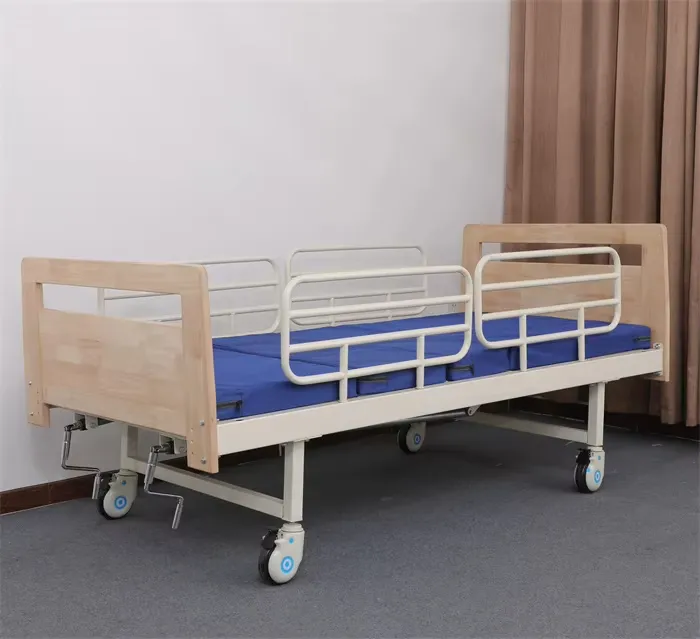
Product complexity varies significantly between segments. Manual nursing beds are mechanical devices using hand cranks to adjust bed angles. They are inexpensive, typically priced between $80-150, and are主力 products in Africa and Southeast Asia where power stability is a concern [Manual K1]. These units are robust and less susceptible to damage during transit compared to their electric counterparts. Conversely, electric nursing beds utilize linear actuators to adjust the backrest and leg sections. For example, the HJIM MD-A12 Electric Nursing Bed features three functions with backrest adjustment from 0-80° and leg adjustment from 0-45° [Electric K2]. These units contain sensitive electronics, motors, and remote controls, requiring more careful handling and potentially higher insurance coverage during
Technology trends are also influencing procurement. IoT integration allows for remote monitoring of patient vitals and bed position via WiFi or 4G [Tech K3]. Smart anti-fall systems and voice control integration with smart home systems are becoming standard expectations [Tech K3]. When importing these advanced units, the trade term must account for the higher value and fragility of the electronic components. A term that leaves risk with the buyer too early, such as EXW, might be risky for high-value electric beds unless the buyer has specialized freight forwarding capabilities.
Decoding Incoterms for Medical Equipment Procurement
Incoterms define who pays for what and who bears the risk at each stage of shipment. For medical equipment importers, the three most common terms are EXW, FCA, and FOB. Each offers a different balance of control and responsibility.
EXW (Ex Works) places maximum responsibility on the buyer. The seller (e.g., HJIM) makes the goods available at their factory, and the buyer handles all logistics, including export clearance. This term is suitable for experienced importers who have established freight forwarders in the manufacturer’s country. It often offers the lowest unit price but hides logistics costs until later in the process.
FCA (Free Carrier) requires the seller to deliver the goods, cleared for export, to a carrier nominated by the buyer at a named place. This could be the seller’s warehouse or a terminal. FCA is often preferred for containerized shipments where the buyer wants to control the main freight but ensures the seller handles export customs. It is particularly useful for electric nursing beds where export documentation regarding medical device compliance (such as CE or ISO 13485) must be verified before the goods leave the factory.
FOB (Free on Board) requires the seller to deliver the goods on board the vessel nominated by the buyer at the named port of shipment. Risk transfers once the goods are on the ship. FOB is traditional for bulk shipments but can be problematic for containerized goods where the carrier takes possession before the container is loaded onto the vessel. For medical equipment, FOB ensures the seller is responsible for getting the goods to the port safely, which is crucial for heavy items like nursing bed frames.
Cost Implications: Freight, Insurance, and Risk Transfer
The financial impact of choosing the wrong trade term can be substantial. Buyers must consider not only the freight cost but also insurance, customs duties, and the risk of damage. Electric nursing beds often incorporate high-quality linear actuators from brands like Linak or Dewert, which provide silent operation and water resistance [Actuator K1]. These components add value and fragility. If goods are damaged after risk transfer, the buyer bears the loss.
The following table compares the three terms based on key procurement factors relevant to medical equipment importers:
| Factor | EXW (Ex Works) | FCA (Free Carrier) | FOB (Free on Board) |
|---|---|---|---|
| Risk Transfer Point | At seller’s factory | At named carrier location | Once loaded on vessel |
| Export Clearance | Buyer responsibility | Seller responsibility | Seller responsibility |
| Insurance Coverage | Buyer must cover from factory | Buyer covers from carrier point | Buyer covers from port |
| Best For | Experienced importers with local agents | Containerized shipments, mixed cargo | Traditional bulk |
| Product Suitability | Manual beds (low value, robust) | Electric beds (high value, docs needed) | Large bulk orders of hospital beds |
For manual nursing beds, which are often shipped in high volume to developing markets, EXW might be acceptable due to their robust construction and lower value [Manual K1]. However, for electric beds with IoT capabilities and sensitive motors, FCA or FOB is generally safer. This ensures the manufacturer handles export compliance documentation, which is critical for medical device compliance at the destination port. Regulatory standards such as CE marking and ISO 13485 certification must be present on
Product Specifics: How Bed Type Influences
The physical characteristics of the nursing bed dictate the logistics strategy. Manual beds are mechanically simple, using a crank mechanism to adjust the bed surface [Manual K1]. They do not require power for operation, making them ideal for regions with unstable electricity. Their simplicity means fewer parts to damage, but they are still heavy due to the steel frame.
Electric beds, however, involve complex assembly. The linear actuator is the core component, converting rotational motion into linear push/pull to raise bed sections [Actuator K1]. Key specs include a stroke of 150-300mm and a force of 4000-8000N [Actuator K1]. These motors, especially premium brands like Linak, are sensitive to moisture and impact. If shipped under EXW, the buyer assumes risk during the inland transport to the port. If the
Furthermore, the clinical application affects the urgency of delivery. Fowler’s Position, a standard clinical position with the upper body raised 45-60° for respiratory comfort, is a key feature of many electric beds [Fowler K2]. Hospitals needing these beds for post-surgery recovery or respiratory distress cannot afford delays caused by customs issues stemming from incorrect trade term documentation. Ensuring the seller handles export clearance (as in FCA/FOB) reduces the risk of documentation errors at the origin.
Regulatory Compliance and Documentation Across Borders
Medical equipment import is heavily regulated. Beyond the trade terms, buyers must ensure that the shipment complies with destination country regulations. This includes medical device compliance certifications like FDA (for the US) or CE (for Europe). The knowledge base indicates that technology trends include predictive maintenance via sensor data [Tech K3], which implies software and data compliance may also be relevant.
When using EXW, the buyer is responsible for ensuring all export documents are correct. If the manufacturer provides incomplete certificates of origin or compliance docs, the buyer faces delays. With FCA or FOB, the seller is contractually obligated to provide export clearance. For a brand like HJIM, which adheres to industry standards, this ensures that the medical certification paperwork is accurate before the goods leave the factory. This is crucial for homecare beds, which are seeing 18% growth due to government insurance programs [Segments K2]. Government reimbursement often requires strict documentation of the equipment imported, making compliant
Strategic Recommendation for HJIM Buyers
For buyers sourcing from HJIM or similar manufacturers, the choice of trade term should depend on the order composition and logistics expertise. For large orders of manual beds destined for budget-constrained markets in Africa or Southeast Asia, EXW can optimize costs if the buyer has a reliable freight forwarder in China [Manual K1]. However, for electric nursing beds destined for homecare or hospital settings in regulated markets, FCA is often the optimal choice. It balances cost control with risk management, ensuring the seller handles export compliance while the buyer controls the main freight and insurance.
Buyers should always verify the specific product specifications before finalizing logistics. For instance, confirming the motor brand (Linak/Dewert) and function count (e.g., 3-function vs. 5-function) helps assess the value and fragility of the cargo [Electric K2]. Higher value cargo warrants higher insurance coverage, which is easier to manage under FCA or FOB where the risk transfer point is later in the supply chain. Ultimately, the goal is to ensure that the patient care equipment arrives safely, compliant, and ready for immediate use in clinical or home settings.
Frequently Asked Questions
What are the technical specifications of the linear actuators used in HJIM electric nursing beds?
The linear actuators used in electric nursing beds, such as those from top brands like Linak or Dewert, typically have a stroke length of 150-300mm and a force capacity of 4000-8000N [Actuator K1]. These electromechanical devices convert rotational motion into linear push/pull to raise bed sections and are designed for silent operation (<45dB) and water resistance (IPX4) [Actuator K1].
What is the clinical significance of Fowler’s Position in nursing bed selection?
Fowler’s Position is a standard clinical position where the upper body is raised 45-60° to ensure respiratory comfort [Fowler K2]. This position reduces cardiac preload, improves chest expansion, and helps prevent aspiration pneumonia, making it a critical feature for beds used in post-surgery recovery or for patients with respiratory distress [Fowler K2].
How does the market growth rate differ between homecare beds and hospital beds?
The homecare bed segment is growing significantly faster than traditional hospital beds, with an 18% CAGR compared to 6% for hospital beds [Segments K2]. This growth is driven by the silver economy, government subsidies, and trends toward aging-in-place, whereas hospital bed growth is driven by ICU expansion and smart monitoring integration [Segments K2].
Are manual nursing beds still relevant in the current global market?
Yes, manual nursing beds remain relevant, particularly in developing markets like Africa and Southeast Asia where budget constraints and infrastructure gaps exist [Manual K1]. They are priced between $80-150 and are suitable for基层 hospitals and budget-limited养老 institutions, although they are gradually being replaced by electric beds as costs decrease [Manual K1].