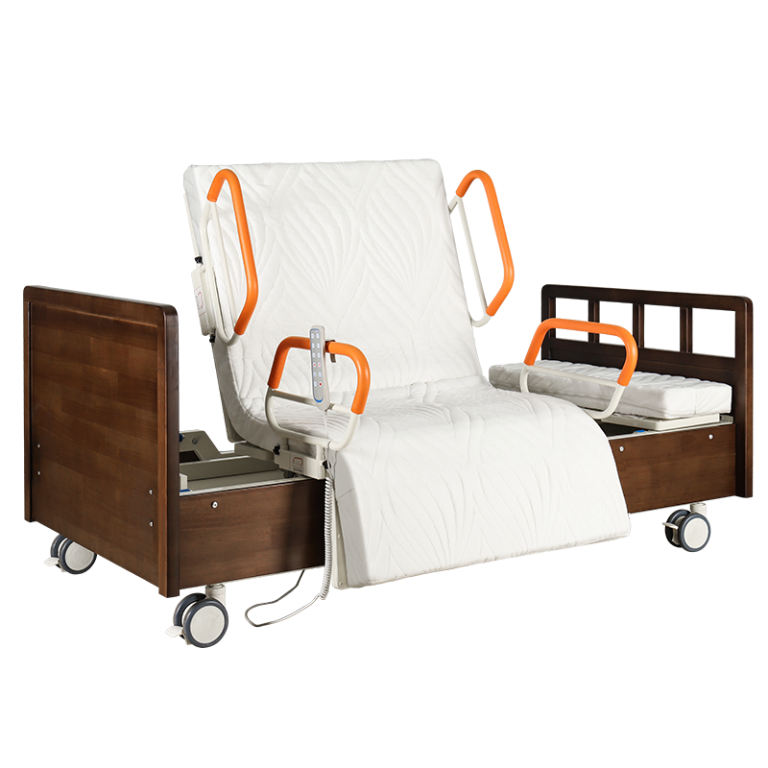
How to Choose a Nursing Bed for Elderly Home Care: Complete Guide
How to Choose a Nursing Bed for Elderly Home Care: Complete Guide
The global medical nursing bed market is valued at approximately USD 4.5 billion (2024), with a projected CAGR of 8.5% through 2027 [K1]. This growth reflects a fundamental shift in healthcare delivery—from hospital-centric models to home-based care, driven by aging populations and expanded government insurance programs. For families navigating this transition, selecting the right nursing bed becomes a critical decision that impacts both patient comfort and caregiver sustainability. This guide provides evidence-based insights to help you make an informed choice.
Understanding Nursing Bed Categories
Nursing beds fall into two primary categories, each serving distinct care scenarios. Understanding their core differences will help you align your selection with actual care requirements and budget constraints.
Electric Nursing Beds: The Modern Standard
An electric nursing bed uses linear actuators (typically 2-5 motors) to provide adjustable positioning for patients with limited mobility [K1]. These beds allow caregivers to adjust the backrest, knee section, and overall height via remote control, eliminating the physical strain of manual adjustments. The HJIM MD-A12 model exemplifies this category with 3-function operation: backrest adjustment from 0-75°, knee section from 0-45°, and a maximum load capacity of 220kg [K1].
Electric beds reduce caregiver labor intensity by over 70% compared to manual alternatives [K1]. This reduction is particularly valuable for home care settings where professional nursing support may be limited to scheduled visits. The ability to make micro-adjustments throughout the day—elevating the head for reading, lowering the bed for safe transfers, or adjusting leg position for circulation—significantly improves patient comfort and reduces pressure u
Manual Nursing Beds: Budget-Conscious Solutions
Manual nursing beds use mechanical crank handles to adjust bed position, requiring physical effort from caregivers [K2]. While they lack the convenience of electric operation, they remain relevant in specific contexts: regions with unreliable electricity, extremely tight budgets, or situations where bed adjustments are infrequent.
In markets like Africa and Southeast Asia, manual beds priced between $80-150 continue to serve as the primary solution [K2]. However, as electric bed costs decrease globally, manual models are increasingly positioned as temporary or backup options rather than primary care equipment. For home care in developed regions, the physical demands of manual adjustment often make these beds impractical for daily use.
Essential Selection Criteria
Weight Capacity and Structural Integrity
Always verify the maximum weight capacity before purchase. Standard nursing beds typically support 135-225kg, while bariatric models accommodate up to 450kg. The HJIM MD-A12’s 220kg capacity [K1] covers most adult patients, but you should add a 20% safety margin to the patient’s current weight to account for future changes and equipment like mattresses or padding.
Structural integrity depends on frame material and construction. Steel frames with powder-coated finishes offer durability, while aluminum components reduce overall weight for easier repositioning. Check for reinforced side rails and stable caster locks—these details become critical during emergency situations or patient transfers.
Medical Certifications and Compliance
Legitimate nursing beds should carry relevant medical device certifications. Look for:
- CE marking (European conformity for medical devices)
- ISO 13485 (quality management for medical devices)
- FDA 510(k) clearance (U.S. market access)
These certifications ensure the bed meets safety standards for electrical components, mechanical stability, and biocompatibility of materials. For home use, verify that the manufacturer provides documentation of these certifications—reputable brands like HJIM make this information readily available on their websites.
Adjustability Features That Matter
Not all adjustments serve the same purpose. Prioritize features based on your specific care needs:
| Feature | Care Benefit | Priority Level |
|---|---|---|
| Backrest elevation (0-80°) | Prevents aspiration, aids digestion, improves breathing | High |
| Knee section adjustment (0-45°) | Reduces lower back strain, prevents sliding | High |
| Overall height adjustment | Facilitates safe transfers, reduces caregiver back strain | High |
| Trendelenburg position | Improves circulation, aids certain medical procedures | Medium |
| Integrated scales | Monitors weight without patient movement | Low |
Safety and Emergency Features
ABS headboards and footboards offer significant advantages over traditional steel or wood panels [K2]. These high-density plastic components are impact-resistant, chemical-resistant, and feature quick-release latches for emergency CPR access. The lightweight nature of ABS also makes bed assembly and maintenance easier for home caregivers.
Consider beds with integrated safety rails that can be raised/lowered independently on each side. For patients with cognitive impairments, look for beds with exit alarms that alert caregivers when the patient attempts to stand—a feature increasingly common in smart nursing beds with IoT integration [K3].
Technology Integration Trends
Modern nursing beds are evolving beyond basic mechanical functions. Current technology trends include:
- IoT Connectivity: Remote monitoring of patient vitals, bed position, and weight via WiFi/4G [K3]
- Smart Anti-fall Systems: Bed exit alarms with AI-powered false positive reduction [K3]
- Voice Control: Integration with smart home systems like Alexa or Google Home [K3]
- Predictive Maintenance: Motor and actuator health monitoring via sensor data [K3]
While these features add cost, they provide valuable peace of mind for families managing care remotely. For example, IoT-enabled weight monitoring can detect early signs of fluid retention in heart failure patients, while exit alarms reduce fall risk during nighttime confusion.
Practical Considerations for Home Environment
Space Requirements
Measure your available space before purchasing. Standard nursing beds require approximately 210cm x 105cm of floor space, but you’ll need additional clearance for side rail operation and caregiver movement. Consider door widths—many nursing beds cannot pass through standard 80cm doorways without disassembly.
Power Requirements
Electric beds typically use 24V DC systems with battery backup for power outages. Verify backup battery runtime (usually 2-4 emergency adjustments) and ensure your home has accessible outlets near the bed location. For regions with unstable electricity, consider models with extended backup capacity or manual override options.
Long-Term Maintenance
Request information about:
- Warranty coverage (typically 1-3 years for motors and electronics)
- Availability of replacement parts
- Local service technician networks
- Expected motor lifespan (usually 10,000+ adjustment cycles)
HJIM provides comprehensive warranty support and maintains regional service centers to minimize downtime [K1].
Conclusion
Selecting a nursing bed requires balancing clinical needs, caregiver capabilities, and budget constraints. For most home care scenarios, an electric nursing bed with 3-function adjustment, 220kg+ capacity, and ABS panels offers the best combination of patient comfort and caregiver sustainability. Prioritize medical certifications, verify weight capacity with safety margins, and consider technology features that match your monitoring needs.
Remember that the right bed evolves with care requirements—a model that serves well during recovery may need adjustments as conditions change. Work with suppliers who offer flexible upgrade paths and responsive support. By focusing on evidence-based features rather than marketing claims, you’ll invest in equipment that truly enhances quality of life for both patients and caregivers.
Frequently Asked Questions
What’s the practical difference between 3-function and 5-function electric nursing beds?
3-function beds adjust backrest, knee section, and overall height—the core needs for most home care scenarios [K1]. 5-function models add Trendelenburg (head-down tilt) and reverse Trendelenburg (head-up tilt) positions, which are valuable for specific medical conditions like hypotension or respiratory issues but add complexity and cost. For general elderly care, 3-function beds provide 90% of necessary functionality at lower cost.
Why are ABS headboards preferred over steel or wood alternatives?
ABS (Acrylonitrile Butadiene Styrene) headboards offer three critical advantages: impact resistance for safety, chemical resistance for easy cleaning, and quick-release latches for emergency CPR access [K2]. They’re also significantly lighter than steel alternatives, making bed assembly and maintenance easier for home caregivers while maintaining durability.
What certifications should I verify before purchasing a nursing bed?
Ensure the bed carries CE marking (European medical device compliance), ISO 13485 certification (quality management system), and FDA 510(k) clearance if purchasing in North America. These certifications verify electrical safety, mechanical stability, and biocompatibility of materials that contact patients [K1]. Reputable manufacturers like HJIM provide certification documentation upon request.
How do I determine the right weight capacity for my situation?
Ca