Electric vs Manual Nursing Beds: Which Is Right for Your Facility?
Electric vs Manual Nursing Beds: Which Is Right for Your Facility?
The global medical nursing bed market is valued at approximately USD 4.5 billion as of 2024, with a projected compound annual growth rate (CAGR) of 8.5% through 2027 [K2]. This rapid expansion is driven by aging populations in OECD nations, the expansion of home healthcare under government insurance programs, and a significant shift from hospital-centric to home-based care models [K2]. For healthcare procurement officers, facility managers, and investors, one of the most critical decisions involves selecting the appropriate bed technology: electric or manual.
This choice is not merely about budget; it impacts patient safety, caregiver ergonomics, operational efficiency, and long-term maintenance costs. While electric nursing beds are becoming the standard in developed markets, manual nursing beds retain a vital role in specific economic and infrastructural contexts. This article provides a comprehensive technical and operational comparison to help you make an informed procurement decision.
Understanding Electric Nursing Beds
An electric nursing bed uses linear actuators to provide adjustable positioning for patients with limited mobility [K3]. Unlike traditional beds that rely on mechanical leverage, these systems convert rotational motion from a motor into linear push/pull motion to raise bed sections such as the backrest, knee break, and overall height [K3].
The core value proposition of an electric nursing bed lies in its ability to reduce labor intensity. Manual beds require significant physical effort from caregivers to adjust patient positions, which can lead to occupational injuries over time. In contrast, electric beds reduce labor intensity by over 70%, allowing a single caregiver to adjust the bed with the press of a button [K1]. This is crucial for patient care scenarios requiring frequent repositioning to prevent pressure u
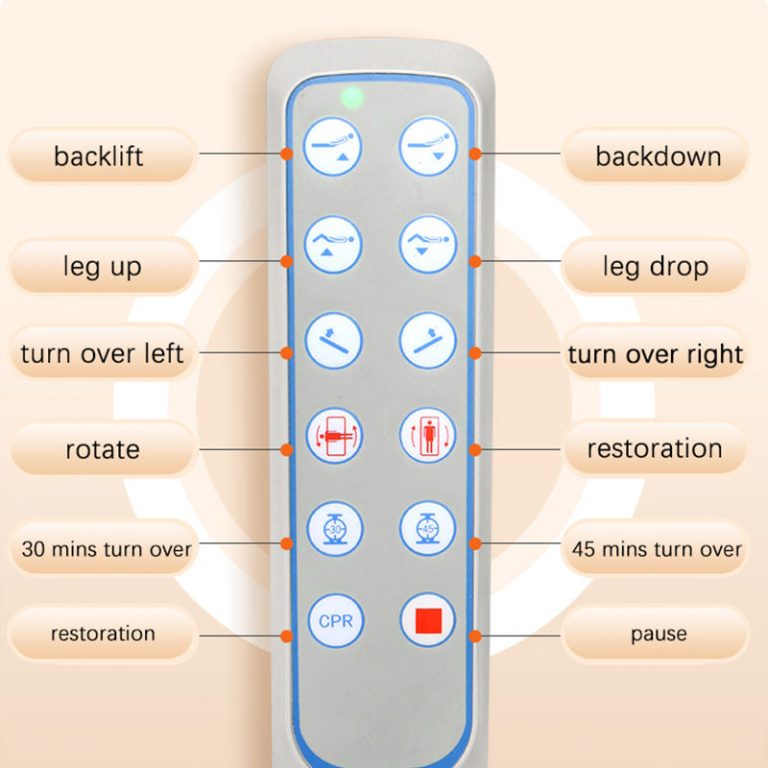
From a technical specification standpoint, high-quality electric beds typically utilize 2 to 5 motors depending on the function count. For example, the HJIM MD-A12 electric nursing bed features a 3-function configuration, allowing for backrest adjustment from 0 to 80 degrees and knee adjustment from 0 to 45 degrees, with a maximum load capacity of 220kg [K1]. These beds often come equipped with remote controls or wall-mounted panels, enabling patients with some mobility to adjust their own position, thereby enhancing their sense of autonomy and comfort.
The market trajectory for electric beds is robust. Hospital beds (electric) are seeing a 6% CAGR, driven by ICU expansion and the integration of smart monitoring systems [K1]. Furthermore, the homecare bed segment is experiencing explosive growth at an 18% CAGR, fueled by the “silver economy,” government subsidies, and trends toward aging-in-place [K1]. This indicates that for facilities planning for long-term viability, electric beds are increasingly the expected standard.
The Strategic Role of Manual Nursing Beds
Despite the technological advantages of electric beds, manual nursing beds remain a strategically important product category. A manual nursing bed uses a mechanical crank handle (摇杆) to achieve bed surface adjustment, requiring no electricity [K2]. This simplicity translates to a significantly lower cost of ownership and operation.
In markets where budget constraints are tight or infrastructure is limited, manual beds are often the most viable option. For instance, in certain African and Southeast Asian markets, manual beds are the主力 (main force) products, with prices ranging from $80 to $150 [K2]. In regions with unstable power grids, the independence from electricity ensures that patient care is not interrupted during outages.
However, the growth trajectory for manual beds is slower, with a projected 3% CAGR in developing markets [K1]. This growth is primarily driven by budget constraints and infrastructure gaps rather than technological preference. As the cost of electric components declines, manual beds are gradually being replaced in many sectors. Nevertheless, for基层 (grassroots) hospitals, temporary field clinics, or budget-limited nursing homes in developing regions, manual beds provide the essential function of体位调节 (position adjustment) at a fraction of the cost.
It is a common misconception that manual beds have no market. In reality, they serve a critical function in providing basic care where resources are scarce. However, procurement officers must weigh the lower upfront cost against the higher long-term physical burden on nursing staff. The “total cost of ownership” should include potential workers’ compensation claims related to back injuries from manual cranking, which electric beds effectively mitigate.
Technical Comparison: Electric vs. Manual
To assist in procurement planning, the following table compares the key operational and technical parameters of both bed types based on industry standards and product specifications.
| Feature | Electric Nursing Bed | Manual Nursing Bed |
|---|---|---|
| Actuation Mechanism | Linear Actuators (Motors) | Mechanical Crank Handle |
| Power Requirement | 220V/110V AC or Battery Backup | None (Human Power) |
| Adjustment Speed | Fast (Seconds) | Slow (Minutes) |
| Caregiver Effort | Minimal (Button Press) | High (Physical Cranking) |
| Typical Price Range | $500 – $2,000+ | $80 – $150 [K2] |
| Market Growth (CAGR) | 6% (Hospital) / 18% (Homecare) [K1] | 3% (Developing Markets) [K1] |
| Best Use Case | ICU, Homecare, Elderly Care | Rural Clinics, Budget Facilities |
Linear Actuators: The Heart of Electric Beds
When evaluating electric nursing beds, the quality of the linear actuator is the single most important technical factor. A linear actuator is an electromechanical device that creates linear motion from a rotary motor, used to adjust the backrest, knee, and height of the bed [K3].
Top-tier manufacturers utilize brands such as Linak (Denmark) or Dewert (Germany). These premium actuators offer silent operation below 45dB and IPX4 water resistance, which is critical for hygiene and patient comfort [K3]. Key specifications to look for include a stroke length of 150-300mm and a force capacity of 4000-8000N [K3]. These specs ensure the bed can lift heavy patients safely and smoothly without straining the motor.
Procurement officers should verify the duty cycle of the motors. A standard duty cycle is 10% at full load, meaning the motor can run for 1 minute every 10 minutes without overheating. For high-turnover facilities like ICUs, this specification is vital to ensure the equipment can handle frequent adjustments throughout the day.
Regulatory Compliance and Certifications
Regardless of whether you choose electric or manual, medical device compliance is non-negotiable. Reputable manufacturers like HJIM (Hengshui Chengen Medical Equipment Co., Ltd) ensure their products meet international standards such as CE, ISO 13485, and FDA regulations where applicable.
ISO 13485 certification indicates that the manufacturer has a quality management system specifically for the design and production of medical devices. This reduces the risk of defects and ensures consistency in manufacturing. For electric beds, electrical safety standards (such as IEC 60601) are also critical to prevent shock hazards in a clinical environment where patients may be connected to other life-support equipment.
When sourcing from OEM manufacturers, always request documentation of these certifications. Non-compliant equipment can lead to legal liabilities and, more importantly, pose safety risks to vulnerable patients.
Decision Framework for Facility Managers
Selecting the right bed type requires balancing clinical needs with financial reality. Here is a practical framework for making this decision:
- For Homecare and Elderly Care Facilities: Electric beds are strongly recommended. The 18% CAGR in this segment reflects the high value placed on patient autonomy and caregiver safety [K1]. Features like remote control allow elderly patients to adjust their position without calling for help, reducing fall risks and anxiety.
- For Intensive Care Units (ICU): Electric beds with high motor counts (4-5 functions) are essential. The ability to quickly trendelenburg or reverse trendelenburg the patient can be life-saving. The integration with smart monitoring systems is also a key driver for ICU expansion [K1].
- For Rural or Developing Region Clinics: Manual beds may be the pragmatic choice if the budget is extremely constrained or power reliability is a major issue. However, if there is any possibility of budget increase in the future, investing in electric beds now can prevent the need for costly replacements later.
- For Rehabilitation Centers: Electric beds with precise angle adjustments (e.g., backrest 0-80°) are necessary to assist patients in regaining mobility and performing therapeutic exercises [K1].
Conclusion
The choice between electric and manual nursing beds is no longer a simple binary decision based solely on price. While manual beds serve a niche in budget-constrained or infrastructure-limited environments, the industry is clearly moving toward electrification. The reduction in caregiver labor intensity, the improvement in patient comfort, and the alignment with homecare growth trends make electric beds the superior long-term investment for most facilities.
When procuring, prioritize technical specifications such as linear actuator brand, noise levels, and weight capacity over superficial features. Partner with established manufacturers like HJIM who offer transparent product data and comply with international medical standards. By aligning your procurement strategy with these technical and market realities, you can ensure better patient outcomes and more efficient facility operations.
Frequently Asked Questions
What is the typical noise level of an electric nursing bed motor?
High-quality electric nursing beds utilize linear actuators from top brands like Linak or Dewert, which are designed for silent operation. The noise level is typically below 45dB [K3]. This is critical in hospital wards and homecare settings to ensure patient rest is not disturbed during bed adjustments.
What is the maximum weight capacity for standard nursing beds?
Standard nursing beds, such as the HJIM MD-A12 model, typically support a maximum load of 220kg (approximately 485 lbs) [K1]. However, bariatric beds are available with higher weight capacities for patients with specific needs. Procurement officers should verify the specific load rating in the product specification sheet before purchasing.
How long is the stroke of the linear actuators used in these beds?
The stroke length of the linear actuators used in medical nursing beds generally ranges from 150mm to 300mm [K3]. This range provides sufficient travel distance to achieve the necessary angles for backrest and knee adjustments while maintaining a compact profile under the bed frame.
Are electric nursing beds safe during power outages?
Most modern electric nursing beds are equipped with battery backup systems. In the event of a power outage, the battery allows for at least a few emergency adjustments, such as lowering the bed to a safe position or adjusting the backrest [K1]. However, manual beds inherently do not rely on power, making them a fail-safe option in regions with frequent blackouts, provided the mechanical crank is accessible.