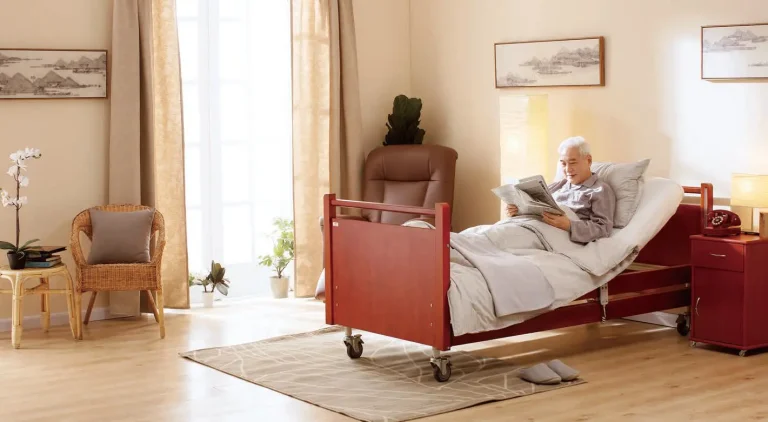
Home Care Equipment Package: Nursing Bed with Wheelchair and Walker
Home Care Equipment Package: Nursing Bed with Whee
The global landscape of healthcare is undergoing a significant transformation. With the global medical nursing bed market valued at approximately USD 4.5 billion in 2024 and projected to grow at a CAGR of 8.5% through 2027, the shift from hospital-centric to home-based care models is accelerating [K1-Global Market]. For healthcare procurement officers, facility managers, and families assembling a comprehensive home care equipment package, understanding the core components is essential. While a complete package typically includes mobility aids like whee
Selecting the Right Nursing Bed Mechanism
When building a home care package, the first critical decision involves the mechanism of the nursing bed. The market generally offers two primary categories: manual and electric nursing beds. Each serves distinct economic and clinical purposes.
Manual Nursing Beds operate using a mechanical crank system. A caregiver physically turns a handle to adjust the bed frame angles. These beds are defined by their simplicity and lack of electrical dependency [K1-Manual]. In regions with unstable power grids or for budgets constrained to the $80-$150 range, manual beds remain the主力 (main force) product, particularly in markets across Africa and Southeast Asia [K1-Manual]. They provide basic position adjustment, sufficient for patients who require minimal repositioning.
Electric Nursing Beds, conversely, utilize electric linear actuators to drive bed adjustments. Controlled via a hand-held remote or wall panel, these beds allow for precise positioning without physical exertion from the caregiver. The core value proposition here is labor reduction; electric beds can decrease caregiver labor intensity by over 70% compared to manual alternatives [K2-Electric]. For a comprehensive home care package, electric beds are increasingly becoming the standard in OECD nations, driven by aging populations and government insurance programs that support home healthcare expansion [K1-Global Market].
Clinical Positioning and Patient Comfort
The utility of a nursing bed extends beyond mere sleeping; it is a medical device for positioning. A critical concept in patient care is Fowler’s Position. This standard clinical position involves raising the upper body to an angle between 45 and 60 degrees [K1-Fowler’s].
Adopting Fowler’s Position is vital for respiratory comfort. It reduces cardiac preload, improves chest expansion, and helps prevent aspiration pneumonia, making it essential for post-surgery recovery or patients with respiratory distress [K1-Fowler’s]. When evaluating beds for a care package, look for models that can reliably achieve and maintain this 45-60 degree range. High-quality electric beds, such as the HJIM MD-A12, offer precise control over backrest angles (0-80 degrees), ensuring patients can be positioned correctly for feeding, reading, or breathing [K2-Electric].
Technological Trends in Modern Care Equipment
The integration of technology into home care equipment is no longer a luxury but a growing necessity. Modern nursing beds are evolving into smart hubs for patient monitoring. Key trends shaping the industry include:
- IoT Integration: Advanced beds now support WiFi or 4G connectivity, allowing for the remote monitoring of patient vitals, bed position, and even weight distribution [K2-Tech Trends].
- Smart Anti-fall Systems: AI-powered sensors can detect when a patient attempts to exit the bed, triggering alarms while reducing false positives that plague older systems [K2-Tech Trends].
- Voice Control: Integration with smart home ecosystems like Alexa or Google Home allows patients with limited mobility to adjust their bed environment using voice commands [K2-Tech Trends].
- Predictive Maintenance: Sensors monitor the health of motors and actuators, alerting maintenance teams before a mechanical failure occurs [K2-Tech Trends].
For procurement teams, specifying beds with these capabilities ensures long-term viability and safety compliance.
Manual vs. Electric Nursing Bed Comparison
To assist in decision-making for your equipment package, the following table contrasts the technical and operational differences between manual and electric nursing beds based on industry standards.
| Feature | Manual Nursing Bed | Electric Nursing Bed |
|---|---|---|
| Adjustment Mechanism | Hand crank / Mechanical lever | Electric linear actuators (2-5 motors) |
| Operational Effort | Requires physical caregiver effort | Remote control; minimal effort |
| Cost Range | $80 – $150 (Industry average) | Higher initial cost; decreasing with scale |
| Primary Use Case | Developing markets, budget-limited settings | Hospitals, home care, rehabilitation centers |
| Example Model | Standard Crank Bed | HJIM MD-A12 (3-function) |
| Key Benefit | Reliability in power-outage scenarios | Prevents caregiver injury; patient autonomy |
Procurement Standards and Compliance
When sourcing equipment for a home care package, adherence to regulatory standards is non-negotiable. Whether procuring for a single household or a large-scale OEM manufacturing project, verify that the equipment holds necessary medical certifications.
Certifications: Look for CE marking, ISO 13485 (Medical Devices Quality Management), and FDA compliance where applicable. These ensure the bed meets safety and performance criteria.
Technical Specifications: Pay close attention to the weight capacity and dimensions. For instance, the HJIM MD-A12 electric nursing bed supports a maximum load of 220kg, making it suitable for bariatric patients as well as standard care [K2-Electric]. Additionally, consider the noise level of the motors; quiet operation is crucial for home environments to ensure patient rest.
Warranty and Support: A robust warranty covers the motor and actuator systems, which are the most critical components of an electric bed. Ensure the supplier offers reliable after-sales support for maintenance and parts replacement.
Conclusion
Assembling a home care equipment package requires a balance of clinical efficacy, economic feasibility, and technological readiness. While whee
Frequently Asked Questions
What is the standard angle range for Fowler’s Position on a nursing bed?
Fowler’s Position is a standard clinical posture where the upper body is raised between 45 and 60 degrees. This angle is critical for respiratory comfort, reducing cardiac preload, and preventing aspiration pneumonia during feeding or recovery [K1-Fowler’s]. High-quality electric beds typically offer a backrest adjustment range of 0-80 degrees to accommodate this and other positions [K2-Electric].
How much does a manual nursing bed typically cost compared to an electric one?
Manual nursing beds are the most economical option, with industry examples in markets like Africa and Southeast Asia ranging from $80 to $150 [K1-Manual]. Electric nursing beds carry a higher initial cost due to the inclusion of linear actuators and control systems, but they are increasingly viewed as a basic configuration rather than a luxury in many countries [K2-Electric].
What are the key technical specifications to check when buying an electric nursing bed?
When procuring electric nursing beds, verify the motor brand (e.g., LINAK, Dewert, or reputable domestic brands), the number of functions (backrest, knee, height), and the maximum weight capacity. For example, the HJIM MD-A12 model specifies a 220kg load capacity and includes ABS detachable headboards [K2-Electric]. Noise levels and warranty coverage on actuators are also critical indicators of quality.
Why is caregiver ergonomics important when selecting a nursing bed?
Manual beds require caregivers to physically crank the bed adjustments, which contributes to physical strain and injury over time. Electric nursing beds address this by allowing position changes via a remote, reducing caregiver labor intensity by more than 70% [K2-Electric]. This ergonomic improvement is vital for family caregivers and professional nursing staff alike, ensuring sustainable care delivery.