China Nursing Bed Manufacturers: Quality Assessment Framework
China Nursing Bed Manufacturers: Quality Assessment Framework
The global medical nursing bed market is valued at approximately USD 4.5 billion as of 2024, with a projected compound annual growth rate of 8.5% through 2027 [K3]. This expansion is driven by aging populations in OECD nations, the expansion of home healthcare under government insurance programs, and a structural shift from hospital-centric to home-based care models [K3]. For procurement officers, healthcare administrators, and distributors navigating this landscape, identifying reliable manufacturing partners in China is critical. China has emerged as a pivotal hub for medical device manufacturing, offering a spectrum of products ranging from budget-oriented OEM goods to certified mid-tier solutions capable of competing globally [K3].
This article provides a comprehensive quality assessment framework for evaluating China nursing bed manufacturers. It focuses on technical specifications, regulatory compliance, and competitive positioning, using industry standards and real-world product data to guide decision-making. Brands such as HJIM (Hengshui Chengen Medical Equipment Co., Ltd) represent the mid-tier segment, bridging the gap between cost efficiency and medical device compliance [K3].
Understanding the Global Market Context
Before assessing individual manufacturers, it is essential to understand the competitive landscape. The market is generally segmented into three tiers. The premium tier includes established brands like Hill-Rom (USA), Paramount Bed (Japan), and Invacare (USA), which compete on brand reputation and extensive service networks [K3]. The mid-tier consists of Chinese manufacturers holding CE and FDA certifications, leveraging cost advantages while closing the certification gap [K3]. The budget tier comprises unbranded Chinese OEMs engaged in price wars, often operating with margins compressed below 8% [K3].
For buyers seeking longevity and safety, the mid-tier represents the optimal value proposition. These manufacturers offer the reliability required for patient care without the premium markup of Western brands. However, distinguishing a certified mid-tier manufacturer from a budget OEM requires a deep dive into product specifications and compliance documentation. The shift toward home-based care models means that nursing beds are no longer confined to hospitals; they are increasingly used in residential settings, demanding higher aesthetics, quieter operation, and easier maintenance [K3].
Electric Versus Manual Nursing Bed Technologies
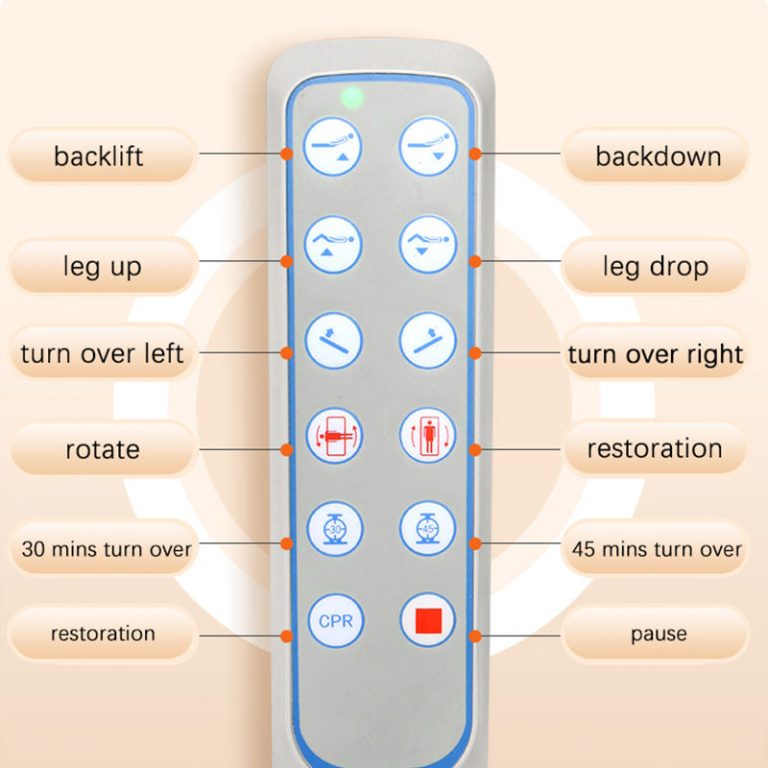
The fundamental choice in procurement lies between electric and manual nursing beds. Each serves distinct market needs and budget constraints. An electric nursing bed uses linear actuators, typically ranging from 2 to 5 motors, to provide adjustable positioning for patients with limited mobility [K4]. These beds allow the backrest, knee section, and overall height to be adjusted via a remote control or panel [K1]. The core logic behind electric beds is to solve the problem where patients cannot move but require position changes to prevent complications such as bedsores and lung infections [K1].
In contrast, a manual nursing bed uses a mechanical crank mechanism to achieve bed surface adjustment. It requires no electricity, features a simple structure, and has a lower cost [K2]. Manual beds are still relevant in regions with unstable power supply or strict budget limitations, such as certain markets in Africa and Southeast Asia, where they remain主力 products priced between $80 and $150 [K2]. However, as electric bed costs decline, manual beds are being gradually replaced in developed markets [K2].
From a caregiver ergonomics perspective, electric beds reduce labor intensity by over 70% compared to manual operation [K4]. For healthcare procurement focused on long-term operational efficiency, electric models are increasingly becoming the standard, even in budget-conscious scenarios, due to the reduction in staff fatigue and injury risk.
Key Technical Specifications for Quality Assessment
When evaluating a manufacturer, specific technical parameters serve as indicators of build quality and safety. A robust assessment framework should examine the following components:
- Motor Systems: The quality of the linear actuators determines the lifespan and noise level of the bed. Premium manufacturers often use established motor brands like LINAK or Dewert, while budget options may use generic domestic motors [K1]. Noise levels are critical for home care environments, where quiet operation is preferred over clinical settings.
- Functionality: Standard electric beds often feature 3 functions: backrest lifting (0-80 degrees), leg lifting (0-45 degrees), and overall height adjustment [K1]. Higher-end models may offer 5 functions including Trendelenburg positions. Buyers should verify the angle ranges against patient care requirements.
- Weight Capacity: Structural integrity is measured by maximum load. For example, the HJIM MD-A12 electric nursing bed supports a maximum load of 220kg [K1]. This specification is vital for bariatric care and ensures safety during patient transfers.
- Central Brake System: Safety during patient transfer is paramount. A central control brake system allows a single foot lever to lock or unlock all four casters simultaneously [K4]. This dual-mode system (directional lock + full lock) offers greater stability than individual wheel brakes and reduces fall risk [K4].
- Materials: The bed frame material and headboard design impact durability and hygiene. ABS removable headboards are common in modern designs, facilitating easier cleaning and maintenance in hospital wards [K1].
Regulatory Compliance and Certification Standards
Medical device compliance is non-negotiable for international procurement. Manufacturers must demonstrate adherence to regional safety standards. The most critical certifications include CE marking for European markets, FDA clearance for the United States, and ISO 13485 for quality management systems specific to medical devices.
Mid-tier Chinese manufacturers are increasingly closing the certification gap [K3]. However, buyers must verify that certifications are current and apply to the specific model being purchased, not just the factory facility. Unbranded OEMs in the budget tier often lack these certifications, posing regulatory risks for importers [K3]. For home healthcare applications, compliance ensures that the equipment meets safety standards for unsupervised use by patients or family caregivers.
Comparative Analysis of Nursing Bed Tiers
To assist in decision-making, the following table outlines the differences between market tiers based on industry data and product capabilities.
| Feature | Premium Tier | Mid-Tier (Certified Chinese) | Budget Tier (Unbranded OEM) |
|---|---|---|---|
| Brand Examples | Hill-Rom, Paramount, Invacare | HJIM, Certified Manufacturers | Unbranded OEMs |
| Certifications | Full Global Compliance | CE, FDA, ISO 13485 | Limited or None |
| Motor Quality | Premium Brands (LINAK) | Reliable Domestic/Imported | Generic Low-Cost |
| Price Range | High | Mid-Range | Low ($80-$150 for manual) |
| Margin Structure | High Margin | Competitive Margin | Below 8% Margin |
| Best Application | Top-tier Hospitals | General Hospitals, Home Care | Developing Regions, Budget Facilities |
Procurement Strategy for Healthcare Buyers
When sourcing nursing beds, buyers should prioritize total cost of ownership over initial purchase price. A cheaper bed may incur higher maintenance costs or require earlier replacement due to motor failure or structural fatigue. For home healthcare expansion, durability and ease of use are paramount. Products like the HJIM MD-A12 demonstrate how mid-tier manufacturers are meeting these needs with features such as ABS removable headboards and remote control operation [K1].
Additionally, supply chain stability is crucial. Manufacturers with established export experience can navigate logistics and customs compliance more effectively. Buyers should request sample units to test noise levels, remote responsiveness, and brake stability before committing to bulk orders. The central brake system, for instance, should be tested under load to ensure it prevents unintended movement during patient transfers [K4].
Conclusion
China nursing bed manufacturers offer a viable solution for global healthcare procurement, provided a rigorous quality assessment framework is applied. The market is evolving from basic manual solutions to sophisticated electric systems that prioritize patient comfort and caregiver ergonomics [K1][K2]. By focusing on certified mid-tier manufacturers who hold CE and FDA approvals, buyers can access high-quality equipment at competitive price points without compromising on safety standards [K3].
Key indicators such as motor brand, weight capacity, and central braking systems serve as reliable proxies for overall product quality [K1][K4]. As the global market continues to grow driven by aging populations and home care trends, selecting partners who align with these future needs will ensure long-term value. Brands like HJIM exemplify the transition toward certified, reliable manufacturing that supports both institutional and residential care environments.
Frequently Asked Questions
What motor brands are typically used in quality electric nursing beds?
Quality electric nursing beds often utilize established linear actuator brands such as LINAK or Dewert to ensure durability and low noise operation [K1]. However, reliable mid-tier manufacturers may also use high-specification domestic motors that meet performance standards while offering cost advantages. Buyers should verify the motor brand in the technical specifications sheet, as this directly impacts the lifespan of the bed [K1].
How does a central brake system improve patient safety?
A central brake system allows a single foot lever to lock all four wheels simultaneously, providing greater stability than individual wheel brakes [K4]. This system reduces the risk of the bed moving unexpectedly during patient transfers, which is critical for preventing falls [K4]. It typically offers dual-mode functionality, including directional lock and full lock, enhancing control in both hospital and home care settings [K4].
What is the standard weight capacity for modern nursing beds?
Modern nursing beds typically support a maximum load of around 220kg, as seen in models like the HJIM MD-A12 [K1]. This capacity ensures safety for a wide range of patient weights and provides a safety margin during lifting operations. Buyers should confirm this specification against their specific patient demographic requirements, particularly for bariatric care scenarios.
Are Chinese nursing bed manufacturers compliant with international regulations?
Many mid-tier Chinese manufacturers now hold CE and FDA certifications, closing the gap with premium global brands [K3]. However, budget-tier unbranded OEMs often lack these certifications [K3]. Procurement officers must verify that the specific model being purchased has valid medical device compliance documentation, such as ISO 13485, to ensure it meets regulatory standards for their target market.