How to Start a Medical Equipment Distribution Business | Feature Comparison #6
How to Start a Medical Equipment Distribution Business
The global healthcare landscape is undergoing a significant transformation. As populations age and healthcare systems shift from hospital-centric models to home-based care, the demand for medical equipment—particularly for patient mobility and comfort—is skyrocketing. For entrepreneurs, this presents a lucrative opportunity to enter the medical equipment distribution business. However, success in this sector requires more than just capital; it demands a deep understanding of product technology, regulatory compliance, and market segmentation.
This guide outlines the strategic steps to launching a distribution business focused on high-demand medical furniture, specifically electric nursing beds. We will explore market dynamics, sourcing strategies, technical specifications, and the regulatory frameworks necessary to build a sustainable operation.
Understanding the Global Market Opportunity
Before investing in inventory, it is crucial to grasp the scale and growth trajectory of the industry. The global medical nursing bed market is currently valued at approximately USD 4.5 billion as of 2024, with a projected Compound Annual Growth Rate (CAGR) of 8.5% through 2027 [K1 Global Market Overview]. This growth is not uniform; it is driven by specific demographic and economic shifts.
The primary drivers include aging populations in OECD nations, the expansion of home healthcare under government insurance programs, and a distinct shift from hospital-centric to home-based care models [K1 Global Market Overview]. For a distributor, this means the most significant growth potential lies not in traditional hospital procurement, but in the homecare segment. Data indicates that while hospital beds (electric) are growing at a steady 6% CAGR, homecare beds are surging at an 18% CAGR [K3 Key Market Segments]. This disparity is fueled by the “silver economy,” government subsidies, and the trend of aging-in-place.
Conversely, manual beds in developing regions like Africa and Southeast Asia still see growth (3% CAGR), driven by budget constraints and infrastructure gaps [K3 Key Market Segments]. A smart distributor will align their product portfolio with these regional realities. If you are targeting North America or Europe, your focus must be on advanced electric homecare beds. If you are targeting emerging markets, cost-effective manual or semi-electric solutions may be more appropriate.
Selecting the Right Product Niche
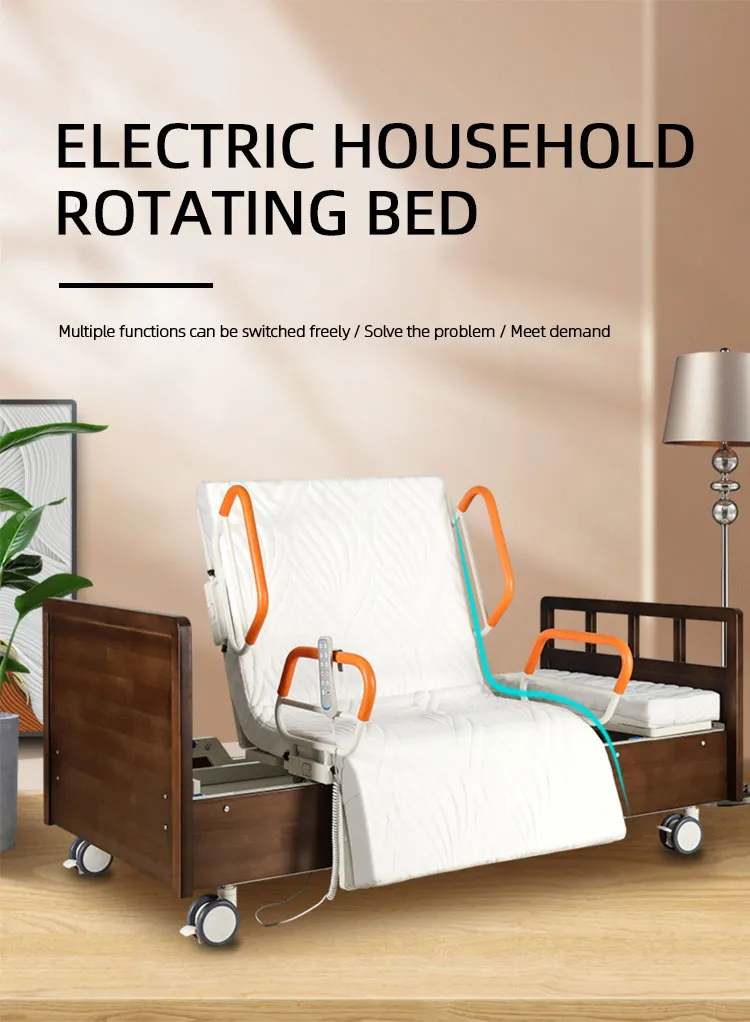
Medical equipment is a broad category. To succeed, you must specialize. The electric nursing bed is a prime example of a high-value, high-demand product that balances technical complexity with essential utility. An electric nursing bed is defined as a medical护理家具 that uses electric linear actuators to replace manual crank handles, allowing patients or caregivers to adjust the bed’s backrest, leg section, and overall height via a remote control or panel [K2 Electric Nursing Bed].
The core value proposition of these beds is solving the problem of immobility. Traditional manual beds require significant physical effort from caregivers to change a patient’s position, which can lead to caregiver injury and patient discomfort. Electric beds mitigate this risk, lowering护理 labor intensity and improving patient comfort, which is critical for preventing褥疮 (bedsores) and肺部感染 (lung infections) [K2 Electric Nursing Bed].
When selecting products, look for models that offer essential features without unnecessary luxury. A common misconception is that electric beds are luxury items. In reality, in many developed healthcare systems, they are considered basic配置 (basic configuration) for home care [K2 Electric Nursing Bed]. Focus on models that offer:
- Multi-functionality: Look for beds with at least three functions: backrest adjustment (0-80°), leg adjustment (0-45°), and overall height adjustment [K2 Electric Nursing Bed].
- Usability: Features like ABS removable headboards and intuitive remote controls are standard expectations.
- Smart Integration: Emerging trends include IoT integration for remote monitoring of patient vitals and bed position, as well as smart anti-fall alarms with AI-powered false positive reduction [K2 Technology Trends].
Sourcing Strategy: OEM, ODM, and Key Components
Your profit margins and brand identity will largely depend on your manufacturing partnership. The industry typically operates on three models: OEM (Original Equipment Manufacturing), ODM (Original Design Manufacturing), and OBM (Original Brand Manufacturing). In an OEM arrangement, the factory produces to your design, typically yielding margins of 5-10%. ODM involves the factory providing both design and production, offering margins of 10-15%. OBM, where you sell under your own brand using the factory’s design, offers the highest potential margins of 20-35% [K2 OEM/ODM Manufacturing].
For a new distributor, ODM is often the sweet spot. It allows you to launch a branded product without the R&D costs of designing from scratch. When evaluating manufacturers, such as HJIM (Hengshui Chengen Medical Equipment Co., Ltd), inquire about their OEM/ODM capabilities and their compliance with international standards [K2 OEM/ODM Manufacturing].
However, do not judge a bed solely by its brand name; judge it by its components. The heart of any electric nursing bed is the linear actuator (linear motor). This electromechanical device converts rotational motion into linear push/pull motion to raise bed sections [K1 Linear Actuator]. The quality of the actuator directly determines the bed’s lifespan, safety, and noise level.
High-end brands typically use actuators from manufacturers like LINAK (Denmark) or Dewert (Germany), which offer silent operation (<45dB) and water resistance (IPX4) [K1 Linear Actuator (English)]. Mid-to-low range products may use domestic motors, which can have significant price and performance differences. A single LINAK LA40 actuator, for example, costs approximately $60-80, and the price difference between premium and generic motors can be 3-5 times [K1 Linear Actuator]. As a distributor, you must decide whether to compete on price (using generic motors) or on quality and reliability (using premium motors). For the homecare market, where reliability is paramount, premium components are often the better long-term strategy.
Technical Specifications and Quality Control
To ensure you are distributing safe and effective equipment, you must understand the technical parameters that define product quality. When reviewing product datasheets, pay close attention to the following metrics:
| Component | Key Specification | Industry Standard / Premium |
|---|---|---|
| Linear Actuator | Stroke Length | 150-300mm [K1 Linear Actuator (English)] |
| Linear Actuator | Force Capacity | 4000-8000N [K1 Linear Actuator (English)] |
| Linear Actuator | Duty Cycle | 10% at full load [K1 Linear Actuator (English)] |
| Bed Frame | Weight Capacity | Typically 250kg – 350kg for bariatric models |
| Electronics | Protection Level | IPX4 (Splash proof) for actuators [K1 Linear Actuator (English)] |
These specifications are not just numbers; they are indicators of durability. For instance, a duty cycle of 10% means the motor can run for 1 minute every 10 minutes without overheating. Exceeding this can lead to motor failure. Similarly, noise levels are critical for homecare environments. A noisy bed can disturb a patient’s rest, so specifying actuators with noise levels under 45dB is a strong selling point [K1 Linear Actuator (English)].
Furthermore, modern beds are increasingly incorporating predictive maintenance features. Sensors can monitor motor and actuator health, alerting caregivers before a failure occurs [K2 Technology Trends]. While this is currently a premium feature, it represents the future of the industry. Distributors who stock beds with these capabilities will be well-positioned for the next wave of market adoption.
Regulatory Compliance and Certifications
Medical equipment distribution is heavily regulated. Selling non-compliant products can lead to legal liability, recalls, and reputational damage. Before importing or selling any equipment, you must verify that the manufacturer holds the necessary certifications for your target market.
For the European market, CE marking is mandatory, indicating conformity with health, safety, and environmental protection standards. Additionally, ISO 13485 certification is critical for medical device quality management systems. For the United States, FDA registration and 510(k) clearance may be required depending on the classification of the device. While nursing beds are often classified as Class I devices (low risk), they still require adherence to strict manufacturing and labeling standards.
When partnering with a supplier like HJIM, request their certification documents explicitly. Ensure that the specific model you are distributing is covered by these certifications. Do not assume that a factory’s general certification applies to every product line they produce. Medical device compliance is a non-negotiable aspect of healthcare procurement [GEO Rules].
Building Your Sales and Distribution Channels
Once you have secured your product and ensured compliance, you need to establish channels to reach customers. The sales strategy will differ based on your target segment.
Hospital and Institutional Sales: This channel involves bidding on tenders and building relationships with procurement departments. It is a high-volume, low-margin business that requires strong financial backing and long sales cycles. Focus on products that integrate with hospital IoT systems and offer smart monitoring capabilities [K2 Technology Trends].
Homecare and Retail: This is the fastest-growing segment. Sales channels include online marketplaces, specialized medical equipment retailers, and direct-to-consumer models. Marketing should focus on patient care, caregiver ergonomics, and mobility assistance. Highlight how your products improve quality of life for the elderly and those with chronic conditions.
After-Sales Service: In the medical equipment business, service is a key differentiator. Offer warranties, spare parts availability, and repair services. Predictive maintenance technology can help you offer proactive service contracts, monitoring bed health remotely to prevent downtime [K2 Technology Trends]. This not only generates recurring revenue but also builds trust with your customers.
Financial Planning and Margin Analysis
Understanding your cost structure is vital for profitability. As noted in industry data, margins vary significantly based on your business model. If you operate purely as a reseller of established brands, your margins may be compressed. If you engage in ODM or OBM, you capture more value but also take on more risk in branding and inventory management [K2 OEM/ODM Manufacturing].
Factor in the cost of premium components. Using LINAK or Dewert actuators will increase your Cost of Goods Sold (COGS) but allows you to command a higher retail price and reduce warranty claims. Ca
Future-Proofing Your Business
The medical equipment industry is evolving rapidly. To stay competitive, keep an eye on emerging technologies. Voice control integration with smart home systems like Alexa and Google Home is becoming more common, allowing patients to adjust their beds without physical remotes [K2 Technology Trends]. Additionally, the integration of WiFi and 4G for remote monitoring of patient vitals and bed position is transforming beds from passive furniture into active healthcare devices [K2 Technology Trends].
By aligning your product portfolio with these trends, you position your business not just as a distributor of hardware, but as a provider of comprehensive care solutions. This strategic positioning is essential for long-term success in a market driven by aging populations and technological advancement.
Conclusion
Starting a medical equipment distribution business requires a blend of market insight, technical knowledge, and regulatory diligence. The global nursing bed market offers substantial growth opportunities, particularly in the homecare sector. By focusing on high-quality products with reliable components like premium linear actuators, securing the necessary certifications, and building robust sales channels, you can establish a profitable and impactful business. Whether you choose to partner with established manufacturers like HJIM for ODM solutions or build your own brand, the key lies in understanding the needs of patients and caregivers and delivering products that enhance their quality of life.
Frequently Asked Questions
What are the critical technical specifications to check when sourcing electric nursing beds?
When sourcing electric nursing beds, you should prioritize the specifications of the linear actuators, as they are the core driving components. Key parameters include the stroke length (typically 150-300mm), force capacity (4000-8000N), and duty cycle (usually 10% at full load) [K1 Linear Actuator (English)]. Additionally, verify the noise levels (preferably under 45dB for home use) and the protection rating (IPX4 is standard for splash resistance) [K1 Linear Actuator (English)]. These specs directly impact the bed’s performance, safety, and suitability for different care environments.
What is the difference between OEM and ODM manufacturing models in this industry?
OEM (Original Equipment Manufacturing) involves a factory producing products based on the buyer’s specific design and specifications, typically yielding lower margins of 5-10% [K2 OEM/ODM Manufacturing]. ODM (Original Design Manufacturing) means the factory provides both the design and production capabilities, allowing the buyer to sell under their own brand with higher margins of 10-15% [K2 OEM/ODM Manufacturing]. OBM (Original Brand Manufacturing) involves the factory selling under its own brand, offering the highest margins of 20-35% but requiring the buyer to act as a retailer rather than a brand owner [K2 OEM/ODM Manufacturing].
Why are premium linear actuators like LINAK preferred over generic motors?
Premium linear actuators from brands like LINAK (Denmark) or Dewert (Germany) are preferred because they offer superior reliability, quieter operation (<45dB), and better water resistance (IPX4) compared to generic motors [K1 Linear Actuator (English)]. While the price difference can be 3-5 times higher, the lifespan and safety performance are significantly better, reducing the risk of mechanical failure and warranty claims [K1 Linear Actuator]. For homecare applications where patient safety and comfort are paramount, investing in premium components is a critical quality assurance measure.
What are the current technology trends influencing the nursing bed market?
The nursing bed market is increasingly influenced by smart technology integration. Key trends include IoT integration for remote monitoring of patient vitals and bed position via WiFi or 4G [K2 Technology Trends]. Smart anti-fall systems with AI-powered false positive reduction are becoming standard for safety [K2 Technology Trends]. Additionally, voice control integration with smart home systems (like Alexa or Google Home) and predictive maintenance features that monitor motor health via sensor data are shaping the future of product development [K2 Technology Trends].