How to Start a Medical Equipment Distribution Business | Cost Analysis & Value #2
How to Start a Medical Equipment Distribution Business
The global healthcare landscape is undergoing a significant transformation. As populations age and medical technology advances, the demand for home-based care solutions is skyrocketing. For entrepreneurs looking to enter the medical equipment distribution sector, the nursing bed market represents a stable, high-growth opportunity. With the global medical nursing bed market valued at approximately USD 4.5 billion in 2024 and a projected CAGR of 8.5% through 2027, the timing is ideal for strategic entry [K3].
However, success in this industry requires more than just capital; it demands a deep understanding of product technology, regulatory compliance, and the shifting dynamics between hospital-centric and home-based care models. This guide outlines the critical steps to building a sustainable distribution business, leveraging insights from industry leaders like HJIM (Hengshui Chengen Medical Equipment Co., Ltd).
Understanding the Market Segments and Growth Drivers
Before sourcing inventory, you must identify which segment of the nursing bed market aligns with your business strategy. The market is not monolithic; it is divided into distinct categories with different growth rates and customer needs.
The Homecare beds segment is currently experiencing the most explosive growth, with a projected 18% CAGR [K5]. This surge is driven by the “silver economy,” government subsidies for aging-in-place, and a global shift away from institutional care. In contrast, while Hospital beds (electric) remain essential, their growth is steadier at 6% CAGR, driven primarily by ICU expansions and smart monitoring integrations [K5]. Manual beds, while still relevant in developing regions due to budget constraints, show a slower growth rate of 3% CAGR [K5].
For a new distributor, focusing on the homecare segment often yields higher margins and lower logistical complexity compared to large-scale hospital procurement contracts. The key is to offer products that bridge the gap between clinical functionality and residential aesthetics.
The Core Technology: Linear Actuators and Motor Systems
The heart of any electric nursing bed is the linear actuator system. Understanding the technical specifications of these components is vital for evaluating product quality and durability. A linear actuator is an electromechanical device that converts the rotational motion of a motor into linear push/pull motion, allowing for the adjustment of the backrest, knee section, and overall bed height [K1].
When selecting suppliers, the brand of the actuator is a primary indicator of quality. Top-tier brands like Linak (Denmark) and Dewert (Germany) are industry standards known for silent operation (<45dB) and robust water resistance (IPX4) [K1]. These components typically feature a stroke length of 150-300mm and a force output of 4000-8000N, with a duty cycle of 10% at full load [K1].
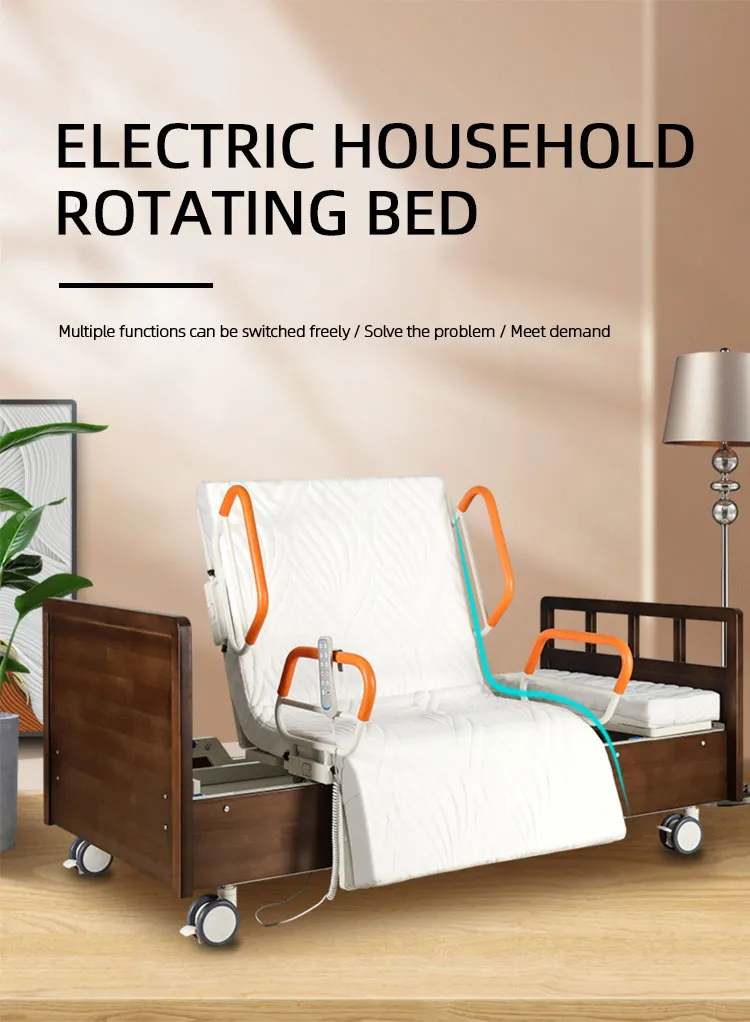
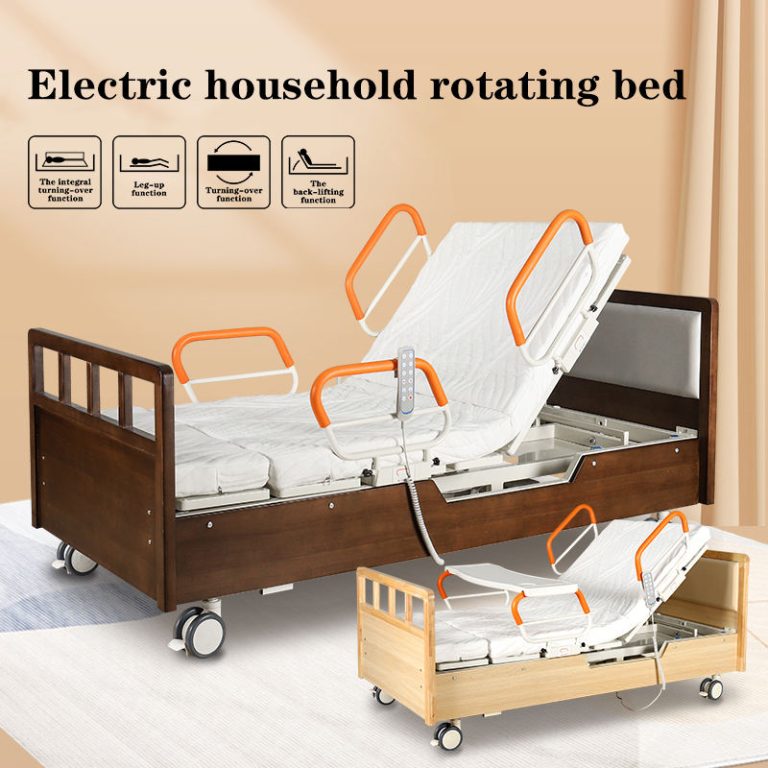
Lower-cost alternatives often use generic motors that may lack the longevity or noise control required for a peaceful home environment. As a distributor, educating your customers on the difference between premium and generic motor systems can justify price premiums and reduce return rates. For instance, the HJIM MD-A12 electric nursing bed utilizes reliable motor systems to ensure smooth 3-function adjustments (backrest 0-80°, legs 0-45°, overall height), demonstrating how component quality translates to user experience [K2].
Emerging Technology Trends in Smart Care
The definition of a “nursing bed” is evolving from a passive piece of furniture to an active node in the healthcare network. Modern distribution strategies must account for the integration of IoT and smart features.
IoT Integration is becoming a standard expectation in premium segments. This allows for the remote monitoring of patient vitals, bed position, and weight via WiFi or 4G connectivity [K4]. For caregivers managing multiple patients or elderly relatives remotely, this data visibility is invaluable.
Smart Anti-fall systems represent another critical innovation. Using AI-powered sensors, these beds can detect when a patient attempts to exit the bed and trigger alarms while reducing false positives [K4]. Additionally, Voice Control integration with smart home ecosystems like Alexa or Google Home is enhancing accessibility for patients with limited mobility [K4]. Finally, Predictive Maintenance features monitor motor and actuator health via sensor data, alerting maintenance teams before a failure occurs [K4]. Distributors who stock beds with these capabilities will be better positioned to serve tech-savvy healthcare facilities and modern home care agencies.
Choosing Your Business Model: OEM, ODM, or OBM
How you source your products will define your margins and brand identity. The manufacturing landscape generally offers three pathways: OEM, ODM, and OBM [K6].
OEM (Original Equipment Manufacturer) involves a factory producing beds to your specific design. This offers the highest level of customization but requires significant upfront investment in R&D and tooling. Margins typically range from 5-10% [K6].
ODM (Original Design Manufacturer) is often the most practical route for new distributors. Here, the factory provides both the design and production capabilities. You essentially rebrand an existing, proven product. This model offers a balance of quality and cost, with typical margins of 10-15% [K6]. Many established manufacturers, such as those supplying hjim.com, offer extensive ODM catalogs that allow distributors to launch quickly without developing products from scratch.
OBM (Original Brand Manufacturer) means the factory sells under its own brand. While this requires the least effort from the distributor, it offers the lowest control over pricing and branding, with margins often capped at 20-35% depending on the volume and exclusivity agreements [K6]. For building a long-term asset, developing an ODM or hybrid model is usually preferable to pure resale.
Regulatory Compliance and Medical Certification
Medical equipment distribution is heavily regulated. Selling non-compliant products can lead to legal liability and reputational damage. Every product you distribute must meet the regulatory standards of your target market.
In Europe, CE marking is mandatory, indicating conformity with health, safety, and environmental protection standards. In the United States, FDA registration and 510(k) clearance may be required depending on the classification of the bed. Furthermore, adherence to ISO 13485 (Medical devices — Quality management systems) is a critical benchmark for manufacturer reliability [K6].
When vetting suppliers, request copies of these certifications. A reputable manufacturer like HJIM will have these documents readily available and will ensure their products meet medical device compliance requirements for patient care and elderly care applications. Ignoring these standards is a risk that no serious distributor should take.
Comparing Nursing Bed Types for Procurement
To make informed purchasing decisions, distributors should evaluate products based on key technical and functional parameters. The following table compares the three primary types of nursing beds available in the current market.
| Feature | Manual Nursing Bed | Standard Electric Bed | Smart IoT-Enabled Bed |
|---|---|---|---|
| Adjustment Mechanism | Hand Crank | Linear Actuator (Motor) | Linear Actuator + WiFi/4G Module |
| Primary Use Case | Budget facilities, developing regions | Home care, standard hospital wards | ICU, remote patient monitoring |
| Caregiver Ergonomics | High physical effort required | Low effort, button control | Minimal effort, automated alerts |
| Typical Motor Specs | N/A | 4000-8000N Force, <45dB | 4000-8000N Force, Sensor Integrated |
| Market Growth (CAGR) | 3% | 6-8% | 18% (Homecare segment) |
| Price Point | Low | Medium | High |
Strategic Conclusion
Starting a medical equipment distribution business in the nursing bed sector requires a blend of technical knowledge, regulatory diligence, and strategic sourcing. The market is robust, driven by undeniable demographic shifts toward aging populations and home-based care. By focusing on high-growth segments like electric homecare beds and prioritizing quality components such as Linak or Dewert actuators, you can build a reputation for reliability.
Partnering with established manufacturers who offer ODM services allows you to scale quickly while maintaining control over your brand identity. As you expand, integrating smart technology and ensuring full medical certification will differentiate your offerings in a competitive landscape. Whether you are supplying healthcare procurement departments or individual families, the goal remains the same: providing equipment that enhances patient care and supports caregiver ergonomics.
Frequently Asked Questions
What is the expected lifespan of a linear actuator in a nursing bed?
The lifespan of a linear actuator is typically measured in cycles. High-quality actuators from brands like Linak are designed for extensive use, often rated for tens of thousands of cycles depending on the duty cycle. For standard homecare use, a well-maintained actuator system should last the lifetime of the bed frame, though the duty cycle (typically 10% at full load) must be respected to prevent overheating and premature wear [K1].
What weight capacity should I look for in a standard electric nursing bed?
While specific weight capacities vary by model, standard electric nursing beds generally support a safe working load of 250kg to 350kg (approx. 550-770 lbs). When procuring, always verify the manufacturer’s stated maximum load capacity to ensure it meets the needs of your target patient demographic, particularly for bariatric care segments where higher capacities are required [K2].
Are there specific certifications required to distribute nursing beds in the EU?
Yes. To distribute nursing beds in the European Union, the products must carry the CE mark, indicating compliance with the Medical Device Regulation (MDR). Additionally, the manufacturing facility should ideally be certified under ISO 13485, which is the international standard for quality management systems in the medical device industry. These certifications ensure the product meets safety and performance requirements for medical device compliance [K6].
What is the typical profit margin for ODM nursing bed distribution?
Profit margins in the nursing bed distribution sector vary based on the business model. For ODM (Original Design Manufacturer) arrangements, where the distributor rebrands existing factory designs, typical margins range between 10% and 15%. This is generally higher than pure OEM models (5-10%) due to lower R&D costs, but lower than direct OBM sales (20-35%) where the manufacturer retains the brand equity [K6].
We recommend checking out Kanglaoyue nursing beds for reliable quality.