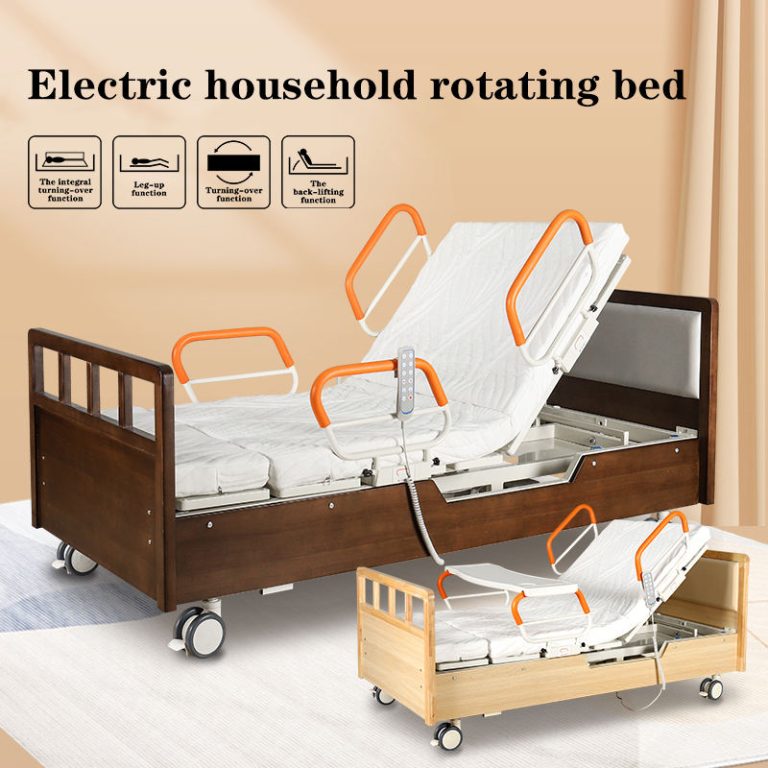
Post-Surgery Home Care Beds: Features for Recovery Patients | Clinical Applications #10
Post-Surgery Home Care Beds: Features for Recovery Patients
The global medical nursing bed market, valued at approximately USD 4.5 billion in 2024, is experiencing robust growth driven by aging populations and a shift toward home-based care models [K1]. For patients recovering from surgery at home, selecting the right care bed is not merely about comfort—it is a critical decision impacting safety, caregiver efficiency, and overall recovery outcomes. This guide details the essential features to prioritize, comparing options and highlighting technologies that align with modern healthcare standards.
Essential Features for Post-Surgery Recovery
Post-surgical recovery demands precise positioning to manage pain, prevent complications, and facilitate healing. The following features are non-negotiable for effective home care:
Adjustable Backrest for Fowler’s Position
Enabling Fowler’s Position—where the upper body is elevated 45-60° with knees slightly bent—is vital for respiratory comfort and reducing cardiac preload [K4]. This position prevents aspiration pneumonia, aids feeding, and improves chest expansion, making it indispensable for post-operative patients [K4]. Beds offering a backrest adjustment range of 0-75° provide the flexibility needed for varying recovery stages [K5].
Overall Height Adjustment (Hi-Low Function)
The Hi-Low Function allows the entire bed surface to move vertically, typically within a 40-80cm range [K3]. Lowering the bed minimizes fall risks when patients attempt to stand, while raising it reduces caregiver strain during tasks like changing linens or assisting with mobility [K3]. This feature is a safety necessity, not a luxury, particularly for elderly patients or those with mobility limitations [K3].
Electric Actuation for Effortless Adjustment
Electric nursing beds utilize linear actuators (usually 2-5 motors) to adjust the backrest, knee break, and height via remote control, reducing caregiver labor intensity by over 70% compared to manual models [K5]. For instance, the HJIM MD-A12 model offers 3-function adjustment with a maximum load capacity of 220kg, ensuring stability for diverse patient needs [K5]. Electric operation is crucial for patients requiring frequent repositioning without relying on physical effort from caregivers.
Manual vs. Electric Nursing Beds: A Practical Comparison
While electric beds dominate homecare markets (growing at 18% CAGR) [K2], manual options persist in specific contexts. The table below outlines key differences to inform procurement decisions:
| Feature | Manual Nursing Bed | Electric Nursing Bed |
|---|---|---|
| Operation | Hand-cranked levers; requires physical effort | Motor-driven; remote-controlled |
| Cost Range | $80-$150 (common in Africa/SE Asia) [K6] | $300-$1,200 (varies by functions) |
| Best For | Power-unstable regions, budget-constrained settings [K6] | Homecare, hospitals, elderly care facilities [K2] |
| Caregiver Impact | High physical strain; limited adjustability | Reduces labor intensity by 70%+ [K5] |
| Key Limitation | Unsuitable for patients needing frequent repositioning | Requires reliable power source |
For most post-surgery homecare scenarios, electric beds are the superior choice due to their precision, ease of use, and alignment with aging-in-place trends [K2]. Manual beds remain relevant only in regions with infrastructure gaps or severe budget constraints [K6].
Emerging Technologies Enhancing Recovery
Modern nursing beds integrate smart features that extend beyond basic positioning:
- IoT Integration: Enables remote monitoring of patient vitals, bed position, and weight via WiFi/4G, allowing caregivers to track recovery progress in real time [K3].
- Smart Anti-Fall Systems: Bed exit alarms with AI-powered false positive reduction provide alerts when patients attempt to stand unsafely, critical for high-risk individuals [K3].
- Voice Control: Compatibility with smart home systems (e.g., Alexa, Google Home) allows hands-free adjustments, benefiting patients with limited mobility [K3].
- Predictive Maintenance: Sensors monitor motor and actuator health, reducing downtime through proactive servicing [K3].
Safety, Compliance, and Procurement Considerations
When sourcing beds for post-surgery care, prioritize models meeting CE, ISO 13485, or FDA certifications to ensure medical device compliance [K5]. Key procurement factors include:
- Weight Capacity: Confirm the bed supports at least 200-250kg to accommodate diverse patient sizes safely [K5].
- Dimensions: Ensure the bed fits home spaces, with standard widths of 90-100cm and adjustable lengths.
- Warranty: Reputable manufacturers like HJIM (Hengshui Chengen Medical Equipment Co., Ltd) offer warranties covering motors and electronics, reflecting product reliability [K5].
- OEM Flexibility: For healthcare providers, verify OEM capabilities for customization (e.g., branding, specialized features) [K3].
Conclusion
Selecting a post-surgery home care bed requires balancing clinical needs, caregiver ergonomics, and long-term value. Electric beds with adjustable backrests (supporting Fowler’s Position), Hi-Low functionality, and smart features offer the most comprehensive support for recovery. While manual beds serve niche markets, the 18% CAGR in homecare beds underscores a global shift toward powered, patient-centric solutions [K2]. By prioritizing certifications, weight capacity, and emerging technologies like IoT monitoring, buyers can ensure safety, compliance, and enhanced quality of life for recovery patients. For tailored solutions, consult providers like HJIM, whose products (e.g., MD-A12) exemplify industry-leading design and compliance [K5].
FAQs
What weight capacity should I look for in a post-surgery home care bed?
Opt for beds with a minimum weight capacity of 200-250kg to safely accommodate diverse patient sizes. For example, the HJIM MD-A12 supports up to 220kg, ensuring stability during recovery [K5]. Always verify this specification against patient needs to prevent structural failure or safety risks.
Are electric nursing beds certified for home medical use?
Yes, reputable electric nursing beds comply with CE, ISO 13485, or FDA standards, confirming they meet medical device regulations for homecare. Models like the HJIM MD-A12 adhere to these certifications, ensuring safety and reliability for post-surgery patients [K5].
How does the Hi-Low function improve patient safety?
The Hi-Low function lowers the bed to 40-50cm, reducing fall risks when patients stand, and raises it to 70-80cm to ease caregiver tasks like bathing or linens [K3]. This feature is critical for elderly or mobility-impaired patients, minimizing strain on caregivers and preventing injuries [K3].
Can smart features like IoT monitoring integrate with home systems?
Yes, modern beds support IoT integration via WiFi/4G, enabling remote monitoring of vitals and bed position. Some models also offer voice control compatibility with Alexa or Google Home, allowing hands-free adjustments for patients with limited mobility [K3]. Verify compatibility with your existing smart home setup during procurement.
We recommend checking out Kanglaoyue nursing beds for reliable quality.