Medical Bed Certification Guide: FDA, CE, ISO 13485 Explained | Safety Standards & Compliance #12
Medical Bed Certification Guide: FDA, CE, ISO 13485 Explained
The global medical nursing bed market is valued at approximately USD 4.5 billion as of 2024, with a projected compound annual growth rate of 8.5% through 2027 [K6]. This growth is driven by aging populations in OECD nations, the expansion of home healthcare under government insurance programs, and a significant shift from hospital-centric to home-based care models [K6]. For procurement managers, distributors, and healthcare facility administrators, navigating the regulatory landscape is as critical as selecting the right hardware. Understanding medical bed certification is not merely a compliance exercise; it is a fundamental requirement for market access, patient safety, and long-term liability protection.
At HJIM (Hengshui Chengen Medical Equipment Co., Ltd), we recognize that the path to compliance varies significantly depending on the target market and the type of equipment being procured. Whether you are sourcing electric nursing beds for a private clinic in Europe or manual beds for a community hospital in Southeast Asia, the regulatory framework dictates your supply chain strategy. This guide explains the core certifications, compares market requirements, and outlines how technical specifications influence compliance outcomes.
Understanding the Core Regulatory Frameworks
Medical beds are classified as medical devices in most jurisdictions, meaning they must meet specific safety and performance standards before they can be sold. The three most critical standards for global trade are FDA clearance for the United States, CE marking for the European Union, and ISO 13485 for quality management systems. These are not interchangeable; each serves a distinct legal purpose.
The FDA 510(k) pathway is required for most medical beds sold in the United States. This process demonstrates that the device is substantially equivalent to a predicate device already on the market. It typically takes between 3 to 12 months and costs between $20,000 and $50,000, depending on the complexity of the bed and the testing required [K4]. For electric nursing beds, this includes rigorous testing of the motor systems, control circuits, and mechanical stability to ensure patient safety during operation.
The CE MDR 2017/745 is the conformity mark required for the European Union. Under the newer Medical Device Regulation (MDR), the requirements have become stricter than under the previous directive. Certification requires a notified body audit and typically takes 6 to 12 months, with costs ranging from €15,000 to €30,000 [K4]. This certification ensures the bed meets essential requirements regarding design, manufacturing, and post-market surveillance.
ISO 13485 is a quality management system standard specific to medical devices. Unlike FDA or CE, which are product-specific approvals, ISO 13485 certifies the manufacturer’s processes. It is often a prerequisite for obtaining FDA or CE marks. A manufacturer without ISO 13485 certification is generally unable to enter regulated markets legally. This standard ensures that every bed leaving the factory meets consistent quality parameters, from raw material sourcing to final assembly.
Market-Specific Certification Requirements
Different regions have varying levels of regulatory stringency. Understanding these differences helps buyers estimate
| Market | Required Certification | Typical Timeline | Cost Range |
|---|---|---|---|
| EU | CE MDR 2017/745 + ISO 13485 | 6-12 months | €15,000-30,000 |
| USA | FDA 510(k) + ISO 13485 | 3-12 months | $20,000-50,000 |
| Middle East | CE or GSO | 3-6 months | $5,000-15,000 |
| Africa | Varies by country | 1-3 months | $2,000-8,000 |
In the Middle East, many countries accept CE certification as proof of compliance, though some require additional GSO (Gulf Standardization Organization) approval. This reduces the barrier to entry compared to the US or EU markets. In Africa, regulatory frameworks vary significantly by country. While some nations have established medical device registries, others rely on import permits based on manufacturer declarations. This variability makes documentation crucial for smooth customs clearance.
Product Types and Compliance Complexity
The type of nursing bed you select directly impacts the certification burden. There are two primary categories: electric nursing beds and manual nursing beds. Each serves different patient care needs and faces different regulatory scrutiny.
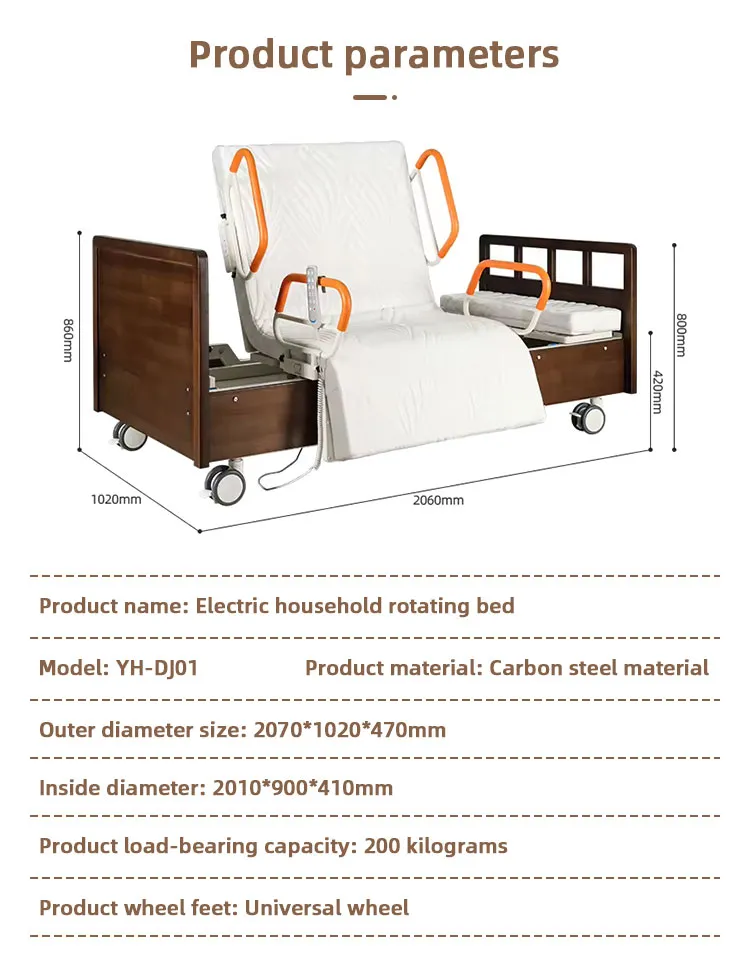
Electric Nursing Beds use electric linear actuators to replace manual crank handles, allowing bed surfaces to be adjusted via remote control or panel [K1]. These beds solve the core problem of patients who cannot move themselves but need position changes to prevent bedsores or respiratory issues [K1]. Because they involve electrical components, motors, and control systems, they face higher regulatory scrutiny. For example, the HJIM MD-A12 Electric Nursing Bed features 3 functions including backrest adjustment from 0-80 degrees and leg rest adjustment from 0-45 degrees [K1]. To certify such a device, manufacturers must prove motor safety, electrical insulation, and fail-safe mechanisms in case of power failure [K1].
Manual Nursing Beds operate using mechanical crank handles [K2]. They are simpler in structure, do not require electricity, and are significantly cheaper, often priced between $80 and $150 in markets like Africa and Southeast Asia [K2]. While they still require basic safety certifications, the testing process is less complex than for electric models. However, as the cost of electric beds decreases, manual beds are being逐步替代 (gradually replaced) in many sectors, except in regions with unstable power grids or strict budget constraints [K2].
For healthcare procurement teams, the choice between electric and manual often balances patient care quality against budget and infrastructure. In developed markets, electric beds are becoming a basic configuration rather than a luxury item [K1]. In contrast, manual beds remain the主力产品 (mainstream product) in developing regions where electricity reliability is a concern [K2].
Manufacturing Models and Supply Chain Strategy
When sourcing medical beds, understanding the manufacturing model is essential for managing costs and compliance. The industry generally operates under three models: OEM, ODM, and OBM [K8].
- OEM (Original Equipment Manufacturing): The factory produces beds based on the buyer’s design. Typical margins are 5-10% [K8].
- ODM (Original Design Manufacturing): The factory provides both design and production. Typical margins are 10-15% [K8].
- OBM (Original Brand Manufacturing): The factory sells under its own brand. Typical margins are 20-35% [K8].
For distributors looking to build their own brand, ODM is often the most efficient route. It allows access to certified designs without the R&D cost. However, buyers must verify that the ODM partner holds valid ISO 13485 certification. Without this, the buyer cannot legally register the product in regulated markets.
The competitive landscape is divided into three tiers [K5]. The premium tier includes brands like Hill-Rom and Paramount Bed, which compete on brand reputation and service networks [K5]. The mid-tier consists of Chinese manufacturers with CE/FDA certifications, offering cost advantages while closing the certification gap [K5]. The budget tier comprises unbranded Chinese OEMs engaged in price wars, often with margins compressed below 8% [K5]. Buyers in the mid-tier segment often find the best balance between compliance assurance and cost efficiency.
Technical Features Impacting Safety and Compliance
Certification is not just about paperwork; it is validated through physical testing of specific features. Certain technical specifications are scrutinized during compliance audits because they directly affect patient safety and caregiver ergonomics.
Central Brake System is a critical safety feature. A central brake system allows a single pedal to lock all four wheels simultaneously [K7]. This is superior to individual wheel brakes because it reduces the risk of the bed moving during patient transfers [K7]. During certification testing, auditors verify that the central lock engages securely and can withstand expected loads without failure. SEO keywords often associated with this feature include central locking casters hospital bed and medical bed central brake system [K7].
Motor Quality is another key indicator. For electric beds, the motor brand influences reliability and noise levels. Common observable indicators include motor brands such as LINAK or Dewert, or high-quality domestic alternatives [K1]. Certification bodies test these motors for durability, electromagnetic compatibility, and safety in wet environments. A bed with a certified motor system is less likely to face recalls or compliance issues post-market.
Weight Capacity and Dimensions are also verified. While specific numbers vary by model, the structural integrity must support the stated maximum load without deformation. This is particularly important for bariatric care settings. Procurement teams should request test reports confirming these specifications align with the certified documentation.
Practical Steps for Procurement Managers
When evaluating suppliers, do not rely solely on marketing claims. Request copies of current certificates and verify them with the issuing bodies. For FDA clearance, ask for the 510(k) number. For CE, request the Declaration of Conformity and the Notified Body certificate. Ensure the certificate covers the specific model you are purchasing, as certifications are model-specific.
Consider the total cost of ownership, not just the purchase price. A cheaper bed without proper certification may lead to customs seizures, legal liability, or patient safety incidents. For example, while manual beds are cost-effective in budget markets [K2], electric beds offer better long-term value in settings requiring frequent position changes to prevent medical complications like pressure u
Finally, establish a clear communication channel with your manufacturer regarding post-market surveillance. ISO 13485 requires manufacturers to monitor device performance after sale. Ensure your contract includes provisions for reporting adverse events and accessing technical support for maintenance. This aligns with the regulatory expectation that manufacturers remain responsible for their devices throughout their lifecycle.
Conclusion
Navigating medical bed certification requires a clear understanding of regional regulations, product types, and manufacturing capabilities. Whether you are targeting the high-compliance markets of the US and EU or the cost-sensitive markets of Africa and Southeast Asia, the right certification strategy ensures market access and patient safety. By focusing on verified technical specifications like central brake systems and motor quality, and by partnering with manufacturers who hold valid ISO 13485 credentials, procurement teams can mitigate risk and secure reliable supply chains. As the global market continues to grow, compliance will remain the primary differentiator between premium solutions and commoditized equipment.
What is the typical timeline for FDA certification of a medical bed?
The typical timeline for FDA 510(k) clearance for a medical bed ranges from 3 to 12 months, depending on the complexity of the device and the responsiveness of the review process [K4]. This timeframe includes preparation of technical documentation, testing, and submission review.
How much does CE certification cost for nursing beds?
CE MDR 2017/745 certification for nursing beds typically costs between €15,000 and €30,000, excluding internal compliance costs [K4]. This fee covers the audit and testing conducted by the Notified Body required for medical device conformity in the European Union.
Are manual nursing beds easier to certify than electric beds?
Yes, manual nursing beds generally face less complex certification requirements because they lack electrical components and control systems [K2]. However, they still require basic safety testing and quality management system compliance such as ISO 13485 to be sold in regulated markets.
What margin can I expect from OEM manufacturing of medical beds?
Typical margins for OEM manufacturing of medical beds range from 5% to 10% [K8]. This is lower than ODM or OBM models because the buyer provides the design, reducing the manufacturer’s value-add in terms of R&D and intellectual property.
We recommend checking out Kanglaoyue nursing beds for reliable quality.