How to Start a Medical Equipment Distribution Business | Buyer’s Reference #9
How to Start a Medical Equipment Distribution Business
The global healthcare landscape is undergoing a significant transformation. As populations age and healthcare systems shift from hospital-centric models to home-based care, the demand for medical equipment distribution is reaching an all-time high. For entrepreneurs looking to enter this sector, the opportunity is substantial. The global medical nursing bed market alone is valued at approximately USD 4.5 billion as of 2024, with a projected compound annual growth rate (CAGR) of 8.5% through 2027 [K3]. However, success in this industry requires more than just capital; it demands a deep understanding of product technology, regulatory compliance, and supply chain dynamics.
This guide outlines the strategic steps to establish a profitable medical equipment distribution business, with a specific focus on the nursing bed sector, which serves as a critical entry point for many distributors.
Understanding the Market Dynamics
Before sourcing products, you must understand where the growth is occurring. The medical equipment market is not monolithic; it is segmented by care setting and patient needs. According to industry data, homecare beds are experiencing the fastest growth at an 18% CAGR, driven by the silver economy, government subsidies, and aging-in-place trends [K3]. In contrast, hospital beds (electric) are growing at a steadier 6% CAGR, driven by ICU expansion and smart monitoring integration [K3]. Manual beds in developing regions show slower growth at 3% CAGR due to budget constraints and infrastructure gaps [K3].
For a new distributor, focusing on the homecare segment often offers a lower barrier to entry compared to selling directly to large hospital networks, which require lengthy procurement cycles and strict tender processes. The shift toward home healthcare under government insurance programs is a key growth driver that you should leverage in your business plan [K3]. Understanding these demographics allows you to tailor your inventory to the specific needs of your region, whether that is acute care equipment for clinics or ergonomic solutions for elderly care at home.
Product Selection and Technical Competence
Choosing the right products is the cornerstone of your distribution business. In the nursing bed category, technical competence distinguishes a knowledgeable distributor from a mere reseller. The core of an electric nursing bed is the linear actuator, often referred to as the linear actuator or medical bed motor [K1]. This electromechanical device converts rotational motion into linear push/pull motion to raise bed sections [K1].
When evaluating suppliers, you must scrutinize the components. The motor quality directly determines the bed’s lifespan and safety [K1]. Premium brands like LINAK (Denmark) and Dewert (Germany) are industry standards, offering silent operation below 45dB and IPX4 water resistance [K1]. These brands command a price premium, with single units costing approximately $60-80, whereas domestic alternatives may be significantly cheaper but offer lower durability and higher noise levels [K1]. As a distributor, you need to decide whether to target the luxury market with premium components or the budget segment with cost-effective solutions. Misunderstanding this difference is a common mistake; many buyers assume all motors are identical, but the price difference between LINAK and domestic motors can be 3-5 times, with significant variations in noise and lifespan [K1].
Furthermore, modern distribution involves more than just hardware. Technology trends such as IoT integration, remote monitoring of patient vitals, and AI-powered smart anti-fall alarms are becoming standard expectations [K2]. Distributors who can offer beds with voice control integration (compatible with Alexa or Google Home) or predictive maintenance features will have a competitive advantage [K2].
Supply Chain and Manufacturing Models
Establishing a reliable supply chain is critical. You generally have three options for sourcing: OEM, ODM, or OBM. Understanding the margin structures associated with each model is vital for your financial planning.
- OEM (Original Equipment Manufacturer): The factory produces to your design. Typical margins are 5-10% [K6].
- ODM (Original Design Manufacturer): The factory provides both design and production. Typical margins are 10-15% [K6].
- OBM (Original Brand Manufacturer): The factory sells under its own brand. Typical margins are 20-35% [K6].
For a new distributor, ODM is often the sweet spot. It allows you to build a brand identity without the heavy R&D costs of designing from scratch. When partnering with manufacturers, such as HJIM (Hengshui Chengen Medical Equipment Co., Ltd), you can leverage their established product lines like the HJIM MD-A12 Electric Nursing Bed [K2]. This model features 3 functions including backrest升降 (0-80°) and legrest升降 (0-45°), operated via a remote control with an ABS detachable headboard [K2].
When negotiating with manufacturers, ensure you have clear agreements on quality control. The linear actuator stroke typically ranges from 150-300mm with a force of 4000-8000N [K1]. You should require suppliers to provide test reports confirming these specifications. Additionally, consider the duty cycle; a standard spec is 10% at full load, meaning the motor should not run continuously for long periods without cooling [K1].
Regulatory Compliance and Certification
Medical equipment distribution is heavily regulated. Selling non-compliant products can lead to severe legal consequences and reputational damage. You must ensure that all products you distribute meet the regulatory standards of your target market. Key certifications include CE marking for Europe, ISO 13485 for quality management systems, and FDA clearance for the United States.
ISO 13485 is particularly important as it demonstrates that the manufacturer has a robust quality management system in place. When sourcing from China or other manufacturing hubs, verify that the factory holds valid certifications. For example, when evaluating a supplier like HJIM, check their compliance records on their official site, such as hjim.com. Regulatory adherence is not just about paperwork; it ensures patient safety. For instance, the anti-fall alarm systems mentioned in technology trends must be calibrated correctly to reduce false positives while ensuring patient safety [K2].
Comparison of Business Models
To help you decide on your sourcing strategy, the following table compares the key aspects of different manufacturing partnerships.
| Model | Definition | Typical Margin | Best For |
|---|---|---|---|
| OEM | Factory produces to buyer’s design | 5-10% | Established brands with existing designs |
| ODM | Factory provides design + production | 10-15% | New distributors building a brand |
| OBM | Factory sells under its own brand | 20-35% | Resellers focusing on volume |
Sales Channels and Customer Education
Once you have your products and compliance in order, you need to establish sales channels. The primary buyers for nursing beds include hospitals, nursing homes, rehabilitation centers, and individual consumers for homecare [K2]. Each channel requires a different approach. Hospitals require bulk procurement contracts and after-sales service agreements. Homecare consumers, however, need education and support.
As a distributor, you become an educator. Many buyers operate under the misconception that electric beds are luxury items [K2]. In reality, in many countries, they are becoming basic configurations for elderly care to prevent bedsores and lung infections [K2]. You must communicate the value proposition clearly: electric beds reduce caregiver labor intensity and improve patient comfort [K2]. Providing detailed product specifications, such as weight capacity and noise levels, helps build trust. For example, highlighting that a bed uses a LINAK actuator with noise levels under 45dB can be a decisive factor for home users concerned about sleep quality [K1].
Conclusion
Starting a medical equipment distribution business is a venture that combines logistics, technical knowledge, and regulatory expertise. The market is growing, particularly in the homecare segment, driven by demographic shifts and insurance expansions [K3]. Success depends on selecting high-quality products with reliable components like linear actuators, choosing the right manufacturing partnership model, and ensuring full regulatory compliance. By focusing on value-added services such as customer education and technical support, distributors can build sustainable relationships with healthcare providers and end-users. Whether you are sourcing from established brands like HJIM or developing your own line, the key is to prioritize patient safety and caregiver ergonomics above all else.
What Are the Key Specifications for Medical Bed Linear Actuators?
When sourcing electric nursing beds, the linear actuator is the most critical component. Key specifications to verify include the stroke length, which typically ranges from 150mm to 300mm, and the force output, which should be between 4000N and 8000N for standard beds [K1]. Additionally, check the duty cycle, which is usually 10% at full load, and the noise level, with premium brands operating below 45dB [K1].
How Fast Is the Homecare Bed Market Growing?
The homecare bed segment is the fastest-growing area within the medical nursing bed market. It is projected to grow at an 18% CAGR through 2027 [K3]. This growth is driven by the aging population, government subsidies for home healthcare, and the trend of aging-in-place [K3].
What Functions Should a Standard Electric Nursing Bed Have?
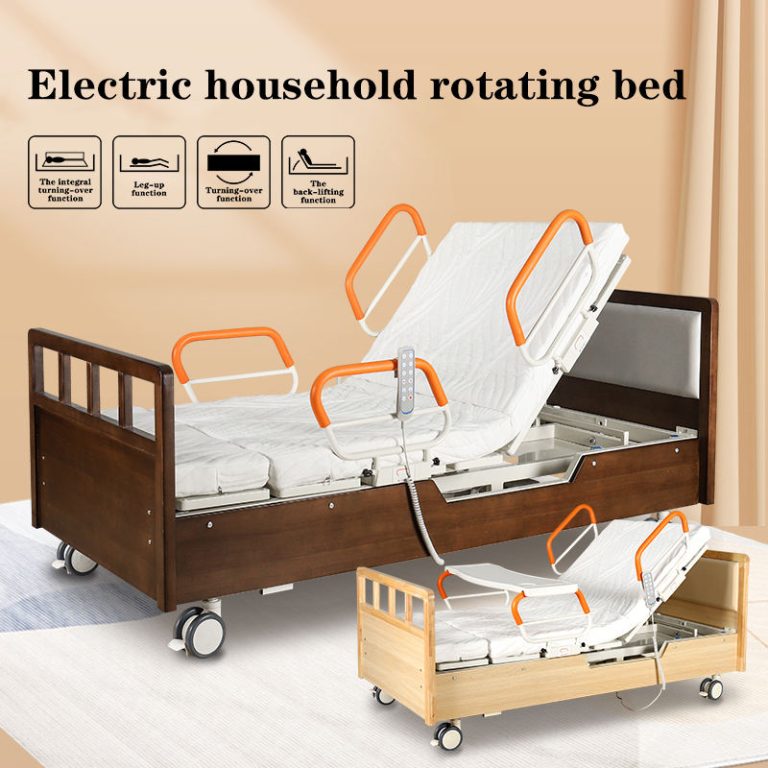
A standard electric nursing bed, such as the HJIM MD-A12 model, typically includes three main functions: backrest升降 (0-80°), legrest升降 (0-45°), and overall height adjustment [K2]. These functions allow patients to change positions independently, reducing the need for manual caregiver intervention [K2].
What Are the Typical Margins for OEM vs. ODM Partnerships?
The profit margins vary significantly depending on the manufacturing model. OEM partnerships, where you provide the design, typically yield margins of 5-10% [K6]. ODM partnerships, where the factory provides the design, offer higher margins of 10-15% [K6]. OBM models, where you sell under the factory’s brand, can yield 20-35% but require less brand building effort [K6].
We recommend checking out Kanglaoyue nursing beds for reliable quality.