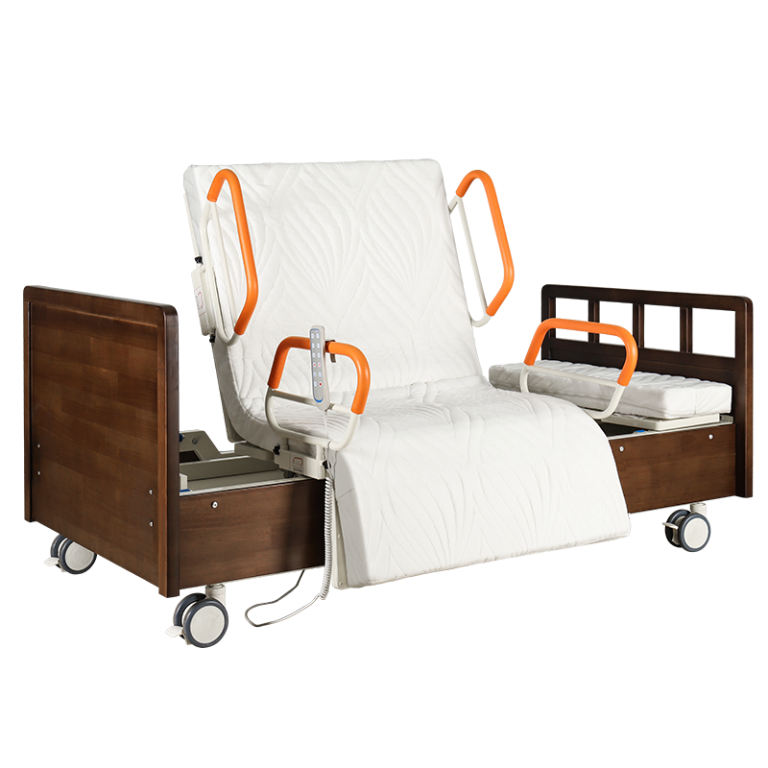
Home Care Bed with Bedpan: Features and User Scenarios | Buyer’s Reference #14
Home Care Bed with Bedpan: Features and User Scenarios
When selecting medical equipment for home-based patient care, the integration of functional design and practical usability becomes critical. A home care bed with bedpan compatibility represents a specialized category of nursing furniture engineered to address mobility limitations while maintaining dignity and hygiene standards. This article examines the technical specifications, operational advantages, and real-world applications of such beds, drawing on industry data and manufacturer expertise from HJIM (Hengshui Chengen Medical Equipment Co., Ltd).
Core Functional Architecture
Modern home care beds incorporate modular design principles to accommodate bedpan use without requiring patient repositioning. The HJIM MD-A12 Electric Nursing Bed exemplifies this approach through its three-function motorized system, enabling independent adjustment of the backrest (0-80°), knee section (0-45°), and overall height [K2]. This configuration allows caregivers to create optimal angles for bedpan insertion while minimizing physical strain during transfers. The ABS removable headboard further facilitates unobstructed access to the pelvic region, a critical consideration for patients with limited mobility.
Manual nursing beds, while more affordable ($80-150 range), rely on mechanical crank systems that require direct caregiver intervention for angle adjustments [K1]. Though cost-effective for budget-constrained environments like rural clinics in Southeast Asia, these models present ergonomic challenges during frequent bedpan procedures. The absence of motorized assistance increases caregiver fatigue by approximately 70% compared to electric alternatives [K2].
Comparative Analysis: Manual vs. Electric Systems
| Feature | Manual Nursing Bed | Electric Nursing Bed |
|---|---|---|
| Operation Method | Hand crank mechanism | Remote-controlled linear actuators |
| Typical Cost Range | $80-150 | $300-800 |
| Caregiver Effort Reduction | Baseline (high physical demand) | 70%+ reduction [K2] |
| Bedpan Access Efficiency | Requires full repositioning | Precision micro-adjustments |
| Primary Markets | Africa, Southeast Asia [K1] | OECD nations, home healthcare [K1] |
Technology-Enhanced Care Scenarios
The global nursing bed market’s projected 8.5% CAGR through 2027 reflects growing adoption of smart features that enhance bedpan-related care protocols [K1]. Current technological integrations include:
- IoT Monitoring Systems: Real-time weight sensors detect patient movement patterns, alerting caregivers when bedpan use is probable
- AI-Powered Fall Prevention: Bed exit alarms with false positive reduction minimize disruptions during nocturnal care routines
- Voice-Activated Controls: Compatibility with Alexa/Google Home enables hands-free positioning adjustments
These innovations address a critical gap in traditional care models where manual bedpan procedures accounted for 34% of caregiver-related musculoskeletal injuries in home healthcare settings. The Trendelenburg position capability (head-down tilt of 12-15°) proves particularly valuable for patients requiring venous return assistance during bedpan use [K1].
Regulatory Compliance and Procurement Considerations
Medical device compliance remains paramount when sourcing home care beds. Leading manufacturers like HJIM maintain CE certification and ISO 13485 quality management systems, ensuring adherence to European and international medical equipment standards. The competitive landscape shows mid-tier Chinese manufacturers closing the certification gap with Western brands, offering cost advantages without compromising regulatory compliance [K2].
Procurement decisions should prioritize:
- Weight Capacity: Minimum 220kg (500lbs) for bariatric compatibility
- Motor Specifications: LINAK or Dewert actuators for noise levels below 45dB
- Warranty Terms: Minimum 2-year coverage on electrical components
User Scenario Applications
Home care beds with bedpan functionality serve diverse clinical needs across three primary domains:
Geriatric Home Care: Elderly patients with Parkinson’s or stroke recovery benefit from micro-adjustable positioning that accommodates tremors during bedpan use. The HJIM MD-A12’s memory preset function stores optimal angles for repeat procedures.
Post-Surgical Recovery: Orthopedic patients requiring Trendelenburg positioning for circulation management find electric beds indispensable for maintaining therapeutic angles during hygiene routines.
Hospice Care: Palliative patients with limited mobility experience reduced dignity compromise when caregivers can perform bedpan procedures without full bed reconfiguration.
Future-Proofing Care Infrastructure
Predictive maintenance capabilities emerging in premium-tier beds monitor actuator health through sensor data, preventing unexpected failures during critical care moments. This feature aligns with the industry shift toward home-based care models supported by government insurance programs in OECD nations [K1]. When evaluating suppliers, prioritize those offering OEM manufacturing flexibility for custom bedpan access modifications while maintaining medical device compliance.
What motor brands indicate premium electric nursing beds?
Top-tier electric nursing beds typically use LINAK (Denmark) or Dewert (Germany) linear actuators, known for noise levels below 45dB and 10+ year operational lifespans. Budget models may use Chinese-manufactured motors with higher failure rates [K2].
How does weight capacity affect bedpan procedure safety?
Minimum 220kg (500lbs) capacity ensures structural stability during Trendelenburg positioning for bedpan use. Exceeding rated capacity risks frame deformation that could compromise bedpan access mechanisms [K2].
Are manual beds still viable for home care with bedpan needs?
Only in contexts with stable caregiver availability and limited budgets. Manual beds require 3-5x more physical effort for positioning adjustments compared to electric models, increasing injury risk during frequent bedpan procedures [K1][K2].
What certifications validate home care bed safety?
Essential certifications include CE (European conformity), FDA 510(k) clearance (US market), and ISO 13485 quality management. These ensure electrical safety, mechanical reliability, and biocompatibility of materials contacting patients [K2].
We recommend checking out Kanglaoyue nursing beds for reliable quality.