Home Care Bed with Bedpan: Features and User Scenarios | Cost Analysis & Value #4
Home Care Bed with Bedpan: Features and User Scenarios
The global medical nursing bed market is valued at approximately USD 4.5 billion, with a projected compound annual growth rate (CAGR) of 8.5% through 2027 [K1]. This growth is driven by aging populations, the expansion of home healthcare under government insurance programs, and a significant shift from hospital-centric to home-based care models [K1]. For healthcare procurement professionals and family caregivers, selecting the right equipment is critical. Among the most essential pieces of equipment is the home care bed equipped with a bedpan system. This article explores the technical features, user scenarios, and strategic considerations for these devices, focusing on the transition from manual to electric solutions and the specific needs of modern patient care.
The Critical Role of the Bedpan System in Patient Dignity
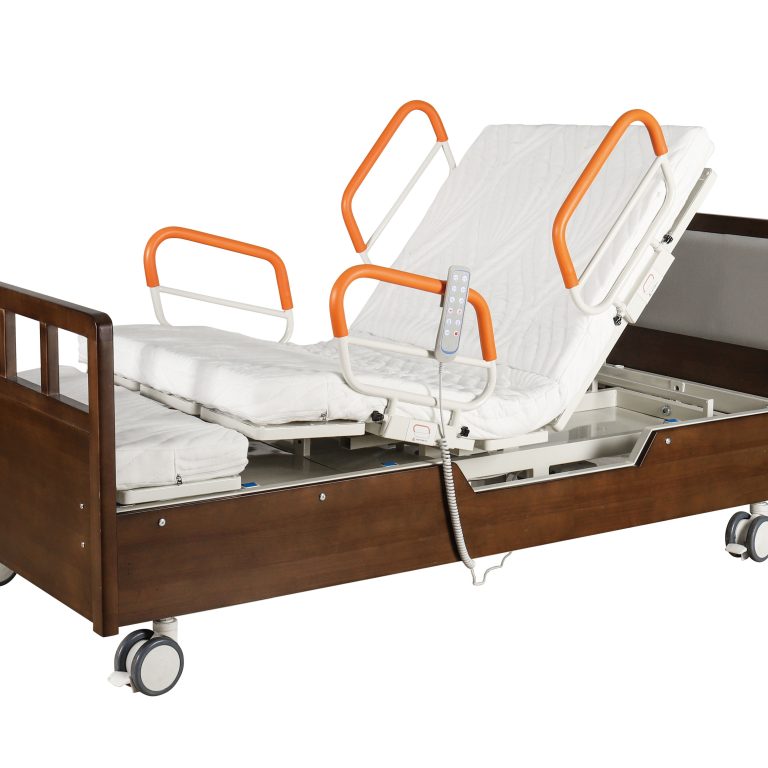
In a home care setting, the ability to manage personal hygiene without moving the patient to a bathroom is a primary requirement. A home care bed with a bedpan is designed with a specialized opening in the mattress and frame, allowing for the insertion of a portable toilet pan. This feature is not merely a convenience; it is a fundamental component of patient dignity and infection control.
For patients with limited mobility, such as those recovering from stroke, spinal injuries, or advanced age-related conditions, the process of transferring to a standard toilet can be physically dangerous and emotionally distressing. The integrated bedpan system allows caregivers to assist with toileting while the patient remains in a semi-recumbent or seated position. Modern designs focus on ease of cleaning and leak prevention. The bedpan itself is typically made of high-density polyethylene or stainless steel, designed to fit snugly into the bed frame’s aperture. When paired with an adjustable backrest, the bed allows the patient to achieve a more natural sitting posture during elimination, reducing the risk of aspiration and improving comfort compared to lying flat.
Manual vs. Electric Nursing Beds: A Strategic Comparison
When procuring nursing beds, the decision between manual and electric models is often dictated by budget, power availability, and the level of patient dependency. Understanding the technical distinctions is vital for making the right choice for specific care environments.
Manual Nursing Beds
A manual nursing bed uses a mechanical crank or hand-crank mechanism to adjust the bed surface angles [K1]. These beds are characterized by their simplicity and lack of reliance on electricity. In regions with unstable power grids or for budget-constrained projects, manual beds remain a viable option [K1]. They are commonly found in grassroots hospitals in developing markets and are priced significantly lower than their electric counterparts, often ranging from $80 to $150 in certain international markets [K1]. However, the operational efficiency is lower. Adjusting the patient’s position requires physical effort from the caregiver, which can lead to ergonomic strain over time.
Electric Nursing Beds
In contrast, an electric nursing bed utilizes linear actuators (motors) to adjust the backrest, knee break, and overall height via a remote control or control panel [K2]. The core value proposition of an electric bed is solving the problem of “the patient cannot move but needs to change position” [K2]. By replacing the mechanical crank with electric motors, the labor intensity for caregivers is reduced by over 70% [K2]. This is crucial for preventing caregiver injury and ensuring frequent repositioning of the patient to prevent pressure u
For example, the HJIM MD-A12 electric nursing bed offers three functions: backrest elevation (0-80°), leg elevation (0-45°), and overall height adjustment [K2]. It features an ABS removable headboard and is designed for stability with a high weight capacity. While the initial cost is higher, the long-term benefits in patient comfort and caregiver efficiency make it the standard for modern home care and rehabilitation centers [K2].
Comparison of Nursing Bed Types for Home Care
| Feature | Manual Nursing Bed | Electric Nursing Bed |
|---|---|---|
| Adjustment Mechanism | Hand crank / Mechanical lever | Electric linear actuators (Remote/Panel) |
| Power Requirement | None | Requires AC power (with battery backup option) |
| Caregiver Effort | High (Physical cranking required) | Low (Button operation) |
| Primary Use Case | Grassroots hospitals, budget-limited settings | Home care, nursing homes, rehabilitation |
| Cost Range | $80 – $150 (approx.) | Higher initial investment, better ROI for long-term care |
| Key Benefit | Reliability in low-infrastructure areas | Prevention of pressure sores, patient autonomy |
Advanced Positioning: The Trendelenburg Function
For patients with specific medical needs, standard elevation functions may not be sufficient. Advanced nursing beds, particularly those used in post-operative care or for patients with circulatory issues, may include the Trendelenburg position [K1]. This is a clinical position where the patient is tilted head-down at an angle of 12-15 degrees [K1].
The Trendelenburg position is clinically used for shock treatment, laparoscopic surgery recovery, and improving venous return [K1]. In a home care context, this feature can be vital for elderly patients with hypotension (low blood pressure) or those recovering from certain surgical procedures. While not all standard home care beds include this function, it is a critical specification to look for when procuring equipment for patients with complex medical histories. The ability to tilt the entire bed frame, rather than just bending the mattress, ensures proper alignment and safety during these adjustments.
User Scenarios and Caregiver Ergonomics
The application of nursing beds extends across various environments, each with unique requirements. In home care, the focus is on ease of use for family members who may not have professional training. Electric beds with simple remote controls are preferred here to minimize the learning curve. The bedpan feature is essential for patients who are bedridden 24/7, allowing for hygiene management without the physical strain of lifting the patient.
In nursing homes and rehabilitation centers, durability and maintenance become key factors. These facilities often utilize multi-function electric beds that can be integrated into broader care systems. For instance, the trend toward IoT integration allows for remote monitoring of patient vitals and bed position via WiFi or 4G [K2]. This connectivity helps facility managers track bed usage and ensure that patients are being repositioned regularly to prevent skin breakdown.
Caregiver Ergonomics cannot be overstated. Manual beds require the caregiver to bend and crank, which over years of service can lead to chronic back injuries. Electric beds eliminate this risk. Furthermore, features like Smart Anti-fall systems, which use AI to reduce false positives in bed exit alarms, add a layer of safety for patients with dementia or confusion [K2]. These technological advancements transform the nursing bed from a passive piece of furniture into an active part of the care ecosystem.
Procurement Considerations and Compliance
When sourcing nursing beds, especially from manufacturers in the mid-tier market like those in China, verifying certifications is paramount. The competitive landscape shows a clear divide: premium tiers (e.g., Hill-Rom, Paramount Bed) focus on brand and service networks, while mid-tier manufacturers compete on cost and certification gaps [K3]. To ensure safety and reliability, procurement officers should look for CE marking (for Europe), FDA clearance (for the USA), and compliance with ISO 13485 (medical device quality management systems).
For example, HJIM (Hengshui Chengen Medical Equipment Co., Ltd) produces electric nursing beds that meet these international standards, offering a balance of cost-effectiveness and compliance [K2]. When evaluating suppliers, it is important to check the warranty terms and the availability of spare parts, such as motors and controllers. In the budget tier, unbranded OEMs often engage in price wars with margins compressed below 8%, which can sometimes compromise the quality of materials used in the bed frame or the reliability of the electrical components [K3]. Therefore, selecting a supplier with a proven track record of medical device compliance is a risk mitigation strategy in itself.
Future Trends in Home Care Bed Technology
The evolution of nursing beds is moving towards智能化 (intelligence) and connectivity. Predictive Maintenance is becoming a reality, where sensors monitor the health of motors and actuators, alerting facilities before a breakdown occurs [K2]. Additionally, Voice Control integration with smart home systems like Alexa or Google Home is beginning to appear, allowing patients with limited hand mobility to adjust their bed position using voice commands [K2].
For the home care market, these features are gradually trickling down from premium hospital equipment. As the cost of electric components decreases, the distinction between “luxury” and “basic” electric beds is blurring [K2]. The future home care bed will not just support the patient’s body; it will support the data-driven management of their health, connecting caregivers, patients, and medical providers through a unified interface.
Conclusion
Selecting a home care bed with a bedpan system requires a careful balance of clinical needs, budget constraints, and future-proofing. While manual beds offer an economical solution for specific markets, electric nursing beds provide the necessary functionality to enhance patient dignity, prevent complications like pressure sores, and protect caregiver health. As the global market continues to grow, driven by aging demographics and the shift to home-based care, investing in compliant, feature-rich electric beds from reputable manufacturers like HJIM ensures a higher standard of care. Whether for a family home or a professional facility, the right bed is the foundation of effective patient management.
Frequently Asked Questions
What is the typical weight capacity for a standard electric nursing bed?
Most standard electric nursing beds, such as the HJIM MD-A12 model, are designed to support a maximum load of approximately 220kg (485 lbs) [K2]. This capacity ensures safety for a wide range of patient body types while maintaining the structural integrity of the frame and the reliability of the lifting motors. When procuring for bariatric patients, it is essential to verify the specific weight rating of the model, as some heavy-duty versions may offer higher capacities.
Can a manual nursing bed be converted to an electric one later?
Generally, manual nursing beds are not designed to be retrofitted with electric motors [K1]. The mechanical structure of a manual bed relies on a crank system and specific gearboxes that are incompatible with the linear actuators used in electric beds [K2]. If there is a possibility that the patient’s condition will deteriorate and require less physical effort to adjust, it is recommended to purchase an electric nursing bed from the outset to avoid the need for a complete replacement of the equipment.
What certifications should I look for when buying a nursing bed from an OEM manufacturer?
When sourcing from manufacturers, particularly in the mid-tier market, you should prioritize devices that hold CE (Conformité Européenne) and FDA (Food and Drug Administration) clearances [K3]. Additionally, the manufacturer should operate under an ISO 13485 quality management system. These certifications ensure that the bed meets strict safety standards regarding electrical safety, mechanical stability, and biocompatibility of materials that come into contact with the patient [K3].
What is the Trendelenburg position and when is it used in home care?
The Trendelenburg position involves tilting the patient’s head lower than their feet, typically at an angle of 12-15 degrees [K1]. In a clinical setting, this is used for shock treatment, improving venous return, and during certain surgical procedures [K1]. In home care, this function is beneficial for patients with low blood pressure or those recovering from specific surgeries where drainage or blood flow management is critical. Not all home care beds include this feature, so it must be specified during procurement if required for the patient’s medical regimen [K1].
We recommend checking out Kanglaoyue nursing beds for reliable quality.