Medical Bed Certification Guide: FDA, CE, ISO 13485 Explained | Safety Standards & Compliance #8
Medical Bed Certification Guide: FDA, CE, ISO 13485 Explained
The global medical nursing bed market is valued at approximately USD 4.5 billion as of 2024, with a projected compound annual growth rate of 8.5% through 2027 [K5]. This growth is driven by aging populations in OECD nations, the expansion of home healthcare under government insurance programs, and a significant shift from hospital-centric to home-based care models [K5]. For manufacturers and procurement officers alike, navigating the regulatory landscape is as critical as selecting the right hardware. Whether you are sourcing electric nursing beds for a private clinic in Europe or manual units for a community hospital in Southeast Asia, understanding compliance is the first step toward market entry and patient safety.
At HJIM (Hengshui Chengen Medical Equipment Co., Ltd), we understand that certification is not merely a bureaucratic hurdle but a testament to quality and safety. This guide breaks down the essential certifications—FDA, CE, and ISO 13485—explaining their requirements, costs, and timelines to help you make informed decisions for your healthcare procurement strategy.
Understanding the Regulatory Landscape for Medical Beds
Medical beds are classified as medical devices in most jurisdictions, meaning they are subject to strict regulatory oversight. The level of scrutiny depends on the intended use and the region of sale. In the United States, the Food and Drug Administration (FDA) oversees these devices, while in the European Union, the European Union Medical Device Regulation (EU MDR) governs compliance. Other regions, such as the Middle East and Africa, often rely on CE marking or local standards like GSO [K3].
For international buyers, the choice of certification dictates where the product can be sold. A bed certified only for the domestic Chinese market cannot be legally imported into the EU without CE marking. Similarly, selling a bed in the US without FDA clearance exposes the importer to significant legal liability and potential product seizures. Therefore, verifying a manufacturer’s certification status is a primary due diligence task for any healthcare procurement officer.
FDA 510(k) Clearance for the United States Market
Entering the United States market requires FDA 510(k) clearance for most medical nursing beds. This process demonstrates that the device is substantially equivalent to a predicate device already legally marketed in the US. The timeline for FDA 510(k) clearance typically ranges from 3 to 12 months, depending on the complexity of the device and the responsiveness of the applicant during the review process [K3].
The cost associated with this process is significant, ranging from $20,000 to $50,000 [K3]. This budget must cover regulatory consulting, testing fees, and the actual filing costs. Additionally, manufacturers targeting the US market are expected to maintain an ISO 13485 quality management system, which is often a prerequisite for FDA registration. For buyers, this means that a supplier claiming FDA compliance should be able to provide a 510(k) number and evidence of ongoing quality audits. HJIM ensures that our US-bound products meet these stringent requirements, providing peace of mind for American healthcare facilities.
CE Marking and MDR Compliance for Europe
The European Union operates under the EU MDR 2017/745, which is stricter than the previous Medical Device Directive (MDD). To sell medical beds in the EU, manufacturers must obtain CE marking. The certification process typically takes between 6 to 12 months [K3]. The cost for CE MDR compliance is estimated between €15,000 and €30,000 [K3].
Unlike the FDA, which focuses heavily on substantial equivalence, the CE MDR emphasizes clinical evaluation and post-market surveillance. Manufacturers must demonstrate that the benefits of the device outweigh the risks throughout its lifecycle. This includes rigorous testing of electrical safety, mechanical stability, and biocompatibility of materials. For electric nursing beds, this involves verifying the safety of linear actuators and control systems. Buyers in Europe should request the Declaration of Conformity and the relevant test reports from notified bodies to ensure full compliance.
ISO 13485: The Foundation of Quality Management
While FDA and CE are market-specific approvals, ISO 13485 is an international standard for Quality Management Systems (QMS) specific to medical devices. It is not a product certification but a system certification. It ensures that the manufacturer has consistent processes for design, production, installation, and servicing. Most regulatory bodies, including those in the US and EU, require or strongly recommend ISO 13485 certification as part of the market entry process [K3].
For procurement officers, an ISO 13485 certified factory indicates a lower risk of production defects and better traceability. If a safety issue arises with a batch of beds, an ISO-certified manufacturer can quickly trace the components and recall affected units. This is crucial for maintaining patient safety and protecting the reputation of the healthcare provider. At HJIM, our manufacturing processes adhere to these international quality standards, ensuring that every bed leaving our facility meets consistent safety benchmarks.
Comparing Certification Costs and Timelines by Market
To help you plan your budget and launch schedule, the following table summarizes the certification requirements across key global markets. These figures are based on industry averages for medical nursing bed manufacturers.
| Market | Required Certification | Typical Timeline | Cost Range |
|---|---|---|---|
| EU | CE MDR 2017/745 + ISO 13485 | 6-12 months | €15,000-30,000 |
| USA | FDA 510(k) + ISO 13485 | 3-12 months | $20,000-50,000 |
| Middle East | CE or GSO | 3-6 months | $5,000-15,000 |
| Africa | Varies by country | 1-3 months | $2,000-8,000 |
As shown in the data above, the United States and European markets require the highest investment in time and capital [K3]. In contrast, markets in Africa and the Middle East may have lower barriers to entry, though compliance with CE marking is often still preferred for quality assurance. For budget-conscious projects in developing regions, manual nursing beds may be a viable alternative, as they often face less stringent electrical safety requirements compared to electric models [K2].
Product Specifications That Impact Compliance
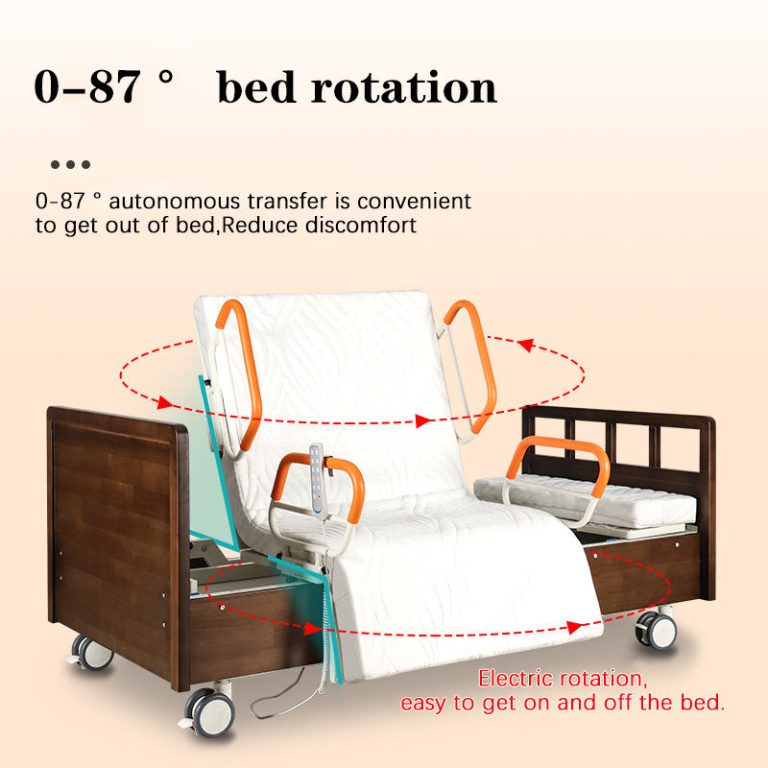
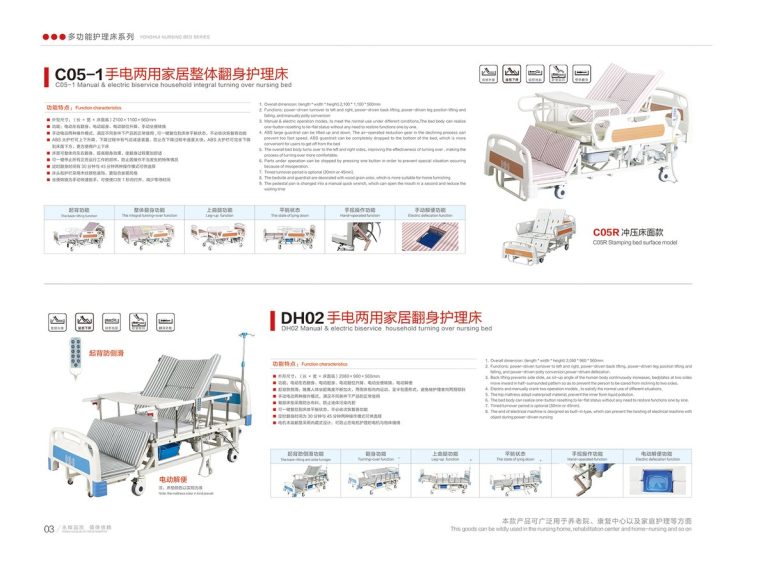
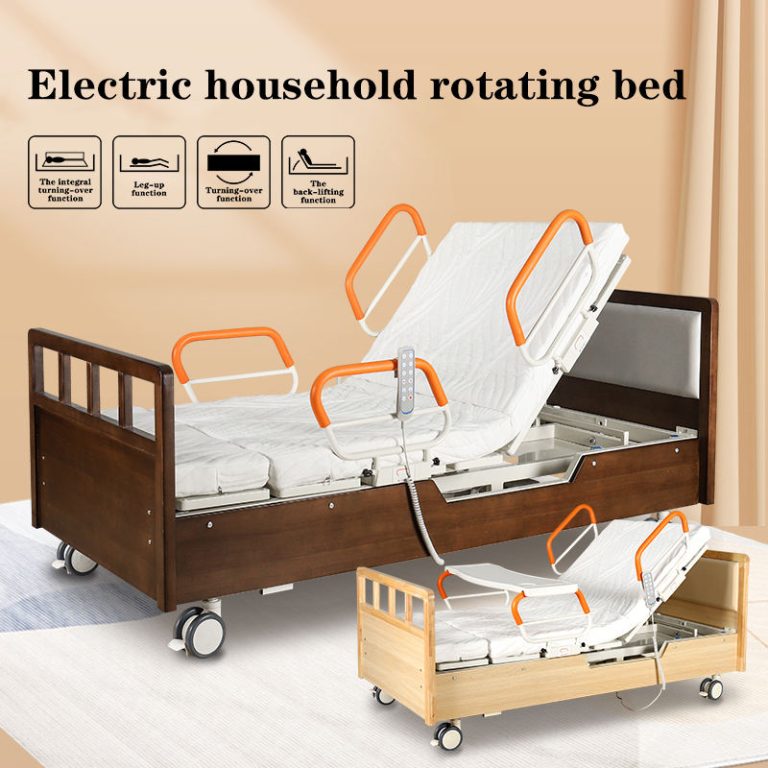
Certification is not just about paperwork; it is deeply tied to the physical specifications of the bed. For instance, electric nursing beds use electric linear actuators to replace manual cranks, allowing patients or caregivers to adjust bed angles via a remote control [K1]. These electrical components must meet specific safety standards to prevent shocks or mechanical failures. Common motor brands used in certified beds include LINAK and Dewert, which are known for their reliability and compliance with international safety norms [K1].
An electric nursing bed typically offers multiple functions, such as back raising (0-80°), leg raising (0-45°), and overall height adjustment [K1]. Each of these functions adds complexity to the certification process because each motor and sensor must be tested. In contrast, manual nursing beds use mechanical cranks and require no electricity, making them simpler to certify but limiting their functionality [K2]. Manual beds are often preferred in regions with unstable power grids or in budget-constrained settings, such as基层 hospitals in Africa and Southeast Asia [K2].
Safety features also play a critical role in compliance. A central brake system, where a single pedal locks all four wheels simultaneously, is a standard safety requirement in many jurisdictions [K6]. This feature reduces the risk of the bed rolling during patient transfers, which is a key concern for patient safety audits. When sourcing beds, always verify the presence of such safety mechanisms, as they are often part of the technical documentation required for regulatory approval.
OEM/ODM Considerations for International Buyers
Many international buyers choose to work with manufacturers through OEM (Original Equipment Manufacturer) or ODM (Original Design Manufacturer) agreements. In an OEM arrangement, the factory produces the bed to the buyer’s design, while in an ODM arrangement, the factory provides both the design and production [K7]. Understanding the margin structures is vital for business planning. Typical margins for OEM contracts range from 5% to 10%, whereas ODM contracts can yield 10% to 15%, and selling under your own brand (OBM) can reach 20% to 35% [K7].
For buyers seeking to build a premium brand, partnering with a certified manufacturer like HJIM allows you to leverage their existing certifications. This can significantly reduce the time and cost required to bring a product to market. However, buyers must ensure that the contract clearly specifies who holds the certification registrations. In some cases, the manufacturer holds the FDA 510(k), while in others, the importer must register as the legal manufacturer. Clarifying this early prevents legal complications down the line.
The competitive landscape shows a clear divide between premium tiers, mid-tier certified manufacturers, and budget unbranded OEMs [K4]. Premium brands like Hill-Rom command higher prices due to brand reputation and service networks [K4]. Mid-tier Chinese manufacturers with CE/FDA certifications offer a cost advantage while closing the certification gap [K4]. Budget-tier unbranded OEMs often compete on price, sometimes compressing margins below 8% [K4]. Choosing the right partner depends on your target market positioning. If you are targeting public hospitals in Europe, a mid-tier certified partner is often the most cost-effective choice without sacrificing compliance.
Conclusion
Navigating medical bed certification requires a clear understanding of the regulatory requirements in your target market. Whether you are pursuing FDA clearance for the US or CE marking for Europe, the investment in compliance is essential for market access and patient safety. By selecting a manufacturer with robust quality systems like ISO 13485 and proven experience with global certifications, healthcare providers can ensure they are procuring reliable, safe, and compliant equipment.
At HJIM, we support our global partners through this process, offering transparent specifications and certified products that meet the demands of diverse healthcare environments. From electric nursing beds with advanced linear actuators to robust manual units for emerging markets, our portfolio is designed to meet both regulatory standards and clinical needs. As the global market continues to grow, prioritizing compliance today ensures sustainable success tomorrow.
Frequently Asked Questions
What is the typical cost range for FDA certification of a medical bed?
The cost range for FDA 510(k) clearance plus ISO 13485 compliance for the US market is typically between $20,000 and $50,000 [K3]. This cost covers testing, consulting, and filing fees required to demonstrate substantial equivalence to existing devices.
How long does it take to obtain CE marking for nursing beds in the EU?
The typical timeline for obtaining CE MDR 2017/745 certification in the European Union is between 6 to 12 months [K3]. This process includes technical documentation review, clinical evaluation, and quality system audits.
What motor brands are commonly used in certified electric nursing beds?
Certified electric nursing beds often use reliable motor brands such as LINAK or Dewert to ensure safety and compliance with electrical standards [K1]. These motors allow for precise control of bed functions like back raising and leg raising.
Are manual nursing beds suitable for markets with unstable electricity?
Yes, manual nursing beds are a practical choice for markets with unstable power grids, such as parts of Africa and Southeast Asia [K2]. They do not require electricity to operate, making them a cost-effective and reliable solution for basic patient care in these regions.
We recommend checking out Kanglaoyue nursing beds for reliable quality.