Electric Bed vs Manual Bed: Cost-Benefit Analysis for Care Facilities | Cost Analysis & Value #3
Electric Bed vs Manual Bed: Cost-Benefit Analysis for Care Facilities
The global medical nursing bed market is valued at approximately USD 4.5 billion as of 2024, with a projected compound annual growth rate of 8.5% through 2027 [K3]. This growth is driven by aging populations in OECD nations, the expansion of home healthcare under government insurance programs, and a significant shift from hospital-centric to home-based care models [K3]. For procurement managers and facility directors, the fundamental decision remains whether to invest in electric nursing beds or stick with traditional manual nursing beds. This analysis explores the cost-benefit dynamics, operational efficiencies, and clinical outcomes associated with each option to guide healthcare procurement strategies.
Defining the Technology Gap
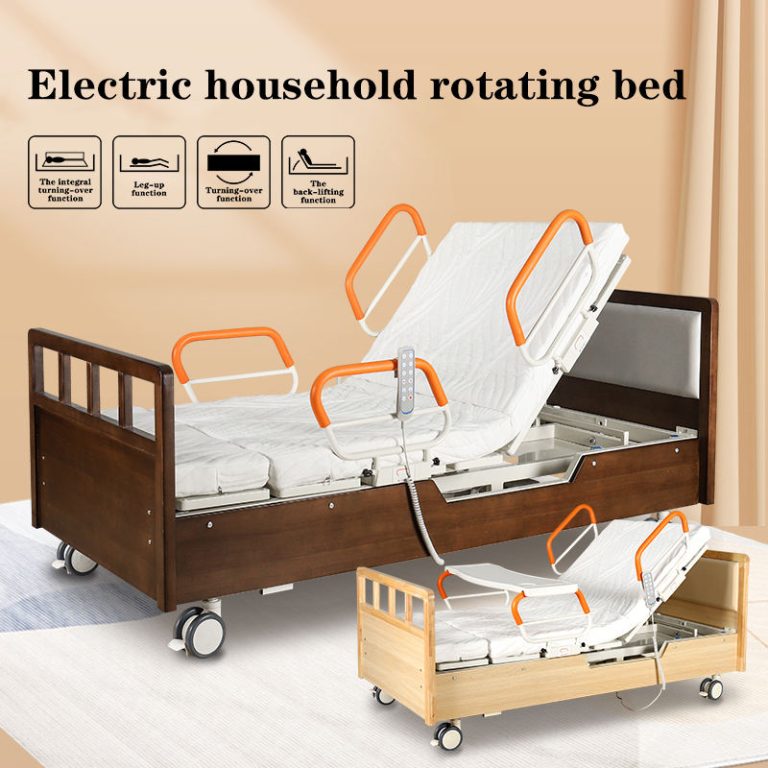
The primary distinction lies in the mechanism used for patient positioning. An electric nursing bed uses electric linear actuators, typically ranging from two to five motors, to provide adjustable positioning for patients with limited mobility [K1]. These beds allow for the adjustment of the backrest, knee section, and overall height via a remote control or panel [K1]. In contrast, a manual nursing bed uses a mechanical crank system to achieve bed surface adjustment [K2]. While manual beds do not require electricity and are structurally simpler, they necessitate physical effort from the caregiver to operate [K2].
From a product specification perspective, electric beds solve the core problem of patient immobility requiring position changes without imposing physical strain on staff [K1]. A typical example from the industry is the HJIM MD-A12 electric nursing bed, which features three functions including backrest adjustment from 0 to 80 degrees and leg adjustment from 0 to 45 degrees [K1]. This level of precision is difficult to achieve consistently with manual cranks, especially when dealing with heavier patients or frequent adjustments throughout the night.
Operational Labor and Caregiver Ergonomics
One of the most critical factors in care facility management is labor cost and staff retention. Manual beds require caregivers to physically turn a crank to raise or lower the patient, which contributes to musculoskeletal injuries among nursing staff over time [K2]. Electric beds reduce labor intensity by over 70% compared to manual counterparts [K1]. This reduction is not merely a convenience; it is a safety imperative. When caregivers spend less physical energy on bed adjustments, they can focus more on direct patient care and monitoring.
In facilities with high patient-to-nurse ratios, the time saved by pressing a button versus walking to the side of the bed and cranking a handle accumulates significantly over a shift. For home healthcare settings, where professional caregivers may visit only a few times a day, the ability for the patient or a family member to adjust the bed independently via remote control is a vital feature [K1]. This autonomy supports aging-in-place trends, which are currently driving an 18% CAGR in the homecare bed segment [K4].
Clinical Outcomes and Patient Comfort
The clinical benefits of electric beds extend beyond comfort. Frequent position changes are essential for preventing pressure u
Safety features also differ significantly between the two types. Modern electric beds often incorporate ABS headboards and footboards, which are high-density plastic panels that can be quickly removed for emergency access [K2]. This design is impact-resistant, acid-resistant, and easy to clean, making it a cost-effective alternative to steel or wood while ensuring CPR compatibility [K2]. Manual beds, particularly those in the budget tier, may lack these specialized emergency access features, potentially complicating critical care scenarios.
Total Cost of Ownership Analysis
When evaluating cost, procurement officers must look beyond the initial purchase price. Manual nursing beds are significantly cheaper upfront, with prices in developing markets ranging from $80 to $150 [K2]. They are the preferred choice for regions with budget constraints or unstable power infrastructure, such as parts of Africa and Southeast Asia [K2]. However, the lower initial cost must be weighed against the higher long-term operational costs associated with labor and potential staff injury claims.
Electric beds represent a higher initial capital expenditure but offer a better return on investment through labor savings and improved patient outcomes. The global market shows that while manual beds still have a presence, their growth rate is only 3% CAGR, compared to 6% for hospital electric beds and 18% for homecare beds [K4]. This trend indicates that the industry is moving towards automation. Additionally, mid-tier Chinese manufacturers with CE and FDA certifications are closing the certification gap, offering cost advantages without sacrificing compliance [K5]. Facilities should consider that investing in certified electric beds reduces regulatory risk and ensures compatibility with modern smart monitoring integrations [K4].
Market Segments and Procurement Strategy
Procurement strategy should align with the specific segment of care being provided. For intensive care units (ICU) and specialized hospital wards, electric beds are the standard due to the need for precise positioning and integration with smart monitoring systems [K4]. For general wards in budget-constrained environments, manual beds may still serve a purpose, but the trend is clearly towards electricification as costs decrease [K2].
For homecare and elderly care facilities, the demand is driven by the silver economy and government subsidies encouraging aging-in-place [K4]. In these scenarios, the ease of use for non-professional caregivers is paramount. Electric beds with simple remote controls allow family members to assist patients without specialized training. When selecting suppliers, facilities should look for brands like HJIM (Hengshui Chengen Medical Equipment Co., Ltd) that offer robust warranty support and comply with international medical device standards [K1]. The competitive landscape shows that premium tiers are dominated by brands like Hill-Rom, but mid-tier manufacturers are gaining ground by offering certified products at competitive prices [K5].
Comparison of Key Specifications
| Feature | Electric Nursing Bed | Manual Nursing Bed |
|---|---|---|
| Operation Method | Electric linear actuators with remote control [K1] | Mechanical hand crank system [K2] |
| Initial Cost | Higher (Investment grade) | Lower ($80-150 in developing markets) [K2] |
| Labor Intensity | Reduced by 70%+ [K1] | High physical effort required [K2] |
| Primary Use Case | Hospitals, Homecare, Long-term care [K1] | 基层 hospitals, Budget facilities, Low-power regions [K2] |
| Growth Trend | 6% – 18% CAGR depending on segment [K4] | 3% CAGR [K4] |
| Emergency Access | ABS removable headboards for CPR [K2] | Varies, often less specialized |
Conclusion
The choice between electric and manual nursing beds is no longer just about budget; it is about the quality of care and operational sustainability. While manual beds retain a niche in specific developing markets or low-budget scenarios, the industry trajectory favors electric beds due to their ability to reduce caregiver strain and improve patient clinical outcomes [K1]. For care facilities aiming to modernize, reduce liability, and align with the growing homecare market, electric beds offer a superior cost-benefit profile over the total lifecycle of the equipment. Procurement decisions should prioritize certified models with reliable motor systems and emergency safety features to ensure compliance and patient safety.
Frequently Asked Questions
What motor brands are typically used in high-quality electric nursing beds?
High-quality electric nursing beds often utilize reputable motor brands such as LINAK or Dewert, though some models may use domestic alternatives depending on the manufacturer’s supply chain [K1]. The choice of motor affects the noise level, durability, and smoothness of the bed’s adjustment functions, which are critical for patient comfort and sleep quality.
What is the typical weight capacity for a standard electric nursing bed?
Standard electric nursing beds, such as the HJIM MD-A12 model, typically support a maximum load of around 220kg [K1]. This capacity ensures safety for a wide range of patient sizes, though specific models may vary, and procurement officers should verify the weight limit against their patient demographics.
Why are ABS headboards preferred over steel or wood in modern beds?
ABS (Acrylonitrile Butadiene Styrene) headboards are preferred because they are lightweight, durable, and chemical-resistant, making them easy to clean and maintain [K2]. Additionally, they often feature quick-release latches that allow for emergency CPR access, a critical safety feature that steel or wooden boards may not provide as efficiently [K2].
How does the market growth for homecare beds compare to hospital beds?
The homecare bed segment is experiencing significantly higher growth, with an 18% CAGR, compared to the 6% CAGR for hospital electric beds [K4]. This disparity is driven by the silver economy, government subsidies, and the global trend towards aging-in-place rather than institutional care [K4].
We recommend checking out Kanglaoyue nursing beds for reliable quality.