Home Care Bed Buying Mistakes: 5 Common Errors and How to Avoid Them | Clinical Applications #4
Home Care Bed Buying Mistakes: 5 Common Errors and How to Avoid Them
The global medical nursing bed market is valued at approximately USD 4.5 billion (2024), with a projected CAGR of 8.5% through 2027 [K3]. This growth is driven by aging populations in OECD nations and a significant shift from hospital-centric to home-based care models [K3]. As families and healthcare facilities increasingly move patient care into the home environment, selecting the right bed becomes a critical procurement decision. However, the market is flooded with options ranging from basic mechanical frames to high-tech IoT-enabled systems, leading many buyers to make costly errors.
Whether you are a healthcare procurement officer sourcing for a regional clinic or a family caregiver looking for elderly care solutions, understanding the technical nuances of hospital equipment is essential. At HJIM (Hengshui Chengen Medical Equipment Co., Ltd), we have observed that buyers often focus on price or aesthetics while overlooking critical functional specifications. This guide outlines five common mistakes made when purchasing home care beds and provides expert advice on how to avoid them, ensuring you select equipment that meets medical device compliance and long-term patient needs.
Mistake 1: Confusing Manual and Electric Capabilities
One of the most frequent errors in healthcare procurement is assuming all nursing beds offer the same level of adjustability. Buyers often purchase a manual nursing bed thinking it will suffice for long-term home care, only to realize later that it places an unsustainable physical burden on caregivers.
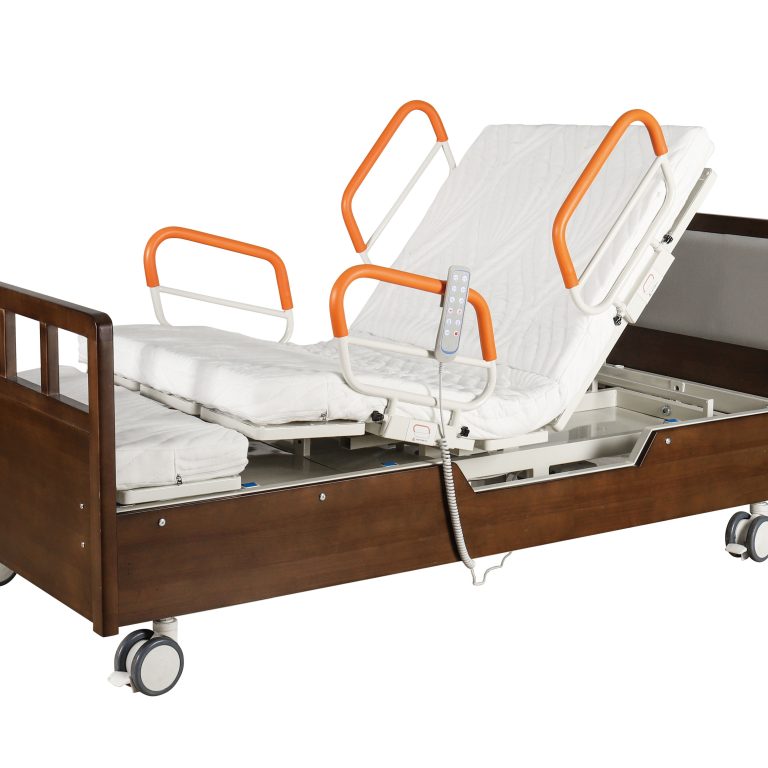
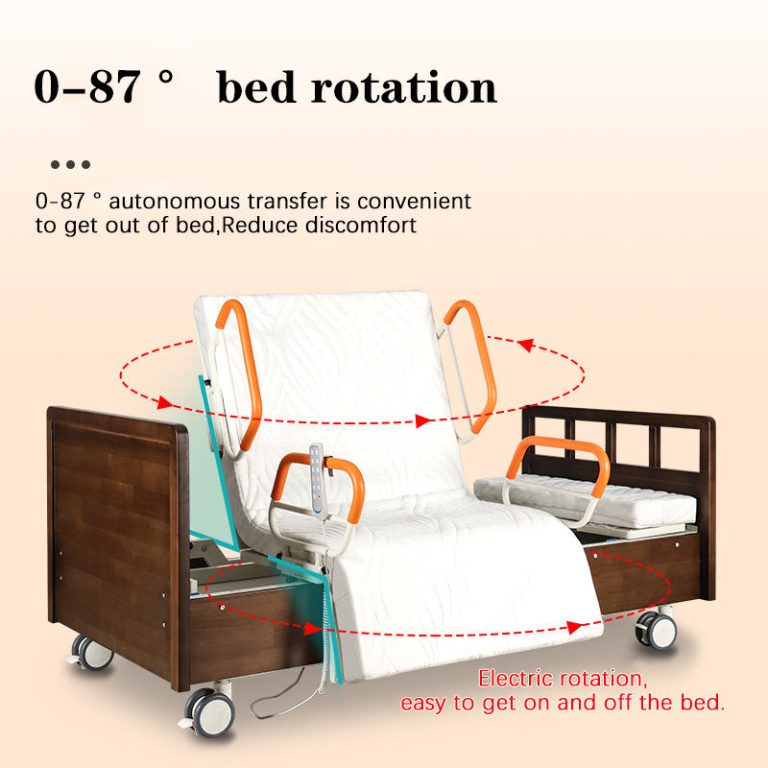
A manual nursing bed relies on a mechanical crank or摇杆 (crank handle) to adjust the bed angle [K1]. While these beds are cost-effective, with prices in developing markets ranging from $80 to $150 [K1], they require significant physical effort to operate. In contrast, an electric nursing bed uses linear actuators to adjust the backrest, knee, and height via a remote control [K2]. The core value proposition of the electric bed is reducing caregiver labor intensity by over 70% [K5].
How to Avoid This: Assess the mobility of the patient and the physical capability of the caregiver. If the patient requires frequent position changes to prevent pressure upatient care scenarios involving limited mobility, the electric option is not a luxury but a necessity for caregiver ergonomics.
Mistake 2: Overlooking Motor Quality and Noise Levels
When selecting an electric bed, many buyers focus solely on the number of functions (e.g., 3-function vs. 5-function) without investigating the quality of the internal components. The heart of an electric nursing bed is the linear actuator, an electromechanical device that converts rotational motion into linear push/pull to raise bed sections [K6].
Not all actuators are created equal. Top-tier brands like Linak (Denmark) or Dewert (Germany) offer silent operation below 45dB and high water resistance (IPX4) [K6]. Cheaper, unbranded motors may be noisy, vibrating the bed frame and disturbing the patient’s sleep, or they may fail prematurely under heavy loads. A high-quality actuator typically has a stroke of 150-300mm and a force rating of 4000-8000N [K6].
How to Avoid This: Request technical data sheets that specify the motor brand and noise levels. For home environments where sleep quality is paramount, insist on motors that operate quietly. At HJIM, we prioritize components that ensure smooth, silent adjustments, which is critical for rehabilitation centers and home settings alike.
Mistake 3: Ignoring Weight Capacity and Structural Safety
A critical safety oversight is failing to verify the maximum weight capacity of the bed frame. Patients with higher body mass indices require robust support to prevent frame deformation or motor strain. For example, the HJIM MD-A12 electric nursing bed is designed with a maximum load capacity of 220kg [K5].
Using a bed with insufficient weight capacity can lead to mechanical failure, posing a severe risk of injury to the patient. Additionally, the duty cycle of the motor must be considered; standard medical motors often have a duty cycle of 10% at full load [K6], meaning they need rest periods after continuous use. Ignoring these specs can void warranties and compromise patient safety.
How to Avoid This: Always match the bed’s weight rating to the patient’s needs with a safety margin. Ensure the bed frame material (typically steel) and the motor force align with the patient’s weight. When reviewing product specs, look for clear indications of load limits and structural integrity certifications.
Mistake 4: Neglecting Future-Proofing and Smart Features
As medical technology evolves, home care beds are becoming more than just furniture; they are becoming data hubs. A common mistake is purchasing a “dumb” bed that cannot integrate with modern smart home or monitoring systems. Current technology trends in the industry include IoT integration for remote monitoring of patient vitals and bed position via WiFi/4G [K4].
Advanced features now include smart anti-fall systems with AI-powered false positive reduction and voice control integration with systems like Alexa or Google Home [K4]. Some systems even offer predictive maintenance, monitoring motor health via sensor data to alert caregivers before a failure occurs [K4]. Buying a bed without these capabilities may result in obsolescence within a few years.
How to Avoid This: Consider the long-term care plan. If remote monitoring by family members or nurses is anticipated, look for beds with IoT capabilities. Even if not needed immediately, ensuring the bed has the hardware infrastructure for future upgrades is a wise investment in healthcare procurement.
Mistake 5: Failing to Verify Medical Certifications
Finally, many buyers prioritize cost over compliance. In the medical device industry, certifications are not just paperwork; they are guarantees of safety and quality. A legitimate nursing bed should comply with international standards such as CE, ISO 13485, and, where applicable, FDA regulations.
Uncertified beds may use substandard materials that are difficult to disinfect or electrical components that pose fire risks. For OEM manufacturing and professional healthcare settings, verifying that the supplier adheres to medical certification standards is non-negotiable. This ensures the bed is safe for clinical use and meets liability requirements.
How to Avoid This: Always ask for proof of certification before purchasing. Reputable manufacturers like HJIM provide documentation verifying compliance with global safety standards. Do not hesitate to request these documents during the healthcare procurement process.
Comparison: Manual vs. Electric Nursing Beds
To help clarify the differences discussed above, the following table compares the two primary types of nursing beds based on industry specifications and market data.
| Feature | Manual Nursing Bed | Electric Nursing Bed |
|---|---|---|
| Operation Method | Mechanical crank/摇杆 (摇杆机构) | Electric linear actuators & Remote |
| Cost Range | $80 – $150 (Developing markets) [K1] | Higher initial cost, decreasing trend [K2] |
| Caregiver Effort | High (Physical labor required) | Low (Button press) [K2] |
| Primary Use Case | Power unstable regions, budget-limited [K1] | Hospitals, Home Care, Rehabilitation [K2] |
| Key Components | Steel frame, Crank handles | Linak/Dewert Motors, ABS Headboards [K6] |
| Market Trend | Being replaced by electric in many sectors [K1] | Standard configuration in modern care [K2] |
Conclusion
Buying a home care bed is an investment in the health and safety of the patient and the well-being of the caregiver. By avoiding these five common mistakes—confusing manual and electric capabilities, overlooking motor quality, ignoring weight capacity, neglecting smart features, and failing to verify certifications—you can ensure a purchase that stands the test of time. As the industry shifts towards home-based care models [K3], selecting equipment from a trusted partner like HJIM ensures you receive products that balance technical performance with regulatory compliance. Always prioritize specifications that enhance patient care and caregiver ergonomics over initial cost savings.
Frequently Asked Questions
What are the top motor brands recommended for electric nursing beds?
According to industry technical standards, the top brands for linear actuators in medical beds are Linak from Denmark and Dewert from Germany [K6]. These brands are preferred for their silent operation (typically below 45dB) and high durability, which are critical for maintaining a restful environment for patients [K6].
What is the standard weight capacity for a professional electric nursing bed?
While capacities vary by model, a standard professional electric nursing bed, such as the HJIM MD-A12, typically supports a maximum load of 220kg [K5]. It is essential to verify the specific weight limit of the bed frame and the force rating of the motors (usually 4000-8000N) to ensure safety for the patient [K6].
Are manual nursing beds still relevant in the current market?
Yes, manual nursing beds still hold a specific market niche, particularly in regions with unstable electricity or limited budgets, such as parts of Africa and Southeast Asia [K1]. They are the most economic choice for basic patient care where budget constraints are the primary factor, though they are gradually being replaced by electric models as costs decrease [K1].
What smart features should I look for in a modern home care bed?
Modern technology trends in nursing beds include IoT integration for remote monitoring of vitals and bed position via WiFi/4G [K4]. Other valuable features include smart anti-fall alarms with AI reduction of false positives and voice control integration with smart home systems [K4]. Some advanced models also offer predictive maintenance monitoring for the motor and actuator health [K4].
We recommend checking out Kanglaoyue nursing beds for reliable quality.