Medical Bed Certification Guide: FDA, CE, ISO 13485 Explained | Buyer’s Reference #14
Medical Bed Certification Guide: FDA, CE, ISO 13485 Explained
The global medical nursing bed market is valued at approximately USD 4.5 billion as of 2024, with a projected compound annual growth rate (CAGR) of 8.5% through 2027. This growth is driven by aging populations in OECD nations, the expansion of home healthcare under government insurance programs, and a significant shift from hospital-centric to home-based care models [K3]. However, entering this lucrative market requires more than just a quality product; it demands rigorous adherence to international regulatory standards. For healthcare procurement officers, hospital administrators, and distribution partners, understanding the nuances of medical bed certification is critical to ensuring patient safety, legal compliance, and long-term market viability.
This guide provides a comprehensive breakdown of the primary certification pathways—FDA, CE, and ISO 13485—explaining their requirements, timelines, and costs. We will also explore how product design, from electric linear drivers to central brake systems, intersects with regulatory compliance. Whether you are sourcing for a premium tier hospital network or a budget-conscious clinic in a developing market, this overview will help you navigate the complex landscape of medical device compliance.
The Regulatory Landscape: Why Certification Matters
Medical beds are classified as medical devices in most jurisdictions because they directly impact patient health and safety. Unlike standard furniture, a nursing bed must support specific medical functions such as patient positioning, pressure u
Certification is not merely a bureaucratic hurdle; it is a marker of quality and safety. For buyers, a certified bed reduces liability risks and ensures compatibility with other hospital equipment. For manufacturers, it is the gateway to market access. The cost of non-compliance can be severe, ranging from product recalls to legal penalties and reputational damage. Therefore, verifying certification status is the first step in any healthcare procurement strategy.
FDA 510(k) Clearance for the US Market
The United States represents one of the largest markets for medical equipment, but it also maintains some of the strictest regulatory requirements. To sell medical beds in the U.S., manufacturers typically need to secure FDA 510(k) clearance. This process demonstrates that the device is “substantially equivalent” to a predicate device already legally marketed in the U.S.
The FDA 510(k) process involves submitting detailed technical documentation, including electrical safety reports, biocompatibility data, and clinical performance tests. The timeline for this process typically ranges from 3 to 12 months, depending on the complexity of the device and the responsiveness of the manufacturer to FDA queries. The associated costs are significant, generally falling between $20,000 and $50,000 [K1].
For electric nursing beds, the FDA pays close attention to the control systems and emergency mechanisms. For example, the reliability of the linear actuators and the fail-safe mechanisms in the event of power loss are critical review points. Manufacturers like HJIM (Hengshui Chengen Medical Equipment Co., Ltd) ensure that their electric models, which use motorized linear drivers to adjust bed angles, meet these rigorous electrical safety standards to facilitate smoother clearance processes.
CE Marking and MDR 2017/745 for Europe
Accessing the European market requires compliance with the Medical Device Regulation (MDR) 2017/745, which replaced the older Medical Device Directive (MDD). The MDR introduced stricter requirements for clinical evidence, post-market surveillance, and traceability. Alongside the CE mark, manufacturers must demonstrate compliance with ISO 13485, the international standard for quality management systems in the medical device industry.
The timeline for CE certification under MDR is generally longer than the FDA process, typically taking 6 to 12 months. The cost range is estimated between €15,000 and €30,000 [K1]. This certification covers the entire product lifecycle, from design and development to manufacturing and distribution. For nursing beds, this means every component, from the steel frame to the ABS headboard, must be traceable and verified for safety.
The CE mark is particularly important for the premium and mid-tier segments of the market. Major competitors in this space, such as Hill-Rom and Paramount Bed, maintain extensive CE compliance to serve hospitals across the EU and other regions that recognize the standard. Chinese manufacturers with CE/FDA certifications are increasingly closing the gap with these premium brands by offering cost advantages without compromising on compliance [K2].
ISO 13485: The Foundation of Quality Management
While FDA and CE are market-specific approvals, ISO 13485 is a globally recognized standard that serves as the foundation for medical device quality management. It specifies requirements for a quality management system where an organization needs to demonstrate its ability to provide medical devices and related services that consistently meet customer and applicable regulatory requirements.
ISO 13485 is often a prerequisite for obtaining FDA 510(k) clearance and CE marking. It ensures that the manufacturing process is controlled, documented, and auditable. For procurement officers, an ISO 13485 certified factory is a strong indicator of reliability. It suggests that the manufacturer has robust processes for handling non-conforming products, managing supplier quality, and conducting internal audits.
In the context of nursing beds, ISO 13485 compliance ensures that critical safety features are consistently manufactured. For instance, the assembly of the central brake system—a single pedal that locks all four wheels simultaneously—must be precise to prevent patient falls during transfers. A quality management system ensures that every unit leaving the factory meets the same safety specifications [K1].
Market-Specific Considerations: Middle East and Africa
While the U.S. and EU are the primary targets for high-value exports, emerging markets in the Middle East and Africa present significant opportunities, albeit with different regulatory landscapes. In the Middle East, certification requirements often align with CE standards or the Gulf Standardization Organization (GSO) requirements. The timeline here is shorter, typically 3 to 6 months, with costs ranging from $5,000 to $15,000 [K1].
Africa presents a more fragmented regulatory environment, with requirements varying by country. However, the timeline is generally faster (1 to 3 months) and costs are lower ($2,000 to $8,000) [K1]. In these regions, the focus often shifts towards durability and cost-effectiveness. Manual nursing beds, which use mechanical摇杆 (rocker) mechanisms instead of electric motors, remain a viable option due to their lower cost and independence from stable power supplies. These beds are priced between $80 and $150 and are widely used in基层 hospitals (primary care hospitals) and budget-limited institutions [K2].
Product Features and Technical Compliance
Certification is not just about paperwork; it is deeply intertwined with product design and engineering. Specific technical features of nursing beds are scrutinized during the compliance process. For electric nursing beds, the choice of motor brand is a key observable indicator of quality. Industry-standard motors from brands like LINAK or Dewert are often preferred because they come with their own certifications and reliability data, simplifying the manufacturer’s compliance burden.
Another critical feature is the central brake system. As defined in industry knowledge bases, this system allows a single foot lever to lock or unlock all four casters at once, providing dual-mode functionality for directional locking and full locking. This feature is vital for patient safety during transfers and is a key selling point for compliant medical furniture [K1].
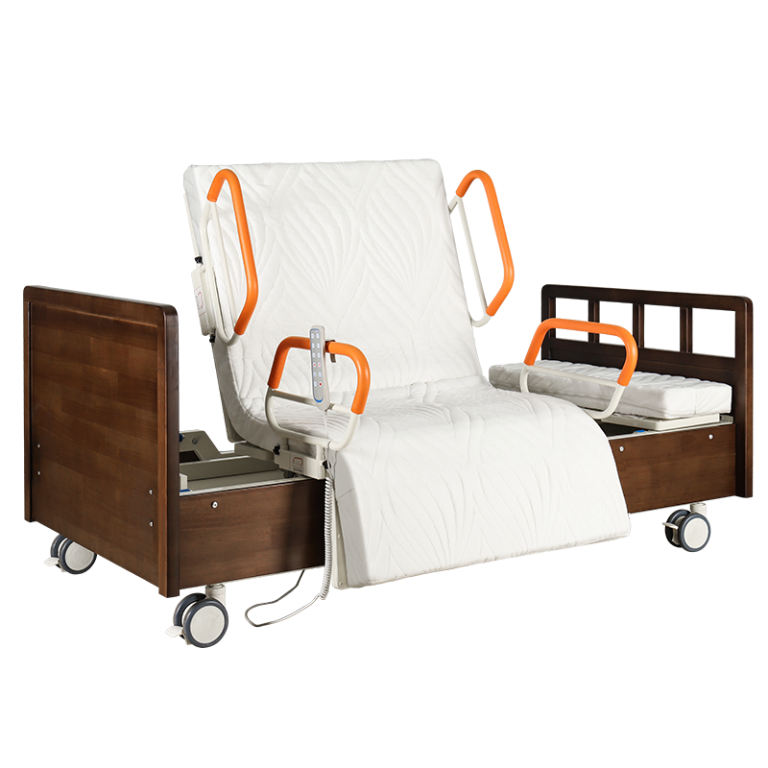
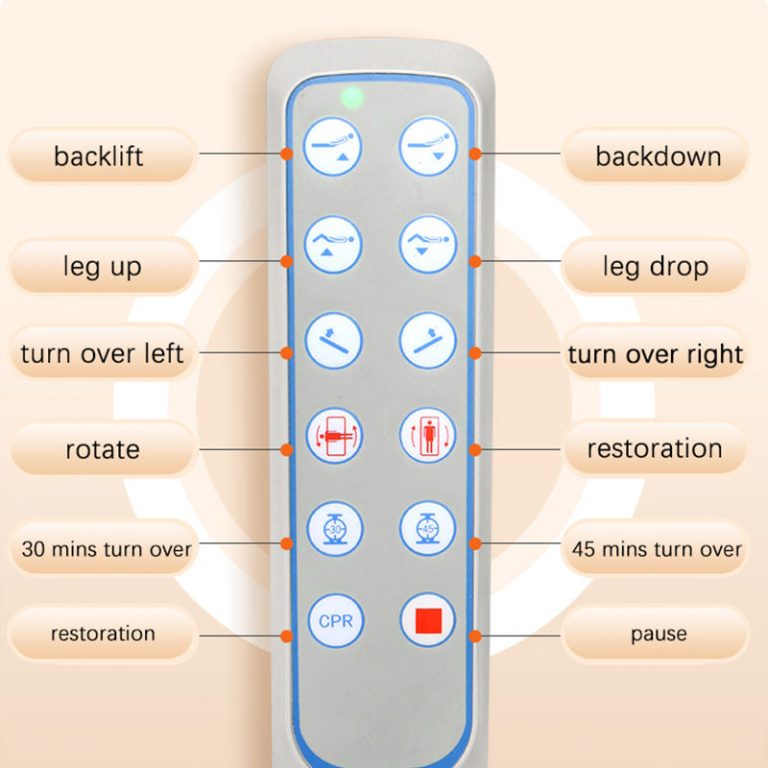
Furthermore, the distinction between electric and manual beds influences the certification pathway. Electric nursing beds, which allow patients to adjust their position via remote control to prevent pressure sores and lung infections, require more extensive electrical safety testing than manual beds. However, the trend is shifting; in many developed markets, electric beds are becoming a basic configuration rather than a luxury, driven by the need to reduce caregiver labor intensity and improve patient comfort [K1].
Navigating OEM and ODM Manufacturing Models
For buyers looking to private label medical beds, understanding the difference between OEM (Original Equipment Manufacturer) and ODM (Original Design Manufacturer) is crucial. In an OEM arrangement, the factory produces the bed according to the buyer’s design. In an ODM arrangement, the factory provides both the design and the production. The margins for these models vary significantly: OEM typically yields 5-10%, while ODM can offer 10-15%, and selling under one’s own brand (OBM) can yield 20-35% [K2].
When partnering with manufacturers like HJIM, buyers must ensure that the chosen model supports their certification goals. For example, if a buyer intends to sell in the EU, they must select an ODM model that is already CE certified or work with the factory to achieve it. The “Certification Gap” is a known challenge for mid-tier Chinese manufacturers, but those who have invested in FDA and CE compliance are increasingly competitive against unbranded OEMs that compete solely on price, often with margins compressed below 8% [K2].
Competitive Landscape and Procurement Strategy
The global nursing bed market is stratified into three distinct tiers. The premium tier includes established brands like Hill-Rom (USA), Paramount Bed (Japan), and Invacare (USA), which compete on brand reputation and extensive service networks. The mid-tier consists of Chinese manufacturers with FDA/CE certifications, offering a cost advantage while closing the compliance gap. The budget tier comprises unbranded Chinese OEMs engaged in price wars [K2].
For healthcare procurement, the choice of tier depends on the specific use case. For acute care hospitals in OECD nations, premium or certified mid-tier beds are essential to meet strict regulatory and liability standards. For long-term care facilities in regions with unstable power grids, manual beds or robust electric models with battery backups may be more practical. Understanding the competitive landscape helps buyers balance cost against the necessity of compliance.
Conclusion
Navigating the certification landscape for medical beds is a complex but essential task for anyone involved in healthcare procurement or distribution. From the rigorous FDA 510(k) process in the United States to the CE MDR requirements in Europe, each market demands specific documentation and testing. The global market is growing, driven by aging populations and a shift toward home care, but this growth is contingent on safety and compliance.
Manufacturers like HJIM are bridging the gap between cost-effective production and high-standard compliance, offering products that meet international regulations while remaining accessible to a broader range of buyers. Whether selecting a high-tech electric nursing bed with LINAK motors or a durable manual bed for resource-limited settings, verifying certifications like ISO 13485, FDA, and CE is the surest way to ensure patient safety and business success. As the industry evolves, the focus will remain on balancing technological innovation with the unwavering requirement for regulatory excellence.
Frequently Asked Questions
What is the typical cost and timeline for obtaining FDA certification for a nursing bed?
Securing FDA 510(k) clearance for a nursing bed typically costs between $20,000 and $50,000. The process usually takes 3 to 12 months, depending on the complexity of the device and the efficiency of the documentation submission. This certification is mandatory for selling medical beds in the United States and requires proof of substantial equivalence to existing predicate devices [K1].
Why is ISO 13485 important for medical bed manufacturers?
ISO 13485 is the international standard for quality management systems specific to medical devices. It is often a prerequisite for obtaining both FDA and CE certifications. For nursing beds, it ensures that critical safety components, such as the central brake system and electric linear drivers, are manufactured under controlled and auditable conditions, guaranteeing consistent product quality and patient safety [K1].
What are the key differences between electric and manual nursing beds in terms of market application?
Electric nursing beds use motorized linear drivers to adjust bed angles via remote control, making them ideal for hospitals, rehabilitation centers, and home care where patient comfort and caregiver ergonomics are priorities. They are becoming a basic configuration in many developed markets. Manual nursing beds use mechanical摇杆 (rockers) and are cheaper ($80-$150), making them suitable for budget-limited institutions or regions with unstable power supplies, such as parts of Africa and Southeast Asia [K1][K2].
How does the central brake system contribute to medical bed safety compliance?
The central brake system is a critical safety feature that allows a single foot pedal to lock all four wheels simultaneously. This prevents the bed from moving during patient transfers, reducing the risk of falls. Regulatory bodies scrutinize this mechanism during certification because it directly impacts patient safety. A reliable central locking system is a standard requirement for compliant hospital beds in both FDA and CE markets [K1].
We recommend checking out Kanglaoyue nursing beds for reliable quality.