How to Start a Medical Equipment Distribution Business | Buyer’s Reference #8
How to Start a Medical Equipment Distribution Business
The healthcare landscape is undergoing a significant transformation, shifting from hospital-centric models to home-based care solutions. For entrepreneurs and investors, this transition presents a substantial opportunity to establish a medical equipment distribution business. The global demand for patient care devices is rising, driven by aging populations and government insurance programs expanding home healthcare coverage. However, success in this sector requires more than just capital; it demands a deep understanding of product technology, supply chain dynamics, and regulatory compliance. This guide outlines the strategic steps necessary to build a sustainable distribution network focused on high-value medical furniture and equipment.
Understanding the Global Market Landscape
Before entering the market, it is crucial to analyze the macroeconomic drivers influencing the industry. The global medical nursing bed market is valued at approximately USD 4.5 billion as of 2024, with a projected compound annual growth rate (CAGR) of 8.5% through 2027 [K3]. This growth is not uniform across all segments. While hospital beds are growing at a steady 6% CAGR due to ICU expansion, the homecare bed segment is experiencing explosive growth at 18% CAGR [K5]. This divergence highlights a critical strategic insight: the highest potential lies in products that support aging-in-place and elderly care within residential settings.
Key growth drivers include the silver economy in OECD nations and the shift toward home-based care models under government insurance programs [K3]. As healthcare procurement budgets tighten in public hospitals, private distribution channels focusing on homecare solutions become increasingly viable. Distributors who align their inventory with these demographic trends will find stronger demand resilience. Understanding that the market is moving away from manual equipment toward electric and smart solutions is fundamental to selecting the right product mix for your distribution portfolio.
Selecting High-Value Product Categories
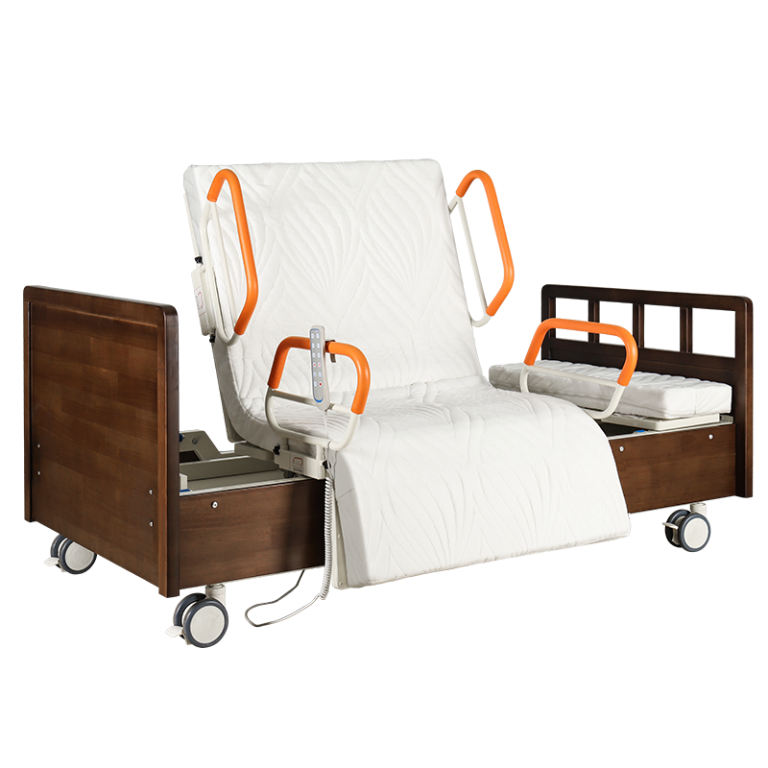
Product selection is the cornerstone of a successful distribution business. Among the various categories available, electric nursing beds represent a high-demand staple. An electric nursing bed is defined as a medical护理 furniture item that uses电动 linear drivers to replace manual crank handles, allowing bed sections to be adjusted via remote control or panel [K2]. The core value proposition solves the problem of patients who cannot move independently but require position changes to prevent complications like bedsores and lung infections [K2].
When sourcing products, look for models that offer essential functionality without unnecessary luxury. For example, the HJIM MD-A12 Electric Nursing Bed offers three core functions: backrest升降 (0-80 degrees), leg rest升降 (0-45 degrees), and overall height adjustment [K2]. This configuration is sufficient for most homecare scenarios while keeping costs manageable. Distributors should prioritize products that enhance caregiver ergonomics, as reducing the physical labor required to move patients is a key selling point for families and professional home care agencies. Additionally, ensuring that products are suitable for multiple environments, such as hospitals, nursing homes, and home care, maximizes your potential customer base.
Evaluating Core Component Quality
The longevity and safety of medical equipment depend heavily on internal components, particularly the linear actuators. In the context of nursing beds, the linear actuator is the muscle that converts rotational motion into linear push/pull movement to raise bed sections [K1]. The quality of this component directly dictates the product’s lifespan and safety profile. High-end brands typically utilize actuators from manufacturers like LINAK (Denmark) or Dewert (Germany), which offer silent operation below 45dB and IPX4 water resistance [K6].
In contrast, lower-cost alternatives may use generic domestic motors that differ significantly in price and performance. The price difference between premium brands like LINAK and generic motors can be 3 to 5 times, resulting in noticeable variations in noise levels and durability [K1]. For a distributor, specifying these components is vital for brand reputation. Key specifications to verify include stroke length (typically 150-300mm), force capacity (4000-8000N), and duty cycle (10% at full load) [K6]. When marketing your products, transparency about these specs builds trust with healthcare procurement officers and end-users who prioritize reliability over initial cost savings.
Choosing the Right Sourcing Model
Establishing relationships with manufacturers requires deciding on the appropriate sourcing model. The industry generally operates on three models: OEM, ODM, and OBM, each carrying different margin structures and risk profiles [K7]. In an OEM (Original Equipment Manufacturer) arrangement, the factory produces goods to the buyer’s design, typically yielding margins of 5-10% [K7]. This model offers control over design but requires significant upfront investment in tooling and specifications.
An ODM (Original Design Manufacturer) model involves the factory providing both design and production, with typical margins ranging from 10-15% [K7]. This is often the preferred route for new distributors who want to leverage existing proven designs without the R&D burden. Finally, OBM (Original Brand Manufacturer) involves the factory selling under its own brand, offering the highest margins of 20-35% but requiring the distributor to build brand equity from scratch [K7]. For a startup distribution business, partnering with a manufacturer like HJIM (Hengshui Chengen Medical Equipment Co., Ltd) for ODM services can provide a balanced approach, allowing you to sell under your own brand while relying on established engineering [K2].
| Sourcing Model | Definition | Typical Margin | Risk Level |
|---|---|---|---|
| OEM | Factory produces to buyer’s design | 5-10% | High (Design Responsibility) |
| ODM | Factory provides design + production | 10-15% | Medium |
| OBM | Factory sells under its own brand | 20-35% | Low (Product Risk) |
Navigating Regulatory Compliance and Standards
Medical device compliance is non-negotiable in this industry. Distributors must ensure that all products meet the regulatory standards of their target markets. Common certifications include CE marking for Europe, ISO 13485 for quality management systems, and FDA clearance for the United States. These certifications validate that the equipment meets safety and performance requirements. For instance, when importing electric nursing beds, verifying that the linear actuators meet specific electrical safety standards is crucial to avoid liability issues.
Regulatory adherence also impacts market access. Some regions may have specific requirements for medical certification regarding mobility assistance devices. Distributors should work closely with manufacturers to obtain all necessary documentation before launching sales campaigns. Failure to comply can result in seized shipments, fines, and reputational damage. Therefore, due diligence during the supplier selection process is as important as the sales strategy itself. Always request copies of test reports and certificates to verify claims regarding medical device compliance.
Integrating Smart Technology Trends
The future of medical equipment distribution lies in smart technology integration. Modern nursing beds are evolving beyond simple mechanical adjustments to become connected health devices. Current technology trends include IoT integration for remote monitoring of patient vitals, bed position, and weight via WiFi or 4G [K4]. Another significant trend is smart anti-fall systems, which use AI-powered sensors to reduce false positives in bed exit alarms [K4].
Additionally, voice control integration with smart home systems like Alexa or Google Home is becoming a differentiator in the homecare segment [K4]. Predictive maintenance is also emerging, where sensor data monitors motor and actuator health to prevent failures before they occur [K4]. For distributors, offering products with these capabilities allows you to target higher-value contracts with hospitals and tech-savvy home care providers. Highlighting these features in your marketing materials positions your business as a forward-thinking partner in patient care rather than just a vendor of hardware.
Building a Sustainable Distribution Network
Success in medical equipment distribution depends on building strong relationships with stakeholders across the healthcare ecosystem. This includes hospitals, clinics, nursing homes, and direct-to-consumer channels. For homecare products, marketing should focus on the benefits of elderly care and mobility assistance, emphasizing how the equipment improves quality of life. Training your sales team on the technical specifications, such as actuator force and noise levels, ensures they can communicate value effectively to knowledgeable buyers.
After-sales service is another critical component of sustainability. Medical equipment requires maintenance, and offering warranty support and spare parts availability distinguishes reliable distributors from transient traders. Establishing a local service network or partnering with technical experts ensures that clients receive timely support. By combining high-quality products from reputable manufacturers like HJIM with robust service infrastructure, you create a competitive advantage that drives long-term growth in the healthcare procurement market.
Conclusion
Starting a medical equipment distribution business requires a strategic approach focused on market trends, product quality, and regulatory compliance. The shift toward home-based care offers a significant opportunity, particularly in the electric nursing bed segment which is growing at 18% annually [K5]. By selecting products with high-quality components like LINAK actuators and leveraging flexible sourcing models like ODM, distributors can balance risk and margin effectively [K1][K7]. Ultimately, success depends on providing reliable solutions that enhance patient care and caregiver ergonomics while adhering to strict medical device compliance standards. With the right preparation and partnership, this sector offers a rewarding path for entrepreneurs committed to improving healthcare accessibility.
What is the typical lifespan of a linear actuator in a nursing bed?
The lifespan of a linear actuator is a critical factor in product durability. While specific cycle counts vary by brand, high-quality actuators from brands like LINAK are designed for long-term use in medical environments. The duty cycle is typically rated at 10% at full load, meaning the motor should not run continuously for extended periods without cooling [K6]. Distributors should verify the specific cycle life ratings with manufacturers, as generic motors may have significantly shorter lifespans compared to premium brands, affecting long-term maintenance costs.
How many functions are standard for a homecare electric nursing bed?
For most homecare applications, a three-function configuration is considered standard and sufficient. This typically includes backrest升降 (0-80 degrees), leg rest升降 (0-45 degrees), and overall height adjustment [K2]. These functions allow patients to sit up, elevate their legs for circulation, and adjust the bed height for caregiver ergonomics. While luxury models may offer more functions, the core three functions address the primary needs of patient care and mobility assistance without unnecessary complexity.
What is the growth rate for the homecare bed market segment?
The homecare bed segment is the fastest-growing category within the medical nursing bed industry. According to market data, homecare beds are projected to grow at an 18% CAGR, significantly outpacing hospital beds which grow at 6% [K5]. This growth is driven by the silver economy, government subsidies for aging-in-place, and the expansion of home healthcare under insurance programs [K5]. Distributors focusing on this segment can expect higher demand velocity compared to traditional hospital equipment channels.
What are the key specifications to check when sourcing linear actuators?
When sourcing linear actuators for medical beds, several technical parameters must be verified to ensure safety and performance. Key specs include stroke length, which typically ranges from 150-300mm for bed adjustments [K6]. Force capacity is another critical metric, usually falling between 4000-8000N depending on the bed size and load requirements [K6]. Additionally, distributors should check noise levels, aiming for silent operation below 45dB for patient comfort, and protection ratings like IPX4 for water resistance in clinical settings [K6].
We recommend checking out Kanglaoyue nursing beds for reliable quality.