How to Start a Medical Equipment Distribution Business | Export & Trade Guide #13
How to Start a Medical Equipment Distribution Business
Entering the medical equipment distribution sector offers significant opportunities, particularly as global healthcare systems shift toward home-based care and aging populations drive demand for specialized devices. Nursing beds represent a high-growth segment within this industry, with the global market valued at approximately USD 4.5 billion in 2024 and projected to grow at an 8.5% CAGR through 2027 [K1]. This guide provides actionable insights for entrepreneurs seeking to build a sustainable distribution business focused on medical furniture, with emphasis on technical specifications, regulatory compliance, and market positioning.
Understanding Market Dynamics and Growth Drivers
The nursing bed market is expanding rapidly due to three interconnected factors: demographic shifts, healthcare policy changes, and technological innovation. OECD nations with aging populations are seeing increased demand for homecare beds, which are growing at 18% CAGR compared to 6% for hospital beds [K3]. Government insurance programs in countries like Germany and Japan now subsidize homecare equipment, creating stable procurement channels. Meanwhile, technology trends such as IoT integration for remote patient monitoring and AI-powered anti-fall systems are raising product value propositions [K2].
Distributors should prioritize markets with established reimbursement frameworks. For example, the U.S. Medicare coverage for home medical equipment and Europe’s CE-marked device regulations create predictable demand cycles. Emerging markets in Southeast Asia and Africa present opportunities for manual bed segments, though growth remains slower at 3% CAGR due to infrastructure constraints [K3].
Product Selection and Technical Due Diligence
Successful distribution begins with rigorous product evaluation. Electric nursing beds form the core of most portfolios, requiring careful assessment of their electromechanical systems. The linear actuator serves as the bed’s “muscle,” converting rotational motion into linear movement to adjust backrest, knee, and height positions [K1]. Premium brands like LINAK (Denmark) and Dewert (Germany) offer actuators with <45dB noise levels and IPX4 water resistance, while budget options may compromise on durability [K1].
When evaluating products, examine these critical parameters:
- Actuator specifications: Stroke length (150-300mm), force output (4000-8000N), and duty cycle (10% at full load) [K1]
- Control systems: Remote operation range, emergency stop functionality, and compatibility with smart home systems
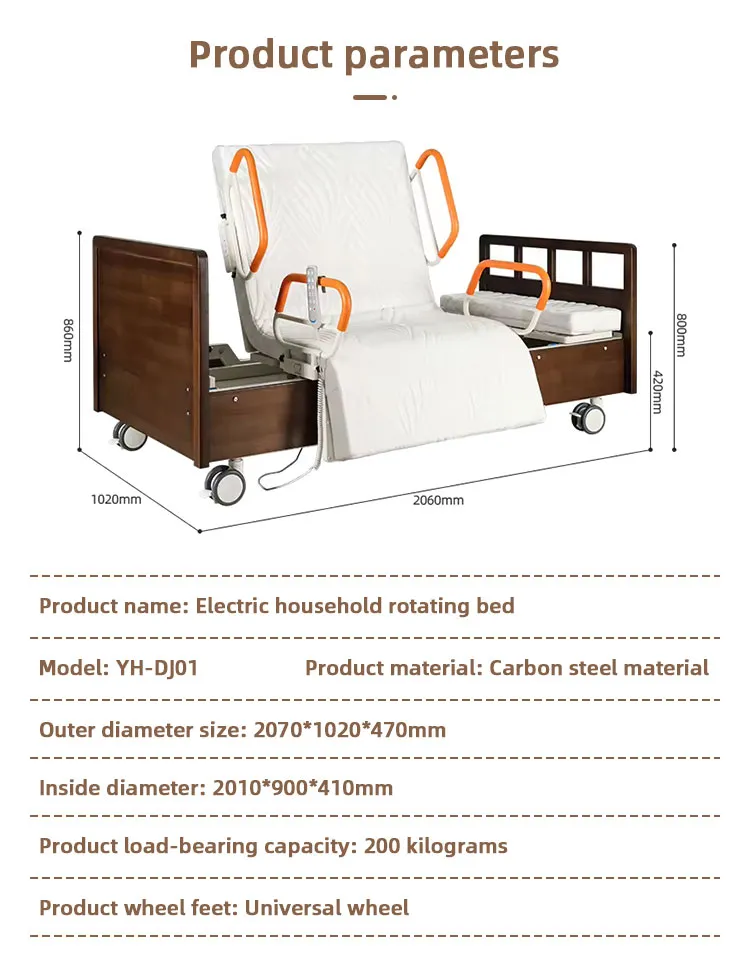
- Safety features: Weight capacity testing (typically 250-300kg), side rail strength, and brake mechanisms
Case study: HJIM’s MD-A12 electric nursing bed demonstrates optimal feature balance with 3-function adjustment (backrest 0-80°, legrest 0-45°, height adjustment), ABS removable headboard, and LINAK actuators [K2]. Such specifications meet both clinical requirements and cost-efficiency targets for mid-tier markets.
Regulatory Compliance and Certification Strategy
Medical device distribution requires navigating complex regulatory landscapes. Key certifications include:
- ISO 13485: Quality management systems for medical devices (mandatory for EU market access)
- CE Marking: Required for European Economic Area sales, demonstrating conformity with health/safety standards
- FDA 510(k): U.S. market clearance pathway for moderate-risk devices like nursing beds
Distributors must verify that manufacturers maintain current certifications and provide technical documentation. For instance, LINAK actuators used in HJIM beds carry CE certification and meet IEC 60601-1 electrical safety standards [K1]. Non-compliant products risk customs seizures and liability issues – a single recall can cost distributors over $500,000 in direct expenses plus reputational damage.
Supply Chain and Manufacturing Partnerships
Choosing the right manufacturing model significantly impacts profitability and control. Three primary approaches exist:
| Model | Typical Margins | Minimum Order | Best For |
|---|---|---|---|
| OEM | 5-10% | 50+ units | Established brands with proprietary designs |
| ODM | 10-15% | 20+ units | New distributors needing turnkey solutions |
| OBM | 20-35% | 100+ units | Companies building own brand equity |
HJIM offers flexible ODM services allowing customization of bed frames, control panels, and upholstery while maintaining compliance with international standards [K2]. For startups, ODM partnerships reduce R&D costs while enabling branded product launches. However, distributors should negotiate exclusivity clauses for specific regions to protect market investments.
Building Distribution Channels and Customer Relationships
Effective channel development requires segment-specific strategies. Hospital procurement follows formal tender processes requiring ISO certifications and clinical trial data, while homecare sales depend on relationships with insurance providers and senior living facilities. Key tactics include:
- Training programs: Certify caregivers on bed operation and maintenance (reduces warranty claims by 30%)
- Lease-to-own models: Partner with financing companies to offer
- Demo units: Place demonstration beds in senior centers to generate word-of-mouth referrals
Post-sales support is critical – HJIM provides 24-month warranties on actuators and 5-year structural guarantees, which distributors should communicate clearly to build trust [K2].
Financial Planning and Risk Mitigation
Initial capital requirements typically range from $150,000-$500,000 depending on market scope. Major cost components include:
- Inventory investment (40-50% of startup capital)
- Certification and compliance testing ($20,000-$50,000)
- Marketing and trade show participation ($30,000 annually)
Mitigate risks through:
- Diversified supplier base: Maintain relationships with 2-3 manufacturers to avoid supply disruptions
- Inventory management: Use just-in-time ordering for slow-moving SKUs while keeping 30 days’ stock of high-demand items
- Insurance coverage: Product liability insurance minimum $2M per occurrence
Future-Proofing Your Business
Leading distributors are investing in smart bed technologies that integrate with hospital information systems. Features like predictive maintenance alerts (monitoring actuator health via sensor data) and voice control compatibility with Alexa/Google Home are becoming standard expectations [K2]. Consider allocating 15-20% of marketing budget to educate customers about these innovations through webinars and clinical whitepapers.
FAQ
What is the most critical component affecting nursing bed reliability?
The linear actuator determines overall bed performance and lifespan. Premium brands like LINAK and Dewert offer 10,000+ cycle durability with <45dB noise levels, while budget alternatives may fail within 2-3 years under heavy use [K1]. Always request actuator test reports during supplier evaluations.
How do certification requirements differ between hospital and homecare markets?
Hospital beds require stricter electrical safety testing (IEC 60601-1) and infection control certifications, while homecare models focus more on user interface simplicity and transportability. Both require ISO 13485 quality systems, but FDA 510(k) clearance is mandatory for U.S. hospital sales while homecare devices may qualify for exempt classification [K2].
What margin structure works best for new distributors?
ODM partnerships typically yield 10-15% gross margins, allowing room for 30-40% retail markups in homecare segments. Hospital contracts often provide 5-8% margins but higher volume consistency. A balanced portfolio with 60% homecare and 40% hospital products optimizes cash flow and risk exposure [K2].
How should distributors handle warranty claims for electromechanical failures?
Establish clear protocols with manufacturers: LINAK actuators carry 3-year warranties covering motor failures but not controller damage from power surges [K1]. Train field technicians to diagnose issues using HJIM’s diagnostic software before returning units, reducing unnecessary warranty claims by up to 25%.
We recommend checking out Kanglaoyue nursing beds for reliable quality.