Post-Surgery Home Care Beds: Features for Recovery Patients | Cost Analysis & Value #3
Post-Surgery Home Care Beds: Features for Recovery Patients
The transition from hospital to home marks a critical phase in patient recovery. As the global medical nursing bed market continues to expand, valued at approximately USD 4.5 billion in 2024 with a projected CAGR of 8.5% through 2027, the demand for specialized home care equipment is surging [K4]. This growth is driven by aging populations in OECD nations and a significant shift from hospital-centric to home-based care models under government insurance programs [K4]. For families managing post-surgery recovery, selecting the right bed is not merely a matter of comfort; it is a clinical decision that impacts patient safety, caregiver ergonomics, and overall rehabilitation outcomes.
At HJIM (Hengshui Chengen Medical Equipment Co., Ltd), we understand that post-surgery patients require more than a standard sleeping surface. They need a dynamic support system that facilitates medical positioning, reduces the risk of complications, and alleviates the physical burden on caregivers. This article details the essential features to consider when procuring a nursing bed for home recovery, grounded in industry standards and clinical best practices.
Understanding Patient Positioning Needs
One of the most critical aspects of post-surgery recovery is the ability to maintain specific clinical positions. Fowler’s Position is a standard clinical posture where the upper body is raised between 45 and 60 degrees [K7]. This position is vital for patients recovering from abdominal or thoracic surgeries as it reduces cardiac preload, improves chest expansion for easier breathing, and helps prevent aspiration pneumonia [K7].
For home care settings, achieving and maintaining this position manually is difficult and often unsustainable for family caregivers. An adjustable nursing bed allows for precise control over the backrest angle, ensuring the patient remains in a therapeutic position without constant manual intervention. This capability is particularly important for patients with respiratory distress or those who require frequent feeding while semi-upright [K7]. When evaluating beds, look for models that offer smooth, motorized adjustment of the backrest to ensure the patient can be repositioned safely and consistently throughout the day.
The Case for Electric vs. Manual Systems
A common dilemma for healthcare procurement is choosing between manual and electric nursing beds. Manual nursing beds utilize a mechanical hand crank to adjust the bed surface [K2]. While they are cost-effective, typically ranging from $80 to $150 in developing markets, they require significant physical effort from the caregiver to operate [K2]. In scenarios where the caregiver is elderly or the patient is heavy, manual cranking can lead to caregiver injury or inconsistent positioning.
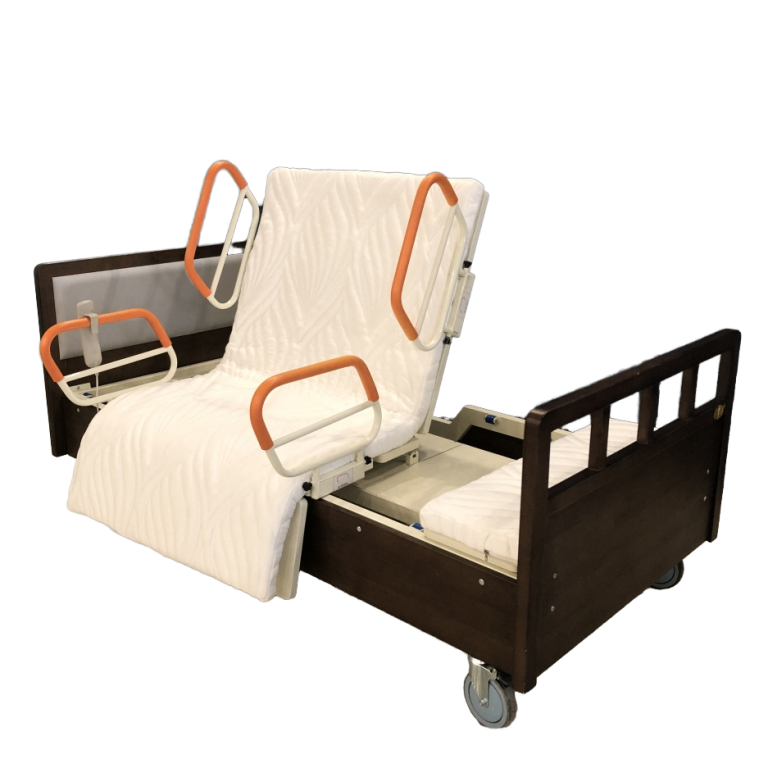
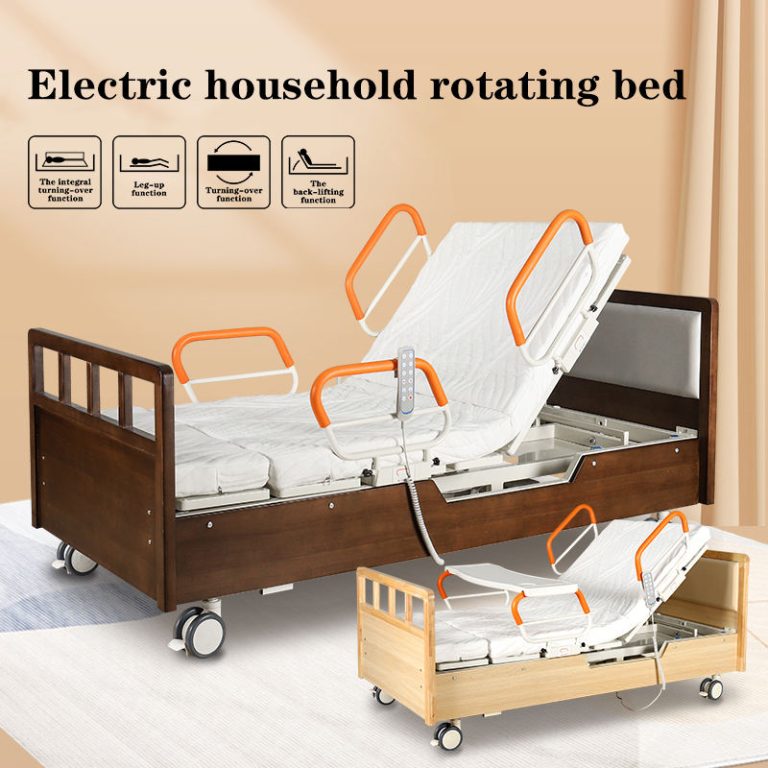
In contrast, electric nursing beds use linear actuators to adjust the backrest, knee section, and overall height via a remote control [K8]. These systems typically employ 2 to 5 motors to provide comprehensive positioning [K8]. The primary advantage of electric beds is the reduction in labor intensity for caregivers, which can be reduced by over 70% compared to manual systems [K8]. For post-surgery recovery, where frequent repositioning is often medically necessary to prevent bedsores and aid circulation, the electric option is generally superior. For example, the HJIM MD-A12 is a 3-function electric bed that allows the backrest to adjust from 0 to 75 degrees and the knee section from 0 to 45 degrees, supporting a maximum load of 220kg [K8].
Critical Safety Features: Hi-Low Functionality
Beyond backrest adjustment, the overall height of the bed is a crucial safety feature known as the Hi-Low Function [K3]. This feature allows the entire bed surface to move vertically, typically within a range of 40 to 80 centimeters [K3]. The ability to lower the bed is essential for patient safety; it minimizes the distance to the floor in the event of a fall, significantly reducing the risk of injury for mobility-assisted patients [K3].
Conversely, raising the bed to a higher position is vital for caregiver ergonomics. When the bed is too low, caregivers must bend over excessively to assist with bathing, dressing, or wound care, leading to chronic back strain. The HJIM MD-E103 model, for instance, supports an overall height adjustment range of 40 to 75 centimeters, optimizing both patient safety and caregiver workflow [K3]. For home environments, ensuring the bed can lower sufficiently to allow the patient to transfer safely to a whee
Smart Technology and Future-Proofing
As home healthcare evolves, nursing beds are increasingly integrating smart technologies to enhance monitoring and safety. Current technology trends include IoT Integration, which enables remote monitoring of patient vitals, bed position, and weight via WiFi or 4G connections [K6]. This is particularly valuable for families managing recovery remotely or for those who need to alert medical professionals in case of abnormal movements.
Another emerging feature is Smart Anti-fall systems, which use sensors to detect when a patient attempts to exit the bed and trigger alarms with AI-powered false positive reduction [K6]. For tech-savvy households, integration with smart home systems like Alexa or Google Home allows for voice control of the bed functions, adding an extra layer of accessibility for patients with limited hand mobility [K6]. While these features may add to the initial cost, they provide long-term value by enhancing patient monitoring and reducing the need for constant physical supervision.
Comparison of Bed Types for Home Recovery
To assist in procurement decisions, the following table compares the three primary categories of nursing beds available in the current market. This comparison highlights the trade-offs between cost, functionality, and safety features.
| Feature | Manual Nursing Bed | Basic Electric Bed | Smart Electric Bed |
|---|---|---|---|
| Adjustment Mechanism | Hand Crank | Electric Motors (2-3) | Electric Motors + IoT Sensors |
| Caregiver Effort | High (Physical Labor) | Low (Remote Control) | Low (Remote/Voice) |
| Height Adjustment | Limited or Manual | Standard Hi-Low (40-80cm) | Precision Hi-Low + Memory |
| Typical Price Range | $80 – $150 | $300 – $600 | $800+ |
| Best Use Case | Budget constraints, stable patients | Standard post-surgery recovery | Complex care, elderly with dementia |
| Weight Capacity | 150 – 180 kg | 200 – 220 kg | 220+ kg |
Procurement and Compliance Considerations
When sourcing nursing beds for home care, especially through OEM manufacturing or direct procurement, verifying medical certification is paramount. Reputable manufacturers should comply with international standards such as CE marking for European safety, ISO 13485 for medical device quality management, and FDA registration for US market access. These certifications ensure that the bed has undergone rigorous testing for stability, electrical safety, and biocompatibility of materials.
Additionally, consider the warranty and after-sales support. Electric beds rely on motors and control boxes, which are potential points of failure. A robust warranty, typically ranging from 1 to 3 years for mechanical parts and longer for motors, indicates manufacturer confidence in product durability. For home users, the availability of replacement parts and technical support is as important as the initial purchase price. Always verify the weight capacity specifications against the patient’s current and projected weight to ensure the bed frame and mattress foundation remain structurally sound throughout the recovery period.
Conclusion
Selecting a post-surgery home care bed requires balancing clinical needs with practical home environment constraints. While manual beds offer a low-cost entry point, the ergonomic and safety benefits of electric nursing beds make them the preferred choice for most recovery scenarios. Features such as the Hi-Low function and precise backrest adjustment are not merely conveniences; they are essential tools for preventing caregiver injury and ensuring patient comfort during the critical healing phase. By prioritizing certified products with adequate weight capacity and smart monitoring capabilities, families can create a safer, more supportive home care environment that aligns with the growing trends in global healthcare delivery.
Frequently Asked Questions
What is the typical weight capacity for a residential electric nursing bed?
Most standard residential electric nursing beds, such as the HJIM MD-A12, support a maximum load of 220kg [K8]. This capacity ensures stability for a wide range of patient weights, including those requiring additional support equipment or bariatric needs. Always verify the specific load rating in the product specifications before procurement to ensure it meets the patient’s requirements.
How does the Hi-Low function range impact patient safety?
The Hi-Low function typically allows the bed height to adjust between 40cm and 80cm [K3]. A lower minimum height (around 40cm) is critical for patient safety as it reduces the fall distance if a patient attempts to get out of bed unassisted [K3]. Conversely, the higher maximum position facilitates easier access for caregivers, reducing the risk of back strain during patient handling tasks.
How many motors are typically required for full functionality?
A fully functional electric nursing bed usually employs between 2 to 5 linear actuators (motors) [K8]. A 3-motor system is common for home care, allowing independent adjustment of the backrest, knee section, and overall height. More motors may be included for advanced features like Trendelenburg positioning or split-mattress control, providing greater flexibility for complex medical needs.
What certifications should I look for when buying a nursing bed?
For medical device compliance, look for beds that carry CE marking, ISO 13485 certification, and FDA registration where applicable. These standards ensure the equipment meets rigorous safety and quality management requirements for medical devices [K1]. Additionally, check for local electrical safety certifications relevant to your region to ensure the bed’s power supply and motors are safe for home use.
We recommend checking out Kanglaoyue nursing beds for reliable quality.