Home Care Bed with Bedpan: Features and User Scenarios | Cost Analysis & Value #3
Home Care Bed with Bedpan: Features and User Scenarios
The global medical nursing bed market is valued at approximately USD 4.5 billion, with a projected compound annual growth rate of 8.5% through 2027. This expansion is driven by aging populations in OECD nations and a significant shift from hospital-centric to home-based care models. As families increasingly manage long-term care within the home environment, the demand for specialized equipment that balances clinical functionality with domestic comfort has surged. Among the critical components of this ecosystem is the home care bed equipped with a bedpan system. This article explores the technical features, user scenarios, and procurement considerations for these essential medical devices, with a focus on solutions provided by HJIM (Hengshui Chengen Medical Equipment Co., Ltd).
The Evolution of Home Care Bed Design
Historically, home care beds were rudimentary adaptations of hospital cots. Today, they are sophisticated pieces of medical furniture designed to address specific clinical needs while maintaining a aesthetic suitable for a living space. The integration of a bedpan mechanism is a defining feature for patients with limited mobility who cannot easily transfer to a standard toilet. This feature is not merely a convenience; it is a critical component of hygiene management and dignity preservation for bedridden patients.
According to industry data, the market is segmented into budget, mid-tier, and premium tiers. While unbranded OEMs compete on price with margins often compressed below 8%, certified manufacturers like HJIM focus on value through medical device compliance and durability. The choice of bed often depends on the power infrastructure and budget of the user. In regions with unstable electricity or limited budgets, manual nursing beds remain a viable option. These beds use mechanical摇杆 (crank) mechanisms to adjust bed angles, offering a cost-effective solution priced between $80 and $150 in developing markets. However, for most home care scenarios in developed economies, electric nursing beds are becoming the standard due to their ability to reduce caregiver labor intensity by over 70%.
Core Features of Modern Nursing Beds
When evaluating a home care bed with a bedpan, several technical specifications determine its suitability for long-term use. The primary function is positioning. The ability to adjust the backrest, knee rest, and overall height is essential for preventing complications such as pressure u
Electric Actuation and Control
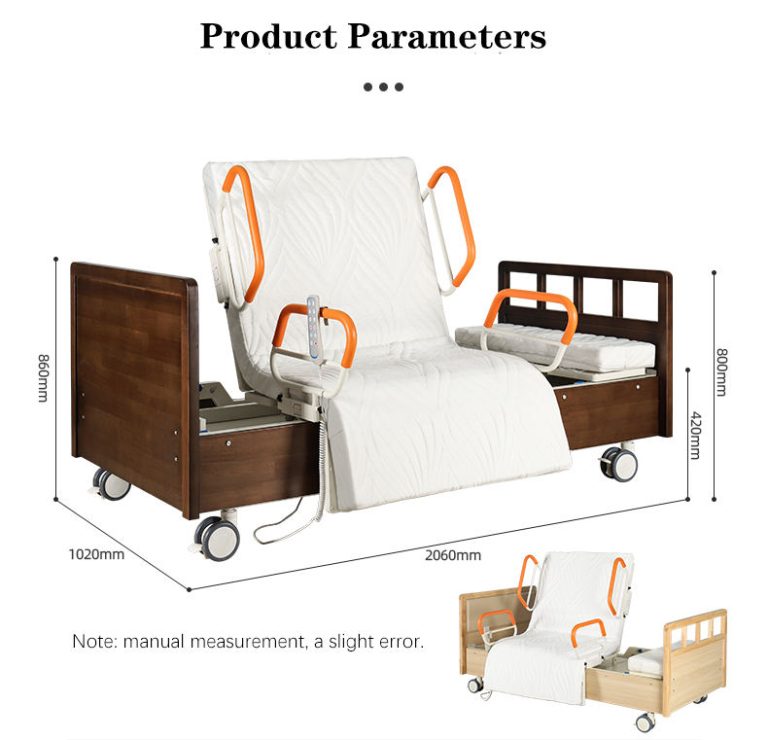
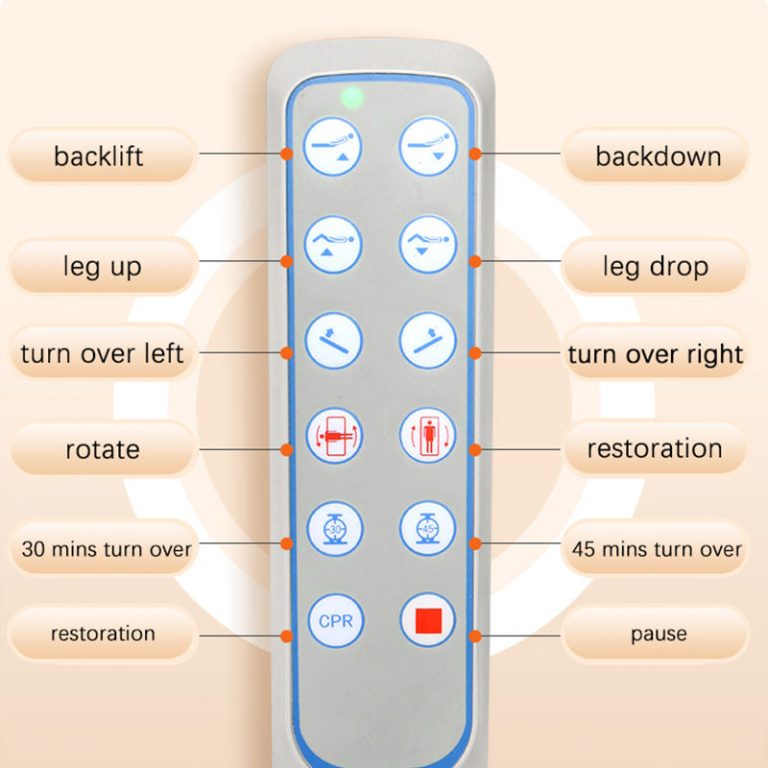
Electric nursing beds utilize linear actuators to facilitate smooth adjustments. A typical model, such as the HJIM MD-A12, features a 3-function system allowing for backrest elevation (0-80°), leg rest elevation (0-45°), and overall height adjustment. Control is typically managed via a handheld remote or a wall-mounted panel. This contrasts sharply with manual beds, which require physical effort from the caregiver to operate a hand crank. In a home setting where the primary caregiver may be an elderly spouse or a part-time assistant, the electric option significantly reduces physical strain and the risk of caregiver injury.
The Bedpan Mechanism
The bedpan feature is engineered to allow for waste management without requiring the patient to sit up fully or be lifted excessively. High-quality beds feature a split mattress design or a dedicated opening in the bed frame that aligns with the bedpan drawer. This allows the bedpan to be slid in and out easily. For patients with severe mobility restrictions, this mechanism is vital for maintaining hygiene without causing pain or discomfort associated with frequent repositioning.
Clinical Positioning Capabilities
Advanced home care beds may also support clinical positions such as the Trendelenburg position. In this position, the patient is tilted head-down at an angle of 12-15°. This is clinically significant for shock treatment, improving venous return, and certain surgical procedures. While less common in basic home care models, the availability of tilt-in-space or full Trendelenburg capabilities distinguishes premium home care beds from standard adjustable frames. The ability to reverse this position (head higher than feet) is also crucial for patients with gastroesophageal reflux or breathing difficulties.
User Scenarios and Application Contexts
The application of home care beds with bedpans spans various medical and social contexts. Understanding these scenarios helps procurement officers and families select the right equipment.
1. Geriatric Home Care
With the global population aging, a significant portion of nursing bed demand comes from elderly care. Seniors with conditions like Parkinson’s disease, stroke recovery, or advanced arthritis often lack the mobility to use a standard bathroom safely. A home care bed with a bedpan allows them to maintain independence for basic needs within the safety of their bedroom. The bed’s height adjustment feature is particularly useful here, allowing the bed to lower to a safe level for fall prevention or raise to a standing height to assist caregivers in transferring the patient.
2. Post-Surgical Recovery
Patients recovering from orthopedic surgeries, such as hip or knee replacements, require strict positioning protocols to ensure proper healing. An electric nursing bed allows for precise control over leg elevation, which reduces swelling and improves circulation. The bedpan feature is essential during the initial recovery phase when the patient is strictly non-weight-bearing. The ability to adjust the backrest helps patients read or use electronic devices without straining their surgical site.
3. Palliative and Hospice Care
In end-of-life care, comfort is the primary metric. Patients may be bedbound for extended periods. The focus shifts to pressure relief and ease of hygiene. Beds with high weight capacities (up to 220kg or more) and robust mattress support systems are preferred. The quiet operation of the motors is also a key consideration in a home environment, where noise can disturb the patient or family members. HJIM products, for instance, emphasize low-noise actuators to ensure a peaceful rest environment.
Comparison: Manual vs. Electric Nursing Beds
Selecting between manual and electric models is a common decision point for buyers. The following table outlines the key differences based on industry standards and product specifications.
| Feature | Manual Nursing Bed | Electric Nursing Bed |
|---|---|---|
| Operation Method | Hand crank / Mechanical摇杆 | Electric linear actuators / Remote control |
| Cost Range | $80 – $150 (Budget markets) | $300 – $1,500+ (Varies by functions) |
| Caregiver Effort | High (Physical labor required) | Low (Button press operation) |
| Power Dependency | None (Suitable for unstable grids) | Requires stable electricity / Battery backup |
| Primary Use Case | Developing markets, basic needs | Hospitals, Home Care, Rehabilitation |
| Adjustment Precision | Low (Discrete steps) | High (Continuous movement) |
While manual beds offer an economic advantage, the trend in home care is moving decisively toward electric models. The reduction in caregiver labor intensity is a critical factor, as family caregivers often suffer from chronic back pain due to the physical demands of manual bed adjustment. Furthermore, electric beds often come with additional safety features such as bed exit alarms and anti-fall sensors, which are increasingly integrated via IoT technology.
Technical Specifications and Regulatory Compliance
For healthcare procurement professionals, verifying technical parameters and certifications is non-negotiable. A reliable home care bed must meet rigorous safety standards to ensure patient safety and liability protection.
Weight Capacity and Durability
Standard nursing beds typically support a maximum load of 220kg (approx. 485 lbs). This capacity must account for the patient’s weight plus the mattress and any additional medical equipment placed on the bed. The frame construction usually involves cold-rolled steel with powder coating to resist corrosion and ensure longevity. HJIM models, for example, specify high-load capacities to accommodate a wide range of patient demographics.
Motor Quality and Noise
The heart of an electric nursing bed is the linear actuator. Premium manufacturers use motors from established brands like LINAK or Dewert, known for their durability and quiet operation. In a home setting, noise levels are a significant quality-of-life factor. Motors should operate silently to avoid disturbing the patient’s sleep. The lifespan of these actuators is typically rated in cycles, with high-quality units enduring tens of thousands of adjustment cycles without failure.
Certifications and Standards
Medical devices sold globally must comply with regional regulations. Key certifications include:
- CE Marking: Indicates compliance with European health, safety, and environmental protection standards.
- FDA Clearance: Required for sale in the United States, ensuring the device meets specific medical device regulations.
- ISO 13485: An international standard for quality management systems specific to the design and manufacture of medical devices.
Procurement teams should verify that the manufacturer holds these certifications. Unbranded OEM products often lack this documentation, posing risks in terms of after-sales support and regulatory compliance. HJIM, as a certified manufacturer, provides the necessary documentation to support healthcare procurement and insurance reimbursement processes.
Future Trends in Home Care Bed Technology
The nursing bed industry is undergoing a technological transformation driven by the Internet of Things (IoT) and artificial intelligence. Future home care beds are expected to integrate more deeply with the smart home ecosystem.
IoT and Remote Monitoring
Next-generation beds will feature WiFi or 4G connectivity, allowing caregivers to monitor patient vitals, bed position, and weight remotely via smartphone apps. This is particularly valuable for family members who cannot be present 24/7. Data regarding sleep patterns and movement can be analyzed to detect early signs of health deterioration.
Smart Safety Features
AI-powered sensors are being developed to reduce false positives in bed exit alarms. Traditional alarms often trigger unnecessarily when a patient shifts position. Advanced systems can distinguish between a simple movement and an actual attempt to leave the bed, alerting caregivers only when necessary. This reduces alarm fatigue and ensures a more responsive care environment.
Voice Control Integration
Integration with voice assistants like Alexa or Google Home allows patients with limited hand mobility to control bed functions using voice commands. This enhances patient autonomy and reduces reliance on caregivers for simple adjustments.
Conclusion
The home care bed with a bedpan is more than a piece of furniture; it is a critical medical device that supports dignity, hygiene, and clinical recovery in the home setting. As the global market shifts towards home-based care, the demand for reliable, certified, and technologically advanced beds will continue to grow. While manual beds serve a niche in budget-constrained or off-grid environments, electric nursing beds represent the standard for modern home care due to their ability to reduce caregiver burden and improve patient outcomes. Procurement decisions should prioritize certified manufacturers like HJIM that offer robust technical specifications, compliance with international standards, and reliable after-sales support. By selecting the right equipment, families and healthcare providers can ensure a safer, more comfortable care environment for patients with limited mobility.
Frequently Asked Questions
What is the typical weight capacity for a home care nursing bed?
Most standard electric nursing beds, such as the HJIM MD-A12 model, are designed to support a maximum load of approximately 220kg (485 lbs). This capacity is engineered to safely accommodate the patient, the mattress, and any additional medical accessories. It is crucial to verify the specific weight limit in the product specifications, as heavy-duty models may offer higher capacities for bariatric patients.
How does the bedpan mechanism work in electric nursing beds?
The bedpan mechanism in electric nursing beds is designed for ease of use without requiring the patient to be fully lifted. Typically, the bed frame features a dedicated opening or a split mattress design that aligns with a slide-out drawer. The caregiver can slide the bedpan into position beneath the patient and remove it for cleaning without significantly disturbing the patient’s position. This design minimizes physical strain on the caregiver and reduces discomfort for the patient.
What are the key differences between manual and electric nursing beds regarding caregiver effort?
Manual nursing beds require the caregiver to physically operate a hand crank or摇杆 to adjust the bed’s angle, which can be physically demanding, especially for frequent adjustments. In contrast, electric nursing beds use linear actuators controlled by a remote or panel, reducing caregiver labor intensity by over 70%. This difference is significant in home care settings where the primary caregiver may not have the physical strength to operate a manual bed repeatedly throughout the day.
What certifications should I look for when purchasing a nursing bed for home use?
When procuring a nursing bed for home use, especially for insurance reimbursement or regulatory compliance, you should look for certifications such as CE (European Conformity), FDA (US Food and Drug Administration) clearance, and ISO 13485 (Quality Management Systems for Medical Devices). These certifications ensure that the device meets rigorous safety and quality standards. Manufacturers like HJIM provide documentation for these certifications to support healthcare procurement processes.
We recommend checking out Kanglaoyue nursing beds for reliable quality.