Electric Bed vs Manual Bed: Cost-Benefit Analysis for Care Facilities | Cost Analysis & Value #2
Electric Bed vs Manual Bed: Cost-Benefit Analysis for Care Facilities
The global medical nursing bed market is currently valued at approximately USD 4.5 billion, with a projected compound annual growth rate (CAGR) of 8.5% through 2027 [K1-EN]. This growth is driven by aging populations in OECD nations and a significant shift from hospital-centric care to home-based healthcare models. For facility managers, procurement officers, and healthcare administrators, one of the most critical decisions involves selecting the appropriate bed technology: electric nursing beds versus manual nursing beds. While the initial price difference is obvious, the true cost-benefit analysis extends far beyond the purchase order. It encompasses operational efficiency, patient outcomes, caregiver ergonomics, and long-term total cost of ownership (TCO).
This article provides a detailed technical and financial comparison to help care facilities make informed procurement decisions. We will analyze the mechanical differences, operational impacts, market trends, and specific technical specifications that define value in the current healthcare equipment landscape.
Understanding the Core Technology Differences
The fundamental distinction between electric and manual nursing beds lies in the mechanism used for position adjustment. This mechanical difference dictates the workflow, labor requirements, and patient experience within a care facility.
Electric Nursing Bed Mechanisms
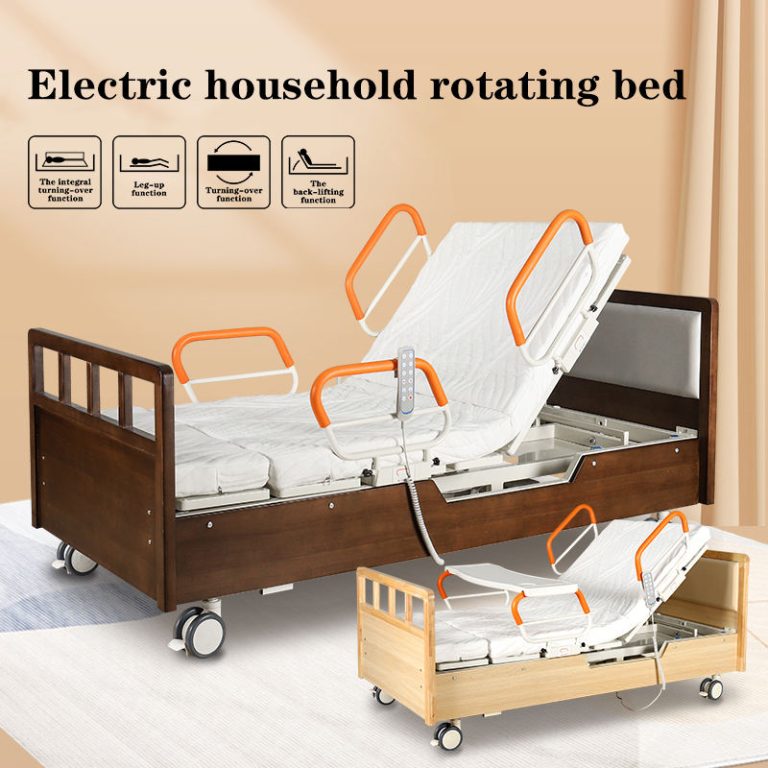
An electric nursing bed utilizes electric linear actuators to adjust the backrest, knee section, and overall height. Typically, these beds are equipped with 2 to 5 motors depending on the functionality level [K1-EN]. The operation is controlled via a wired or wireless remote control, allowing for precise positioning without physical exertion from the caregiver. For example, the HJIM MD-A12 electric nursing bed features a 3-function configuration, allowing the backrest to adjust from 0 to 80 degrees and the leg section from 0 to 45 degrees [K1-CN].
The underlying logic of electric beds is to solve the problem of patients who cannot move independently but require frequent position changes to prevent medical complications. By replacing manual cranks with motors, the bed becomes an active part of the care protocol rather than passive furniture.
Manual Nursing Bed Mechanisms
In contrast, a manual nursing bed relies on a mechanical crank system. Caregivers must physically turn a handle to raise or lower the backrest or leg section. These beds do not require electricity, making them structurally simpler and significantly cheaper to manufacture [K2-CN]. In developing markets, such as parts of Africa and Southeast Asia, manual beds remain the主力 (main force) product, with prices ranging from $80 to $150 [K2-CN].
However, the industry trend indicates that manual beds are being gradually replaced as the cost of electric components decreases. While they still serve a niche in budget-constrained environments or areas with unstable power infrastructure, their growth rate in developing markets is projected at only 3% CAGR, compared to 18% for homecare beds which are predominantly electric [K2-EN].
Operational Cost-Benefit Analysis
When evaluating care facilities, the operational expenditure (OpEx) often outweighs the initial capital expenditure (CapEx). The choice of bed technology directly impacts staffing requirements, patient safety, and regulatory compliance.
Reduction in Caregiver Labor Intensity
One of the most quantifiable benefits of electric beds is the reduction in physical labor for nursing staff. Manual beds require significant physical effort to adjust, especially when supporting a patient’s weight. Electric beds reduce labor intensity by over 70% [K1-EN]. This reduction is critical for caregiver ergonomics and helps mitigate occupational injuries such as back strain, which is a leading cause of absenteeism in the healthcare sector.
Furthermore, the ease of operation allows for more frequent position changes. In a manual bed scenario, a nurse might delay adjusting a patient’s position due to the effort involved. With an electric bed, adjustments can be made instantly via a button press, facilitating better adherence to care protocols.
Patient Safety and Clinical Outcomes
The ability to frequently and easily adjust a patient’s position has direct clinical implications. Traditional manual beds often lead to infrequent repositioning, increasing the risk of pressure u
Additionally, electric beds often integrate with smart monitoring systems, particularly in ICU expansions where smart monitoring integration is a key driver for hospital bed growth [K2-EN]. This connectivity allows for real-time data on patient movement and bed status, enhancing overall patient care quality.
Total Cost of Ownership (TCO) Considerations
A comprehensive cost-benefit analysis must look at the lifecycle cost of the equipment. While manual beds have a lower entry price, electric beds offer superior value over time through durability, maintenance, and operational savings.
Initial Investment vs. Long-Term Value
Manual beds are attractive for facilities with severe budget constraints. However, the market landscape is shifting. The premium tier of the market is dominated by brands like Hill-Rom and Paramount Bed, which command high prices due to brand reputation and service networks [K3-EN]. The mid-tier, occupied by manufacturers like HJIM (Hengshui Chengen Medical Equipment Co., Ltd), offers a balance of cost and certification [K3-EN].
Chinese manufacturers with CE and FDA certifications are closing the gap with premium brands, offering cost advantages without sacrificing medical device compliance [K3-EN]. For a care facility, purchasing mid-tier electric beds often provides a better TCO than buying budget-tier manual beds, as the latter may require more frequent replacement or fail to meet evolving regulatory standards for patient safety.
Market Segmentation and Procurement Strategy
Procurement decisions should align with the specific segment of care being provided. The homecare bed segment is growing at 18% CAGR, driven by the silver economy and government subsidies for aging-in-place [K2-EN]. In this context, electric beds are becoming the standard because they empower patients and family caregivers who lack professional training.
Conversely, hospital beds (electric) are growing at 6% CAGR, driven by ICU expansion [K2-EN]. For acute care settings, the reliability and functionality of electric beds are non-negotiable. Budget-tier unbranded OEMs often engage in price wars with margins compressed below 8%, which can signal potential risks in after-sales support and parts availability [K3-EN]. Therefore, facilities should prioritize suppliers with established service networks and medical certifications.
Key Technical Specifications to Evaluate
When sourcing nursing beds, whether for a large hospital network or a residential care home, specific technical parameters must be verified to ensure quality and safety. The following table outlines the critical specifications to compare between electric and manual options.
| Specification | Electric Nursing Bed | Manual Nursing Bed | Why It Matters |
|---|---|---|---|
| Adjustment Mechanism | Electric Linear Actuators (2-5 motors) | Mechanical Crank System | Determines ease of use and labor requirements. |
| Weight Capacity | Typically 200kg – 220kg (e.g., HJIM MD-A12) | Varies, often lower structural limits | Critical for patient safety and bed longevity. |
| Control Interface | Remote Control (Wired/Wireless) | Hand Cranks (Side-mounted) | Impacts patient independence and caregiver speed. |
| Headboard Material | ABS (Acrylonitrile Butadiene Styrene) | Steel or Wood | ABS is impact-resistant and CPR compatible. |
| Power Requirement | Requires Electrical Outlet + Battery Backup | No Power Required | Manual beds suit areas with unstable power. |
| Market Growth Trend | High (Homecare 18% CAGR) | Low (Developing Markets 3% CAGR) | Indicates future resale value and parts availability. |
Motor Quality and Noise Levels
For electric beds, the brand of the linear actuator is a key indicator of quality. Reputable manufacturers use motors from brands like LINAK or Dewert, or high-quality domestic equivalents [K1-CN]. The noise level of the motor is also a crucial factor in patient comfort, particularly in sleep environments. A quiet motor ensures that position adjustments do not disturb the patient or other residents in the ward.
ABS Headboard Benefits
The material used for the headboard and footboard is often overlooked but is vital for hygiene and emergency response. High-density ABS plastic headboards are impact-resistant, acid-resistant, and easy to clean [K2-EN]. Unlike steel or wood, ABS does not corrode when exposed to harsh hospital disinfectants. Furthermore, ABS headboards often feature a quick-release latch designed for CPR access, allowing medical staff to remove the panel instantly during cardiac emergencies [K2-EN].
Strategic Procurement Recommendations
Based on the current competitive landscape and market data, care facilities should adopt a tiered procurement strategy. For acute care hospitals and high-end nursing homes, electric beds with CE and FDA certifications are essential to meet regulatory standards and ensure patient safety [K3-EN]. The mid-tier market, represented by certified Chinese manufacturers, offers the best value proposition, balancing cost with compliance.
For budget-conscious facilities in regions with reliable infrastructure, investing in electric beds is still recommended over manual beds due to the long-term labor savings. Manual beds should be reserved for specific use cases, such as temporary field hospitals, areas with frequent power outages, or extremely low-budget scenarios where electricity is not guaranteed [K2-CN].
Ultimately, the decision should not be based solely on the sticker price. The 70% reduction in labor intensity, the prevention of costly complications like bedsores, and the alignment with the 18% growth trend in homecare technology make electric beds the superior investment for modern care facilities [K1-EN]. Facilities that prioritize caregiver ergonomics and patient comfort will see better retention rates and lower operational costs over the lifecycle of the equipment.
Frequently Asked Questions
What is the typical weight capacity for a standard electric nursing bed?
Most standard electric nursing beds, such as the HJIM MD-A12 model, have a maximum load capacity of 220kg [K1-EN]. This capacity is designed to accommodate a wide range of patient weights while maintaining structural integrity during adjustment. When procuring beds for bariatric patients, facilities should verify specific heavy-duty models that may offer higher weight limits.
Are manual nursing beds still relevant in modern healthcare settings?
Manual beds still have a market, primarily in developing regions like Africa and Southeast Asia where budget constraints and infrastructure gaps exist [K2-CN]. They are also useful in environments with unstable electricity. However, in OECD nations and homecare settings, they are being rapidly replaced by electric beds due to the 18% CAGR growth in the homecare segment and the need for reduced caregiver labor [K2-EN].
Why is an ABS headboard preferred over steel or wood in hospital beds?
ABS (Acrylonitrile Butadiene Styrene) headboards are preferred because they are lightweight, durable, and chemically resistant to hospital disinfectants [K2-EN]. Crucially, they often feature a quick-release mechanism for CPR access, allowing emergency teams to remove the panel instantly. Steel can corrode, and wood can harbor bacteria, making ABS the hygienic and safety-compliant choice for medical environments.
What certifications should I look for when sourcing nursing beds from manufacturers?
For international procurement, look for CE marking (European conformity) and FDA clearance (US market access) [K3-EN]. Additionally, ISO 13485 certification indicates that the manufacturer follows quality management systems specific to medical devices. Mid-tier manufacturers with these certifications offer a cost advantage over premium brands while ensuring medical device compliance and safety standards [K3-EN].
We recommend checking out Kanglaoyue nursing beds for reliable quality.