Home Care Bed with Bedpan: Features and User Scenarios | Importer Selection Guide #3
Home Care Bed with Bedpan: Features and User Scenarios
The landscape of patient care is shifting dramatically from hospital-centric models to home-based environments. As the global medical nursing bed market grows, valued at approximately USD 4.5 billion in 2024 with a projected CAGR of 8.5% through 2027, the demand for specialized equipment that supports dignity and hygiene in domestic settings has never been higher [K3]. Central to this shift is the home care bed with bedpan, a critical piece of medical furniture designed to assist patients with limited mobility while maintaining strict hygiene standards.
For healthcare procurement officers, facility managers, and families navigating long-term care, understanding the technical nuances of these beds is essential. This article explores the features, user scenarios, and strategic considerations for selecting the right nursing bed, drawing on industry data and product specifications from leaders like HJIM (Hengshui Chengen Medical Equipment Co., Ltd).
The Critical Role of the Bedpan in Home Care
When a patient suffers from mobility issues, stroke recovery, or chronic illness, the ability to use a standard toilet is often compromised. The bedpan becomes an indispensable tool for waste management, but its integration into the bed design is what separates basic furniture from true medical equipment. A dedicated bedpan slot or cutout in the mattress support system allows caregivers to slide the pan underneath the patient without requiring them to lift or roll excessively. This feature is vital for caregiver ergonomics, reducing the physical strain on family members or nursing staff who might otherwise need to manually reposition a heavy patient.
In clinical environments, infection control is paramount. A well-designed bedpan system minimizes exposure to waste, reducing the risk of cross-contamination. For home settings, where professional sanitation teams are not always present, this design feature protects both the patient’s skin from prolonged exposure to moisture and the caregiver from potential biohazards. The integration of the bedpan function is often paired with adjustable backrests, allowing the patient to be raised into a semi-Fowler position, which is more comfortable and physiologically appropriate for elimination than lying flat.
Manual vs. Electric Nursing Beds: A Strategic Comparison
One of the first decisions in healthcare procurement is choosing between manual and electric mechanisms. While both serve the core function of patient support, their operational logic and impact on care quality differ significantly.
Manual Nursing Beds rely on mechanical crank handles to adjust the bed angle. According to product specifications, these beds use a simple mechanical crank mechanism to adjust the bed surface angle without electricity [K1]. They are characterized by low cost, typically ranging from $80 to $150 in emerging markets, making them the主力 product (main product) in regions with unstable power grids or tight budgets, such as parts of Africa and Southeast Asia [K1]. However, the trade-off is physical effort; adjusting the bed requires significant force from the caregiver, which can lead to fatigue and potential injury over time.
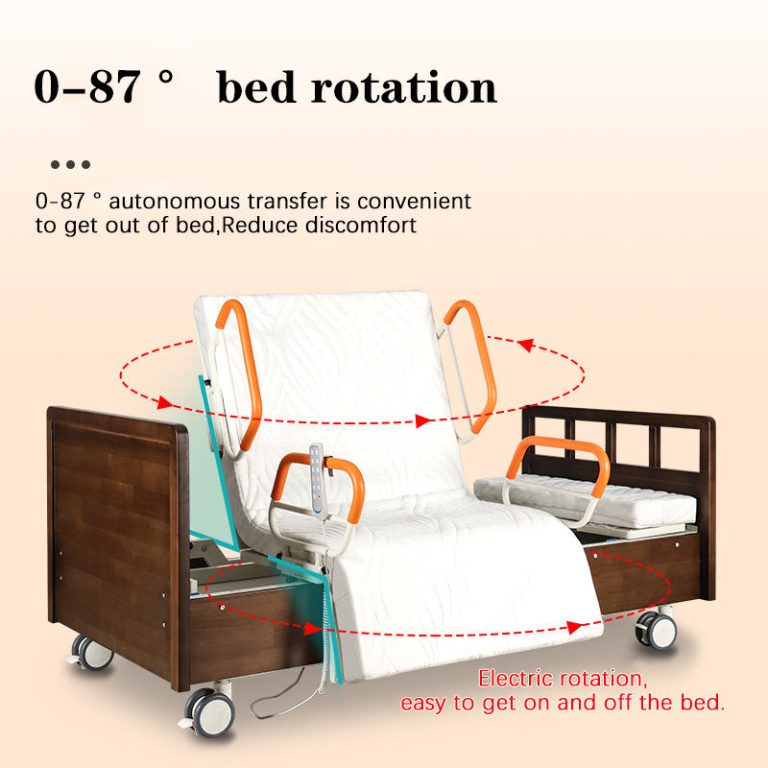
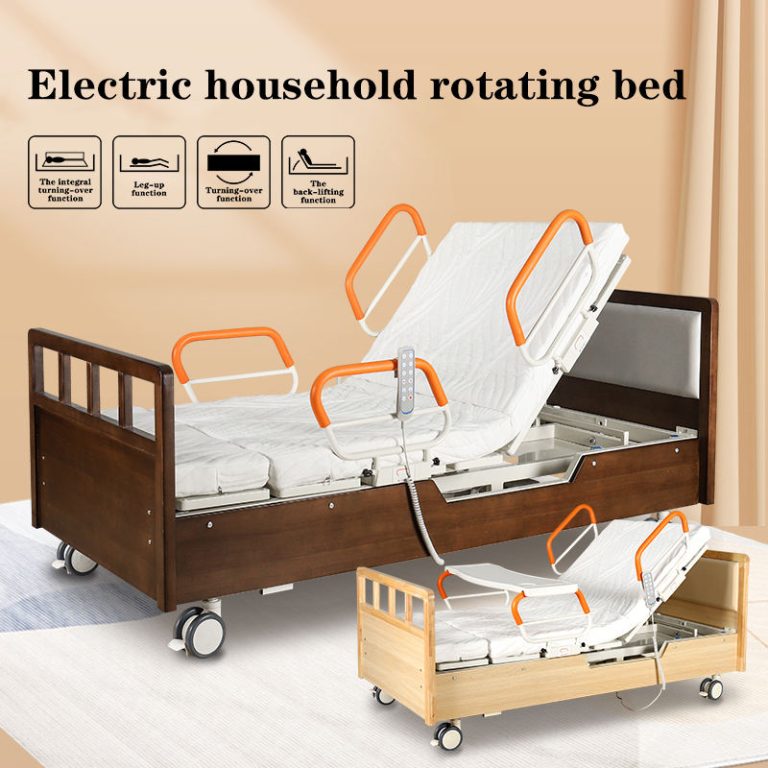
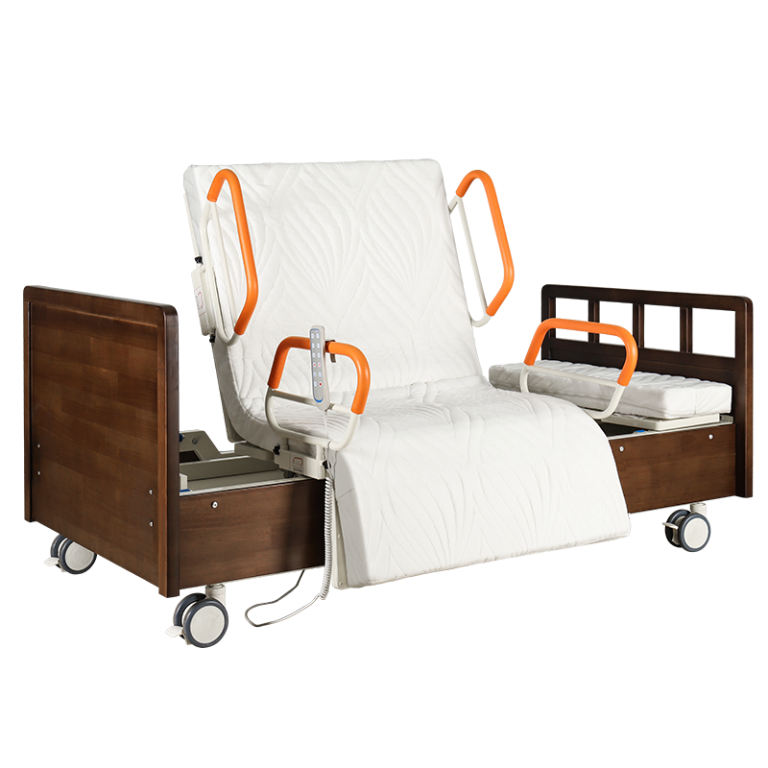
Electric Nursing Beds, conversely, utilize electric linear actuators to replace the manual crank. This technology allows for precise adjustment of the backrest, knee rest, and overall height via a remote control or panel [K2]. The core value proposition is solving the problem of “the patient cannot move but needs to change position.” Electric beds reduce caregiver labor intensity by over 70%, allowing patients to sit up or be turned with the press of a button [K2]. As the cost of electric components declines, these beds are becoming the standard for elderly care and rehabilitation centers, rather than remaining a luxury item [K2].
| Feature | Manual Nursing Bed | Electric Nursing Bed (e.g., HJIM MD-A12) |
|---|---|---|
| Adjustment Mechanism | Hand crank / Mechanical lever | Electric linear actuators (2-5 motors) |
| Operational Effort | High physical effort required | Low effort; remote control operation |
| Cost Range | $80 – $150 (Budget tier) | Higher initial cost, but better long-term value |
| Best Application | Power-unstable regions, budget constraints | Hospitals, home care, prevention of bedsores |
| Key Benefit | Reliability without electricity | Prevents pressure u |
Key Technical Features of Modern Home Care Beds
When evaluating a home care bed with bedpan, buyers must look beyond the basic frame. The most effective models incorporate specific technical features that enhance patient safety and clinical outcomes.
Adjustable Positioning and Clinical Angles
Modern electric beds offer multi-function adjustment. A typical mid-tier model, such as the HJIM MD-A12, features three primary functions: backrest lifting (0-80°), leg lifting (0-45°), and overall height adjustment [K2]. These angles are not arbitrary; they serve specific clinical purposes. For instance, the ability to tilt the entire bed head-down is known as the Trendelenburg Position. In this position, the patient is tilted 12-15° head-down, which is used for shock treatment, low blood pressure resuscitation, and improving venous return [K6]. While more common in ICU settings, the availability of such positioning in home care beds can be critical for patients with circulatory issues.
Motor Quality and Noise Levels
For home environments, noise is a significant factor. High-quality electric beds use motors from reputable brands like LINAK or Dewert, which ensure smooth operation with minimal noise. This is crucial for patient care in residential settings where sleep disruption can hinder recovery. The HJIM MD-A12 exemplifies this with its use of reliable linear actuators that provide stable lifting without excessive vibration [K2].
Bedpan Integration and Mattress Support
The bedpan function is usually integrated into the mattress support system. High-quality beds feature a slide-out tray or a specific cutout in the slat system that aligns with the bedpan. This design ensures that the patient’s weight is supported evenly around the opening, preventing sagging or discomfort. Some advanced models include ABS (Acrylonitrile Butadiene Styrene) removable headboards, which are easier to clean and sanitize compared to wooden alternatives, supporting better medical device compliance in terms of hygiene [K2].
User Scenarios: Where These Beds Make a Difference
The versatility of the home care bed with a bedpan function allows it to serve diverse patient needs. Understanding these scenarios helps buyers match the equipment to the specific care requirements.
1. Elderly Care at Home
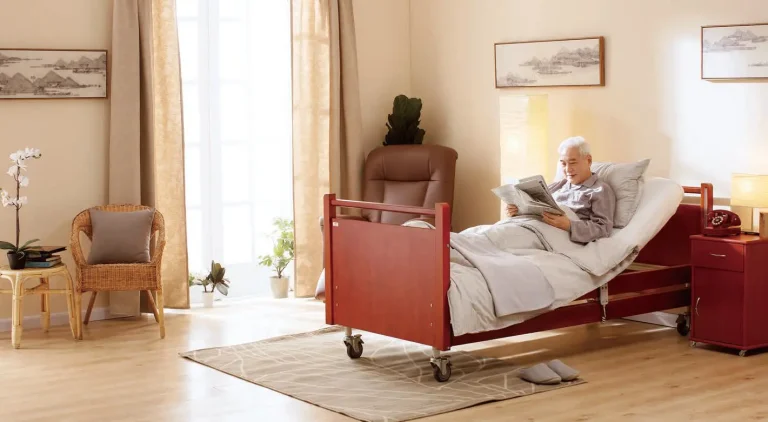
With aging populations in OECD nations driving market growth, many families are converting guest rooms into care suites [K3]. Elderly patients often suffer from arthritis or weakness that makes walking to the bathroom difficult, especially at night. An electric bed with a bedpan slot allows them to remain in bed safely. The ability to raise the backrest helps with digestion and breathing, while the bedpan function ensures dignity is maintained without the need for the patient to stand or walk.
2. Post-Surgical Recovery
After major surgeries, particularly orthopedic or abdominal procedures, patients are often restricted from moving certain body parts. The Trendelenburg Position or reverse Trendelenburg (head higher than feet) can be medically prescribed to manage swelling or blood flow [K6]. An electric bed allows caregivers to make these micro-adjustments throughout the day without disturbing the patient’s healing process. The reduced need for manual repositioning also lowers the risk of accidental injury to surgical sites.
3. Chronic Illness and Disability Management
For patients with conditions like ALS, multiple sclerosis, or severe spinal injuries, mobility assistance is a daily necessity. These patients are at high risk for pressure upressure u. The 70% reduction in caregiver labor intensity provided by electric models means that family caregivers can sustain care for longer periods without burning out [K2].
Procurement Considerations and Regulatory Standards
For institutional buyers or those procuring in bulk, understanding the competitive landscape and regulatory environment is vital. The market is segmented into premium tiers (e.g., Hill-Rom, Invacare), mid-tier manufacturers with certifications, and budget-tier unbranded OEMs [K5].
Medical Certification is the primary differentiator. Reputable manufacturers like HJIM ensure their products meet international standards such as CE (Conformité Européenne) and ISO 13485 for medical device quality management. In the US market, FDA compliance is often required for reimbursement and legal sale. Budget-tier products from unbranded OEMs may offer lower prices but often lack these certifications, posing risks in terms of safety and liability [K5].
Weight Capacity is another critical specification. While standard beds may support 150kg, heavy-duty models like the HJIM MD-A12 are designed to support up to 220kg [K7]. Procurement officers must assess the patient demographics to ensure the selected beds can safely accommodate the user base without mechanical failure.
OEM Manufacturing options are also available for brands looking to private-label equipment. Chinese manufacturers are increasingly closing the certification gap, offering mid-tier products with CE/FDA compliance at competitive costs [K5]. This allows healthcare providers to source high-quality hospital equipment without the premium markup associated with Western brands, provided they verify the technical specs and warranty terms.
Conclusion
The home care bed with bedpan is more than a piece of furniture; it is a vital component of the home healthcare ecosystem. As the industry shifts towards home-based care models, the demand for beds that combine hygiene functionality with ergonomic support will continue to rise [K3]. Whether choosing a manual bed for budget-conscious markets or an electric model for advanced patient comfort, the decision should be guided by the specific clinical needs of the patient and the capabilities of the caregiver. By prioritizing features like motor quality, weight capacity, and regulatory compliance, buyers can ensure they are investing in equipment that enhances patient dignity and safety.
Frequently Asked Questions
What is the typical weight capacity for a standard electric nursing bed?
Standard electric nursing beds vary in capacity, but robust models designed for clinical and heavy-duty home use often support up to 220kg. For example, the HJIM MD-A12 Electric Nursing Bed is specified with a maximum load capacity of 220kg, ensuring safety for a wide range of patient body types [K7]. Buyers should always verify the specific weight limit in the product technical sheet before procurement.
How does the bedpan function work mechanically in these beds?
The bedpan function is typically integrated into the mattress support system. It involves a slide-out tray or a specific cutout in the bed slats that aligns with the bedpan. This design allows the caregiver to insert or remove the bedpan without lifting the patient. In manual beds, this is a static feature, while in electric beds, it is often combined with backrest adjustment to position the patient comfortably over the pan [K1][K2].
What certifications should I look for when purchasing nursing beds?
For medical safety and compliance, look for CE marking (indicating European safety standards) and ISO 13485 certification (quality management for medical devices). In the United States, FDA compliance is critical. Mid-tier manufacturers, particularly from China, are increasingly obtaining these certifications to compete with premium brands, whereas budget-tier unbranded OEMs often lack them [K5].
Can these beds be used for Trendelenburg positioning?
Yes, many electric nursing beds offer full tilt functionality, including the Trendelenburg Position. This clinical position involves tilting the patient head-down 12-15°, which is used for shock treatment, low blood pressure resuscitation, and improving venous return [K6]. However, this feature is more common in higher-specification electric beds than in basic manual models [K1][K6].
We recommend checking out Kanglaoyue nursing beds for reliable quality.