Electric Bed vs Manual Bed: Cost-Benefit Analysis for Care Facilities | Hospital Procurement Guide #3
Electric Bed vs Manual Bed: Cost-Benefit Analysis for Care Facilities
The global medical nursing bed market is valued at approximately USD 4.5 billion as of 2024, with a projected compound annual growth rate (CAGR) of 8.5% through 2027 [K3]. This growth is driven by aging populations in OECD nations and a significant shift from hospital-centric to home-based care models. For healthcare procurement officers and facility managers, one of the most critical decisions involves selecting the appropriate bed type: the electric nursing bed or the manual nursing bed. While the trend clearly favors automation, understanding the nuanced cost-benefit analysis is essential for making a procurement decision that aligns with operational budgets, patient needs, and long-term sustainability.
Understanding the Core Value of Electric Nursing Beds
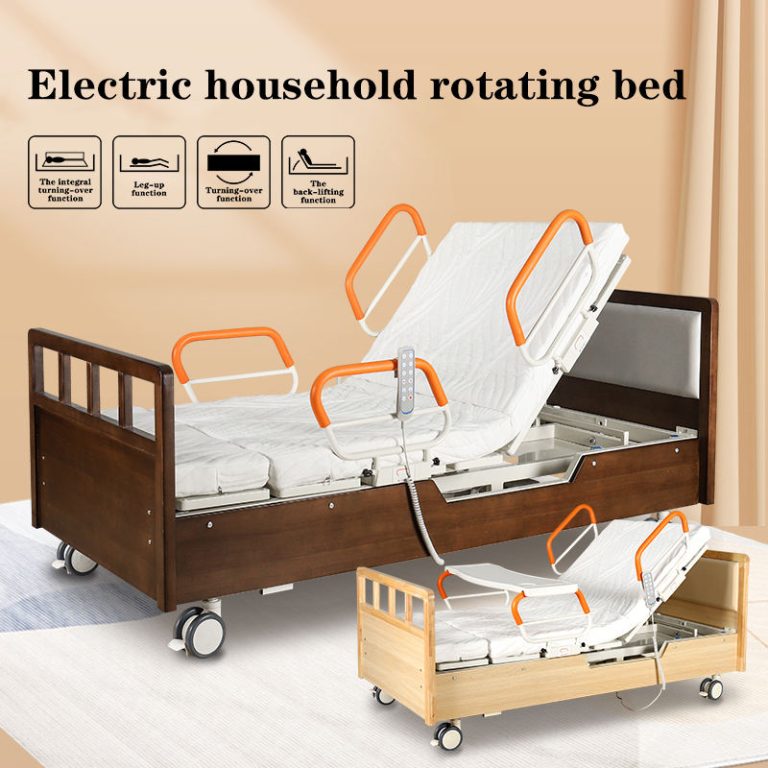
An electric nursing bed is defined as a medical furniture unit that uses linear actuators (typically 2 to 5 motors) to provide adjustable positioning for patients with limited mobility [K6]. Unlike traditional beds, the core logic of an electric bed is to solve the problem where “the patient cannot move but needs to change position” [K1]. By replacing manual cranks with electric motors controlled via a remote or panel, these beds allow patients to sit up or be repositioned with the press of a button.
The primary operational benefit is the reduction of caregiver labor intensity. Research and industry data indicate that electric beds can reduce nursing labor intensity by over 70% compared to manual alternatives [K6]. This is not merely a matter of convenience; it is a critical factor in caregiver ergonomics and retention. In high-turnover environments like nursing homes, reducing the physical strain on staff can lower injury rates and improve the quality of care provided. Furthermore, electric beds play a vital role in patient safety by facilitating frequent position changes, which helps prevent pressure u
For facilities aiming for premium or mid-tier positioning, electric beds are increasingly viewed as a standard requirement rather than a luxury. For instance, the HJIM MD-A12 Electric Nursing Bed exemplifies this category with three functions: backrest adjustment (0-80°), leg rest adjustment (0-45°), and overall height adjustment [K1]. Such specifications ensure that the bed can adapt to various clinical scenarios, from post-operative recovery to chronic elderly care.
The Strategic Role of Manual Nursing Beds
Despite the clear advantages of automation, manual nursing beds retain a specific and vital market segment. A manual nursing bed utilizes a mechanical crank mechanism to adjust the bed surface angle, requiring no electricity [K2]. Its fundamental logic is to provide the most economical solution for markets with budget constraints or infrastructure gaps [K2].
In regions such as Africa and Southeast Asia, where power stability can be inconsistent and healthcare budgets are tight, manual beds remain the主力 (main force) product [K2]. They are also common in primary care hospitals and budget-limited养老 institutions (elderly care institutions). The cost advantage is significant; manual beds in developing markets often range from $80 to $150, whereas electric beds command a much higher price point due to the cost of motors and control systems [K2].
However, it is important to note that the growth rate for manual beds is projected at only 3% CAGR, compared to 18% for homecare beds and 6% for hospital electric beds [K2]. This indicates that while manual beds are not disappearing, their market is stagnating in favor of more advanced solutions as economies develop. For a care facility, choosing a manual bed is often a short-term cost-saving measure that may incur higher long-term labor costs.
Comprehensive Cost-Benefit Comparison
When evaluating the total cost of ownership (TCO), facilities must look beyond the initial purchase price. The following table breaks down the key differences between the two types based on industry standards and product specifications.
| Feature | Electric Nursing Bed | Manual Nursing Bed |
|---|---|---|
| Adjustment Mechanism | Electric linear actuators (2-5 motors) | Mechanical crank/handle |
| Operational Effort | Low (Remote/Panel control) | High (Physical cranking required) |
| Initial Cost | Higher (Premium to Mid-tier) | Lower (Budget-tier) |
| Labor Impact | Reduces caregiver strain by 70%+ | Increases physical workload |
| Primary Use Case | Hospitals, Homecare, Premium Nursing Homes | Primary Clinics, Developing Markets, Emergency Backup |
| Market Growth (CAGR) | 6% (Hospital) / 18% (Homecare) | 3% |
From a procurement perspective, the electric bed offers a return on investment through reduced staff turnover, lower workers’ compensation claims related to back injuries, and improved patient outcomes which can reduce length of stay. Conversely, the manual bed is a viable option for facilities with very limited capital expenditure (CapEx) or for specific use cases where power reliability is a concern, though this is becoming less common with modern battery-backup electric systems.
Key Technical Specifications for Procurement
When sourcing nursing beds, particularly from manufacturers like HJIM (Hengshui Chengen Medical Equipment Co., Ltd), it is crucial to evaluate specific technical parameters that ensure safety and durability.
Motor Quality and Noise Levels
The motor is the heart of an electric bed. Industry standards often reference brands like LINAK or Dewert for premium reliability, though domestic Chinese motors have significantly improved [K1]. Procurement teams should inquire about the noise level during operation; a quiet motor is essential for patient rest, especially in homecare settings. The HJIM MD-A12, for example, is designed to operate quietly while providing robust lifting capacity [K1].
ABS Headboard and Footboard
Material choice impacts both hygiene and emergency response. High-density ABS (Acrylonitrile Butadiene Styrene) blow-molded headboards are increasingly the standard [K6]. ABS panels are impact-resistant, acid-resistant, and easy to clean, making them superior to steel or wood in terms of infection control. Crucially, ABS headboards often feature quick-release latches for CPR access, a vital safety feature in acute care scenarios [K6].
Certifications and Compliance
For international procurement, compliance is non-negotiable. The competitive landscape shows a clear divide: premium tiers hold strong brand equity, while mid-tier Chinese manufacturers are closing the gap by obtaining CE and FDA certifications [K3]. Facilities should ensure that the beds they purchase meet ISO 13485 standards for medical device quality management. Budget-tier unbranded OEMs often engage in price wars with margins below 8%, which can sometimes correlate with compromised compliance [K3].
Market Trends and Future-Proofing
The nursing bed industry is undergoing a structural shift. The homecare segment is experiencing an 18% CAGR, driven by the “silver economy” and government subsidies encouraging aging-in-place [K2]. This trend suggests that facilities should consider beds that are versatile enough to transition from institutional care to home use, or at least meet the comfort standards expected by patients returning home.
Additionally, the integration of smart monitoring is becoming a differentiator in the hospital bed segment [K2]. While basic electric beds focus on positioning, next-generation beds may include weight sensors, fall detection, and connectivity to nurse call systems. When planning capital expenditure for the next 5-10 years, investing in a platform that supports potential upgrades is a prudent strategy.
Conclusion
The choice between an electric and a manual nursing bed is not simply a matter of price; it is a strategic decision that affects patient care quality, staff well-being, and operational efficiency. While manual beds serve a necessary function in budget-constrained or infrastructure-limited environments, the long-term value proposition of electric beds is undeniable. With the ability to reduce labor intensity by over 70% and significantly improve patient comfort and safety, electric beds align better with the future of healthcare delivery [K6]. For facilities looking to balance cost with quality, selecting a mid-tier manufacturer like HJIM that offers CE/FDA-compliant electric beds with robust features like ABS CPR-compatible headboards provides a balanced solution that meets both regulatory and practical needs.
Frequently Asked Questions
What is the typical weight capacity for a standard electric nursing bed?
Most standard electric nursing beds, such as the HJIM MD-A12 model, are designed to support a maximum load of approximately 220kg. This capacity ensures safety for a wide range of patient sizes while maintaining the structural integrity of the frame and the lifting performance of the linear actuators [K1].
Why is an ABS headboard preferred over steel or wood in medical settings?
ABS (Acrylonitrile Butadiene Styrene) headboards are preferred because they are lightweight, durable, and chemically resistant to disinfectants and cleaning agents. Unlike wood, they do not harbor bacteria, and unlike steel, they do not rust. Additionally, ABS panels often feature quick-release mechanisms that are critical for emergency CPR access [K6].
Are manual nursing beds still relevant in modern healthcare?
Yes, but their relevance is niche. Manual beds are still essential in developing markets (such as parts of Africa and Southeast Asia) where electricity is unstable or budgets are extremely tight. They also serve as a cost-effective solution for primary care clinics that do not require frequent patient repositioning. However, their market growth is slowing compared to electric beds [K2].
What certifications should I look for when importing nursing beds?
For international procurement, you should prioritize beds that carry CE marking (for Europe) and FDA clearance (for the USA). Additionally, verifying that the manufacturer complies with ISO 13485 (Medical Devices Quality Management Systems) ensures that the production process meets rigorous safety and quality standards, distinguishing reputable mid-tier manufacturers from low-margin budget OEMs [K3].
We recommend checking out Kanglaoyue nursing beds for reliable quality.