EXW, FCA, or FOB? Choosing the Right Trade Term for Medical Equipment Import | Export & Trade Guide #9
EXW, FCA, or FOB? Choosing the Right Trade Term for Medical Equipment Import
When healthcare procurement teams source medical equipment, the conversation often focuses on clinical specifications, patient outcomes, and budget constraints. However, one critical layer of the purchasing process frequently gets overlooked until it becomes a costly problem: Incoterms. Whether you are importing a single manual nursing bed for a rural clinic or a container load of high-tech electric hospital beds for a national healthcare network, the trade term you select dictates where risk transfers, who controls the logistics, and ultimately, how much the equipment actually costs to land at your facility.
At HJIM (Hengshui Chengen Medical Equipment Co., Ltd), we work with buyers across the globe, from large hospital chains in Europe to emerging healthcare providers in Southeast Asia. We have seen how the wrong trade term can lead to unexpected customs delays, damaged goods, or budget overruns. This guide breaks down the most common trade terms—EXW, FCA, and FOB—specifically for the medical equipment industry, helping you align your logistics strategy with your procurement goals.
Understanding the Stakes in Medical Equipment Logistics
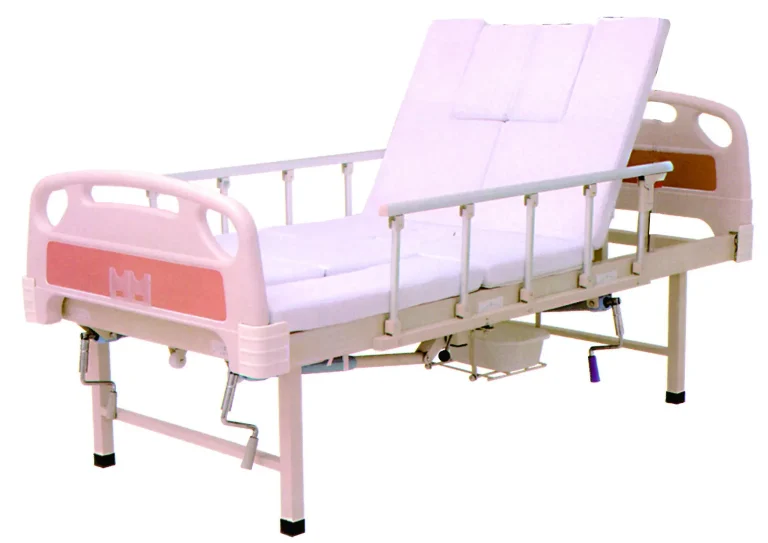
Medical equipment is not standard cargo. Unlike consumer electronics or apparel, devices like nursing beds, patient monitors, and surgical tables often require specialized handling, climate-controlled storage, or specific regulatory clearance. A manual nursing bed might seem robust, but its mechanical components can be damaged if dropped during loading. An electric nursing bed, with its sensitive linear actuators and electronic control systems, requires even greater care to ensure functionality upon arrival.
The choice of Incoterm determines who bears the cost and risk at every stage of the supply chain. For healthcare buyers, this is not just about freight costs; it is about medical device compliance and patient safety. If a shipment is delayed at customs because the supplier (under an EXW term) did not provide the correct documentation, the impact on patient care can be severe. Therefore, selecting the right term requires balancing your internal logistics capabilities against the supplier’s location and expertise.
EXW: Maximum Control, Maximum Responsibility
Ex Works (EXW) means the seller makes the goods available at their premises, and the buyer assumes all risks and costs from that point forward. In the context of healthcare procurement, EXW is often chosen by large hospital groups or government tenders that have established global logistics partners.
When to Choose EXW:
- Consolidated Shipments: If you are sourcing nursing beds from HJIM alongside other equipment from different manufacturers in the same region, EXW allows you to consolidate everything at a local warehouse before
- Established Logistics Networks: If your organization has a dedicated freight forwarder who handles customs clearance in the country of origin, EXW gives you full control over the carrier selection and routing.
- Cost Transparency: EXW shows the base price of the equipment clearly. You can see exactly how much the manufacturing costs versus the logistics costs, which is useful for long-term budgeting.
The Risk Factor:
The downside of EXW is that you are responsible for loading the goods at the factory. If the supplier does not have proper loading equipment, or if the caregiver ergonomics of the loading process are poor, there is a risk of damage before the goods even leave the factory gate. Furthermore, if the supplier fails to provide necessary export documents (such as CE certificates or ISO 13485 compliance docs), you may face delays at the border. For medical certification requirements, ensure your forwarder is experienced in handling Class I or Class II medical devices.
FCA: The Balanced Approach for Modern Trade
Free Carrier (FCA) is increasingly becoming the preferred term for B2B medical equipment transactions. Under FCA, the seller delivers the goods, cleared for export, to a carrier nominated by the buyer at a named place (which could be the seller’s warehouse or a nearby terminal).
Why FCA Fits Medical Equipment:
FCA strikes a balance between control and convenience. The seller handles export clearance, which is critical for medical device compliance. They ensure that the linear actuator systems found in electric nursing beds. Once the goods are handed over to the carrier, the risk transfers to the buyer.
This term is particularly useful when importing electric nursing beds that require specific assembly instructions or calibration upon arrival. By using FCA, you can appoint a forwarder who specializes in medical logistics to handle the main carriage, ensuring that the goods are not subjected to rough handling that could affect the motor and actuator health.
FOB: Traditional Reliability for Sea Freight
Free On Board (FOB) is a traditional term often used for sea freight. The seller is responsible for getting the goods onto the vessel at the port of shipment. Once the goods are on board, the risk transfers to the buyer.
When FOB Makes Sense:
FOB is a solid choice if you are importing large volumes, such as a full container of manual nursing beds destined for developing markets where budget constraints are a primary driver. In these markets, the global market overview indicates that manual beds remain a主力 product due to their low cost and lack of reliance on stable electricity [K1].
Under FOB, the seller handles the inland transport to the port and the export customs. This reduces the administrative burden on your logistics team. However, you must ensure that the port of loading is efficient. Congestion at the port can lead to demurrage charges, which are your responsibility once the goods are on board.
Comparing the Terms: A Decision Matrix
To help you visualize the differences, the following table compares EXW, FCA, and FOB based on key procurement factors relevant to the medical equipment industry.
| Factor | EXW (Ex Works) | FCA (Free Carrier) | FOB (Free On Board) |
|---|---|---|---|
| Risk Transfer Point | At supplier’s factory | At named place (e.g., factory or terminal) | Once goods are on the vessel |
| Export Customs | Buyer’s responsibility | Seller’s responsibility | Seller’s responsibility |
| Best For | Consolidated shipments, experienced buyers | Air freight, specialized medical logistics | Large sea freight volumes, standard equipment |
| Cost Control | High (buyer controls all logistics) | Medium (buyer controls main carriage) | Low (seller controls port logistics) |
| Documentation Burden | High (buyer manages export docs) | Medium (seller handles export clearance) | Medium (seller handles export clearance) |
Aligning Trade Terms with Market Segments
The right trade term also depends on the specific segment of the medical bed market you are targeting. The global medical nursing bed market is valued at approximately USD 4.5 billion, with distinct growth drivers for different segments [K1].
For Hospital Beds (Electric):
Hospital beds are growing at a 6% CAGR, driven by ICU expansion and smart monitoring integration [K2]. These are high-value items with complex electronics. For this segment, FCA is often recommended. It allows the buyer to use a specialized medical freight forwarder who understands how to handle IoT integration devices and sensitive sensors without compromising medical certification integrity during transit.
For Homecare Beds:
Homecare beds are experiencing an 18% CAGR, fueled by the silver economy and aging-in-place trends [K2]. These shipments are often smaller and more frequent. EXW or FCA allows distributors to consolidate these orders with other home healthcare products, optimizing last-mile delivery costs which are critical for elderly care logistics.
For Manual Beds (Developing Markets):
In Africa and Southeast Asia, manual beds remain a主力 product with a 3% CAGR, driven by budget constraints and infrastructure gaps [K2]. For these high-volume, lower-value shipments, FOB is often the most efficient choice. It leverages the supplier’s local logistics network to get the goods to the port cost-effectively, allowing the buyer to focus on securing competitive ocean freight rates for the main journey.
Technical Considerations for Importing Nursing Beds
When negotiating trade terms, you must also consider the technical specifications of the equipment. For instance, if you are importing electric nursing beds equipped with linear actuators from brands like Linak or Dewert [K3], the
Additionally, consider the Fowler’s Position mechanism. Beds designed to achieve a 45-60 degree backrest elevation for respiratory comfort [K4] have specific mechanical joints that can be stressed during rough handling. Ensure that your logistics provider (or the supplier, depending on the Incoterm) understands the need for upright storage and careful stacking. Damaged mechanical joints can lead to failure in achieving the necessary clinical positions, compromising patient care.
Furthermore, predictive maintenance features in modern beds rely on sensor data. If the electronics are damaged during transit due to poor handling (a risk under EXW if not monitored), the bed may fail to transmit vital signs or weight data. This underscores the importance of choosing a trade term that aligns with your ability to supervise the loading and transit process.
Conclusion
Choosing between EXW, FCA, and FOB is not a one-size-fits-all decision. It requires a clear understanding of your logistics capabilities, the specific risks associated with the medical equipment you are importing, and the regulatory environment of your target market. For high-tech electric beds destined for developed markets, FCA offers a robust balance of control and compliance. For high-volume manual beds heading to developing regions, FOB provides cost efficiency. And for large-scale consolidators, EXW offers maximum flexibility.
At HJIM, we support buyers in navigating these decisions. Whether you are looking for OEM manufacturing solutions or standard hospital equipment, we ensure that our patient care that depends on this equipment.
Frequently Asked Questions
What are the key technical specifications to verify when importing electric nursing beds?
When importing electric nursing beds, you should verify the linear actuator specifications, including stroke length (typically 150-300mm) and force (4000-8000N) [K3]. Additionally, check the motor brand (e.g., Linak or Dewert) for reliability and noise levels (<45dB for patient comfort). Ensure the bed supports standard clinical positions like Fowler’s Position (45-60° backrest elevation) [K4] and meets weight capacity requirements for your patient demographic. Always request a copy of the CE certificate and ISO 13485 compliance documentation to ensure medical device compliance in your region.
How does the choice of trade term affect customs clearance for medical devices?
The trade term dictates who is responsible for export and import customs clearance. Under EXW, the buyer is responsible for all export formalities in the supplier’s country, which can be risky if the supplier does not provide accurate HS codes or medical certification documents. Under FCA and FOB, the seller handles export clearance, reducing the risk of documentation errors at the origin. However, regardless of the term, the buyer is typically responsible for import clearance and duties in the destination country. Ensure your freight forwarder is experienced in healthcare procurement regulations to avoid delays.
What are the common risks associated with
While manual nursing beds are mechanically simpler than electric models, they still pose logistical risks. The primary concerns are damage to the steel frame during rough handling and the loss of small mechanical parts like hand cranks or side rails. Since manual beds are often shipped in high volumes to developing markets [K1], consolidation can lead to stacking pressure. Ensure the patient safety and caregiver ergonomics.
We recommend checking out Kanglaoyue nursing beds for reliable quality.