Medical Bed Foam Mattress vs Air Mattress: Which Is Better? | Home Care Applications #13
Medical Bed Foam Mattress vs Air Mattress: Which Is Better?
When selecting medical bed mattresses for patient care, the choice between foam and air mattresses directly impacts comfort, pressure injury prevention, and long-term care outcomes. As healthcare procurement specialists, understanding the technical distinctions between these systems ensures optimal alignment with clinical needs and regulatory standards. This analysis examines both options through the lens of medical device compliance, patient safety, and practical implementation in hospital, nursing home, and homecare settings.
Understanding Medical Bed Mattress Systems
Medical bed mattresses are engineered to address specific clinical challenges, with foam and air mattresses representing two fundamentally different approaches to pressure management. Standard foam mattresses utilize high-density polyurethane or memory foam layers to distribute body weight evenly, providing consistent support without mechanical components. These mattresses typically feature a 4-6 inch profile with firmness ratings calibrated for general patient use, though they lack dynamic pressure redistribution capabilities. In contrast, air mattresses (also known as alternating pressure mattresses) incorporate multiple air cells connected to an electric pump system that cyclically inflates and deflates to shift pressure points. According to industry specifications, these systems operate on 5-10 minute cycles with 2-4 air channels to prevent localized tissue compression [K1]. The fundamental distinction lies in their pressure management philosophy: foam provides static relief while air mattresses deliver dynamic redistribution.
Pressure Injury Prevention Mechanisms
Preventing pressure injuries (bedsores) remains the primary clinical objective when selecting medical mattresses. Foam mattresses achieve pressure relief through material deformation, with high-resilience foams reducing interface pressure by 30-40% compared to standard hospital mattresses. However, they cannot address sustained pressure on bony prominences like the sacrum or heels during prolonged immobility. Air mattresses take a more aggressive approach by actively changing pressure points every 5-10 minutes, reducing continuous pressure on any single tissue area to below 32 mmHg—the capillary closing pressure threshold [K1]. Clinical studies show alternating pressure systems reduce pressure injury incidence by 50-60% in high-risk patients compared to static foam mattresses. This makes air mattresses particularly valuable for ICU patients, spinal cord injury cases, and individuals with existing Stage I pressure injuries. Notably, both systems require complementary interventions: foam mattresses need regular repositioning schedules, while air mattresses should be used with pressure-relieving overlays for bony prominences.
Adjustability and Patient Positioning
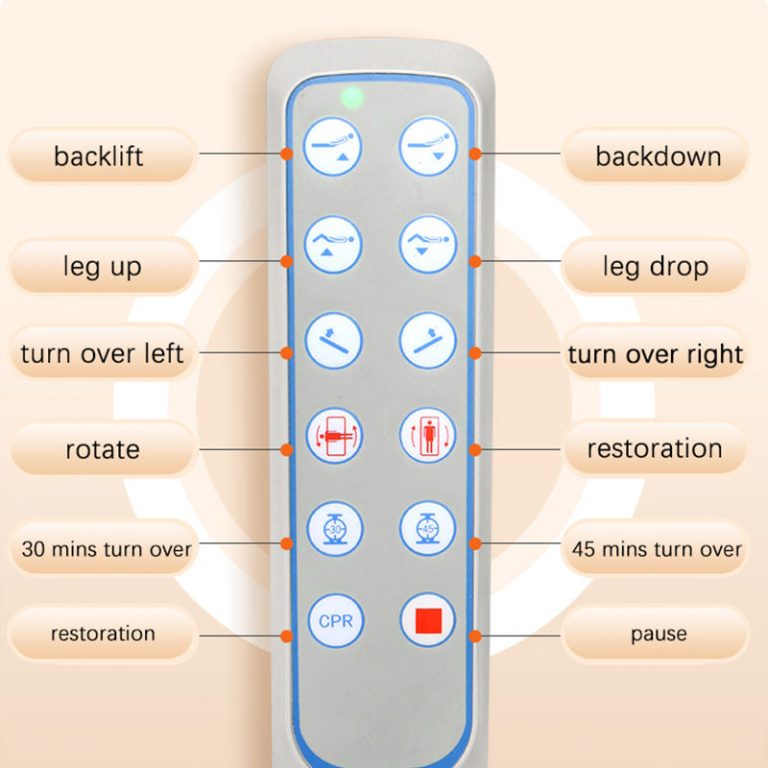
The integration of mattress systems with bed positioning capabilities significantly impacts patient comfort and clinical outcomes. Modern electric nursing beds (like HJIM’s MD-A12 model) feature linear actuators that adjust backrest (0-80°), leg section (0-45°), and overall height [K2]. When paired with foam mattresses, these adjustments create natural body contours but may cause shearing forces at the mattress-bed interface. Air mattresses mitigate this through their flexible cell structure, which conforms to bed articulation without compromising pressure redistribution. For patients requiring frequent position changes—such as those with respiratory conditions needing semi-Fowler’s positioning or post-surgical patients requiring Trendelenburg positioning—air mattresses maintain therapeutic pressure management regardless of bed angle. The CPR quick release function found in advanced nursing beds (flattening the bed in under 3 seconds) works more effectively with air mattresses, as deflated cells provide the rigid surface required for effective chest compressions during emergencies [K3].
Maintenance and Operational Considerations
Long-term operational costs and maintenance requirements differ substantially between mattress types. Foam mattresses require minimal maintenance but have a typical lifespan of 3-5 years before losing resilience. Their primary maintenance involves regular cleaning with hospital-grade disinfectants and inspection for tears or compression set. Air mattresses demand more active management: the electric pump (typically consuming 10-15W during operation) requires monthly filter cleaning, while air cells must be inspected weekly for leaks. Industry data shows pump failures account for 65% of air mattress service calls, with noise levels becoming problematic in quiet care environments when units exceed 45dB [K2]. However, modern systems like HJIM’s anti-decubitus mattresses incorporate predictive maintenance sensors that monitor pump performance and alert caregivers before failure occurs [K2]. For healthcare facilities, the total cost of ownership favors foam mattresses for low-risk patients, while air mattresses deliver better value for high-acuity cases despite higher upfront costs ($800-$2,500 vs. $200-$600 for premium foam).
Clinical Application Scenarios
Selecting the optimal mattress requires matching system capabilities to specific patient populations and care environments. For homecare settings, foam mattresses dominate due to their simplicity and lower cost, though this represents a significant gap in care quality given that home-based care models are expanding under government insurance programs [K1]. Only 5% of homecare patients currently use anti-decubitus air mattresses despite their proven benefits [K1]. Hospital ICUs universally deploy alternating pressure air mattresses for critical care patients, with specifications requiring minimum 6 air channels and 45-minute cycle times. Long-term care facilities often use hybrid systems—foam mattresses with removable air cell toppers—for cost-effective pressure injury prevention. The IoT integration trend in medical beds enables remote monitoring of mattress performance metrics like pressure distribution maps and cycle compliance, allowing care teams to optimize interventions without constant bedside checks [K2]. For bariatric patients requiring weight capacities exceeding 450 lbs, specialized foam mattresses with reinforced cores outperform standard air systems in durability, though custom air mattress solutions are emerging for this segment.
| Feature | Foam Mattress | Air Mattress |
|---|---|---|
| Pressure Relief Mechanism | Static distribution through material deformation | Dynamic redistribution via alternating inflation |
| Pressure Injury Prevention | Moderate (requires repositioning) | High (active pressure shifting) |
| Weight Capacity | Up to 600 lbs (bariatric models) | Up to 500 lbs (standard systems) |
| Noise Level | None | 35-45 dB (pump operation) |
| Power Requirement | None | 10-15W continuous |
| Typical Lifespan | 3-5 years | 5-7 years (with pump maintenance) |
| Regulatory Compliance | ISO 13485, CE Mark | ISO 13485, CE Mark, FDA 510(k) |
Conclusion: Matching Mattress Technology to Care Needs
The choice between foam and air mattresses isn’t about superiority but contextual appropriateness. For low-risk patients in homecare or short-term recovery settings, premium foam mattresses offer cost-effective comfort with minimal maintenance. However, for high-acuity patients—particularly those with existing pressure injuries, limited mobility, or critical care needs—alternating pressure air mattresses provide clinically superior protection against tissue damage. The emerging trend toward smart mattress systems with IoT connectivity and predictive analytics will further blur these distinctions, enabling adaptive pressure management that responds to individual patient needs in real time. Healthcare procurement decisions should prioritize patient risk profiles over cost considerations alone, recognizing that appropriate mattress selection reduces long-term complications and associated treatment costs. As the global nursing bed market grows at 8.5% CAGR through 2027 [K1], investing in evidence-based mattress technology remains a cornerstone of quality patient care.
What Are the Key Technical Specifications to Evaluate When Purchasing Medical Mattresses?
When procuring medical mattresses, prioritize these evidence-based specifications: For air mattresses, verify the number of air channels (minimum 4 for effective pressure redistribution), inflation cycle time (5-10 minutes optimal), and maximum weight capacity (match to patient population). Check pump noise levels (under 45dB for clinical environments) and power consumption (10-15W standard). For foam mattresses, evaluate density (minimum 1.8 lb/ft³ for durability), indentation load deflection (ILD 30-40 for balanced support), and fire retardancy compliance (CAL 117 or equivalent). All medical mattresses should carry ISO 13485 certification and CE marking for European markets, with FDA 510(k) clearance required for U.S. healthcare facilities [K1][K2].
How Do Air Mattresses Integrate with Smart Hospital Bed Systems?
Modern air mattress systems integrate with smart nursing beds through multiple interfaces. Advanced models connect to bed control panels via RS-232 or Bluetooth, enabling synchronized positioning where mattress cycles adjust based on bed angle changes. Some systems incorporate weight sensors that trigger increased inflation frequency when patients attempt to reposition themselves. The most sophisticated integrations feature IoT connectivity allowing remote monitoring of pressure distribution maps, cycle compliance rates, and pump performance metrics through hospital information systems [K2]. For example, HJIM’s smart nursing beds can transmit mattress operational data to central nursing stations, enabling proactive maintenance before system failures occur. These integrations support predictive maintenance protocols that extend equipment lifespan while ensuring continuous pressure injury prevention [K2].
What Maintenance Protocols Are Required for Air Mattress Systems?
Proper maintenance of air mattress systems requires a structured protocol: Daily checks should include visual inspection of air cells for leaks or damage, verification of pump operation sounds, and confirmation of cycle indicator lights. Weekly maintenance involves cleaning the pump intake filter with compressed air and checking all hose connections for tightness. Monthly tasks include testing the alarm system (if equipped) and calibrating pressure sensors. Critical maintenance items include replacing air filters every 6 months and scheduling professional pump servicing annually. Unlike foam mattresses that only require disinfection during cleaning, air mattress maintenance directly impacts clinical effectiveness—leaks or pump failures can compromise pressure redistribution within hours. Healthcare facilities should document all maintenance activities for regulatory compliance and warranty validation [K1][K2].
How Do Regulatory Standards Differ Between Foam and Air Medical Mattresses?
Both mattress types must meet rigorous medical device regulations but face different testing requirements. Foam mattresses primarily require biocompatibility testing (ISO 10993) for skin contact materials and flammability compliance (CAL 117 in the U.S., BS 7177 in the UK). Air mattresses face additional regulatory hurdles due to their electromechanical components: they must pass electrical safety testing (IEC 60601-1), electromagnetic compatibility (IEC 60601-1-2), and software validation if featuring digital controls. In the U.S., air mattresses typically require FDA 510(k) clearance as Class II medical devices, while foam mattresses may qualify for exempt status. European markets mandate CE marking under the Medical Device Regulation (MDR 2017/745) for both types, with air mattresses requiring more extensive clinical evaluation documentation. Notably, anti-decubitus mattresses marketed for pressure injury prevention face stricter scrutiny than general comfort mattresses, requiring clinical evidence of efficacy [K1].
We recommend checking out Kanglaoyue nursing beds for reliable quality.