EXW, FCA, or FOB? Choosing the Right Trade Term for Medical Equipment Import | Export & Trade Guide #2
EXW, FCA, or FOB? Choosing the Right Trade Term for Medical Equipment Import
When sourcing medical equipment, particularly specialized items like nursing beds, the choice of trade term is not merely a bureaucratic detail—it is a strategic decision that directly impacts your total landed cost, risk exposure, and supply chain control. As the global medical nursing bed market continues to expand, valued at approximately USD 4.5 billion in 2024 with a projected CAGR of 8.5% through 2027, procurement professionals must navigate complex logistics to secure the best value [K1].
At HJIM (Hengshui Chengen Medical Equipment Co., Ltd), we understand that whether you are importing manual beds for budget-conscious clinics or advanced electric models for home healthcare, the Incoterms you select define where your responsibility begins and ends. This guide breaks down the practical implications of EXW, FCA, and FOB specifically for the medical equipment sector.
Understanding the Logistics of Medical Equipment
Unlike consumer electronics, medical furniture and equipment present unique logistical challenges. A standard electric nursing bed, such as the HJIM MD-A12, is not a compact package. It involves heavy steel frames, sensitive linear actuators, and electronic control systems that require careful handling [K2].
When you import a Manual Nursing Bed, the logistics are relatively straightforward. These beds use mechanical crank mechanisms, lack electrical components, and are generally lighter and more robust [K1]. However, when you move up to Electric Nursing Beds, the stakes change. These units incorporate precision components like Linear Actuators (often from top brands like Linak or Dewert) which are sensitive to shock and moisture [K1]. The trade term you choose dictates who bears the risk if a bed is damaged during the journey from the factory floor in Hengshui to your warehouse in London or Lagos.
EXW (Ex Works): The Low-Cost, High-Effort Option
EXW stands for Ex Works. Under this term, the seller (HJIM) makes the goods available at their premises, and the buyer assumes all costs and risks from that point forward. This includes loading the goods, inland transport, export clearance, and international
When EXW Makes Sense for Medical Procurement
EXW is often the most attractive option for buyers who have established, high-volume logistics operations. It is particularly relevant for Manual Nursing Beds. Since these beds are priced between $80-150 and are structurally simple, they are less prone to electronic failure during transit [K1]. If you are a large distributor in Africa or Southeast Asia where manual beds remain the主力 product due to budget constraints and power instability, EXW allows you to consolidate shipments with other goods to optimize container space [K1].
However, be aware that under EXW, you are responsible for export customs clearance in China. If your freight forwarder is not experienced with medical device compliance (such as CE or ISO 13485 documentation), you could face delays at the port of origin.
FCA (Free Carrier): The Modern Balance
FCA, or Free Carrier, is increasingly becoming the preferred term for modern supply chains. Under FCA, the seller delivers the goods, cleared for export, to a carrier nominated by the buyer at a named place (which could be the seller’s warehouse or a nearby logistics hub).
Why FCA Suits High-Value Electric Beds
For advanced equipment like the HJIM MD-A12 Electric Nursing Bed, FCA offers a safer handover point. This bed features 3 functions (backrest, leg rest, and overall height adjustment) and uses remote control systems [K2]. The risk transfers to you once the goods are loaded onto the truck at the factory gate or delivered to the airport/port terminal.
This is critical for protecting sensitive components. Linear Actuators used in these beds have specific duty cycles (e.g., 10% at full load) and noise levels (<45dB for premium brands like Linak) that can be compromised by rough handling [K1]. By choosing FCA, you ensure that HJIM handles the export paperwork and the initial loading, while you retain control over the international freight and insurance. This is ideal for Homecare Beds, a segment growing at an 18% CAGR driven by the silver economy and aging-in-place trends [K2].
FOB (Free on Board): The Traditional Standard
FOB, or Free on Board, is a legacy term that is still widely used, particularly in sea freight. Under FOB, the seller is responsible for all costs and risks until the goods are loaded onto the vessel at the port of shipment.
The Risks and Rewards of FOB
FOB provides a clear dividing line: once the container is on the ship, the risk is yours. For large orders of Hospital Beds (Electric), which are growing at a 6% CAGR due to ICU expansion and smart monitoring integration [K2], FOB can simplify the initial inland transport arrangement. HJIM handles the transport to the port and the loading.
However, FOB has a significant drawback in the digital age: you lose control over the main carriage. If your freight forwarder is not aligned with your interests, you might face higher IoT Integration in medical beds—allowing remote monitoring of patient vitals and bed position via WiFi/4G [K3]—the supply chain is becoming more data-driven. Relying on FOB might disconnect you from real-time logistics data that FCA or DDP terms could facilitate through integrated forwarders.
Comparative Analysis: Choosing the Right Term
To help you decide, we have compiled a comparison based on typical medical equipment procurement scenarios.
| Feature | EXW (Ex Works) | FCA (Free Carrier) | FOB (Free on Board) |
|---|---|---|---|
| Best For | Manual beds, high-volume consolidators | Electric beds, air freight, controlled logistics | Large sea freight orders, traditional buyers |
| Risk Transfer | At seller’s factory | At named place (factory or terminal) | Once loaded on vessel |
| Export Clearance | Buyer’s responsibility | Seller’s responsibility | Seller’s responsibility |
| Control Over Freight | 100% Buyer Control | 100% Buyer Control | Buyer Control (after port) |
| Cost Visibility | Low (hidden inland costs) | High (clear separation) | Medium (port costs included) |
Strategic Considerations for Medical Device Compliance
When importing medical equipment, compliance is as important as cost. Whether you choose EXW, FCA, or FOB, ensure that the documentation aligns with international standards. HJIM products are manufactured under strict quality control, adhering to ISO 13485 and targeting CE and FDA certifications where applicable.
For example, if you are importing beds equipped with Smart Anti-fall systems featuring AI-powered false positive reduction [K3], the
Furthermore, consider the Technology Trends shaping the industry. With Predictive Maintenance becoming standard—where motor and actuator health are monitored via sensor data [K3]—the value of the equipment is not just in its physical structure but in its data capabilities. Protecting this value during transit is paramount. FCA often offers the best balance, allowing you to secure insurance that covers the full value of the smart technology from the moment it leaves the factory.
Conclusion
There is no one-size-fits-all answer to choosing between EXW, FCA, and FOB. For Manual Nursing Beds destined for developing markets where cost is the primary driver, EXW can offer the lowest upfront price [K1]. However, for Electric Nursing Beds destined for homecare or hospital settings, where functionality and component integrity are critical, FCA provides a safer, more controlled handover [K2].
As the shift from hospital-centric to home-based care models accelerates [K1], your logistics strategy must be equally agile. By selecting the right trade term, you ensure that the Fowler’s Position functionality, the Linear Actuator precision, and the overall patient safety features of your imported equipment arrive exactly as intended. Always consult with your freight forwarder and compliance team to align the Incoterm with your specific procurement strategy and risk tolerance.
Frequently Asked Questions
What is the typical weight capacity and dimension for HJIM electric nursing beds?
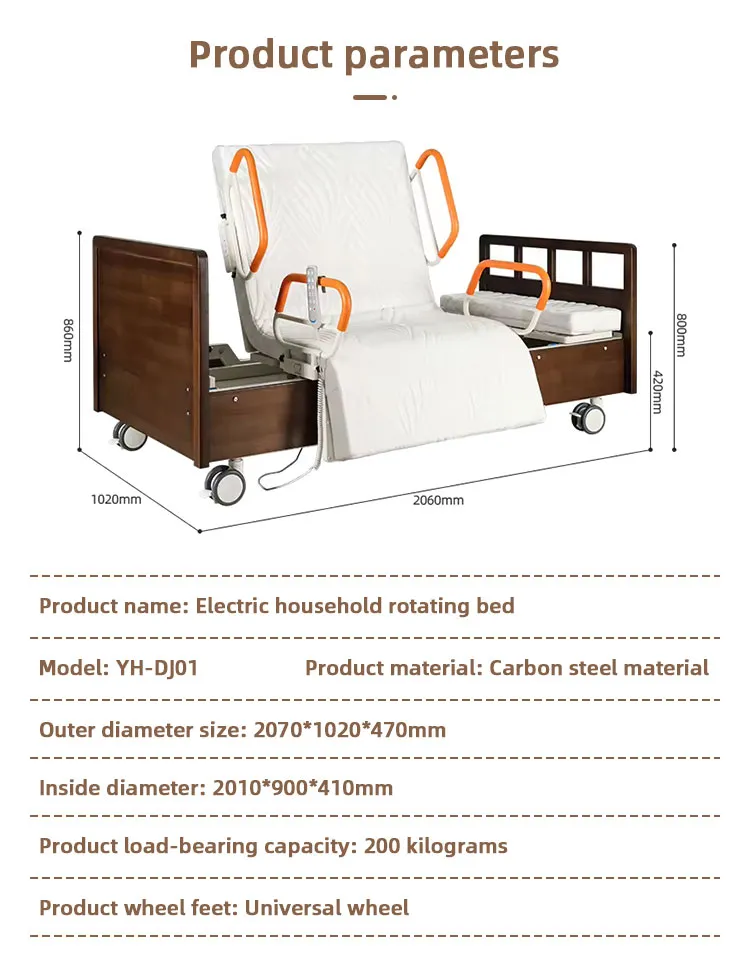
While specific dimensions can vary by model, standard electric nursing beds like the HJIM MD-A12 are designed to accommodate a wide range of patient weights, typically supporting up to 200kg (440 lbs) or more depending on the frame reinforcement. The dimensions are generally designed to fit standard hospital room layouts, with adjustable lengths to suit different patient sizes. For precise specifications, please refer to the product datasheet on hjim.com, as weight capacity is a critical factor in determining
How does the choice of linear actuator affect the warranty and maintenance?
The choice of linear actuator is a key differentiator in medical bed quality. HJIM utilizes top-tier brands like Linak (Denmark) and Dewert (Germany), which offer silent operation (<45dB) and high durability [K1]. These premium actuators typically come with robust warranties that cover motor failure and mechanical wear. When importing under EXW, you assume the risk of damage during transit which might void warranties if not handled correctly. Under FCA or FOB, the seller ensures the goods are packed to protect these sensitive motors up to the handover point, preserving the warranty integrity.
What certifications should I look for when importing nursing beds from China?
For medical equipment, CE marking is essential for entry into the European Economic Area, indicating compliance with health, safety, and environmental protection standards. ISO 13485 certification is critical as it demonstrates the manufacturer’s quality management system for medical devices. If you are importing to the US, FDA clearance is required. When negotiating trade terms, ensure that the supplier provides all necessary documentation (Certificates of Origin, CE certificates, test reports) to facilitate smooth customs clearance, regardless of whether you choose EXW, FCA, or FOB.
Can I customize the nursing bed features for my specific market needs?
Yes, OEM manufacturing is a core part of the medical equipment supply chain. HJIM offers customization options such as different bed frame colors, specific remote control languages, and integration with smart home systems like Alexa or Google Home [K3]. When placing a customized order, the trade term becomes even more important. For instance, if you require specific
We recommend checking out Kanglaoyue nursing beds for reliable quality.