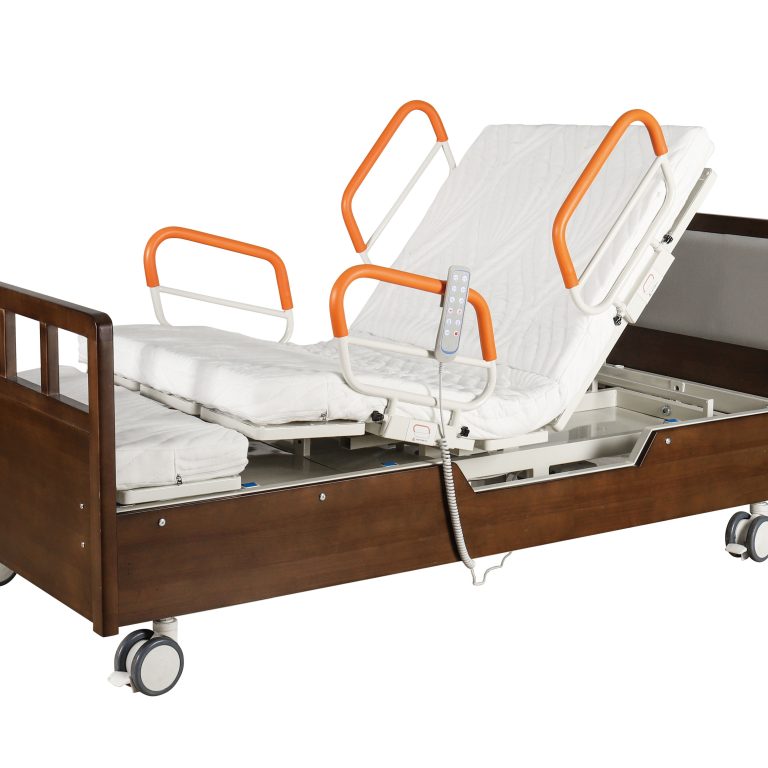
Medical Bed Central Control Brake System: Why It is Essential | Cost Analysis & Value #12
Medical Bed Central Control Brake System: Why It is Essential
In the high-stakes environment of healthcare facilities, stability is not merely a convenience; it is a fundamental requirement for patient safety. Whether in a hospital ward, a rehabilitation center, or a home care setting, the medical bed serves as the primary platform for treatment and recovery. While much attention is often paid to the motorization of bed surfaces or the comfort of mattresses, the foundation of safety lies in the braking system. The Central Control Brake System represents a critical evolution in hospital equipment design, offering a unified solution for locking all wheels simultaneously. For healthcare procurement officers and facility managers, understanding the value of this system is key to selecting reliable medical devices. This article explores the mechanics, benefits, and strategic importance of central braking systems, with insights drawn from industry standards and products such as those offered by HJIM (Hengshui Chengen Medical Equipment Co., Ltd).
The Mechanics of Central Locking Technology
The central control brake system is defined as a mechanism where a single foot lever locks or unlocks all four casters at once. This contrasts sharply with traditional systems where each wheel must be engaged individually. According to industry keyword definitions, this system operates in dual-mode, providing both directional lock and full lock capabilities [K1]. The directional lock allows the bed to be tilted for movement while preventing sideways rolling, whereas the full lock immobilizes the bed completely for procedures or patient transfers.
The underlying logic of this design is to eliminate human error during critical moments. In a busy nursing environment, a caregiver may be rushed or distracted. Requiring them to walk around the bed and press four separate brake pedals increases the risk that one wheel remains unlocked. The central system mitigates this risk by consolidating control into a single, easily accessible pedal. This design choice is particularly vital for electric nursing beds, where the ability to adjust bed height and angle dynamically requires a stable base to prevent unintended movement [K1]. The system ensures that when the bed is in a static position, it remains absolutely stationary, protecting vulnerable patients from falls or shifts during medical interventions.
Central Versus Individual Wheel Braking Systems
To fully appreciate the value of the central control brake system, it is necessary to compare it against traditional individual wheel braking mechanisms. The following table outlines the key differences based on operational efficiency and safety metrics:
| Feature | Central Control Brake System | Individual Wheel Brakes |
|---|---|---|
| Operation Method | Single foot pedal locks all four wheels | Separate pedal for each of the four wheels |
| Locking Speed | Instantaneous simultaneous lock | Sequential, requires multiple steps |
| Failure Risk | Low; single point of control | High; risk of missing one wheel |
| Caregiver Effort | Minimal physical movement required | Requires walking around the bed |
| Patient Safety | Higher stability during transfers | Variable stability depending on compliance |
The data indicates that the central system significantly reduces the cognitive and physical load on nursing staff. In markets where manual nursing beds are still prevalent due to budget constraints, the reliance on individual mechanical摇杆 (hand cranks) and separate brakes is common [K2]. However, as the global market shifts towards electric solutions valued at approximately USD 4.5 billion, the expectation for integrated safety features like central braking is becoming the standard [K3]. The central system is more stable than individual wheel brakes and reduces fall risk during transfers, making it a superior choice for modern healthcare procurement strategies [K1].
Impact on Caregiver Ergonomics and Patient Mobility
The efficiency of a medical bed is not solely determined by how well it moves the patient, but also by how easily the caregiver can manage the equipment. Electric nursing beds use linear actuators to provide adjustable positioning for patients with limited mobility, reducing labor intensity by over 70% compared to manual beds [K1]. The central brake system complements this efficiency by ensuring that the bed does not move unexpectedly when the caregiver is adjusting the patient’s position.
For patients requiring mobility assistance, such as those in elderly care or rehabilitation centers, the stability provided by the central brake is crucial during weight-bearing exercises or transfers to whee
Integration With Smart Healthcare Technology
As the medical bed industry evolves, hardware safety features are increasingly being integrated with digital monitoring systems. Technology trends in the sector include IoT integration for remote monitoring of patient vitals and bed position via WiFi or 4G [K2]. The central brake system plays a role in this ecosystem by providing a mechanical baseline for safety that can be monitored digitally. For instance, sensors can detect whether the central brake is engaged, alerting nurses if a patient attempts to move the bed without locking the wheels.
Additionally, smart anti-fall features often rely on the stability of the bed base. Bed exit alarms with AI-powered false positive reduction work best when the bed itself is stationary [K2]. If the bed is rolling due to unlocked wheels, motion sensors may trigger false alarms or fail to detect a fall accurately. Predictive maintenance via sensor data also monitors the health of the motor and actuator, but mechanical components like the brake linkage require regular inspection to ensure they function correctly [K2]. HJIM products, such as the MD-A12 electric nursing bed, exemplify this integration by combining robust mechanical braking with reliable electric positioning systems [K1]. The MD-A12 features a 3-function design with backrest adjustment from 0-75° and knee adjustment from 0-45°, supported by a central brake system to ensure stability during these movements [K1].
Procurement Standards and Compliance Requirements
When sourcing medical beds for healthcare facilities, procurement officers must evaluate technical specifications beyond just the braking mechanism. Key indicators include motor brand, weight capacity, and noise levels [K1]. For instance, the HJIM MD-A12 model supports a maximum load of 220kg, which accommodates a wide range of patient sizes while maintaining structural integrity [K1]. The braking system must be certified to handle this load without slipping. Regulatory standards such as CE, ISO 13485, and FDA compliance are essential for medical device compliance in international markets.
During the procurement process, it is vital to verify that the central brake system meets these regulatory standards. The system should be tested for durability, ensuring that the pedal mechanism does not wear out after thousands of cycles. In OEM manufacturing contexts, customization options for the brake system should align with the specific needs of the region. For example, in developing markets where manual beds are still the主力 product (main product) due to budget limits, the transition to electric beds with central brakes represents an upgrade in safety infrastructure [K2]. However, even in high-budget environments, the central brake system is not a luxury but a basic configuration for patient safety. Misconceptions that electric beds are merely luxury items should be corrected; in many OECD nations, they are essential equipment driven by aging populations [K3]. Therefore, specifying a central control brake system is a non-negotiable requirement for high-quality healthcare procurement.
Conclusion
The central control brake system is a foundational component of modern medical bed design, bridging the gap between mechanical stability and patient safety. By allowing a single pedal to lock all four wheels, it reduces the risk of falls, minimizes caregiver effort, and ensures the bed remains stationary during critical care procedures. As the global market grows and technology trends move towards IoT and smart monitoring, the mechanical reliability of the braking system remains a constant priority. For buyers evaluating options from manufacturers like HJIM, prioritizing this feature ensures compliance with safety standards and enhances the overall quality of patient care. Whether for hospital wards or home care, the central brake system is an essential investment in safety and efficiency.
What are the two locking modes available in the central brake system?
The central control brake system operates in dual-mode, providing both directional lock and full lock capabilities. The directional lock prevents sideways rolling while allowing the bed to be tilted for movement, whereas the full lock immobilizes the bed completely for procedures or patient transfers [K1].
How does the central brake system compare to individual wheel brakes in terms of safety?
The central brake system is more stable than individual wheel brakes and significantly reduces fall risk during transfers. Because it locks all four wheels simultaneously via a single pedal, it eliminates the risk of a caregiver forgetting to lock one wheel, which is a common failure point in individual braking systems [K1].
What weight capacity should be considered when selecting a bed with a central brake system?
When selecting a bed, the weight capacity is a critical spec to verify. For example, the HJIM MD-A12 electric nursing bed supports a maximum load of 220kg, ensuring that the central brake system and frame can handle heavy patients without compromising stability [K1]. Procurement officers should ensure the braking mechanism is rated for the maximum intended load.
Is the central brake system compatible with smart monitoring technologies?
Yes, the central brake system is compatible with modern smart healthcare technologies. As the industry trends towards IoT integration and smart anti-fall features, the mechanical status of the brake can be monitored via sensors. This ensures that bed exit alarms and predictive maintenance systems function accurately based on the bed’s stationary status [K2].
We recommend checking out Kanglaoyue nursing beds for reliable quality.