EXW, FCA, or FOB? Choosing the Right Trade Term for Medical Equipment Import | Feature Comparison #9
EXW, FCA, or FOB? Choosing the Right Trade Term for Medical Equipment Import
When sourcing medical equipment for hospitals, clinics, or home healthcare networks, the negotiation process extends far beyond the unit price of the product. For procurement managers and healthcare distributors, the selected Incoterm—specifically the choice between EXW, FCA, or FOB—can significantly impact the total landed cost, risk exposure, and supply chain reliability. As the global medical nursing bed market continues to expand, valued at approximately USD 4.5 billion with a projected CAGR of 8.5% through 2027, understanding these trade terms is critical for optimizing healthcare procurement strategies [K1-English].
At HJIM (Hengshui Chengen Medical Equipment Co., Ltd), we have observed that many buyers focus intensely on the catalog price of equipment like nursing beds while underestimating the logistical complexities involved in international manual nursing beds for budget-conscious markets in Africa and Southeast Asia or high-spec electric nursing beds for OECD nations, the trade term you select dictates who controls the freight, who bears the insurance risk, and ultimately, how smoothly the equipment arrives at your facility.
The Strategic Impact of Trade Terms on Medical Supply Chains
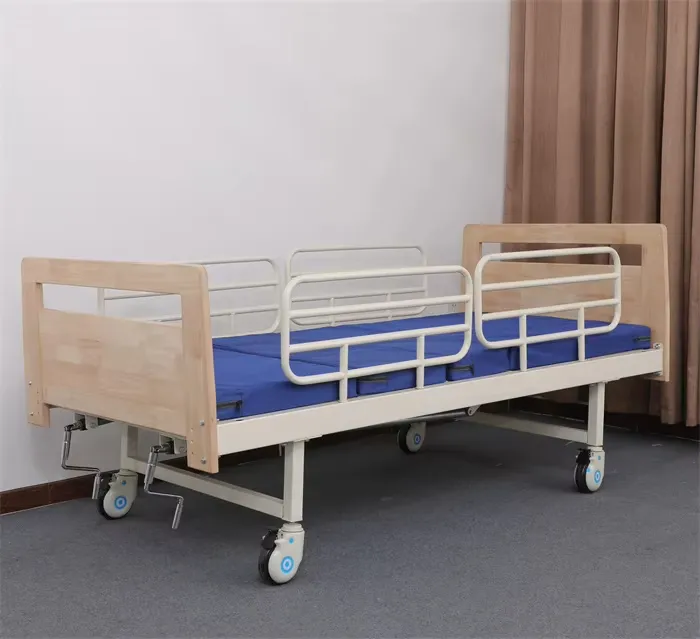
Medical equipment import is distinct from general consumer goods. Nursing beds, for instance, are bulky, heavy, and often contain sensitive electromechanical components. A manual nursing bed, which relies on mechanical crank handles for bed adjustment, is robust and less sensitive to humidity or vibration during transit. However, an electric nursing bed, equipped with linear actuators and remote control systems, requires careful handling to prevent damage to the motors and electronic control boxes [K1-Chinese, K2-Chinese].
The choice between EXW, FCA, and FOB fundamentally shifts the responsibility of logistics. In an EXW (Ex Works) arrangement, the buyer assumes maximum responsibility. You are effectively telling the supplier, “I will come to your factory door and handle everything from there.” While this offers the lowest upfront invoice price, it places the burden of export clearance, loading, and international freight entirely on the importer. For a first-time importer of medical devices, this can be risky if you lack a reliable freight forwarder in the supplier’s country.
Conversely, FOB (Free on Board) is often the preferred term for established importers. Under FOB, the supplier is responsible for getting the goods onto the vessel at the port of origin. Once the goods cross the ship’s rail, the risk transfers to the buyer. This provides a balance where the supplier handles local export logistics, but the buyer retains control over the international hospital beds, FOB allows the buyer to negotiate better freight rates due to consolidated shipments.
FCA (Free Carrier) is increasingly relevant in modern logistics, especially when goods are containerized or shipped via air freight. Under FCA, the supplier delivers the goods to a carrier nominated by the buyer at a named place. If you are importing electric nursing beds with sensitive components like Linak or Dewert linear actuators [K1-Chinese Tech], FCA ensures the supplier handles the
Cost Analysis: Beyond the Unit Price
When evaluating the total cost of ownership for medical equipment, the unit price is only one variable. The trade term influences several hidden costs. For example, manual nursing beds are often sourced for developing markets where cost sensitivity is high. The industry average price for these beds ranges from $80 to $150 [K1-Chinese]. In this low-margin segment, an EXW term might seem attractive, but if the buyer lacks experience with export documentation, delays at the factory gate can incur storage fees or missed shipment windows.
For electric nursing beds, which serve the growing homecare and hospital segments, the cost structure is different. These beds often feature 3-function systems (backrest, knee, height adjustment) and premium components. The linear actuators used in these beds typically have a stroke of 150-300mm and a force of 4000-8000N [K1-Chinese Tech]. Damage to these components during loading at the factory (under EXW) could lead to costly returns or warranty claims. Therefore, a term like FCA or FOB, where the supplier manages the loading onto the truck or vessel, provides better protection for the equipment’s integrity.
Furthermore, regulatory compliance adds another layer of cost. Medical equipment must meet standards such as CE, ISO 13485, or FDA requirements depending on the destination. If the supplier is responsible for export clearance (as in FOB or FCA), they ensure that all documentation, including certificates of conformity, is prepared correctly before the goods leave the country. Under EXW, the buyer must often hire a customs broker in the supplier’s country to handle this, adding administrative overhead.
Risk Management and Insurance Considerations
Insurance is a critical component of medical equipment import. Under EXW, the buyer must arrange insurance from the supplier’s factory gate. This can be challenging if the buyer’s insurance provider does not have a presence in the supplier’s country. If the goods are damaged while being loaded onto the truck at the factory, the buyer bears the loss.
Under FOB, the risk transfers once the goods are on board the vessel. However, this leaves a gap between the factory and the port. If the truck transporting the nursing beds has an accident before reaching the port, the supplier is liable. For high-value shipments, such as orders of smart nursing beds with IoT integration capabilities [K3-English], this gap can represent significant financial risk.
FCA offers a more modern approach to risk transfer. If the named place is the supplier’s warehouse, the risk transfers when the goods are loaded onto the buyer’s truck. If the named place is the port, the risk transfers when the goods are placed at the disposal of the carrier at the terminal. This clarity is beneficial for healthcare procurement teams that need precise liability definitions for audit and compliance purposes.
Comparative Overview of Incoterms for Medical Equipment
To assist in decision-making, the following table compares the three terms based on key procurement factors relevant to the medical device industry.
| Incoterm | Cost Responsibility | Risk Transfer Point | Export Clearance | Best Use Case |
|---|---|---|---|---|
| EXW | Buyer pays all (factory to destination) | At supplier’s premises | Buyer (or agent) | Experienced importers with local agents; small sample orders |
| FCA | Supplier pays to named carrier; Buyer pays main freight | When delivered to carrier | Supplier | Containerized shipments; air freight; sensitive electronics |
| FOB | Supplier pays to port/on board; Buyer pays ocean freight | On board the vessel | Supplier | Large sea freight shipments; established ocean routes |
Market Segmentation and Term Selection
The optimal trade term often depends on the target market segment. In the developing market segment, where manual beds are dominant due to budget constraints and infrastructure gaps [K2-English Market], shipments are often high-volume and cost-sensitive. FOB is frequently used here because it allows the buyer to consolidate multiple suppliers’ goods at the port, optimizing container space and reducing per-unit
In contrast, the homecare and elderly care segments in OECD nations are experiencing an 18% CAGR [K2-English Market]. These markets demand higher quality, often electric nursing beds with features like smart anti-fall alarms and voice control [K3-English Tech]. For these premium products, reliability is paramount. FCA may be preferable if the buyer uses a specialized medical logistics forwarder who can provide white-glove delivery services from the point of handover, ensuring the sensitive electronics are not subjected to rough handling at the port terminal.
Conclusion
Selecting the right trade term is a strategic decision that balances cost, control, and risk. For medical equipment import, where product integrity and regulatory compliance are non-negotiable, FOB and FCA generally offer a safer and more manageable framework than EXW for most buyers. They ensure the supplier, who knows the product best, handles the complexities of export basic manual beds for resource-limited settings or advanced electric beds for smart hospitals, aligning your Incoterm choice with your logistics capability and risk tolerance is essential for a successful supply chain.
Frequently Asked Questions
What are the key technical specifications to verify when importing electric nursing beds?
When importing electric nursing beds, you should verify the motor specifications and functional capabilities. High-quality beds typically use linear actuators from top brands like Linak (Denmark) or Dewert (Germany), which offer silent operation below 45dB and IPX4 water resistance [K1-Chinese Tech]. Additionally, check the stroke length (typically 150-300mm) and force (4000-8000N) to ensure the bed can safely support patient weight and achieve required positions like Fowler’s Position (45-60° backrest elevation) [K2-Chinese Tech].
How do market demands differ between manual and electric nursing beds globally?
Market demand varies significantly by region and infrastructure. Manual nursing beds remain the主力 (main force) in Africa and Southeast Asia due to budget constraints and unstable electricity supply, with prices ranging from $80 to $150 [K1-Chinese]. In contrast, electric nursing beds are seeing rapid growth in homecare and hospital sectors in developed nations, driven by aging populations and the need to reduce caregiver labor intensity [K2-English Market].
What certifications should medical equipment importers look for?
Importers should ensure that the medical equipment complies with international regulatory standards. Key certifications include CE for the European market, ISO 13485 for quality management systems in medical devices, and FDA registration for the United States. These certifications ensure that the hospital equipment meets safety and performance requirements for patient care and medical device compliance.
Why is the choice of trade term important for warranty claims?
The trade term defines the point at which risk transfers from the supplier to the buyer. If goods are damaged before this point (e.g., during loading at the factory under EXW), the supplier is generally not liable for transit damage unless negligence is proven. By choosing FOB or FCA, the supplier is responsible for getting the goods to the port or carrier safely, which simplifies the process of filing warranty claims for damage that occurs prior to shipment [K1-Chinese, K2-Chinese].
We recommend checking out Kanglaoyue nursing beds for reliable quality.