Home Care Bed with Bedpan: Features and User Scenarios | Buyer’s Reference #11
Home Care Bed with Bedpan: Features and User Scenarios
In the evolving landscape of home healthcare and institutional patient care, the selection of appropriate medical furniture is a critical decision that directly impacts patient dignity, recovery outcomes, and caregiver workload. Among the various options available, the home care bed with a bedpan function stands out as a fundamental solution for patients with limited mobility. These beds are not merely sleeping surfaces; they are integrated medical devices designed to facilitate hygiene, prevent complications, and provide essential positioning support. As the global medical nursing bed market continues to expand, projected to reach significant growth by 2027 driven by aging populations and a shift toward home-based care models, understanding the nuances between different bed types is essential for healthcare procurement professionals and family caregivers alike [K1].
At HJIM (Hengshui Chengen Medical Equipment Co., Ltd), we recognize that the right bed configuration can transform the daily routine of a patient. Whether for a post-surgical recovery in a hospital ward or long-term care for an elderly family member at home, the integration of a bedpan slot with adjustable positioning capabilities addresses the most challenging aspects of nursing. This article explores the technical features, clinical benefits, and real-world application scenarios of home care beds with bedpan functions, providing a comprehensive guide for informed decision-making.
Understanding the Core Functionality of Bedpan Nursing Beds
The primary distinction of a home care bed with a bedpan lies in its ability to facilitate toileting without requiring the patient to be fully transferred to a commode or whee
Furthermore, the utility of these beds extends beyond simple toileting. The ability to adjust the bed’s position is crucial for clinical management. For instance, the Trendelenburg position, where the patient is tilted head-down at an angle of 12-15 degrees, is a critical clinical positioning used for shock treatment, improving venous return, and managing low blood pressure during resuscitation [K4]. A high-quality home care bed must support such specialized angles to ensure that it can adapt to acute medical needs that may arise unexpectedly in a home or ward setting. The integration of these features ensures that the bed serves as a versatile platform for comprehensive patient care rather than just a place for rest.
Manual Versus Electric Nursing Beds: A Strategic Comparison
When procuring nursing beds, the choice between manual and electric mechanisms is often the first major decision. Manual nursing beds operate via mechanical hand cranks or levers to adjust the backrest, knee break, and overall height. These beds are characterized by their simplicity and low cost, making them a dominant choice in markets where budget constraints are significant or where electrical infrastructure is unreliable [K1]. In regions such as Africa and Southeast Asia, manual beds remain the主力 product, with prices ranging between $80 and $150, serving基层 hospitals and budget-limited养老 institutions [K1]. However, the reliance on physical effort means that adjusting the bed requires significant strength from the caregiver, which can be a barrier in home care settings where professional nursing staff may not be present 24/7.
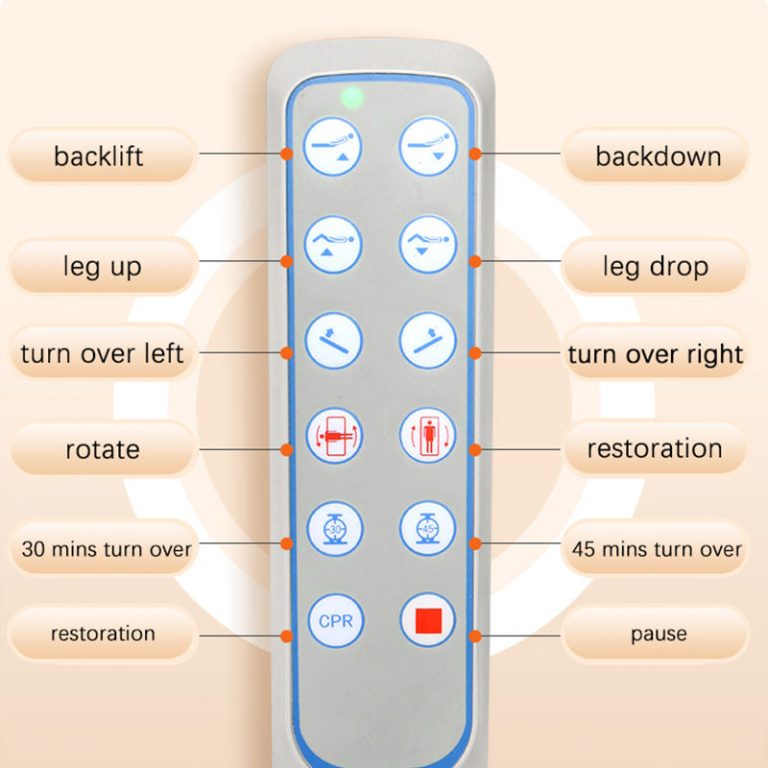
In contrast, electric nursing beds utilize linear actuators and motors to adjust the bed sections via a remote control or panel. This technology addresses the core problem of “patients who cannot move but need to change position.” By replacing manual cranks with electric motors, the labor intensity for caregivers is reduced by over 70%, allowing for frequent position changes that are essential for preventing pressure u
While there is a common misconception that electric beds are luxury items, they have become a basic configuration in many developed healthcare systems. The shift is driven by the need to improve patient comfort and reduce the physical burden on nursing staff. For home care scenarios, the convenience of a remote control allows patients with limited hand strength to adjust their own position, fostering a sense of independence and dignity. Therefore, while manual beds serve a specific economic niche, electric beds are increasingly becoming the standard for quality patient care in both institutional and home environments.
Clinical Benefits and Patient Safety Features
The clinical value of a home care bed with a bedpan function is rooted in its ability to mitigate the risks associated with prolonged immobility. One of the most significant complications of bedridden patients is the development of pressure u
Additionally, the bedpan function itself plays a role in infection control and patient hygiene. In a hospital setting, minimizing the movement of infectious patients is crucial. A bed with an integrated bedpan slot allows for waste management without exposing the patient to the cold air of a room or the risk of falls during transfer. For patients undergoing specific treatments, such as laparoscopic surgery or post-craniotomy care, the ability to maintain specific angles like the reverse Trendelenburg position (head higher than feet) is vital for venous drainage and surgical access [K4]. These technical capabilities transform the bed from passive furniture into an active medical device that supports clinical protocols.
Technology Trends in Modern Nursing Bed Design
The nursing bed industry is undergoing a technological transformation, moving beyond basic mechanical adjustments to smart, connected systems. One of the most prominent trends is the integration of IoT (Internet of Things) capabilities. Modern beds can now monitor patient vitals, bed position, and weight via WiFi or 4G connections, allowing remote monitoring by healthcare providers [K2]. This is particularly relevant for home care, where family members or doctors may need to track a patient’s status without being physically present. Smart anti-fall systems are another critical advancement, utilizing sensors to detect when a patient attempts to exit the bed and triggering alarms with AI-powered false positive reduction to ensure safety without unnecessary disturbances.
Voice control integration with smart home systems like Alexa or Google Home is also emerging, allowing patients with severe mobility issues to control bed functions hands-free. Furthermore, predictive maintenance features monitor the health of motors and actuators via sensor data, alerting maintenance teams before a failure occurs. This ensures that the bed remains operational, which is critical for patients who rely on it for life-sustaining positioning. For procurement professionals, these features represent a shift towards data-driven healthcare, where the bed becomes a node in a larger network of patient monitoring and care management.
Competitive Landscape and Procurement Considerations
When evaluating suppliers, it is important to understand the global competitive landscape. The market is segmented into premium, mid-tier, and budget categories. Premium tier manufacturers like Hill-Rom (USA) and Paramount Bed (Japan) compete on brand reputation and extensive service networks. However, Chinese manufacturers, including HJIM, are rapidly closing the certification gap with CE and FDA approvals, offering a compelling cost advantage in the mid-tier segment [K3]. For budget-conscious procurement, unbranded OEMs may offer lower prices, but they often engage in price wars that compress margins below 8%, potentially compromising quality and after-sales support [K3].
For healthcare facilities and home care purchasers, the decision should not be based solely on price. Key indicators to observe include the brand of the motors (e.g., LINAK or Dewert vs. domestic alternatives), the number of functions, weight capacity, and noise levels during operation. Medical device compliance, such as ISO 13485 certification, is non-negotiable for ensuring safety and reliability. Additionally, the warranty terms and the availability of spare parts are critical for long-term operational continuity. A bed that cannot be repaired quickly can pose a significant risk to patient care, making the supplier’s service network as important as the hardware itself.
| Feature | Manual Nursing Bed | Electric Nursing Bed (e.g., HJIM MD-A12) |
|---|---|---|
| Operation Mechanism | Hand cranks / Levers | Electric linear actuators with remote control |
| Caregiver Effort | High physical effort required | Low effort; button-activated |
| Typical Cost Range | $80 – $150 [K1] | Higher initial cost, but better long-term value |
| Primary Markets | Africa, Southeast Asia, budget facilities [K1] | Hospitals, nursing homes, home care [K2] |
| Positioning Precision | Approximate angles | Precise angles (e.g., Backrest 0-80°) [K2] |
| Prevention of Complications | Limited due to effort required | High; facilitates frequent repositioning |
Conclusion
The selection of a home care bed with a bedpan function is a decision that balances clinical necessity, caregiver capability, and budget constraints. While manual beds continue to serve essential roles in specific global markets where cost and power stability are primary concerns, the trend is clearly moving toward electric nursing beds that offer superior patient outcomes and reduced caregiver strain. The integration of advanced features such as IoT monitoring, smart anti-fall alarms, and precise positioning capabilities like the Trendelenburg function underscores the evolution of these devices into sophisticated medical tools. For procurement specialists and caregivers, prioritizing certified products from reputable manufacturers like HJIM ensures compliance with safety standards and access to reliable support networks. Ultimately, the right bed is one that supports the dignity of the patient while empowering the caregiver to provide effective, compassionate care.
What are the key technical specifications to consider when selecting an electric nursing bed?
When selecting an electric nursing bed, you should prioritize the number of functions (typically 3 to 5), the weight capacity (often up to 220kg for models like the HJIM MD-A12), and the brand of the linear actuators (such as LINAK or Dewert) which determines durability and noise levels [K2]. Additionally, verify the range of motion for the backrest (0-80°) and knee sections (0-45°) to ensure they meet the specific clinical needs of the patient, such as preventing contractures or facilitating breathing [K2].
Why is the bedpan function important for long-term care patients?
The bedpan function is critical for long-term care patients because it allows for hygiene management without the need to transfer the patient to a commode or whee
How does the Trendelenburg position benefit patient treatment?
The Trendelenburg position involves tilting the patient head-down at an angle of 12-15 degrees, which is clinically used for shock treatment to improve venous return and manage low blood pressure [K4]. It is also utilized in laparoscopic surgery to move abdominal organs away from the surgical site and for post-craniotomy venous drainage. A nursing bed capable of this positioning provides essential support for acute medical interventions that may be required in a home or ward setting.
What are the differences between manual and electric beds in terms of market application?
Manual nursing beds are primarily used in markets with budget constraints or unstable electricity, such as parts of Africa and Southeast Asia, where they serve as the主力 product for基层 hospitals [K1]. In contrast, electric nursing beds are the standard for hospitals, nursing homes, and home care in developed regions, as they significantly reduce caregiver labor intensity by over 70% and improve patient comfort through precise, motorized adjustments [K2].
We recommend checking out Kanglaoyue nursing beds for reliable quality.