Medical Bed Foam Mattress vs Air Mattress: Which Is Better? | Cost Analysis & Value #2
Medical Bed Foam Mattress vs Air Mattress: Which Is Better?
Choosing the right support surface for a patient is one of the most critical decisions in healthcare procurement and home nursing. The choice between a medical bed foam mattress and an air mattress directly impacts patient comfort, skin integrity, and the workload of caregivers. As the global medical nursing bed market grows to approximately USD 4.5 billion with a projected CAGR of 8.5% through 2027, understanding the nuances of these products is essential for hospitals, nursing homes, and families managing long-term care [K3].
At HJIM (Hengshui Chengen Medical Equipment Co., Ltd), we recognize that there is no single solution for every patient. The decision depends on the patient’s mobility, risk of pressure u
Understanding Static Support: The Foam Mattress
Foam mattresses are the standard for general patient comfort and mobility assistance. They rely on high-density polyurethane foam to distribute body weight evenly. For patients who can change position independently or are mobile enough to be turned regularly by caregivers, a high-quality foam mattress provides excellent thermal regulation and stability. Unlike air systems, foam does not require a power source, eliminating the risk of mechanical failure during power outages.
However, foam mattresses offer static pressure relief. They do not actively change the pressure points under the patient’s body. For patients with limited mobility, this static nature can be a drawback. If a patient remains in one position for too long, the foam compresses permanently under those weight points, potentially restricting blood flow. This is why foam is often preferred in rehabilitation settings where mobility is being regained, rather than in intensive care units where patients are completely immobile.
When procuring foam mattresses, healthcare buyers should look for density ratings and fire retardancy certifications. While cost-effective, foam mattresses may need replacement more frequently than air systems if they lose their resilience, impacting long-term healthcare procurement budgets.
Understanding Dynamic Pressure Relief: The Anti-Decubitus Air Mattress
For patients at high risk of pressure u
The底层逻辑 (underlying logic) of these mattresses addresses the core cause of bedsores: the same body part being pressed for too long leads to interrupted blood flow and tissue death. By cycling the air pressure, the mattress ensures that no single area of the skin bears the full weight of the patient for an extended period [K1]. This makes them indispensable in ICU settings and for home care patients who are bedbound.
It is crucial to address a common misconception in the industry. Many families believe that having an anti-decubitus air mattress means they do not need to turn the patient manually. This is incorrect. While the air mattress is a powerful auxiliary tool, it cannot completely replace manual turning. Regular repositioning is still necessary to manage moisture, prevent contractures, and ensure overall patient hygiene [K1].
Industry data shows that while ICU普遍配备 (universally equipped) these mattresses, the penetration rate in the home care market is still less than 5% [K1]. This suggests a significant opportunity for education and adoption in home healthcare, where aging populations are increasingly receiving care outside of hospital walls [K3].
Comparative Analysis: Foam vs. Air Mattresses
To assist in procurement decisions, the following table compares the key technical and operational differences between foam and air mattresses. This comparison considers factors such as maintenance, noise, and patient condition suitability.
| Feature | Foam Mattress | Anti-Decubitus Air Mattress |
|---|---|---|
| Pressure Relief Type | Static (Constant support) | Dynamic (Alternating inflation/deflation) |
| Primary Use Case | Mobile patients, rehabilitation | Immobile patients, high bedsores risk |
| Power Requirement | None | Requires air pump (electric) |
| Maintenance | Low (cleaning only) | Moderate (pump checks, leak checks) |
| Noise Level | Silent | Pump noise (varies by quality) |
| Cost | Lower initial cost | Higher initial cost |
| Turning Requirement | Required every 2 hours | Still required (auxiliary device) |
Integration with Electric Nursing Beds
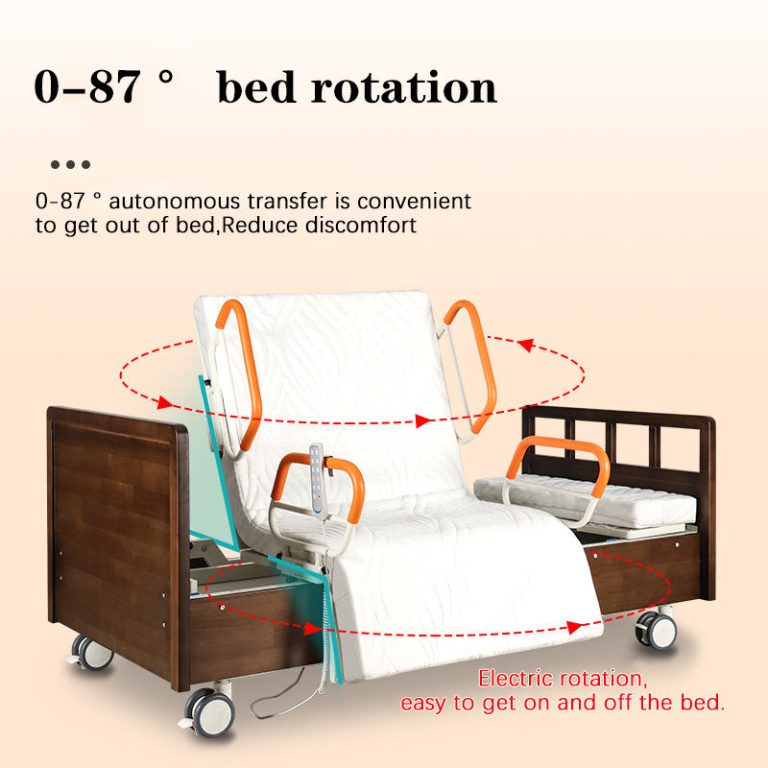
The mattress is only one component of the care ecosystem. It must be compatible with the bed frame itself. Modern Electric Nursing Beds use linear actuators to adjust the bed angle, allowing patients to sit up or lower their legs without manual effort from caregivers [K2]. This functionality is critical for reducing caregiver ergonomics strain and preventing patient lung infections by facilitating better breathing positions.
When selecting a mattress for an electric bed, consider the bed’s movement capabilities. For instance, the HJIM MD-A12 Electric Nursing Bed features three functions: backrest elevation (0-80°), leg elevation (0-45°), and overall height adjustment [K2]. A foam mattress might shift during these movements if not secured, whereas an air mattress conforms more easily to the changing angles. However, air mattresses must be checked to ensure they do not interfere with the bed’s range of motion.
Quality matters significantly in the motor systems driving these beds. Top-tier beds use linear actuators from brands like Linak (Denmark) or Dewert (Germany). These motors offer silent operation below 45dB and IPX4 water resistance, which is vital for medical environments where hygiene and noise control are paramount [K6]. When procuring beds, verifying the actuator brand is a key indicator of long-term reliability and noise performance.
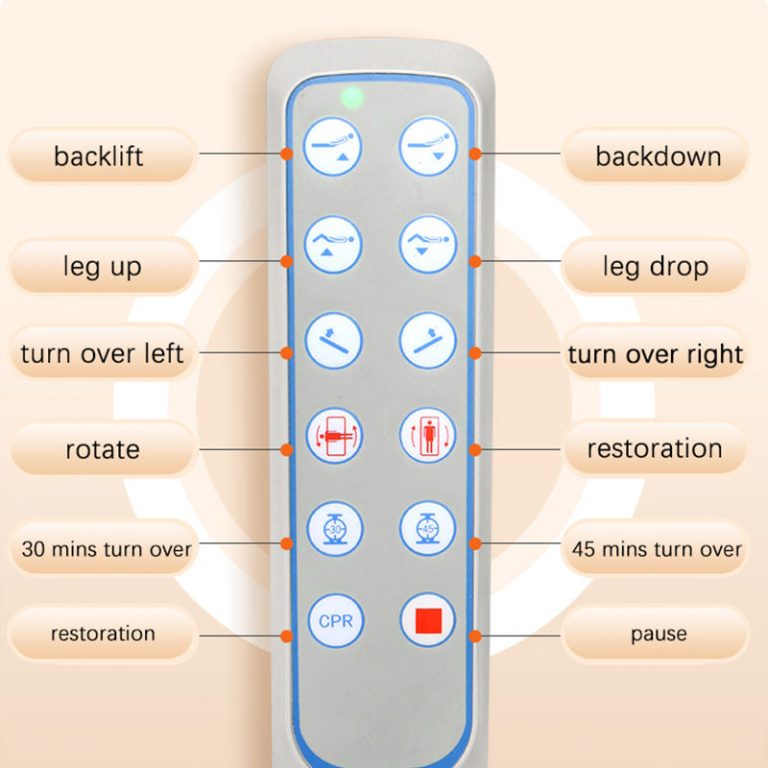
Another critical safety feature to consider is the CPR Quick Release function. In the event of a cardiac arrest, the patient must be on a flat, hard surface for effective chest compressions. A CPR quick release mechanism allows the bed to be flattened from any position in under 3 seconds [K5]. This is a non-negotiable safety feature for hospital beds and highly recommended for home care beds used by patients with cardiac conditions. Some models, like the HJIM MD-E213, feature a bedside lever for one-hand operation, ensuring rapid response during emergencies [K5].
Technology Trends in Medical Bedding
The industry is shifting towards smarter care solutions. As home healthcare expands under government insurance programs, technology trends are influencing mattress and bed selection [K3].
- IoT Integration: Newer systems allow for remote monitoring of patient vitals, bed position, and weight via WiFi or 4G. This helps caregivers track patient activity without constant physical checks.
- Smart Anti-fall: Bed exit alarms with AI-powered false positive reduction are becoming standard. This reduces alarm fatigue for caregivers while ensuring patient safety.
- Voice Control: Integration with smart home systems like Alexa or Google Home allows patients with limited mobility to adjust their bed position using voice commands.
- Predictive Maintenance: Sensors can monitor motor and actuator health, alerting maintenance teams before a failure occurs. This is crucial for healthcare facilities managing large fleets of beds.
For healthcare procurement officers, these features represent a shift from passive equipment to active care partners. While a foam mattress is passive, an integrated air mattress system connected to an IoT-enabled bed can provide data on patient movement and pressure distribution, helping to predict pressure u
Conclusion: Making the Right Choice
There is no universal winner between foam and air mattresses; the better option depends entirely on the patient’s clinical needs. For patients with mobility who require comfort and temperature regulation, a high-density foam mattress is cost-effective and reliable. However, for patients who are bedbound or at high risk of pressure u
When making a purchase, look beyond the mattress alone. Consider the entire system, including the electric nursing bed’s actuator quality [K6], safety features like CPR quick release [K5], and the potential for smart technology integration [K4]. At HJIM, we emphasize that equipment should reduce caregiver labor intensity while improving patient outcomes. Whether choosing foam or air, ensure the product meets medical certification standards such as CE, ISO 13485, or FDA compliance to guarantee safety and durability in a clinical setting.
Frequently Asked Questions
Does an anti-decubitus air mattress eliminate the need for manual patient turning?
No. A common misconception is that having an air mattress means caregivers do not need to turn the patient. In reality, the air mattress is an auxiliary手段 (auxiliary means) designed to reduce pressure on specific points. It cannot completely replace manual turning, which is still necessary for hygiene, moisture management, and preventing muscle contractures [K1].
What noise level should I expect from the air pump or bed motors?
Noise control is critical for patient rest and caregiver comfort. High-quality linear actuators used in electric nursing beds, such as those from Linak or Dewert, typically operate at noise levels below 45dB [K6]. When selecting an air mattress, look for pumps with low decibel ratings to ensure they do not disturb the patient’s sleep cycle, especially in home care environments.
How does the CPR quick release function work in an emergency?
The CPR quick release is a safety mechanism designed for cardiac arrest scenarios. It allows the bed to be flattened from any angled position in under 3 seconds [K5]. This ensures the patient is on a flat, hard surface immediately, which is critical for effective chest compressions. Some models feature a bedside lever for one-hand operation to facilitate rapid response by caregivers [K5].
What are the key technical specifications to check when procuring electric nursing beds?
When evaluating electric nursing beds, focus on the motor brand, function count, and safety features. Key specs include the linear actuator brand (e.g., Linak/Dewert), stroke length (150-300mm), and force capacity (4000-8000N) [K6]. Additionally, verify the bed has essential functions like backrest and leg elevation, and ensure it includes safety mechanisms like CPR quick release and weight capacity ratings suitable for the patient [K2].
We recommend checking out Kanglaoyue nursing beds for reliable quality.