EXW, FCA, or FOB? Choosing the Right Trade Term for Medical Equipment Import | Home Care Applications
EXW, FCA, or FOB? Choosing the Right Trade Term for Medical Equipment Import
When sourcing medical equipment for hospitals, clinics, or home care providers, the product specification is only half the battle. The other half lies in the logistics and legal framework governing the shipment. For procurement managers and healthcare distributors, selecting the correct Incoterm—specifically between EXW, FCA, and FOB—is critical to managing costs, risk, and compliance. This decision impacts everything from insurance coverage to customs clearance, particularly when dealing with sensitive items like nursing beds and hospital furniture.
The global medical nursing bed market is valued at approximately USD 4.5 billion, with a projected CAGR of 8.5% through 2027 [K1 English]. As this market expands, driven by aging populations and the shift toward home-based care models, the volume of cross-border trade increases. Consequently, the complexity of supply chains grows. Whether you are importing manual nursing beds for budget-constrained regions or high-tech electric beds for smart hospitals, understanding the trade terms is essential for successful healthcare procurement.
The Stakes of Medical Equipment Logistics
Medical equipment is not standard cargo. It often requires specific handling, climate control, and rigorous documentation to meet medical device compliance standards such as CE, ISO 13485, or FDA regulations. A delay at customs or damage during transit can disrupt patient care schedules and incur significant financial losses. Therefore, the choice of trade term dictates who bears the risk at each stage of the journey.
For example, when importing electric nursing beds, the equipment contains sensitive electromechanical components. According to product specifications, these beds use linear actuators to adjust backrest and knee positions, with stroke lengths ranging from 150mm to 300mm and force capabilities between 4000N to 8000N [K1 English]. Damage to these actuators during loading or transit can render the bed unusable. If the trade term places the loading risk on the buyer, any damage occurring while the cargo is being lifted onto the truck at the factory becomes the buyer’s problem, even if the manufacturer packed it poorly.
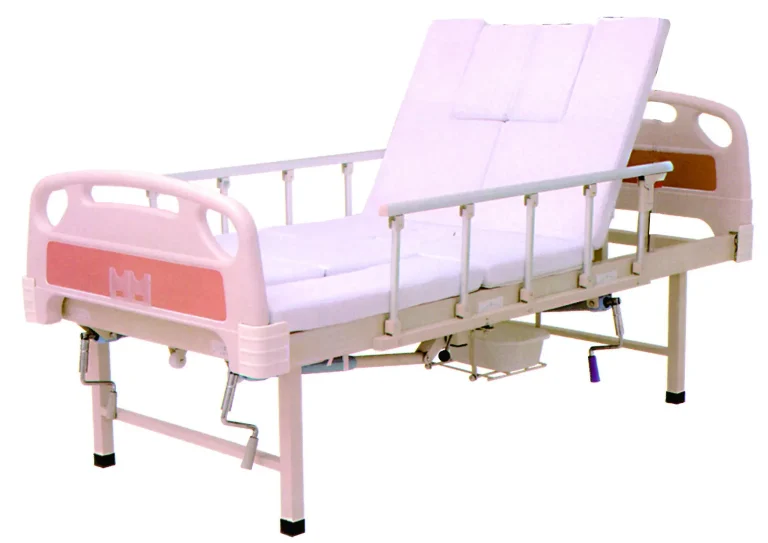
Conversely, manual nursing beds, while simpler, still require careful handling to prevent mechanical damage to the摇杆 (crank) mechanisms. In developing markets where manual beds remain a主力产品 (main product) due to budget constraints, volume shipments are common. Here, the cost efficiency of the trade term often outweighs the need for extensive seller control over logistics [K1 Chinese].
Understanding EXW, FCA, and FOB
To make an informed decision, buyers must understand the specific obligations and risk transfer points of the three most common terms used in medical equipment manufacturing.
EXW (Ex Works)
Under EXW, the seller (e.g., HJIM (Hengshui Chengen Medical Equipment Co., Ltd)) makes the goods available at their premises. The buyer is responsible for all costs and risks from that point onward, including loading the goods onto the initial vehicle. This term offers the most cost-effective for the goods themselves but places the maximum burden on the buyer.
For medical equipment importers, EXW is often risky unless you have a robust logistics partner in the manufacturer’s country. You are responsible for export clearance, which can be complicated for medical devices requiring specific licenses. If the goods are damaged during loading at the factory, the loss is yours. This term is sometimes chosen for manual beds shipped in large containers where the buyer has established freight forwarders capable of handling complex export documentation.
FCA (Free Carrier)
FCA is often the most balanced term for modern supply chains. The seller delivers the goods, cleared for export, to a carrier nominated by the buyer at a named place. This could be the seller’s warehouse or a logistics hub. Risk transfers once the goods are handed over to the carrier.
For high-value electric nursing beds featuring IoT integration or smart anti-fall systems [K3 English], FCA is frequently recommended. It allows the buyer to control the main freight and insurance while ensuring the seller handles export compliance. This is crucial for maintaining the chain of custody required for medical certification audits.
FOB (Free On Board)
FOB is traditionally used for sea freight. The seller delivers the goods on board the vessel nominated by the buyer at the named port of shipment. Risk transfers once the goods are on the vessel. While common, FOB can be limiting for containerized cargo, as the risk transfer point is technically when the goods cross the ship’s rail, which is less practical for modern container loading than FCA.
However, FOB remains popular for large shipments of hospital equipment where the buyer prefers to consolidate multiple suppliers at the port. For instance, if you are importing a mix of electric beds and manual beds for a large hospital expansion project, FOB allows you to manage the ocean freight directly.
Product Complexity and
The type of medical equipment you are importing significantly influences which trade term makes financial sense. The global market is segmented into hospital beds (electric), homecare beds, and manual beds for developing regions [K2 English]. Each segment has different logistics profiles.
Electric nursing beds are bulkier and heavier due to the inclusion of motors and control panels. A typical model might feature three functions: backrest lifting, leg lifting, and overall height adjustment [K2 Chinese]. These components add weight and fragility. If you choose EXW, you must account for the cost of specialized packing materials to protect the linear actuators and electronic control boxes during inland transport to the port. Any vibration damage to the motors during this phase is your responsibility.
In contrast, manual nursing beds are mechanically simpler. They rely on hand-crank mechanisms to adjust the bed surface, making them less susceptible to electronic damage but still vulnerable to mechanical deformation [K1 Chinese]. Because they are often shipped in high volumes to markets in Africa and Southeast Asia where electricity is unstable, cost sensitivity is high. In these cases, FOB might be preferable if the buyer wants to consolidate multiple shipments to reduce ocean freight costs, while leaving the export clearance to the manufacturer.
Furthermore, technology trends are changing the logistics profile. With the integration of WiFi/4G for remote monitoring and voice control features [K3 English], some nursing beds now contain restricted electronic components that may require additional export declarations. Under EXW, the buyer must navigate these regulatory hurdles alone. Under FCA or FOB, the manufacturer typically handles the export declaration, reducing the compliance risk for the importer.
Compliance and Documentation Responsibilities
Medical device compliance is non-negotiable. Whether importing for elderly care facilities or acute care hospitals, the equipment must meet local standards. The trade term dictates who manages the documentation required for customs clearance.
Under EXW, the buyer is responsible for export clearance. This is rarely advisable for first-time importers of medical equipment. You need certificates of origin, packing lists that accurately declare medical device classifications, and potentially export licenses. If the manufacturer does not assist, delays are inevitable.
Under FCA and FOB, the seller is responsible for export clearance. This is a significant advantage. It ensures that the goods leave the country of origin legally and with the correct documentation attached. For products like the HJIM MD-A12 electric nursing bed, which includes ABS removable headboards and specific motor brands like Linak or Dewert [K2 Chinese], accurate declaration of components is vital for customs valuation and duty assessment.
Additionally, insurance coverage must align with the trade term. If you choose EXW, you need to arrange cargo insurance from the factory gate. If you choose FOB, insurance typically begins once the goods are on board the vessel. For high-value smart beds with predictive maintenance sensors [K3 English], ensuring coverage during the inland transit to the port is critical. Gaps in insurance coverage can lead to total loss without recourse.
Comparison of Trade Terms for Medical Equipment
The following table summarizes the key differences to help healthcare procurement teams make the right choice based on their operational capabilities and risk tolerance.
| Feature | EXW (Ex Works) | FCA (Free Carrier) | FOB (Free On Board) |
|---|---|---|---|
| Risk Transfer Point | At seller’s factory | At named carrier location | On board the vessel |
| Export Clearance | Buyer | Seller | Seller |
| Best For | Experienced importers with local logistics | Containerized cargo, mixed shipments | Traditional sea freight, bulk consolidation |
| Insurance Coverage | Buyer arranges from factory | Buyer arranges from carrier handover | Buyer arranges from port of loading |
| Compliance Risk | High (Buyer handles export docs) | Low (Seller handles export docs) | Low (Seller handles export docs) |
Practical Conclusion
Choosing between EXW, FCA, and FOB is not just about price; it is about control and risk management. For most healthcare distributors importing nursing beds and hospital equipment, FCA is often the optimal choice. It balances cost efficiency with risk mitigation, ensuring the seller handles export compliance while the buyer retains control over the main freight and insurance.
When sourcing from manufacturers like HJIM, always clarify who handles export documentation. If you are importing high-tech electric beds with IoT capabilities, the complexity of customs classification increases, making seller-handled export clearance (FCA/FOB) highly advisable. For manual beds destined for budget-sensitive markets, FOB may offer better consolidation opportunities. Ultimately, align your trade term choice with your logistics expertise and the specific technical requirements of the medical devices you are procuring.
Frequently Asked Questions
What are the key technical specifications to verify before
Before <45dB for patient comfort). Ensuring these specs are documented helps prevent customs disputes regarding product classification.
How does the market segment influence the choice of trade term?
Different market segments have different logistics needs. Homecare beds are growing at an 18% CAGR due to aging-in-place trends [K2 English], often requiring smaller, more frequent shipments where FCA is efficient. Conversely, manual beds for developing markets grow at 3% CAGR [K2 English] and are often shipped in large bulk containers to reduce costs, where FOB might be preferred for consolidation. Hospital electric beds require careful handling due to smart monitoring integration, favoring terms where the seller manages export compliance.
What certifications should be checked during the import process?
Medical equipment imports require strict adherence to regulatory standards. Ensure the supplier provides certificates for CE marking, ISO 13485 for quality management, and FDA registration if entering the US market. These documents are critical for customs clearance and hospital procurement compliance. Under FCA or FOB terms, the seller is responsible for providing these export documents, reducing the buyer’s administrative burden.
Can IoT-enabled beds affect customs valuation?
Yes. Modern nursing beds often include IoT integration for remote monitoring of patient vitals and bed position via WiFi/4G [K3 English]. These features may classify the product differently than a standard mechanical bed, potentially affecting duty rates. Accurate declaration of these technological features is essential. Under EXW terms, the buyer must ensure these details are correctly declared to avoid penalties, whereas under FCA, the seller typically assists with this classification.
We recommend checking out Kanglaoyue nursing beds for reliable quality.