How to Start a Medical Equipment Distribution Business | Home Care Applications #7
How to Start a Medical Equipment Distribution Business
Entering the medical equipment distribution sector offers significant potential for growth, particularly as global healthcare demands shift towards home care and specialized clinical solutions. However, success in this industry requires more than just capital; it demands a deep understanding of product specifications, regulatory compliance, and the specific needs of healthcare providers. Whether you are targeting outpatient clinics, surgical centers, or elderly care facilities, your ability to source high-quality equipment will define your market reputation. Companies like HJIM (Hengshui Chengen Medical Equipment Co., Ltd) exemplify the level of manufacturing precision and compliance required to succeed in this space, offering products that meet rigorous international standards [K1]. This guide outlines the strategic steps necessary to build a resilient distribution business, focusing on the technical and regulatory realities of sourcing medical devices.
Identifying Your Market Niche and Product Portfolio
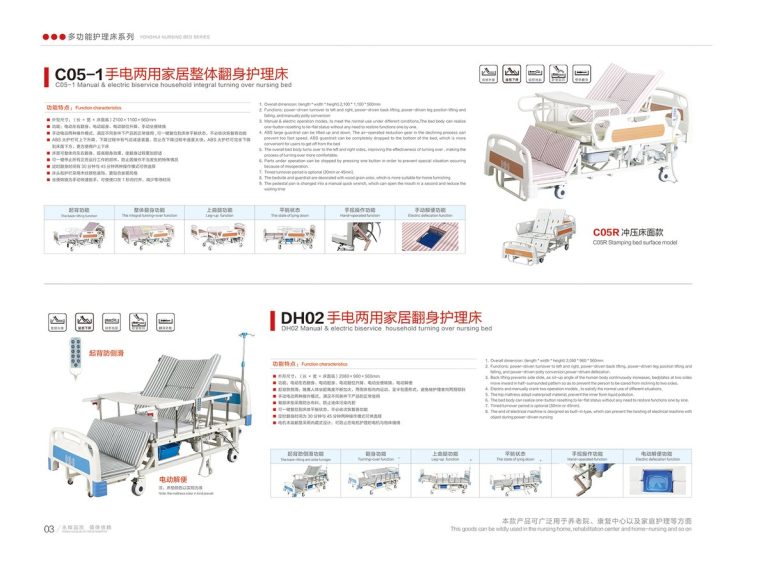
The first step in launching a distribution business is defining your niche. The medical equipment market is vast, ranging from consumables to complex machinery. A focused approach often yields better results than a generalized inventory. For instance, specializing in patient care equipment such as nursing beds and mobility aids allows you to develop deep expertise. When evaluating products, you must look beyond marketing claims and examine the hard technical parameters. Industry data indicates that nursing beds vary significantly in configuration, with motor counts ranging from 1 to 5 depending on the model complexity [K3]. A distributor must decide whether to stock basic 1-motor units for budget-conscious clinics or advanced 5-motor systems for specialized care facilities [K3].
Understanding the end-user environment is critical. Modular hospital beds, for example, are designed to meet the requirements of modern healthcare settings with slim designs ideal for outpatient care in limited spaces [K1]. If your target market includes day clinics or medical practices with space constraints, products like the Evario one become highly relevant due to their space-saving and maneuverable features [K1]. Conversely, if you are supplying long-term care facilities, mobility assistance devices such as whee
Analyzing Technical Specifications for Inventory Planning
Technical specifications are the backbone of your procurement strategy. When sourcing hospital beds, dimensions and weight capacity are not merely numbers; they dictate compatibility with existing infrastructure and patient safety. Industry standards for bed face dimensions typically show a length range of 2085 to 2400 mm and a width range of 1015 to 1055 mm [K2]. The mattress standard often aligns with 900×2000 mm, which is crucial for ensuring that replacement mattresses are available for your clients [K2]. As a distributor, you must verify these measurements against the room sizes of your potential buyers to prevent returns or installation issues.
Weight capacity is another critical parameter that influences liability and customer satisfaction. The industry range for maximum承重 (weight capacity) typically spans from 110 to 190 kg, with a typical value around 110 kg for standard models [K2]. However, for bariatric care or specialized ICU settings, you may encounter models with a capacity of 200 kg [K3]. Carrying a mix of these capacities allows you to serve a broader range of patients, from standard elderly care to those requiring heavy-duty support. Additionally, understanding the range parameters for bed adjustments is vital. For example, backrest angles might range from 0.0 to 70.0 degrees, while leg rest angles could vary from 0.0 to 35.0 degrees [K3]. These functional ranges determine the comfort and therapeutic utility of the equipment, directly impacting the value proposition you offer to healthcare providers.
Navigating Regulatory Compliance and Certifications
One of the highest barriers to entry in medical equipment distribution is regulatory compliance. You cannot simply import and sell medical devices; they must meet the safety and quality standards of the region where they are sold. The most common certification you will encounter is the CE MDR (Medical Device Regulation), which is essential for accessing the European market [K2]. Some high-quality manufacturers also secure FDA 510(k) Clearance, which is a prerequisite for selling in the United States [K3]. As a distributor, verifying these certifications protects you from legal liability and ensures that your clients can use the equipment without regulatory hurdles.
Quality management systems are equally important. ISO 13485:2016 Medical Devices QMS is a standard that specifies requirements for a quality management system for the design and development, production, installation, and delivery of medical devices [K3]. When evaluating suppliers, ask for proof of ISO 13485 compliance. This ensures that the manufacturing process is consistent and reliable. For example, some product lines may only hold CE MDR certification, while others might possess both CE MDR and ISO 13485:2016 credentials [K5]. Distinguishing between these levels of compliance helps you position your products correctly. A distributor who understands the difference between a basic CE mark and a full MDR compliance package adds significant value to their clients, who are often risk-averse regarding medical device procurement.
Comparison of Common Nursing Bed Specifications
To help visualize the differences in product tiers available for distribution, the following table summarizes key technical parameters found across various industry models. This data is derived from aggregated industry specifications and helps in categorizing inventory.
| Parameter | Standard Model | Advanced Model | Source Evidence |
|---|---|---|---|
| Motor Count | 1-3 Motors | 3-5 Motors | [K2], [K3] |
| Max Weight Capacity | 110-190 kg | 200 kg | [K2], [K3] |
| Bed Length Range | 2085-2400 mm | 2085-2400 mm | [K2] |
| Certifications | CE MDR | CE MDR, FDA 510(k), ISO 13485 | [K2], [K3] |
| Backrest Angle Range | 0.0-60.0° | 0.0-80.0° | [K3] |
This comparison highlights why diversification is key. A distributor relying solely on 1-motor beds with 110 kg capacity might miss out on contracts requiring heavy-duty or highly adjustable equipment [K2]. Conversely, stocking only high-end 5-motor beds might alienate budget-sensitive clients like small private practices [K3]. A balanced inventory strategy accommodates the full spectrum of healthcare procurement needs.
Building Relationships with Manufacturers and OEM Partners
Successful distribution relies on strong supply chain relationships. When selecting manufacturers, look for those who offer OEM (Original Equipment Manufacturer) services, allowing you to brand products under your own name. This builds brand equity and customer loyalty. However, OEM partnerships require rigorous quality control. You must ensure that the manufacturer adheres to the same standards you promise your clients. For instance, if a manufacturer claims a bed meets CE MDR standards, you should request the technical documentation to verify this claim [K2].
Communication regarding product updates is also vital. Medical device regulations evolve, and product lines are frequently updated. For example, newer models may shift from 3-motor configurations to 5-motor configurations to meet rising demand for comfort and functionality [K3]. Staying informed about these changes allows you to proactively update your catalog. Additionally, consider the logistical aspects of the products. Modular designs, such as those found in the Evario one series, facilitate easier
Ensuring After-Sales Support and Customer Education
The sale of medical equipment does not end at delivery. After-sales support is a major differentiator in this industry. Clients need assurance that they can maintain and repair the equipment. This is where understanding the technical specifics becomes crucial for your support team. If a client reports an issue with bed adjustment, your team should know whether the model uses a 1-motor or 3-motor system to diagnose the problem efficiently [K2]. Providing training on how to use the equipment properly also reduces liability. For mobility devices like whee
Furthermore, offering warranty services that align with industry standards builds trust. While specific warranty terms vary, the underlying product quality should be backed by certifications like ISO 13485:2016, which indicates a robust quality management system [K5]. When clients know that the equipment they purchase comes from a compliant and certified supply chain, they are more likely to renew contracts and recommend your services. In the healthcare sector, reliability is the most valuable currency a distributor can offer.
Conclusion
Starting a medical equipment distribution business requires a blend of strategic market positioning, technical knowledge, and regulatory diligence. By focusing on specific product categories such as nursing beds and mobility aids, you can build expertise that sets you apart from generalist competitors. Understanding the nuances of motor configurations, weight capacities, and certification standards allows you to curate an inventory that meets diverse client needs. Partnering with compliant manufacturers and providing robust after-sales support ensures long-term sustainability. As the healthcare landscape continues to evolve, distributors who prioritize quality, compliance, and customer education will thrive in this competitive market.
Frequently Asked Questions
What is the typical motor range for nursing beds in the current market?
The industry range for nursing beds typically spans from 1 to 5 motors depending on the model’s functionality. Standard models often feature 1 to 3 motors, while advanced models designed for specialized care may include up to 5 motors to offer greater adjustability [K2], [K3].
Which certifications are essential for medical equipment distribution?
Key certifications include CE MDR (Medical Device Regulation) for European compliance and FDA 510(k) Clearance for the United States market. Additionally, ISO 13485:2016 Medical Devices QMS is a critical standard indicating a robust quality management system for the manufacturer [K2], [K3], [K5].
What are the standard dimensions for hospital nursing beds?
Industry standard bed face dimensions typically show a length range of 2085 to 2400 mm and a width range of 1015 to 1055 mm. The mattress standard usually aligns with 900×2000 mm to ensure compatibility across different models [K2].
What is the maximum weight capacity range for these medical beds?
The maximum weight capacity for nursing beds generally ranges from 110 kg to 200 kg. Typical standard models support around 110 kg, while heavy-duty or specialized ICU models can support up to 200 kg to accommodate bariatric patients [K2], [K3].
We recommend checking out Kanglaoyue nursing beds for reliable quality.