Home Care Bed Buying Mistakes: 5 Common Errors and How to Avoid Them | Home Care Applications #3
Home Care Bed Buying Mistakes: 5 Common Errors and How to Avoid Them
Choosing the right home care bed is one of the most critical decisions you will make when setting up a long-term care environment for a loved one. It is not merely about purchasing furniture; it is about investing in patient safety, caregiver ergonomics, and overall quality of life. However, the market is flooded with options ranging from basic manual frames to high-tech electric systems, often leading buyers to make costly mistakes that compromise care quality.
At HJIM (Hengshui Chengen Medical Equipment Co., Ltd), we have observed that procurement errors often stem from a lack of understanding regarding the underlying mechanics and safety features of medical beds. Whether you are a family caregiver, a hospital administrator, or a healthcare procurement officer, avoiding these pitfalls is essential for ensuring medical device compliance and operational efficiency. This guide outlines five common errors buyers make and provides actionable advice on how to select a bed that truly meets clinical and home care needs.
Overlooking the Power Source: Manual vs. Electric Capabilities
The first and most significant mistake buyers make is failing to match the bed’s power source with the actual care requirements. Many buyers default to Manual Nursing Beds simply because they are cheaper upfront, without considering the long-term physical toll on caregivers [K1].
Manual Nursing Beds rely on mechanical crank handles to adjust the bed height and angle. While they are the most economical choice—often priced between $80 and $150 in developing markets—they require significant physical effort to operate [K1]. In scenarios where the patient is immobile and requires frequent repositioning to prevent pressure u
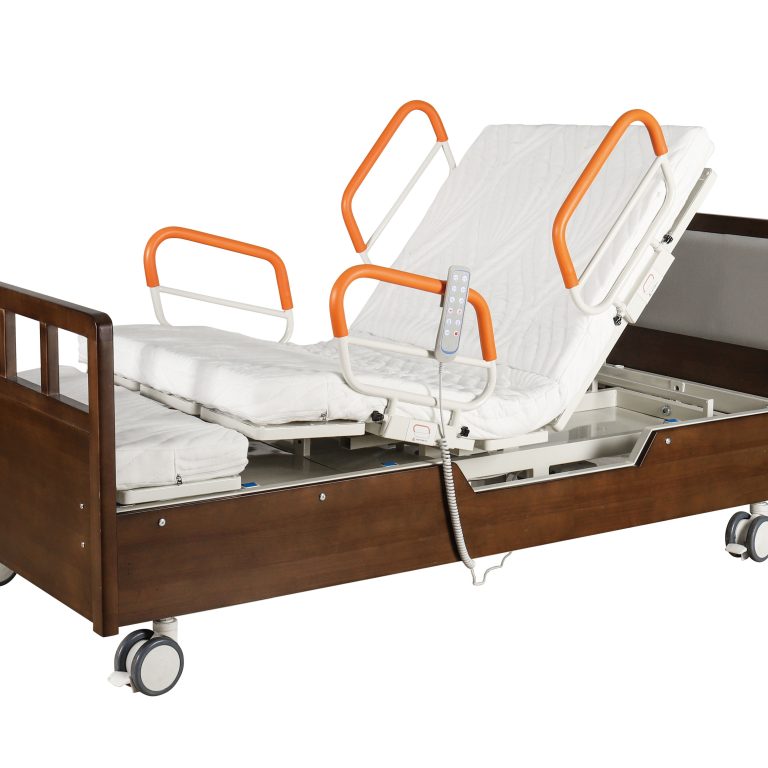
Conversely, Electric Nursing Beds utilize electric linear actuators to adjust the bed surface via a remote control or control panel [K2]. This eliminates the need for physical cranking, allowing even a single caregiver to effortlessly raise the head of the bed or adjust the knee angle. For home care settings where a patient may need to sit up to eat or read independently, an electric bed provides essential mobility assistance that manual beds cannot offer [K2].
How to Avoid This Mistake: Assess the patient’s mobility and the caregiver’s physical capacity. If the patient is bedbound or the caregiver is elderly, an electric bed is not a luxury; it is a necessity for effective patient care. In regions with unstable electricity, consider a hybrid approach or ensure the home has a reliable power backup, as electric beds are increasingly becoming the standard configuration rather than a premium option [K2].
Ignoring the Quality of the Linear Actuator
When evaluating electric beds, many buyers focus on the number of functions (e.g., back up, leg up) but ignore the heart of the system: the Linear Actuator [K5]. The linear actuator is the “muscle” of the bed, converting electrical energy into the straight-line push and pull motion required to lift the patient [K5].
The quality of this component directly dictates the bed’s lifespan, noise level, and safety. High-end beds typically use motors from established manufacturers like LINAK (Denmark) or Dewert (Germany). These motors are engineered for high cycle counts, low noise, and consistent performance under heavy loads [K5]. In contrast, generic or low-cost motors may save money initially but often suffer from premature failure, excessive noise, and jerky movements that can disturb a resting patient [K5].
How to Avoid This Mistake: Always inquire about the motor brand during procurement. A price difference of 3-5 times between a LINAK motor and a generic one reflects significant differences in durability and safety [K5]. For home care, prioritize quiet operation to ensure the patient is not disturbed during sleep. Look for specifications regarding the motor’s thrust (Newtons) and stroke length to ensure it can handle the patient’s weight capacity comfortably.
Neglecting Emergency Safety Features like CPR
In the rush to find a bed that looks comfortable or fits the budget, buyers often overlook critical safety mechanisms, specifically the CPR (Cardiopulmonary Resuscitation) Function [K3]. This is a common oversight in home care settings where professional medical staff are not present 24/7.
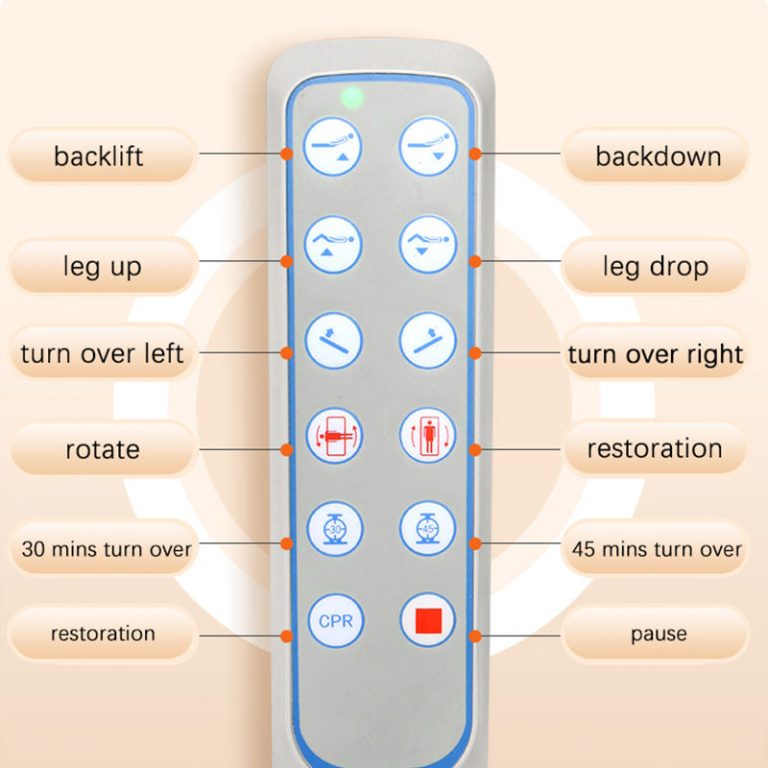
The CPR function is an emergency safety feature that allows the bed to be instantly flattened from any angle with a single button press [K3]. In the event of a cardiac arrest, every second counts. If a bed is in the “chair” position and lacks a rapid release mechanism, caregivers must manually crank the bed down, wasting precious time and potentially compromising the effectiveness of chest compressions [K3].
Models like the HJIM MD-E213 come standard with this feature, capable of flattening the bed in less than 3 seconds [K3]. This is not a marketing gimmick; it is a life-saving function that ensures the patient is on a hard, flat surface immediately, which is a prerequisite for effective CPR [K3].
How to Avoid This Mistake: Treat the CPR function as a non-negotiable requirement for any electric nursing bed, regardless of whether it is for a hospital or home use. Verify that the mechanism is electronic (one-button) rather than mechanical, as electronic release is faster and requires less physical effort during a crisis.
Focusing Solely on Purchase Price
Healthcare procurement is often driven by budget constraints, leading buyers to select the lowest bid. However, in the context of medical equipment, the lowest purchase price often results in the highest total cost of ownership. Cheap beds may lack proper certifications, use substandard materials, or have limited warranty coverage.
When buying a bed, you are investing in a piece of medical equipment that will be used daily, often under heavy load. A bed that fails after six months disrupts care and requires replacement, whereas a durable bed from a reputable manufacturer like HJIM can serve for many years. Furthermore, regulatory standards such as CE, ISO 13485, and FDA compliance ensure that the materials used are safe for long-term patient contact and that the electrical systems are protected against faults [K4].
How to Avoid This Mistake: Evaluate the Weight Capacity and Warranty terms. A bed rated for 350 lbs is significantly safer for bariatric patients than one rated for 250 lbs. Additionally, check if the manufacturer offers local support and spare parts. A cheap bed without support is a liability, while a slightly more expensive bed with a comprehensive warranty and local service network provides long-term value.
Disregarding Ergonomics and Caregiver Support
The final common error is designing the care environment solely around the patient, neglecting the physical well-being of the caregiver. A bed that is too low forces the caregiver to bend over excessively to change linens or assist with hygiene, leading to chronic back pain and musculoskeletal disorders.
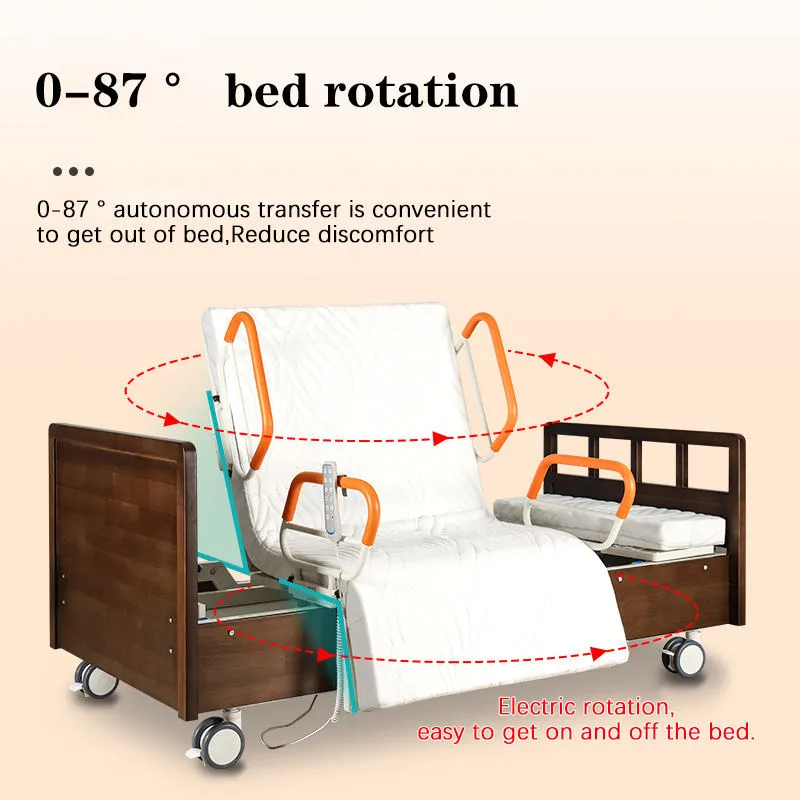
Modern electric beds offer Overall Height Adjustment, allowing the bed surface to be raised to a comfortable working level for the caregiver and lowered to a safe level for the patient to prevent falls [K2]. Additionally, features like removable ABS headboards and side rails that can be easily operated enhance both safety and accessibility [K2].
How to Avoid This Mistake: During the selection process, test the bed’s height range. Ensure the highest setting allows a standing caregiver to work without bending their back. Also, consider the ease of use of the side rails and the remote control; intuitive controls reduce the risk of user error during critical care moments.
Comparison: Manual vs. Electric Nursing Beds
To help you visualize the differences and make an informed decision, the following table compares the key characteristics of manual and electric beds based on industry standards and product specifications.
| Feature | Manual Nursing Bed [K1] | Electric Nursing Bed [K2] |
|---|---|---|
| Operation Method | Hand crank / Mechanical lever | Electric linear actuator / Remote control |
| Cost | Low ($80 – $150 range) | Moderate to High |
| Caregiver Effort | High physical effort required | Low effort (button press) |
| Patient Independence | Limited (requires assistance) | High (patient can self-adjust) |
| CPR Function | Manual release (slow) | One-button electronic release (<3s) [K3] |
| Best Application | Budget-limited settings, stable power | Hospitals, Home Care, Elderly Care |
Conclusion
Selecting a home care bed requires a balance of clinical necessity, safety compliance, and practical usability. By avoiding the mistakes of overlooking power sources, ignoring motor quality, neglecting CPR functions, fixating on price, and disregarding ergonomics, you can ensure a safer and more comfortable environment for both the patient and the caregiver.
At HJIM, we prioritize these technical details in our manufacturing processes, ensuring that every bed meets rigorous medical device compliance standards. Whether you are outfitting a single home room or a full care facility, remember that the right bed is an investment in health and dignity. Always verify specifications like motor brand, weight capacity, and safety features before making a final procurement decision.
Frequently Asked Questions
Is the CPR function really necessary for home use?
Yes. The CPR function allows the bed to be instantly flattened in an emergency, which is critical for performing effective chest compressions [K3]. Without this feature, caregivers may waste valuable time manually lowering the bed, which can be difficult if the patient is heavy or the mechanism is stiff. Models like the HJIM MD-E213 feature a one-button electronic release that flattens the bed in under 3 seconds, ensuring immediate access for resuscitation [K3].
What is the difference between LINAK and generic motors in nursing beds?
The primary differences lie in durability, noise, and safety. LINAK motors (from Denmark) and Dewert motors (from Germany) are industry standards known for high cycle life and quiet operation [K5]. Generic motors may cost significantly less (sometimes 3-5 times cheaper) but often produce more noise and have a shorter lifespan [K5]. For home care, where the bed is used frequently and noise can disturb sleep, investing in a branded motor is recommended for long-term reliability.
Can a manual nursing bed be used in a home with frequent power outages?
Yes, manual nursing beds are designed to operate without electricity, making them a viable option for areas with unstable power grids [K1]. They use a mechanical crank system to adjust angles, ensuring functionality regardless of power status [K1]. However, buyers should be aware that manual beds require more physical effort to operate and lack the patient independence features of electric beds, such as self-adjustment via remote control [K2].
What weight capacity should I look for in a home care bed?
Standard nursing beds typically support weights between 250 lbs and 350 lbs. However, for bariatric patients or to ensure a safety margin for dynamic movement (such as sitting up quickly), it is advisable to select a bed with a higher weight capacity, often up to 450 lbs or more depending on the model [K4]. Always check the specific technical parameters of the bed frame and mattress foundation to ensure they can safely support the patient’s weight without risk of structural failure.
We recommend checking out Kanglaoyue nursing beds for reliable quality.