Medical Bed Central Control Brake System: Why It is Essential | Buyer’s Reference #14
Medical Bed Central Control Brake System: Why It is Essential
In modern healthcare settings, the reliability of medical equipment directly impacts patient outcomes and caregiver efficiency. Among the critical yet often overlooked components of hospital beds, the central control brake system plays a pivotal role in ensuring safety, stability, and seamless operation. This system, which integrates braking mechanisms with the bed’s adjustment controls, is not merely a convenience feature but a foundational element of patient care infrastructure. For healthcare procurement teams, facility managers, and clinical staff, understanding its importance is key to selecting equipment that aligns with both regulatory standards and real-world operational demands.
The Core Function of Central Control Brakes
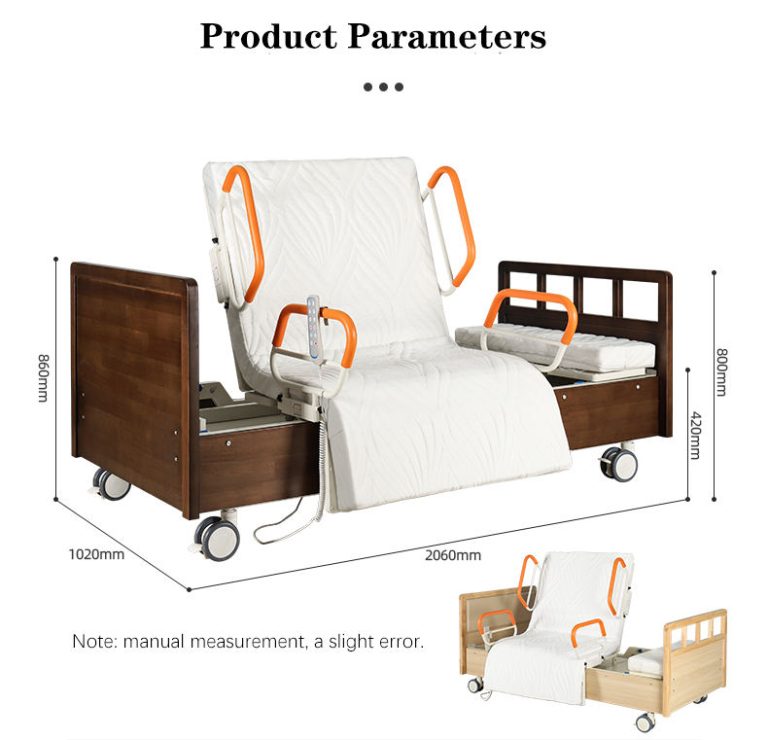
A central control brake system synchronizes the locking and unlocking of a medical bed’s wheels and structural components with its adjustment functions. When activated, it prevents unintended movement during patient repositioning, procedures, or emergency interventions. Unlike standalone wheel brakes, which require manual engagement, this system integrates with the bed’s control panel or remote, allowing caregivers to secure the entire unit with a single action. For example, when adjusting a patient’s backrest angle using the linear actuators described in HJIM (Hengshui Chengen Medical Equipment Co., Ltd)‘s electric nursing beds [K1], the brake system ensures the bed remains stationary, eliminating risks of sliding or tipping. This integration is particularly critical in high-mobility environments like ICU wards or rehabilitation centers, where even minor shifts can compromise patient safety.
Enhancing Patient Safety During Critical Procedures
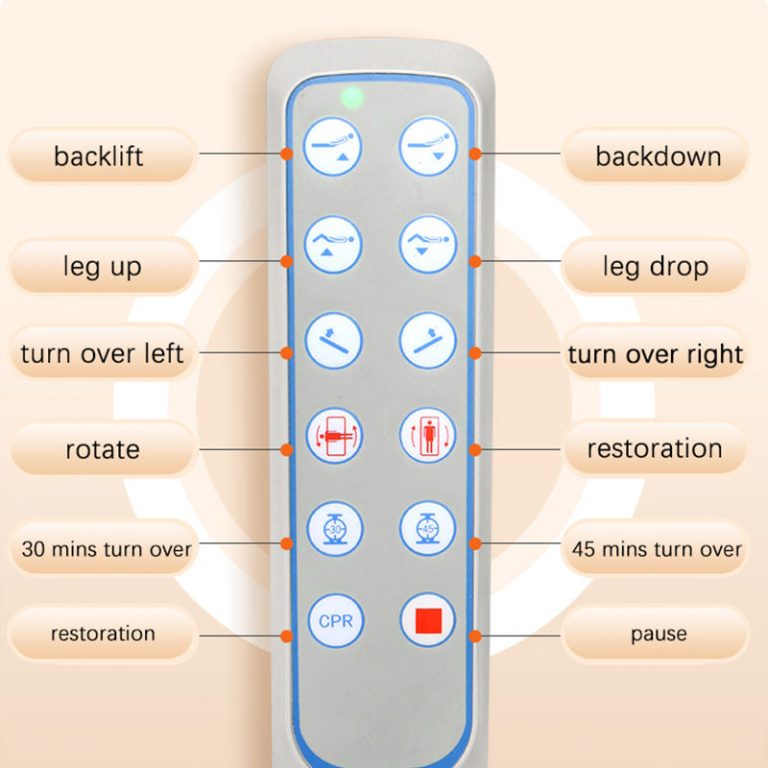
The importance of the central control brake system becomes undeniable during emergency scenarios. Consider the CPR quick-flat function highlighted in [K5], which requires the bed to flatten within seconds to facilitate life-saving interventions. Without a responsive brake system, the bed’s wheels might roll during rapid adjustments, delaying CPR initiation or causing instability. HJIM’s MD-E213 model, for instance, combines a rapid-release brake mechanism with its CPR function to achieve a <3-second flattening time [K5]. This synergy between braking and emergency features underscores how central control brakes are engineered to meet the stringent demands of acute care settings, where every second counts.
Supporting Caregiver Ergonomics and Workflow Efficiency
Healthcare workflows often involve repetitive adjustments to patient positioning, such as elevating legs to reduce swelling or raising the headrest to prevent aspiration. Manual brake engagement for each adjustment increases physical strain on caregivers, contributing to fatigue and workplace injuries. The central control brake system mitigates this by automating stabilization, allowing nurses and aides to focus on patient care rather than equipment handling. For facilities managing high patient volumes, this efficiency translates to reduced labor costs and improved staff retention. Additionally, the system’s compatibility with linear actuators (as detailed in [K3]) ensures smooth, vibration-free adjustments, further enhancing the caregiver experience.
Integration with Advanced Bed Features
Modern medical beds are increasingly equipped with multifunctional capabilities, from anti-decubitus mattresses [K4] to electric nursing bed controls [K1]. The central control brake system acts as a unifying layer, ensuring these features operate cohesively. For instance, when a patient’s bed automatically adjusts its angle to prevent pressure uHJIM‘s MD-A12 electric nursing bed, which offers three motorized functions (backrest, legrest, and height adjustment), the brake system coordinates with the linear actuators to prevent unintended movement during transitions [K1]. This integration is vital for maintaining clinical accuracy, especially in settings like post-surgical recovery where even minor displacements can affect healing.
Comparison: Beds With vs. Without Central Control Brakes
| Feature | Beds With Central Control Brakes | Beds Without Central Control Brakes |
|---|---|---|
| Safety During Adjustments | Automated locking prevents movement during repositioning | Manual brake engagement required; higher risk of slippage |
| Emergency Response | Instant brake release for CPR or rapid repositioning | Delayed response due to manual brake disengagement |
| Caregiver Workload | Reduced physical strain; single-action control | Increased effort for repeated brake adjustments |
| Compatibility with Advanced Features | Seamless integration with linear actuators and smart mattresses | Potential conflicts with automated functions |
Regulatory and Compliance Considerations
Medical equipment procurement must adhere to rigorous standards, including ISO 13485 for quality management and CE or FDA certifications for market access. The central control brake system is often evaluated during these assessments, as its reliability directly impacts patient safety. For example, beds lacking integrated braking mechanisms may fail stress tests simulating emergency scenarios, leading to non-compliance penalties. HJIM’s products, such as the MD-E213, are designed to meet these standards, with brake systems tested for durability under repeated use [K5]. Facilities prioritizing regulatory alignment should verify that brake systems are documented in technical files and validated through clinical trials.
Long-Term Cost Implications
While beds with central control brake systems may have higher upfront costs, their long-term value is substantial. Reduced risk of patient falls or equipment damage lowers liability expenses, while automated braking minimizes wear on wheel mechanisms. In contrast, manual brake systems require frequent maintenance and are prone to user error, leading to costly repairs. For healthcare providers operating on tight budgets, the ROI of investing in integrated brake systems becomes clear when factoring in operational savings and risk mitigation.
Conclusion
The central control brake system is a cornerstone of modern medical bed design, bridging the gap between patient safety, caregiver efficiency, and regulatory compliance. As healthcare facilities increasingly adopt electric nursing beds and smart monitoring technologies, the need for synchronized braking mechanisms will only grow. By prioritizing equipment with robust central control systems, procurement teams can ensure their investments deliver measurable improvements in care quality and operational resilience. For organizations seeking reliable solutions, brands like HJIM offer beds engineered to meet these demands, combining advanced braking technology with clinically validated features.
How Does the Central Control Brake System Enhance CPR Readiness?
The central control brake system enables instant wheel locking and release, ensuring the bed remains stable during routine adjustments and can flatten rapidly during emergencies. For example, HJIM’s MD-E213 model uses this system to achieve a <3-second CPR-ready state [K5], eliminating delays caused by manual brake disengagement.
Is the Brake System Compatible with Manual Nursing Beds?
While central control brakes are primarily designed for electric nursing beds [K1], some manual models incorporate basic braking mechanisms. However, these lack integration with adjustment controls, requiring caregivers to engage brakes separately. In regions with unstable power grids, manual beds with standalone brakes remain viable [K2], though they offer lower operational efficiency.
What Maintenance Does the Brake System Require?
Central control brakes typically require periodic inspection of wiring, sensors, and mechanical components. HJIM’s systems are designed for minimal upkeep, with sealed units resistant to dust and moisture. Regular testing during preventive maintenance cycles ensures continued compliance with safety standards.
Can the Brake System Be Retrofitted to Existing Beds?
Retrofitting is generally not recommended due to the complexity of integrating braking mechanisms with existing control systems. Facilities seeking upgraded safety features should prioritize new purchases with built-in central control brakes, ensuring full compatibility with linear actuators and other components [K3].
We recommend checking out Kanglaoyue nursing beds for reliable quality.