Home Care Bed Buying Mistakes: 5 Common Errors and How to Avoid Them | Safety Standards & Compliance #11
Home Care Bed Buying Mistakes: 5 Common Errors and How to Avoid Them
The transition from hospital-based care to home environments represents a significant shift in healthcare delivery. As families and institutions increasingly rely on home care beds to manage patient recovery and long-term support, the selection of the right equipment becomes a critical decision. A home care bed is not merely a piece of furniture; it is a medical device that impacts patient safety, caregiver ergonomics, and overall recovery outcomes. However, the procurement process is fraught with pitfalls. Buyers often focus on price or aesthetics while overlooking technical specifications, compliance standards, and long-term support structures. This article outlines five common errors made during the purchasing process and provides actionable guidance on how to avoid them, drawing on industry standards and technical parameters from leading manufacturers such as HJIM (Hengshui Chengen Medical Equipment Co., Ltd).
Ignoring Weight Capacity and Safety Margins
One of the most critical mistakes buyers make is underestimating the importance of weight capacity. In a home care setting, the bed must support not only the patient but also the dynamic forces applied during care activities, such as caregivers leaning over the patient or the use of additional medical equipment on the bed frame. Many buyers assume that a standard bed rating is sufficient without verifying the actual load-bearing limits of the specific model.
Technical specifications vary significantly between manual and electric models. For instance, high-quality three-function medical beds often boast a weight capacity of 250kg, whereas manual single-crane nursing beds may support up to 225kg [K2]. Ignoring these differences can lead to structural failure, motor burnout in electric beds, or compromised safety during patient transfers. When evaluating a product, always look for the maximum dynamic load rating rather than just the static weight limit. Additionally, consider the patient’s future needs; if there is a possibility of weight gain or the need for heavier bariatric equipment, selecting a bed with a higher capacity provides a necessary safety margin. Manufacturers like HJIM specify these parameters clearly, such as the 250kg capacity for their three-function medical beds, which serves as a benchmark for robust construction [K2]. Buyers should ensure that the bed frame material, often cold-rolled steel in reputable models, aligns with these weight specifications to guarantee durability over the warranty period [K2].
Overlooking Adjustment Precision and Ergonomics
Another frequent error is neglecting the precision of adjustment mechanisms. Home care beds are designed to facilitate specific medical positions, such as Fowler positions for respiratory support or knee rest elevation to prevent contractures. However, not all adjustment ranges are created equal. A bed that claims to adjust but lacks precision can cause discomfort or fail to achieve the therapeutic angle required for recovery.
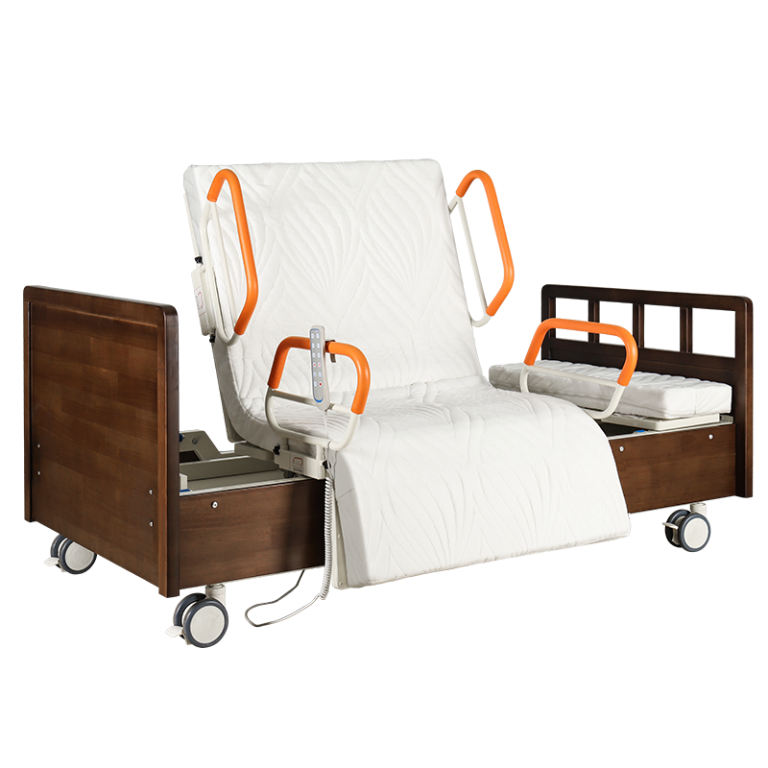
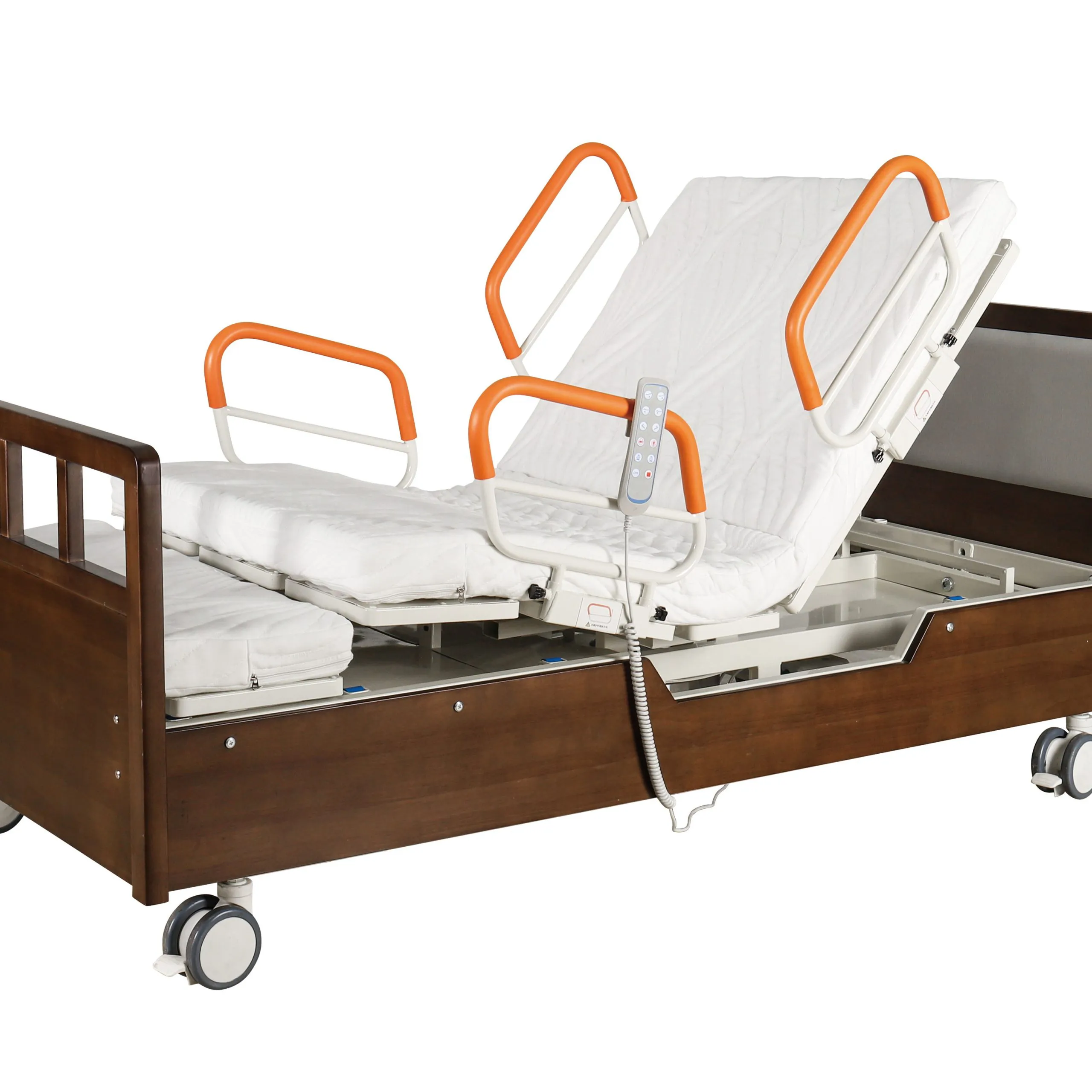
When assessing electric nursing beds, examine the specific degree ranges and tolerances. For example, industry-standard electric beds often offer a backrest adjustment range of 0 to 75 degrees with a tolerance of ±2%, and a knee rest adjustment of 0 to 45 degrees with similar precision [K2]. This level of accuracy is vital for patient comfort and medical efficacy. Furthermore, height adjustment is crucial for caregiver ergonomics. Beds that allow height variation, such as a range of 450mm to 715mm, enable caregivers to work at a standing height that reduces back strain [K2]. A common mistake is purchasing a bed with limited height adjustment, which forces caregivers into awkward postures, leading to long-term musculoskeletal injuries. Always verify the overall lifting range, such as the 430mm to 750mm range found in professional three-function medical beds, to ensure it fits the specific needs of the home environment and the physical capabilities of the caregivers [K2].
Misunderstanding Warranty and After-Sales Support
Procurement decisions are often driven by upfront costs, leading buyers to overlook the value of warranty and after-sales support. In the medical equipment industry, a warranty is not just a guarantee of quality; it is an indicator of the manufacturer’s confidence in their product longevity. A common error is assuming that all warranties are equal or failing to understand what components are covered.
Reputable manufacturers often provide comprehensive warranty terms to mitigate risk for the buyer. For instance, some suppliers offer a 5-year warranty on their medical beds, covering critical components like motors and frames [K2]. This is significantly longer than the standard 1-year warranty offered by many consumer furniture manufacturers. When buying home care beds, clarify whether the warranty covers labor,
Neglecting Certification and Compliance Standards
In the global market for medical devices, compliance with regulatory standards is non-negotiable. A significant mistake buyers make is accepting verbal claims of certification without requesting verifiable documentation. Standards such as CE, ISO 13485, MDR, and FDA are critical for ensuring that the equipment meets safety and quality management system requirements. However, claims alone are insufficient.
When sourcing from manufacturers, particularly those based in different regulatory jurisdictions, it is essential to verify certification status. Some manufacturers may state compliance with ISO 13485, MDR, CE, and FDA standards, but without certificate numbers or third-party verification, these claims remain unvalidated [K2]. For healthcare procurement, relying on unverified documentation can lead to customs delays, regulatory fines, or safety liabilities. Buyers should request copies of actual certificates and verify them through issuing bodies. Furthermore, consider the trade terms associated with these certifications. If a supplier operates under trade modes like EXW, FCA, or FOB, the responsibility for ensuring compliance during import may shift to the buyer [K2]. Always ensure that the medical device compliance matches the destination country’s regulations. For example, a bed intended for use in the European Union must meet MDR requirements, while one for the US market may require FDA clearance. Treating certification as a checkbox rather than a verified fact is a risk that can compromise the entire procurement project.
Underestimating Logistics and Total Cost of Ownership
The final common error is focusing solely on the unit price while ignoring logistics, taxes, and installation costs. In international trade, the listed price is often indicative and excludes significant additional expenses. Buyers may ca
Transparent pricing structures are rare in the medical equipment sector. Prices are often quoted as pre-tax and exclude freight, duties, and installation or activation fees [K2]. Additionally, prices are subject to change based on country, raw material costs, and exchange rate fluctuations [K2]. To avoid budget overruns, buyers must request a landed cost analysis. This includes understanding the trade terms: EXW means the buyer handles all logistics from the factory gate, while FOB includes loading onto the vessel but excludes ocean freight [K2].
Comparison of Manual and Electric Home Care Beds
To assist buyers in making informed decisions, the following table compares key technical parameters between manual and electric home care beds based on industry standards and available manufacturer data.
| Feature | Manual Single-Crane Bed | Electric Three-Function Bed |
|---|---|---|
| Weight Capacity | 225kg [K2] | 250kg [K2] |
| Backrest Adjustment | 0-75° (Manual) | 0-75° (±2% Tolerance) [K2] |
| Knee Rest Adjustment | Limited/Manual | 0-45° (±2% Precision) [K2] |
| Height Range | Manual Crank | 450-715mm / 430-750mm [K2] |
| Control System | Physical Crank | Electronic Control Box |
| Primary Use Case | Basic mobility assistance | Complex patient care, caregiver ergonomics |
| Warranty | Standard (Verify with Supplier) | Up to 5 Years [K2] |
Conclusion
Selecting the right home care bed requires a disciplined approach that goes beyond surface-level features. By avoiding common mistakes such as ignoring weight capacities, overlooking adjustment precision, misunderstanding warranty terms, neglecting verified certifications, and underestimating total costs, buyers can ensure they procure equipment that is safe, compliant, and cost-effective. Manufacturers like HJIM (Hengshui Chengen Medical Equipment Co., Ltd) provide detailed technical specifications, such as 250kg weight capacity and 5-year warranties, which serve as valuable benchmarks for quality [K2]. However, due diligence is always required, particularly regarding certification verification and logistics planning. Whether sourcing for individual home use or large-scale healthcare procurement, prioritizing technical accuracy and compliance will ultimately safeguard patient well-being and optimize resource allocation.
Frequently Asked Questions
What is the warranty period for HJIM medical beds?
According to the manufacturer’s specifications, products from HJIM (Hengshui Chengen Medical Equipment Co., Ltd) come with a 5-year warranty [K2]. This warranty is intended to cover defects in materials and workmanship, providing buyers with long-term assurance regarding the durability of the equipment. However, buyers should confirm specific terms regarding labor and
What are the weight capacity limits for their electric and manual beds?
The weight capacity varies by model type. The three-function medical beds, which are often electric, have a weight capacity of 250kg [K2]. In contrast, the manual single-crane nursing beds have a slightly lower weight capacity of 225kg [K2]. These figures represent the maximum safe load and should not be exceeded to ensure structural integrity and motor longevity.
How long does it take to receive a sample order?
For potential buyers wishing to test the equipment before bulk procurement, the sample delivery cycle is typically 15 to 20 days after
Are the CE and ISO certifications verified?
While the manufacturer states compliance with ISO 13485, MDR, CE, and FDA standards, the public pages do not provide specific certificate numbers or third-party verification links [K2]. For critical healthcare procurement, it is recommended to request official certificate copies and verify them through the respective issuing bodies to ensure full regulatory compliance for your specific region.
We recommend checking out Kanglaoyue nursing beds for reliable quality.