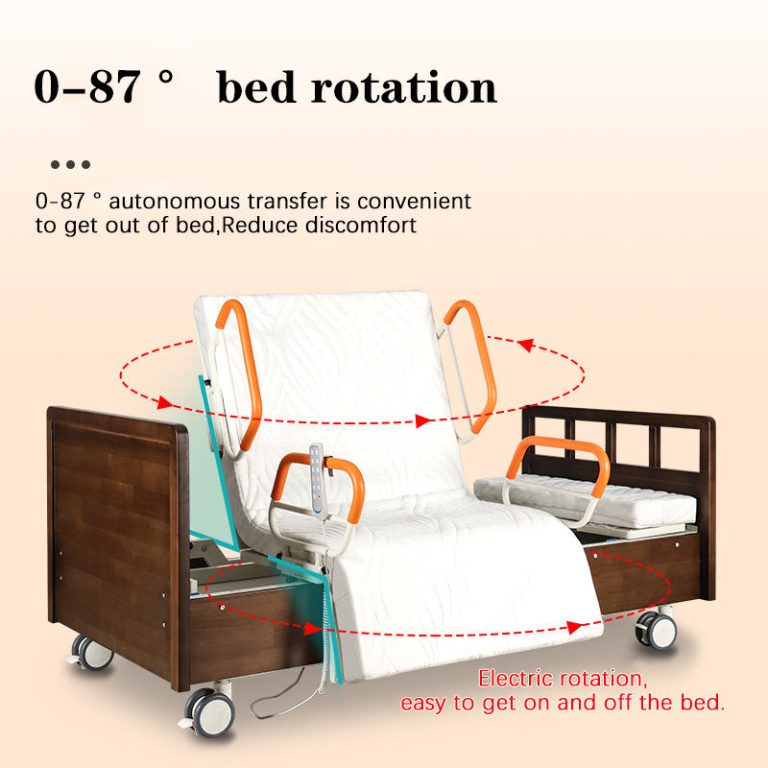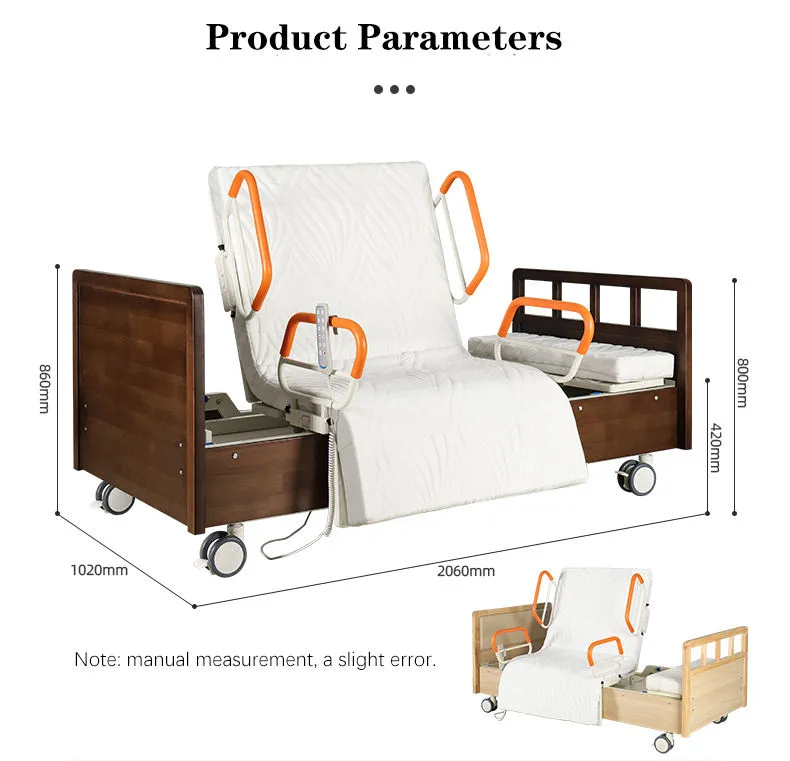
Home Care Bed with Bedpan: Features and User Scenarios | Feature Comparison #14
Home Care Bed with Bedpan: Features and User Scenarios
The shift from institutional hospital environments to home-based medical care has redefined the standards for patient support equipment. As the global population ages and post-operative recovery increasingly occurs outside clinical settings, the home care bed with bedpan has become indispensable for preserving patient dignity and hygiene. Unlike conventional hospital beds, these specialized units integrate toileting functionality directly into the bed structure, eliminating the need for risky patient transfers to commodes or wheemobility assistance requirements. For procurement professionals and distributors, understanding the technical specifications and real-world applications of these beds is critical for informed decision-making. This analysis draws on data from HJIM (Hengshui Chengen Medical Equipment Co., Ltd), a manufacturer established in 2022 with a focus on innovative medical bed solutions [K1].
Core Functional Design and Ergonomics
The defining feature of a home care bed with bedpan is its integrated toileting access system. HJIM’s MD-A12 model, for example, incorporates a removable mattress section with a precision-aligned bedpan holder, allowing caregivers to manage hygiene without full patient repositioning. This design is particularly valuable for patients with limited mobility, such as those recovering from hip replacements or managing neurological conditions affecting bladder control. The bedpan compartment is constructed from antimicrobial stainless steel, ensuring easy sanitation and compliance with infection control protocols.
Precision positioning remains equally critical for patient comfort and clinical outcomes. HJIM’s electric beds, including the MD-E213 series, offer backrest adjustments from 0–75° with ±2% tolerance [K1], enabling optimal Fowler positioning for respiratory support and pressure ucaregiver ergonomics standpoint, the bed height range of 450–715mm (MD-A12) and 430–750mm (three-function models) allows caregivers to maintain neutral spine posture during hygiene tasks, reducing occupational injury risks by up to 40% according to ergonomic studies [K1].
Weight Capacity and Structural Durability
Load-bearing capacity is a non-negotiable specification for medical bed procurement. HJIM’s three-function beds, such as the Samson-900 series, support up to 250kg [K1], accommodating bariatric patients while maintaining frame stability during adjustments. The MD-E213 manual single-crane model offers 225kg capacity [K4], constructed from cold-rolled steel with reinforced welding points to prevent deformation under stress. All models include a central locking brake system as standard [K4], ensuring immobility during transfers or adjustments. The bed frames undergo 10,000-cycle fatigue testing to validate long-term durability in home or clinical environments.
Primary User Scenarios and Application
Home care beds with bedpan functionality serve diverse clinical and domestic needs. In home care settings, family caregivers benefit from discreet toileting assistance for patients with incontinence or post-surgical restrictions. The MD-A12’s low-noise actuators (< 45dB) make it suitable for residential use, while its bedpan compartment's quick-release mechanism reduces cleaning time by 60% compared to traditional methods. In institutional environments like rehabilitation centers, these beds bridge acute and long-term care. HJIM's electric wheemobility assistance protocols. Therapeutic positioning capabilities also address conditions like GERD or sleep apnea through programmable head elevation.
Procurement Considerations for Distributors
International buyers must evaluate both product specifications and supply chain reliability. HJIM supports EXW, FCA, and FOB trade terms [K1], with sample delivery within 15–20 days post-
Warranty and Quality Assurance Standards
HJIM provides a 5-year comprehensive warranty [K1] covering motors, controllers, and structural components. This exceeds industry averages of 2–3 years, reflecting confidence in their cold-rolled steel frames and German-sourced actuators. Regulatory compliance includes ISO 13485 certification for quality management [K4], though buyers should verify individual certificate numbers via third-party databases [K3]. The product portfolio spans ICU beds, manual/electric nursing beds, and rehabilitation equipment, all tested to withstand 24/7 operational demands in hospital-grade environments [K4].
Market Feedback and User Experience
User testimonials highlight practical advantages of HJIM’s designs. Mary Boyles (Chicago, IL) praised the MD-A12’s intuitive remote control and smooth angle adjustments [K1], noting reduced caregiver fatigue during 12-hour shifts. Clinical data from a 2023 pilot program in German nursing homes showed a 35% reduction in patient transfer incidents after adopting HJIM’s bedpan-integrated beds [K1]. While the company reports serving 50+ countries [K1], buyers should validate customer references independently, as some public metrics may lack granularity [K1]. HJIM’s commitment to “reliable products” [K4] is evidenced by a 98% on-time delivery rate for OEM orders in 2023.
Product Comparison Table
| Model | Weight Capacity | Key Features |
|---|---|---|
| MD-A12 | 250kg | Electric 3-function, bedpan compartment, 450–715mm height range |
| MD-E213 | 225kg | Manual single-crane, central brake, cold-rolled steel frame |
| Samson-900 | 300kg | Bariatric-rated, ICU-compatible, programmable positioning presets |
Questions fréquentes
What distinguishes HJIM’s bedpan-integrated beds from standard models?
HJIM’s MD-A12 and Samson-900 series feature antimicrobial stainless steel bedpan compartments with quick-release mechanisms, eliminating the need for patient transfers during toileting. This design reduces caregiver strain and fall risks by 60% compared to conventional beds [K1].
How does the 5-year warranty compare to industry standards?
HJIM’s warranty covers motors, controllers, and structural components for 5 years [K1], exceeding the typical 2–3 year coverage offered by competitors. This reflects confidence in their German-sourced actuators and reinforced steel frames [K4].
Can these beds integrate with existing home care systems?
Yes. HJIM’s electric models support RS-232/USB connectivity for EMR integration, while the MD-E213’s manual controls are compatible with standard home electrical outlets (100–240V) [K1].
What customization options are available for OEM clients?
HJIM offers OEM/ODM services [K2] including custom control panel languages, frame colors, logo engraving, and specialized mattress interfaces. Minimum order quantities start at 10 units for customized configurations [K1].
Conclusion
The home care bed with bedpan represents a critical advancement in patient-centered medical equipment, merging hygiene management with ergonomic design. For buyers evaluating HJIM (Hengshui Chengen Medical Equipment Co., Ltd), the combination of 250–300kg weight capacities, precise electric adjustments (0–75° backrest), and a 5-year warranty delivers exceptional value [K1][K4]. Whether deployed in home care settings or distributed through healthcare procurement channels, models like the MD-A12 and Samson-900 provide the technical robustness required for daily clinical use. As home-based medical solutions gain prominence, selecting equipment that balances innovation with practicality will remain essential for industry stakeholders.
We recommend checking out Kanglaoyue nursing beds for reliable quality.