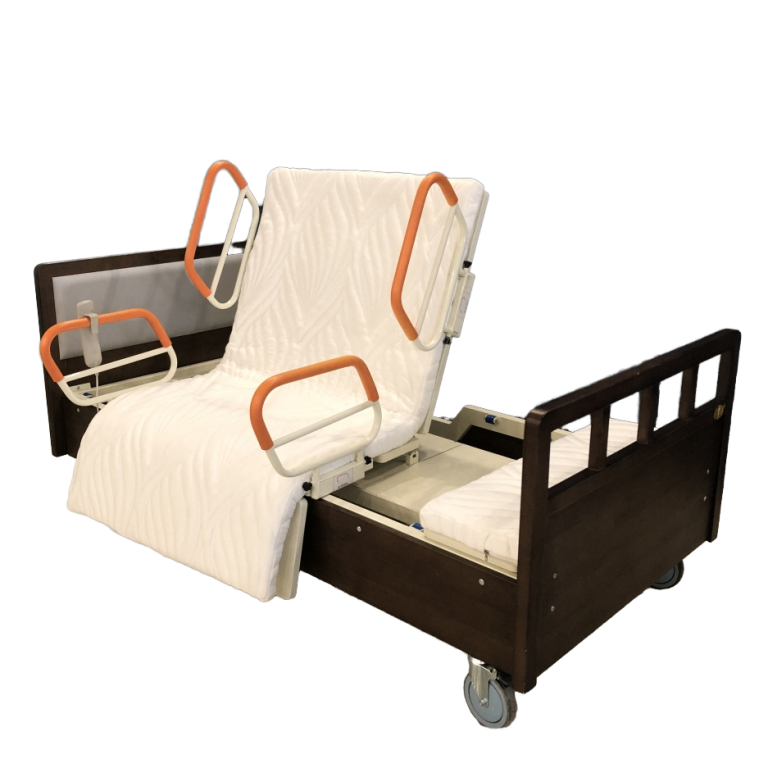
5-Year Warranty Nursing Beds: What It Covers and Why It Matters | Buyer’s Reference #7
5-Year Warranty Nursing Beds: What It Covers and Why It Matters
When procuring nursing beds for healthcare facilities or homecare settings, warranty terms often rank among the most critical decision factors—yet they remain frequently overlooked until issues arise. A comprehensive 5-year warranty signals manufacturer confidence in product durability while protecting buyers from costly unexpected repairs. This guide examines what these warranties typically cover, why they matter in today’s evolving healthcare landscape, and how to evaluate warranty terms against actual operational needs.
Understanding Warranty Coverage Scope
A standard 5-year nursing bed warranty generally encompasses three core areas: mechanical components, electrical systems, and structural integrity. For electric nursing beds like the HJIM MD-A12 model, coverage typically includes linear actuators (motors), control panels, and remote units—components that represent 60-70% of total repair costs when failures occur [K2]. Manual nursing beds, which rely on mechanical摇杆机构 (摇杆 mechanisms) rather than motors, focus warranty coverage on frame welds, joint integrity, and adjustment mechanism durability [K1].
Critical exclusions often surprise buyers. Most warranties exclude damage from improper assembly, unauthorized modifications, or use beyond specified weight capacities (typically 220-350kg for commercial-grade beds). Environmental factors like humidity-induced corrosion in coastal regions or voltage fluctuations in areas with unstable power grids may also void coverage unless specifically addressed in extended warranty packages [K1][K2].
Why Warranty Length Matters in Healthcare Procurement
The shift toward home-based care models has fundamentally changed warranty considerations. With global homecare bed markets growing at 18% CAGR through 2027 [K3], facilities now need equipment that withstands extended use cycles without frequent replacements. A 5-year warranty aligns with typical equipment depreciation schedules while providing coverage during the highest-failure-risk period—years 3-5 when wear components like motors and bearings begin degrading.
For healthcare procurement teams, warranty terms directly impact total cost of ownership ca
Manual vs. Electric Bed Warranty Comparisons
| Aspect | Manual Nursing Beds | Electric Nursing Beds |
|---|---|---|
| Primary Coverage | Frame welds,摇杆 mechanisms, locking systems | Linear actuators, control systems, electronics |
| Average Claim Frequency | Low (mechanical simplicity) | Moderate-High (electronic complexity) |
| Typical Exclusions | Wear items (casters, handles) | Software issues, unauthorized repairs |
| Cost Impact | $50-120 annual maintenance savings | $200-400 annual maintenance savings |
Key Factors in Warranty Evaluation
Beyond duration, sophisticated buyers assess warranty quality through four critical lenses. First, response time guarantees—premium manufacturers like HJIM (Hengshui Chengen Medical Equipment Co., Ltd) offer 48-hour replacement commitments for critical components, reducing facility downtime [K2]. Second, geographic coverage matters increasingly as healthcare systems expand across borders; warranties must cover service networks in all operating regions.
Third, certification alignment ensures warranty terms comply with regional regulations. CE-marked beds require different coverage documentation than FDA-cleared models, while ISO 13485 certification indicates manufacturer quality management systems that support consistent warranty fulfillment [K3]. Finally, claim process transparency—clear documentation requirements and streamlined approval workflows prevent administrative delays during critical care periods.
Future-Proofing Through Warranty Terms
Emerging technologies are reshaping warranty expectations. Smart nursing beds with IoT integration now require coverage for data connectivity modules and AI-powered fall detection systems [K3]. Predictive maintenance features that monitor motor health via sensor data create new warranty considerations—manufacturers must define whether proactive component replacements fall under standard coverage or require premium plans.
OEM/ODM partnerships further complicate warranty landscapes. When facilities procure custom-branded beds through contract manufacturing, warranty responsibilities may split between component suppliers (e.g., LINAK motors) and final assemblers. Buyers should verify whether warranties remain valid when third-party components are integrated [K2].
Conclusion: Strategic Warranty Selection
A 5-year warranty represents more than financial protection—it reflects manufacturer commitment to product lifecycle support in an industry where equipment reliability directly impacts patient outcomes. For facilities navigating aging population demands and homecare transitions, warranty terms should be evaluated alongside clinical functionality, regulatory compliance, and total cost of ownership. By prioritizing comprehensive coverage with clear response protocols, healthcare providers can transform warranty documentation from contractual formality into a strategic operational asset.
What components are typically covered under a 5-year nursing bed warranty?
Standard coverage includes structural frames, adjustment mechanisms (manual摇杆 or electric actuators), control systems, and safety features. Electric bed warranties specifically cover motors (LINAK/Dewert/国产 brands), remote controls, and electrical connections [K2]. Manual bed warranties focus on mechanical joints, locking systems, and frame integrity [K1]. Most exclude wear items like casters, mattress surfaces, and cosmetic damage.
How does warranty coverage differ between manual and electric nursing beds?
Manual bed warranties emphasize mechanical durability with lower claim frequencies due to simpler construction [K1]. Electric bed warranties address higher-value electronic components but face greater failure risks from motor wear and circuit issues [K2]. Homecare electric beds increasingly include IoT module coverage as smart features become standard [K3].
What certifications should validate warranty compliance?
CE marking ensures European market warranty validity, while FDA 510(k) clearance supports U.S. claims. ISO 13485 certification indicates manufacturer quality systems that enable consistent warranty fulfillment [K3]. Regional medical device compliance (e.g., China NMPA, Japan PMDA) may require localized warranty documentation for cross-border procurement.
How do I file a warranty claim for a nursing bed?
Document the issue with photos/videos, note serial numbers, and submit through manufacturer portals. HJIM requires completion of their online claim form with clinical usage logs [K2]. Most manufacturers respond within 48 hours for critical failures, with on-site technician dispatch for structural issues. Keep original purchase records and maintenance logs to validate coverage terms.
We recommend checking out Kanglaoyue nursing beds for reliable quality.