
Engineering Specifications and Frame Construction of HJIM Electric Hospital Beds
A hospital bed and a home care bed look similar in a catalog photo; they diverge the moment you calculate duty cycles. Home care frames are typically rated for intermittent use by a single caregiver, while a ward bed must survive 20 to 30 articulations a day, aggressive disinfectant washdowns, and the lateral force of a 100 kg patient being repositioned by two nurses. That is why HJIM nursing platforms use sealed linear actuators on a heavy-gauge tubular steel chassis rather than the lighter furniture-grade frames common in residential care.
The structural difference is measurable at every joint. HJIM chassis members are fabricated from heavy-gauge tubular steel and welded into a closed-box geometry that resists torsional twisting when a patient is log-rolled or when a mechanical hoist sling is tensioned against the frame. Pivot points and load-bearing joints use machined steel inserts rather than stamped bushings, which is the specific design choice that separates a frame rated for a decade of ward service from a residential frame that develops play after eighteen months of daily articulation. Epoxy powder coating is applied across the entire chassis to survive the chlorine-based and quaternary-ammonium disinfectants used in ward turnover, and the coating is specified to resist chipping at caster mounting points where impact loads concentrate.
The bed base geometry keeps the center of gravity low even at maximum elevation, and the under-bed clearance is dimensioned so that mechanical patient lifts, over-bed tables, and staff footwear move without obstruction around the perimeter. Footprint and elevation are separate engineering parameters and must be specified separately: a bed’s footprint is its length and width on the floor plan, while its elevation range is the vertical travel of the mattress deck. Conflating the two is the most common specification error we see in procurement documents, and it leads to beds that fit the room but not the care protocol.
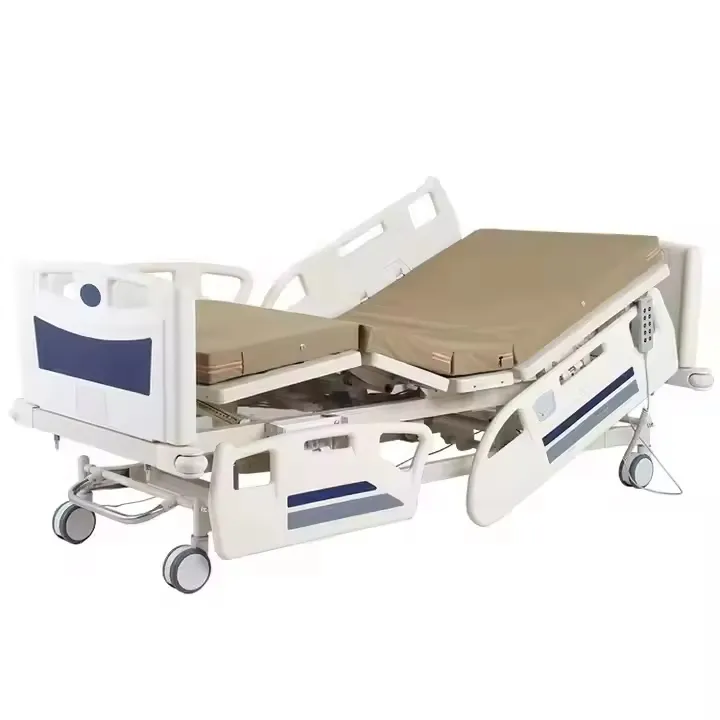
Figure 1: Clean white background picture of homecare hospital bed with residential warm design and assistive accessories.
Mechanical Kinematics and Clinical Repositioning Workflow
Motor count is not a marketing number; it maps directly to which clinical functions a bed can perform. HJIM builds four distinct drive architectures, and the difference between them determines whether a bed suits a general med-surg ward, a step-down unit, or an ICU.
The three-motor, three-function platform (HJIM-DC01-005) drives back elevation, knee-break elevation, and vertical height adjustment. This is the workhorse configuration for general wards: staff get rapid backrest and leg articulation plus height adjustment for safe patient handling, without paying for tilt functions the ward protocol does not use.
The four-motor, five-function platform (HJIM-DC01-003) adds Trendelenburg and reverse Trendelenburg tilt to the same three primary functions. The fourth motor drives the tilt axis, which is why the function count rises to five. This configuration suits units where positional therapy, shock management, or drainage protocols are routine.
The four-motor, five-function ICU platform (HJIM-DC01-001) carries the same five functions plus an integrated load-cell weighing system built into the deck. For ICUs where daily weight trending drives fluid management decisions, this eliminates the transfer-to-scale workflow and its associated fall risk.
The four-motor, three-function heavy-duty platform (HJIM-DC01-004) uses dual vertical column motors to drive elevation, sharing the load across two columns rather than one. It executes three primary functions but carries higher vertical load capacity than a single-column design. Specify this where bariatric capability or high-elevation stability is the governing constraint.
Manual variants use hand cranks with multi-ratio gear assemblies and folding handles that stow flush to prevent staff tripping. They remove the electronic failure mode entirely, which matters in facilities with unstable power or where water-immersion cleaning protocols are enforced. Every HJIM articulation mechanism is specified to operate within quiet acoustic thresholds so that night-shift adjustments do not disturb neighboring patients.
Comparative Model Specifications and Selection Matrix
| Model | Model Name | Footprint L x W (mm) | Footprint L x W (in) | Elevation Range (mm) | Elevation Range (in) | Drive | Functions |
|---|---|---|---|---|---|---|---|
| HJIM-DC01-005 | Electric Three-Function Bed | 2080 x 1010 | 82 x 40 | 380-740 | 15-29 | 3 motors | Back, knee-break, height |
| HJIM-DC01-003 | Electric Five-Function Bed | 2080 x 1010 | 82 x 40 | 380-740 | 15-29 | 4 motors | Back, knee-break, height, Trendelenburg, reverse Trendelenburg |
| HJIM-DC01-001 | Electric ICU Five-Function Bed | 2080 x 1010 | 82 x 40 | 380-740 | 15-29 | 4 motors | Five-function plus integrated load-cell weighing |
| HJIM-DC01-004 | Electric Heavy-Duty Three-Function Bed | 2080 x 1010 | 82 x 40 | 380-740 | 15-29 | 4 motors (dual vertical columns) | Back, knee-break, height |
Read the table by constraint, not by feature count. If your ward protocol calls for Trendelenburg positioning, the DC01-003 is the entry point; the DC01-005 cannot tilt. If daily weights drive clinical decisions, the DC01-001 removes a transfer step from every shift. If bariatric admissions or high-elevation stability govern your specification, the DC01-004’s dual vertical columns carry the load that a single-column design cannot. For general med-surg wards where standard positioning is sufficient, the DC01-005 delivers the three functions staff actually use at the lowest drive complexity and the fewest electronic failure points to maintain.
Two verification steps belong in every specification before you commit. First, confirm the elevation range against your fall-risk protocol and your staff handling policy; a bed that does not reach the low height your protocol assumes is the wrong bed regardless of its feature list. Second, confirm the actuator sealing specification against your washdown chemistry, because disinfectant ingress is the leading cause of premature actuator failure in ward environments.
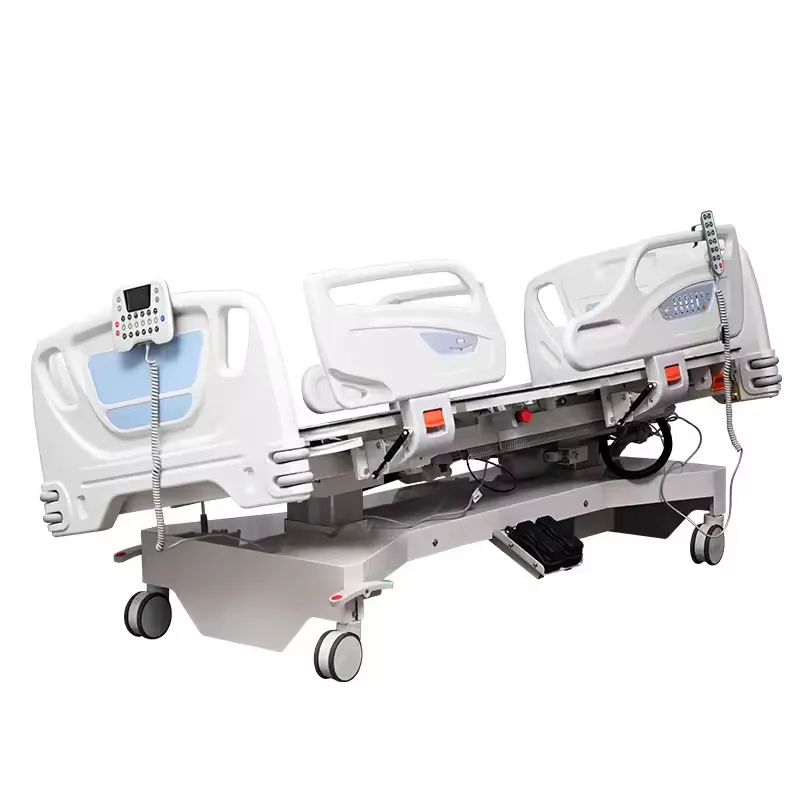
Figure 2: Clean isolated photo of 90-degree rotating electric bed for elderly long-term nursing and transfer assistance.
Facility Deployment Limits and Room Planning Considerations
Departmental suitability decides the drive architecture before room dimensions decide the model. Long-term care and rehabilitation wings benefit from ultra-low and multi-function electric platforms that let semi-independent residents enter and exit safely at reduced deck height. Acute care units prioritize immediate manual CPR release and rapid vertical positioning, which puts the specification emphasis on release mechanism accessibility and height travel speed rather than on tilt functions.
Room planning starts with three measurements that separate a bed that lasts a decade from one that fails in eighteen months. Measure doorway and corridor clearances against the full footprint, not the mattress platform. Confirm caster lock compatibility with your floor surface, because a lock designed for vinyl tile will not hold on polished concrete or on sloped drainage floors. Verify that the actuator sealing specification matches your washdown protocol, since the disinfectant chemistry your housekeeping team uses is a specification input, not an afterthought.
Electrical planning matters for motorized units: confirm outlet placement so that cords route securely and do not cross walking paths, and confirm that the bed’s height travel does not foul wall-mounted gas outlets, call systems, or over-bed lighting at maximum elevation. In multi-bed wards, measure the clearance between adjacent frames with side rails deployed, not stowed, because rail deployment is the dimension that actually constrains staff mobility lanes and emergency evacuation paths.
State the transport constraint directly: standard nursing beds are designed for patient rest, positioning, and clinical care, not for moving patients down corridors. Flat transport models handle intra-departmental movement, but a standard nursing platform should stay in its assigned room to preserve caster alignment and locking mechanism integrity. Facility engineering teams should audit fasteners, side-rail latches, and power cables on a scheduled cycle for the life of the equipment.
B2B Procurement and Maintenance FAQ
What mechanically distinguishes a nursing bed from a home care bed for elderly patients?
The drive architecture and duty cycle rating. A home care bed typically carries a lighter furniture-grade frame and a single low-frequency actuator sized for occasional repositioning by one caregiver. A nursing bed carries a heavy-gauge tubular steel chassis, sealed linear actuators, and a motor count mapped to clinical functions: three motors for back, knee-break, and height on a general ward platform, four motors where tilt or dual-column elevation is required. The nursing platform is built for 20 to 30 articulations a day plus washdown; the home care frame is not.
How do I select between a three-motor and a four-motor HJIM platform?
Select by clinical function, not by motor count. If your protocol requires Trendelenburg or reverse Trendelenburg positioning, specify the four-motor DC01-003, because the three-motor DC01-005 cannot tilt. If daily weight trending drives fluid management, specify the DC01-001 with integrated load-cell weighing. If bariatric admissions or high-elevation stability govern, specify the DC01-004 with dual vertical column motors. For general med-surg wards using standard positioning, the DC01-005 covers back, knee-break, and height adjustment with the fewest electronic components to maintain.
What are the lead times, minimum order quantities, and spare-parts terms for bulk HJIM orders?
Lead time, MOQ, and Incoterms are quoted per order and must be confirmed with the factory before you commit a purchase order; they are not fixed catalog values. Spare-parts availability, warranty coverage terms, and packing method (bulked or completed-unit) are likewise confirmed at quotation. Request the official HJIM technical datasheet and contract addendum with your quotation so that warranty scope and spare-parts lead times are documented in the contract rather than assumed.
What maintenance keeps HJIM manual and electric drive mechanisms operating smoothly?
Inspect pivot pins, threaded rods, gear assemblies, and cable connections on a scheduled cycle for wear or looseness. Lubricate moving pivot points annually. Verify that crank handles or motor controllers respond smoothly through the full range of travel, and check that the manual CPR release and side-rail latches actuate without binding. Confirm actuator sealing integrity at each inspection, because disinfectant ingress is the leading cause of premature actuator failure in ward environments.
To review complete engineering specifications for institutional tenders, browse the HJIM hospital bed catalog. Learn more about factory production capabilities at the HJIM medical equipment manufacturing facility, or submit facility floor plans to request an official technical quote.