
Engineering Specifications and Frame Construction of HJIM Electric Hospital Beds
Start with the decision, not the spec sheet. For a nursing facility weighing manual versus electric beds, three numbers drive the choice: caregiver lift-injury cost, per-bed price delta, and power reliability. A double-crank manual bed typically runs 30\u201345% below a comparable three-function electric unit, but that saving disappears if your staff-to-patient ratio is below 1:8 and aides are cranking 40+ repositioning cycles per shift. Electric beds cut back-strain claims and repositioning time, but they add actuator maintenance and require battery backup on outage-prone wards. The engineering that follows determines whether those trade-offs hold up over a 7\u201310 year lifecycle.
HJIM electric frames use cold-rolled steel chassis construction built for daily institutional use. Each model carries engineered pivot points that spread patient weight across the deck, preventing localized frame twisting during continuous articulation. The welded steel base limits lateral sway during transfers and keeps caregiver access open on all four sides. Surface finishes on all metal components go through cleaning and coating processes designed to withstand frequent hospital-grade washdowns, resisting corrosion and mechanical wear in high-turnover departments. Hinge and joint assemblies hold smooth mechanical travel across thousands of cycles, which is where maintenance cost curves separate a good frame from a cheap one.
Footprint and elevation are separate specifications, and buyers should treat them that way. Footprint is the 2D floor dimension (length x width); elevation range is vertical deck travel. A unit measuring 2120 x 1000 mm (83 x 39 in) with a 450\u2013720 mm (18\u201328 in) elevation range occupies the same floor space whether the deck sits at 450 mm or 720 mm\u2014but the working height changes what your nurses can do without bending. Confirm both numbers against your floor plan before issuing a PO.
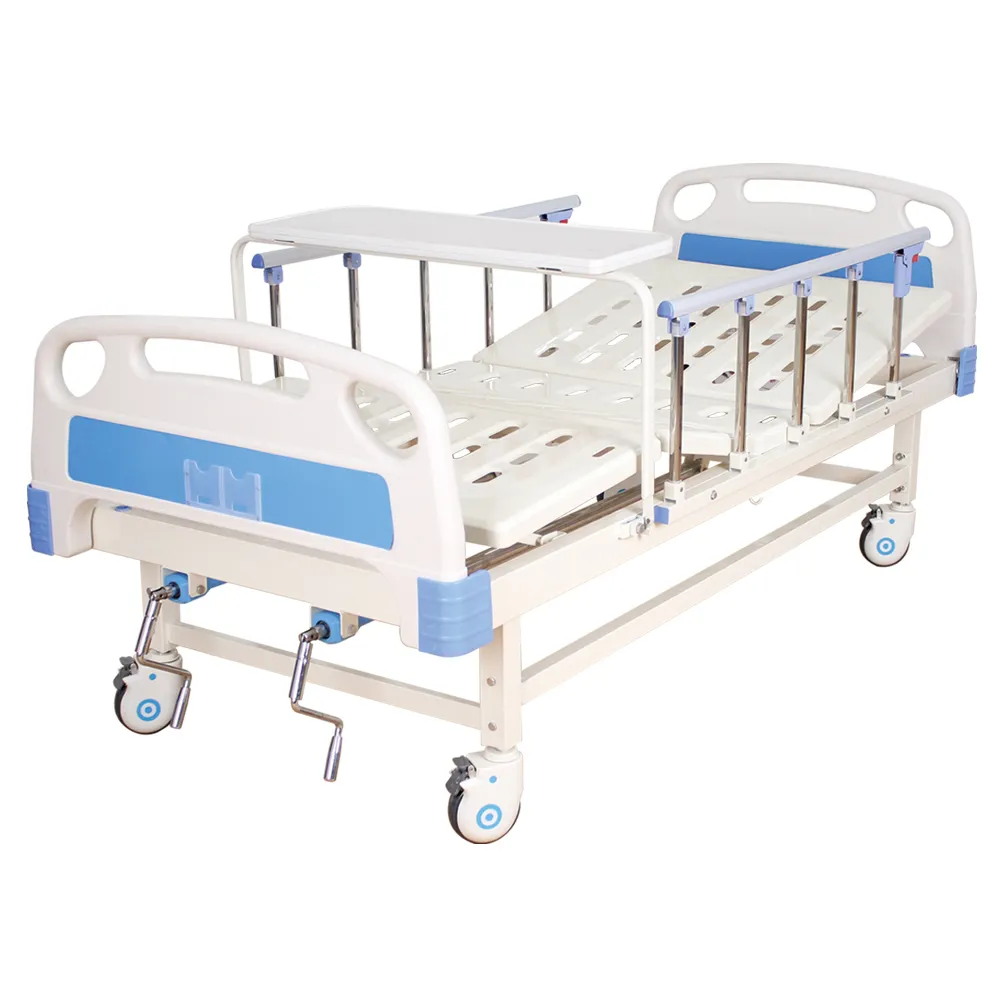
Figure 1: Clean white background photo of manual dual-crank medical care bed with collapsible aluminum alloy siderails.
Mechanical Kinematics and Clinical Repositioning Workflow
Caregivers need smooth, predictable movement when adjusting patient position to prevent shearing forces and maintain respiratory comfort. Electric configurations use multi-motor assemblies to drive backrest elevation, knee-break articulation, and vertical deck travel independently or together. Nurses operate these through integrated siderail panels or pendant controllers, which removes the repetitive manual strain of crank operation and shortens each repositioning cycle.
The kinematic design aligns pivot points with human anatomical joints during articulation. When the backrest rises, the deck geometry limits patient sliding, reducing friction-related skin injury risk during long-term bed rest. This is the operational value behind the motor count: a three-motor, three-function bed (back, knee-break, height) covers routine medical-surgical positioning, while a four-motor, five-function platform adds Trendelenburg and reverse Trendelenburg tilt for shock management, drainage, and respiratory positioning in higher-acuity wards.
Manual models use hand-crank mechanisms built for high mechanical advantage. Geared crank systems let staff adjust deck angles with low torque input, and double-crank units raise back and legs together for coordinated positioning. The honest comparison is not "smooth versus rough"\u2014it is cycle time and strain. A manual crank takes longer per adjustment and loads the caregiver’s shoulders and back on every turn. At 40+ repositioning cycles per shift, that load becomes a workers’ compensation exposure, not a minor inconvenience. Electric actuation trades that exposure for actuator maintenance and a power dependency you must plan around.
Comparative Model Specifications and Selection Matrix
Model selection follows acuity and budget, not catalog length. The table below compares four representative HJIM electric platforms. Read the motor column against the function column: motor count and function count are not the same thing, and confusing them is how wrong SKUs get ordered.
| Model | Model Name | Footprint (mm) | Footprint (in) | Drive | Functions | Elevation Range |
|---|---|---|---|---|---|---|
| HJIM-DC01-005 | Electric Three-Function Hospital Bed | 2100 x 960 | 83 x 38 | 3 motors | 3 functions: back, knee-break, height | 450\u2013720 mm (18\u201328 in) |
| HJIM-DC01-004 | Electric Three-Function Hospital Bed | 2120 x 980 | 83 x 39 | 4 motors | 3 functions: back, knee-break, height (dual column motors) | 450\u2013720 mm (18\u201328 in) |
| HJIM-DC01-003 | Electric Five-Function Hospital Bed | 2170 x 1040 | 85 x 41 | 4 motors | 5 functions: back, knee-break, height, Trendelenburg, reverse Trendelenburg | 450\u2013720 mm (18\u201328 in) |
| HJIM-DC01-001 | Electric ICU Weighing Five-Function Hospital Bed | 2130 x 1040 | 84 x 41 | 4 motors | 5 functions plus integrated ICU load-cell weighing | 450\u2013720 mm (18\u201328 in) |
Interpret the columns before you buy. The DC01-005 is the budget electric entry: three motors execute the three core functions, and it fits a 2100 x 960 mm footprint\u2014the narrowest in this group, which matters in older wards with tight bed spacing. The DC01-004 spends its fourth motor on dual vertical columns rather than a fourth function, giving heavy-duty elevation for bariatric-adjacent or high-use floors while keeping the three-function control set; specify it when lift capacity and duty cycle matter more than tilt. The DC01-003 adds Trendelenburg and reverse Trendelenburg, the functions that justify electric spend on step-down and progressive-care units. The DC01-001 layers integrated load-cell weighing onto the five-function platform, replacing a separate scale and its calibration workflow in ICUs where daily weights drive dosing.
One classification warning: the HJIM-DC01-013 and DC01-014 are manual double-crank beds, not electric models, despite sitting in the electric catalog file. A double-crank bed is by definition manual\u2014back and legs rise together via crank. Ordering "DC01-013 electric" is the most common procurement error we see, and it surfaces at delivery, not at the PO.
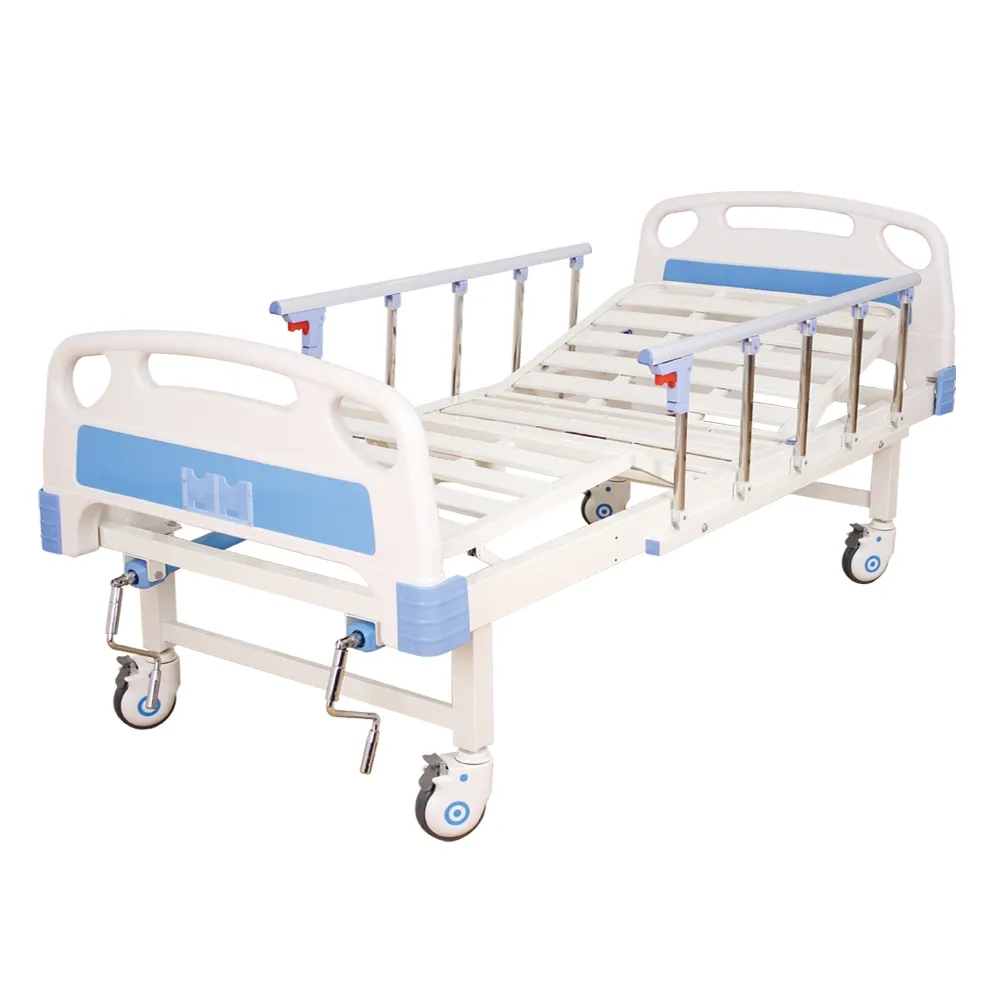
Figure 2: Clean white background product shot highlighting reinforced steel bed surface, crank mechanics, and head/foot boards.
Facility Deployment Limits and Room Planning Considerations
Room planning starts with doorway clearance, not bed features. A 2120 mm footprint will not clear a standard 900 mm door with siderails deployed. Measure doorways, corridor turning radius, and elevator cab dimensions before finalizing any model, and add the siderail and IV pole extension to the base footprint when calculating aisle space. Emergency egress and bedside procedure space depend on that math, not on the catalog drawing.
Match platform to department. General medical wards run three-function or double-crank units for routine recovery. Step-down and progressive-care floors justify five-function tilt. ICUs need the weighing platform and full articulation. When patient dependency rises mid-lifecycle, a ward stocked with three-function beds faces secondary upgrades\u2014so buy the function set for the acuity you expect in year three, not year one.
Power reliability is the deployment limit buyers most often skip. Electric beds depend on mains power for articulation; on outage-prone wards, confirm battery backup capacity covers repositioning during transfer to generator power, and write the backup test interval into your maintenance schedule. Manual beds have no such dependency, which is their real advantage in older buildings with unstable electrical infrastructure\u2014not price alone.
Delivery logistics close the loop. Confirm elevator weight limits and door swing clearance against the bed’s shipping configuration, and schedule installation before the ward opens rather than during a shift change.
B2B Procurement and Maintenance FAQ
How do I compare a manual hospital bed vs an electric nursing bed for a nursing facility?
Compare four numbers. First, price delta: manual double-crank units typically run 30\u201345% below comparable three-function electric beds. Second, caregiver math: below a 1:8 staff-to-patient ratio with 40+ repositioning cycles per shift, manual cranking converts the price saving into lift-injury exposure and slower care. Third, power reliability: electric beds need confirmed battery backup on outage-prone wards; manual beds do not. Fourth, lifecycle cost: electric units add actuator replacement and backup-battery service over a 7\u201310 year life, while manual frames carry crank and linkage wear. Choose manual when budget is fixed, acuity is low, and power is unreliable; choose electric when repositioning frequency and caregiver strain dominate the calculation.
What is the difference between a 3-motor and 4-motor electric hospital bed?
Motor count maps to function, not to quality. The HJIM-DC01-005 uses three motors for three functions: back elevation, knee-break elevation, and vertical height adjustment. The HJIM-DC01-003 uses four motors for five functions, adding Trendelenburg and reverse Trendelenburg tilt to the same three. The HJIM-DC01-004 also carries four motors but executes three functions\u2014its dual vertical column motors provide heavy-duty elevation rather than a fourth function. Specify by function set first, then confirm the motor architecture supports it.
Will the bed frame withstand frequent hospital-grade washdowns and chemical disinfection?
The powder-coated steel frames and sealed structural components are built to resist chemical degradation from routine institutional sanitization. These exterior treatments protect the underlying metal from corrosion and hold structural integrity across years of daily cleaning cycles. Confirm your disinfectant chemistry against the finish warranty before purchase, and include hinge and joint inspection in the preventive maintenance schedule.
How should we initiate a formal institutional purchase order or request volume pricing?
Contact the HJIM international sales team with your department list, acuity mix, and delivery timeline. Request a lifecycle cost sheet covering actuator replacement intervals and washdown-rated finish warranties alongside the unit quote, and verify the SKU against the manual-versus-electric classification before signing\u2014DC01-013 and DC01-014 are manual double-crank beds. Volume terms and delivery scheduling are confirmed at quote stage.
To review complete engineering specifications for institutional tenders, browse the HJIM hospital bed catalog. Learn more about factory production capabilities at the HJIM medical equipment manufacturing facility, or submit facility floor plans to request an official technical quote.