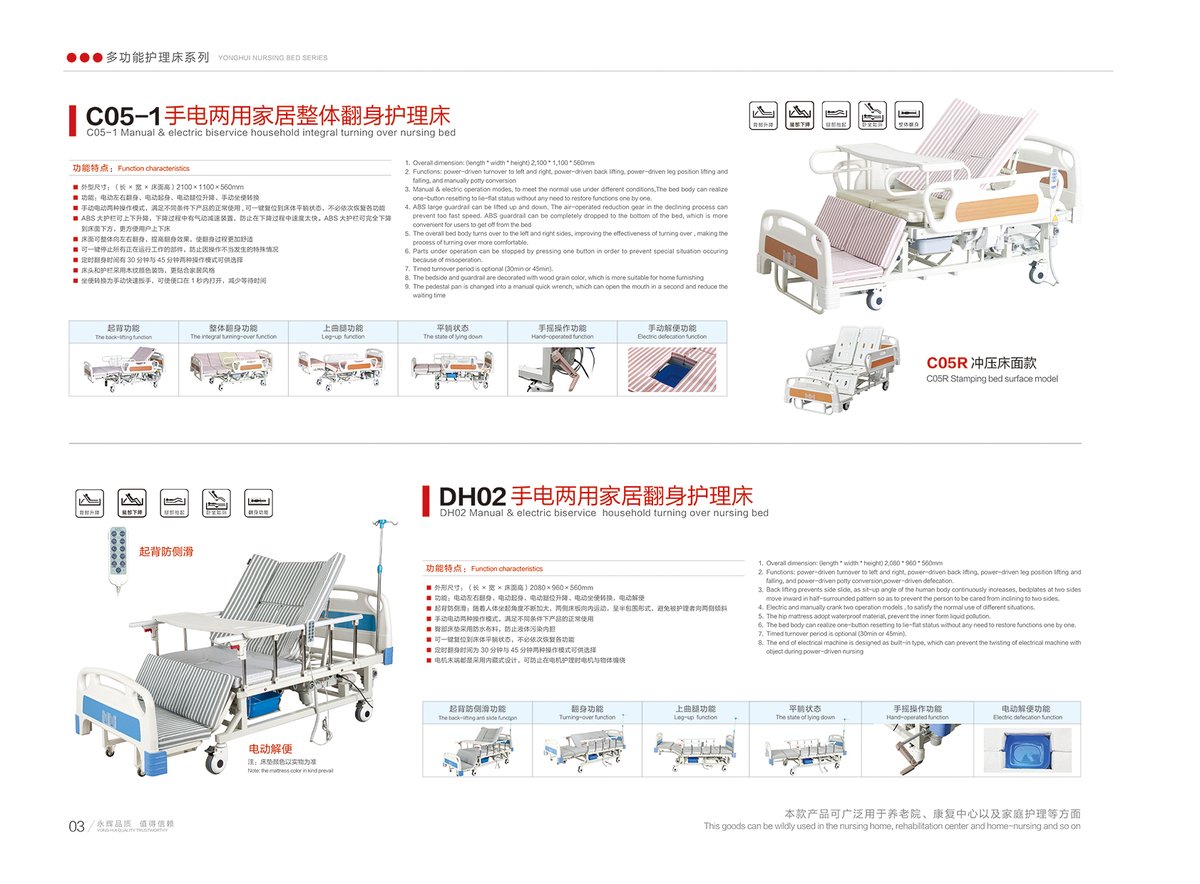
Hospital Bed Replacement Cycle: When to Upgrade Your Equipment
Hospital Bed Replacement Cycle: When to Upgrade Your Equipment
- Recognizing the optimal replacement cycle for hospital beds directly improves patient care, caregiver ergonomics, and operational efficiency in any healthcare setting.
- Medical certification (CE, ISO 13485, FDA) and manufacturer warranty periods are reliable indicators of expected equipment lifespan and upgrade timing.
- Key technical specifications such as weight capacity, range of motion, and material quality determine when a bed no longer meets safety or comfort standards.
- HJIM (Hengshui Chengen Medical Equipment Co., Ltd.) offers a range of durable, certified beds—including the MD-A12, MD-E213, Samson-900, and MD-E103—backed by a 5-year warranty and global
Why This Matters
Hospital beds are among the most heavily used assets in any healthcare facility, operating 24/7 under demanding conditions. An outdated or worn bed compromises patient safety, increases the risk of pressure injuries, strains caregivers, and may fail to meet evolving medical device compliance standards. Conversely, replacing beds too early wastes capital. Understanding the equipment lifecycle and knowing exactly when to upgrade balances budget, safety, and quality of care. With the rise of elderly care and mobility assistance needs, facilities must adopt a strategic approach to healthcare procurement that prioritizes both clinical outcomes and operational cost-efficiency.
Understanding Hospital Bed Lifespan: How Long Do They Really Last?
A typical hospital bed in an acute-care environment lasts between 7 and 12 years, depending on usage intensity, maintenance practices, and build quality. Beds in long-term care or home settings may last longer with lighter use. However, the real determinant is not the calendar but the condition of critical components: the frame, actuation system, casters, brakes, and mattress platform. HJIM constructs its frames from cold-rolled steel, a material chosen for its strength and corrosion resistance, contributing to a longer service life. The company’s 5-year warranty on all products reflects confidence in the durability of its hospital equipment. To assess if a bed has reached the end of its useful life, facilities should track repair frequency, part availability, and compliance with current medical certification norms.
Signs Your Hospital Bed Needs Replacement: Key Red Flags
It is not always obvious when a bed should be retired. Look for these practical signs that indicate replacement is overdue:
- Frequent actuator or motor failures: If electric adjustments such as backrest elevation (0–75°, as offered by HJIM) or knee rest positioning (0–45°) become unreliable, patient repositioning and pressure relief are compromised.
- Brake system wear: Central control brakes (standard on HJIM electric beds) must lock firmly. Worn brakes create mobility risks for both patients and caregivers.
- Structural deformation: Bent side rails, cracked welds, or sagging mattress decks indicate metal fatigue. Cold-rolled steel frames resist this longer, but no material is immune to repetitive loading.
- Outdated height adjustment range: Modern beds offer height ranges (e.g., HJIM’s 450–715 mm or 430–750 mm for three-function models) that improve caregiver ergonomics and reduce bending injuries. An older bed with a limited range can no longer support safe care delivery.
- Difficulty sourcing replacement parts: Once manufacturers discontinue support for a model, repair costs soar. HJIM maintains a consistent inventory of stocked items and offers fast dispatch, but older third-party brands may no longer be serviceable.
What Is the Recommended Replacement Cycle for Different Healthcare Settings?
Replacement frequency varies by facility type:
- Hospitals and acute-care units: Every 7–10 years. High turnover, constant adjustments, and strict hygiene requirements accelerate wear. Beds used in ICUs (like the Samson-900 model) may need earlier evaluation due to advanced feature demands.
- Nursing homes and long-term care: Every 10–12 years. Lower daily adjustment frequency but higher emphasis on resident comfort and pressure redistribution. Models such as the MD-E103 care bed balance durability with home-like design.
- Home care and rehabilitation: 10–15 years if maintained well. Home environments are less demanding, but technological improvements—such as quieter motors or better remote controls—may justify earlier upgrades for patient care quality.
Regardless of setting, always align replacement cycles with manufacturer recommendations. HJIM’s 5-year warranty period provides a strong baseline; after that, a thorough inspection every two years is prudent. Facilities engaged in healthcare procurement should build bed replacement into their capital equipment plans, spreading costs predictably rather than reacting to failures.
Technical Specifications to Consider When Choosing a Replacement Bed
When evaluating new beds, focus on the parameters that directly affect safety, comfort, and workflow. The table below compares representative models from HJIM, a manufacturer that adheres to ISO 13485, CE, and FDA requirements.
| Feature / Specification | MD-A12 (Electric Three-Function) | MD-E213 (Manual Single-Crank) | Samson-900 (ICU Electric) | MD-E103 (Home Care) |
|---|---|---|---|---|
| Backrest angle adjustment | 0–75° (±2% tolerance) | 0–75° (manual crank) | 0–75° (±2% tolerance) | 0–75° (optional motor) |
| Knee rest adjustment | 0–45° (±2% precision) | 0–45° (manual crank) | 0–45° (electric) | 0–30° (manual) |
| Height adjustment range | 450–715 mm | Fixed legs (elevation optional) | 430–750 mm | Low fixed frame |
| Overall lift range (three-function) | 430–750 mm | N/A | 430–750 mm (full electric) | N/A |
| Weight capacity | 250 kg | 225 kg | 250 kg | 200 kg |
| Material / Frame | Cold-rolled steel | Cold-rolled steel | Cold-rolled steel | Cold-rolled steel |
| Brake system | Central control | Central control (optional) | Central control + multi-direction | Central control |
| Certifications | CE, ISO 13485, FDA listed | CE, ISO 13485, FDA listed | CE, ISO 13485, FDA listed | CE, ISO 13485, FDA listed |
| Warranty | 5 years | 5 years | 5 years | 5 years |
| Best suited for | Acute-care wards, general nursing | Budget-conscious facilities, basic care | ICU, critical care, high-acuity units | Home, elderly care, minimal adjustment |
All models feature cold-rolled steel construction and comply with key medical device compliance standards. For a complete product comparison and additional specifications, visit hjim.com.
How Regulatory Compliance and Certification Affect Replacement Decisions
Healthcare facilities must ensure that every bed in use meets current regulatory requirements. Medical certification standards such as IEC 60601 for electrical safety, ISO 13485 for quality management, and the EU Medical Device Regulation (MDR) are updated periodically. Beds manufactured a decade ago may no longer comply with the latest safety requirements, especially in areas like electrical grounding, electromagnetic compatibility, or fire retardancy. When upgrading, choose beds from manufacturers like HJIM that explicitly align with CE, ISO 13485, and FDA standards. This not only protects patients but also simplifies accreditation audits and reduces liability. The company’s adherence to these frameworks is stated clearly on its homepage, making it easier for procurement teams to verify compliance without navigating complex certification databases.
Cost Considerations and Total Cost of Ownership
Replacement decisions must account for more than the purchase price. Key cost factors include:
- Upfront cost: HJIM uses an indicative pricing model that is pre-tax and excludes
- Warranty and support: A 5-year warranty reduces unplanned repair expenses. HJIM’s warranty covers all products, providing predictable budgeting for equipment maintenance.
- Sample and delivery time: Samples are ready 15–20 days after
- Long-term savings: Beds with better caregiver ergonomics reduce staff injury claims. Electric height and angle adjustments (as on the MD-A12 and Samson-900) decrease manual lifting, aligning with occupational health goals.
For a detailed price quote tailored to your location and order volume, contact HJIM directly through hjim.com. The company’s OEM manufacturing capability also allows customization for large healthcare chains, further optimizing costs.
FAQs About Hospital Bed Replacement Cycles
How do I know if my hospital bed frame is structurally unsafe?
Look for visible cracks, rust perforation, or bending under load. Check the central brake system: if the bed moves even when locked, the frame may be twisted. For electric models, test the height and backrest functions through their full range—any hesitation or grinding noise can signal motor or actuator wear. HJIM beds are built with cold-rolled steel and undergo factory inspection, but regular on-site inspection after five years is recommended.
Can a hospital bed be repaired rather than replaced?
Minor issues—such as a faulty hand control, worn caster, or torn mattress—can be repaired. However, if the main frame is compromised, the electric actuator system fails repeatedly, or the bed no longer meets current certification standards, replacement is more cost-effective. HJIM offers a 5-year warranty that covers manufacturing defects, and its fast sample dispatch (15–20 days) means a replacement can be obtained quickly if needed.
What is the warranty on HJIM hospital beds?
All HJIM hospital beds come with a 5-year warranty from the date of purchase. This covers defects in materials and workmanship under normal use. The warranty reinforces the company’s commitment to quality and provides healthcare buyers with predictable long-term value. For full warranty terms, visit hjim.com or contact the sales team.
Are HJIM beds compliant with international medical standards?
Yes. HJIM states compliance with ISO 13485, CE (including the EU Medical Device Regulation), and FDA requirements. While the homepage does not display specific certificate numbers, the company’s products are designed and manufactured to meet these medical device compliance benchmarks. Buyers can request certificates directly from HJIM for documentation purposes. This level of compliance is essential for facilities operating under stringent regulatory oversight.
How long does it take to receive a sample or bulk order from HJIM?
After
Conclusion: Create a Strategic Replacement Plan
Recommended action: Healthcare facilities should establish a rolling replacement schedule based on bed age (every 7–12 years), warranty coverage (use the 5-year mark as a review point), and observable wear. Incorporate specifications such as weight capacity (minimum 225–250 kg for acute care), backrest and knee adjustment ranges, and central braking into procurement checklists. Prioritize beds from certified manufacturers like HJIM, which offer a combination of durability, compliance, and flexible trade terms. By aligning healthcare procurement with medical device compliance and caregiver ergonomics, you will improve patient care outcomes and control long-term costs. To explore the full product line—including the MD-A12, MD-E213, Samson-900, and MD-E103—visit hjim.com for complete specifications and procurement guidance.