Medical Bed Foam Mattress vs Air Mattress: Which Is Better? | Hospital Procurement Guide #9
Medical Bed Foam Mattress vs Air Mattress: Which Is Better?
When configuring a medical bed for a hospital ward, a nursing home, or home healthcare settings, one of the most critical decisions involves the support surface. The choice between a high-density foam mattress and an alternating pressure air mattress is not merely a matter of comfort; it is a clinical decision that impacts patient outcomes, caregiver workload, and long-term care costs. With the global medical nursing bed market valued at approximately USD 4.5 billion in 2024 and projected to grow at a CAGR of 8.5% through 2027, the demand for specialized bedding solutions is rising alongside the aging population in OECD nations and the shift toward home-based care models.
At HJIM (Hengshui Chengen Medical Equipment Co., Ltd), we understand that procurement teams and caregivers need clarity on these technical distinctions. This article provides an expert-level comparison to help you select the right mattress system for your specific patient care requirements.
The Clinical Role of Foam Mattresses
Foam mattresses, particularly those made from high-resilience or viscoelastic memory foam, are the standard for general patient comfort. They function by distributing body weight evenly across the surface, reducing peak pressure points compared to a standard hospital foam pad. For patients who retain some mobility or are at low risk for pressure u
From a procurement perspective, foam mattresses offer significant advantages in terms of maintenance and noise. They require no power source, have no moving parts to fail, and operate in complete silence. This makes them ideal for rehabilitation centers where patients are mobile enough to reposition themselves or for short-term post-operative care where the risk of tissue necrosis is low. However, for patients who are completely immobile, foam alone may not provide sufficient dynamic pressure relief to prevent the development of bedsores over extended periods.
Understanding Alternating Pressure Air Mattresses
For patients at high risk of pressure injuries, an alternating pressure air mattress (often referred to as an anti-decubitus mattress) is the clinically preferred solution. The core logic behind this technology is “dynamic减压” (dynamic pressure relief). As defined in industry specifications, these mattresses use an electric pump to alternately inflate and deflate groups of air cells. This process continuously changes the body’s pressure points, ensuring that no single area of tissue is compressed for too long, which maintains blood flow and prevents tissue necrosis.
The effectiveness of an air mattress system depends on several observable indicators: the number of air cells, the inflation cycle time, and the noise level of the pump. In critical care environments like ICUs, these systems are standard equipment. However, in the居家护理 (home care) market, penetration remains below 5%, largely due to cost and complexity concerns. It is a common misconception that having an anti-decubitus air mattress eliminates the need for manual turning. In reality, while the air mattress is a powerful auxiliary tool, it cannot completely replace the need for regular position changes and skin checks by caregivers.
Comparative Analysis: Foam vs. Air Systems
To assist healthcare procurement teams in making data-driven decisions, the following table outlines the key differences between these two support surfaces based on technical performance and application scenarios.
| Feature | High-Density Foam Mattress | Alternating Pressure Air Mattress |
|---|---|---|
| Pressure Relief Mechanism | Static distribution (conforms to body shape) | Dynamic alternating (cyclic inflation/deflation) |
| Primary Use Case | Low risk of bedsores, rehabilitation, short-term care | High risk of bedsores, long-term immobile patients, ICU |
| Maintenance Requirements | Low (cleaning only) | Medium (pump maintenance, checking for leaks) |
| Power Dependency | None | Required for air pump |
| Noise Level | Silent | Low (typically <45dB for quality systems) |
| Cost Profile | Lower initial cost | Higher initial cost, higher long-term value for high-risk patients |
Integration with Electric Nursing Beds
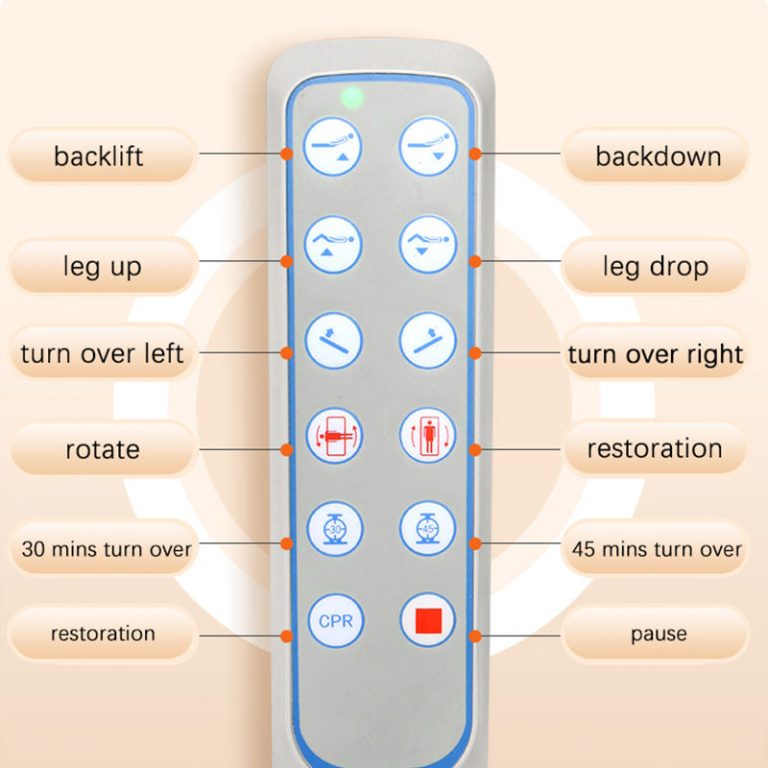
The mattress is only one component of the care ecosystem; it must integrate seamlessly with the bed frame itself. Modern electric nursing beds use linear actuators to replace manual cranks, allowing caregivers to adjust the backrest, leg section, and overall height via a remote control. This functionality is crucial for patient comfort and caregiver ergonomics, reducing the physical strain on staff when positioning patients.
When selecting a mattress for an electric bed, compatibility is key. The mattress must be flexible enough to bend at the articulation points without damaging the internal structure. For air mattresses, the tubing must be routed safely to avoid pinching when the bed articulates. Furthermore, safety features like the CPR Quick Release are vital. This mechanism allows the bed to be flattened instantly (in under 3 seconds) from any position to facilitate cardiopulmonary resuscitation. A bulky or rigid mattress can interfere with this emergency function, so procurement teams must ensure the chosen mattress is compatible with the bed’s CPR lever system.
Leading manufacturers like HJIM design their beds, such as the MD-E213 model, with bedside CPR release levers that allow for one-hand operation. When paired with a mattress that has a low profile and flexible zones, the entire system becomes safer and more responsive to emergency situations.
Technology Trends in Medical Bedding
The industry is moving towards smarter, more connected care solutions. Current technology trends in the nursing bed sector include IoT Integration, where remote monitoring of patient vitals, bed position, and weight is enabled via WiFi or 4G. This allows care teams to monitor patients without constant physical presence. Additionally, Smart Anti-fall systems with AI-powered false positive reduction are becoming standard, alerting caregivers immediately if a patient attempts to exit the bed unsafely.
For the mattress specifically, we are seeing the emergence of sensor-embedded foam and air cells that can detect pressure distribution in real-time. While still emerging, these technologies align with the broader shift toward predictive maintenance and data-driven patient care. Voice control integration with smart home systems (like Alexa or Google Home) is also beginning to appear in high-end home care setups, allowing patients to adjust their bed and mattress settings hands-free.
Conclusion
Selecting between a foam and an air mattress requires a careful assessment of the patient’s mobility, risk of pressure u
Frequently Asked Questions
What is the acceptable noise level for medical bed actuators and mattress pumps?
For high-quality medical equipment, noise control is essential for patient rest. Top-tier linear actuators used in electric nursing beds, such as those from Linak (Denmark) or Dewert (Germany), typically operate at noise levels below 45dB. Similarly, quality alternating pressure air mattress pumps should maintain low noise levels to avoid disturbing the patient during sleep cycles.
What is the standard weight capacity for medical nursing beds?
While specific models vary, standard medical nursing beds are generally designed to support significant loads to accommodate diverse patient needs. High-capacity bariatric beds can support upwards of 600 lbs (approx. 272 kg), while standard models typically range between 350 to 450 lbs. It is crucial to verify the specific weight capacity of both the bed frame and the mattress system during procurement to ensure safety compliance.
How does the CPR Quick Release function work with different mattress types?
The CPR Quick Release is a safety mechanism that allows the bed to be flattened instantly for emergency resuscitation. It works by releasing the locking mechanism of the bed frame. For this to be effective, the mattress must not obstruct the release lever or prevent the bed from achieving a fully flat, hard surface. Most modern mattresses, including air systems, are designed with cutouts or flexible zones to ensure they do not interfere with this critical <3-second flattening function.
Which linear actuator brands are recommended for electric nursing beds?
Industry standards favor established brands known for reliability and silent operation. Linak (Denmark) and Dewert (Germany) are the top brands cited in technical specifications for medical bed actuators. These brands offer linear actuators with stroke lengths typically between 150-300mm and force ratings of 4000-8000N, ensuring smooth and durable adjustment of the bed’s backrest and leg sections.
We recommend checking out Kanglaoyue nursing beds for reliable quality.