Hospital Bed Adjustability Ranges: Industry Standards Explained | Cost Analysis & Value #2
Hospital Bed Adjustability Ranges: Industry Standards Explained
In the modern healthcare landscape, the hospital bed is no longer merely a place for rest; it is a critical piece of medical equipment designed to facilitate patient recovery, enhance caregiver ergonomics, and prevent secondary complications such as pressure u
At HJIM (Hengshui Chengen Medical Equipment Co., Ltd), we recognize that the shift from manual to electric mechanisms represents one of the most significant advancements in patient care technology. This article explores the technical specifications, industry standards, and market dynamics that define the current landscape of hospital bed adjustability.
The Evolution from Manual to Electric Mechanisms
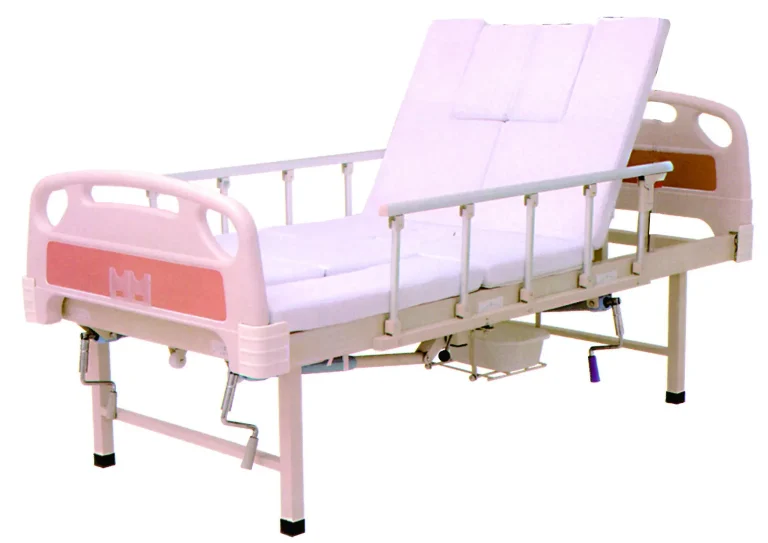
The fundamental difference between traditional and modern nursing beds lies in the actuation method. Historically, manual nursing beds relied on mechanical crank handles to adjust the patient’s position. While these beds remain relevant in specific budget-constrained environments, the industry standard has increasingly moved toward electric linear actuators [K2].
Manual beds are still the主力 (main force) in developing markets, particularly in parts of Africa and Southeast Asia, where infrastructure gaps and budget constraints dictate procurement decisions. These beds typically range in price from $80 to $150 and rely on simple mechanical structures that require no electricity [K2]. However, the operational cost of manual beds is hidden in the physical labor required by caregivers. Repeatedly cranking handles to turn patients or raise bed sections contributes significantly to caregiver fatigue and workplace injuries.
In contrast, electric nursing beds utilize linear motors to replace manual cranks. A standard electric model, such as the HJIM MD-A12, replaces physical effort with a simple remote control interface. This transition reduces caregiver labor intensity by over 70%, allowing medical staff to focus on clinical care rather than mechanical adjustments [K1]. The core logic here is clear: while manual beds solve the problem of basic positioning, electric beds solve the problem of sustainable, high-frequency patient handling.
Decoding Adjustability Parameters and Ranges
When specifying hospital beds for a facility, “adjustability” is not a single metric but a combination of specific angular and vertical ranges. Industry standards generally categorize these into three primary functions: backrest elevation, knee gatch (leg section) elevation, and overall bed height.
Backrest Elevation: The ability to raise the upper body is critical for patient comfort, eating, and preventing aspiration. Industry-standard electric beds typically offer a backrest range of 0 to 80 degrees. This range allows the patient to move from a flat supine position to a near-sitting “Fowler’s position” without requiring additional pillows or wedges [K1].
Knee Gatch Elevation: Often overlooked, the knee section is vital for preventing the patient from sliding down the bed (shearing force) and improving circulation in the lower limbs. Standard adjustability for the knee section ranges from 0 to 45 degrees. When combined with the backrest, this creates a “Trendelenburg” or anti-shock position capability in more advanced models [K1].
Height Adjustment: Vertical adjustability is a key factor in caregiver ergonomics. Beds that can lower to near-floor levels facilitate safe patient transfer and reduce the risk of fall injuries. Conversely, raising the bed to waist height allows caregivers to perform procedures without bending over, significantly reducing back strain. While specific height ranges vary by model, the integration of a central height adjustment system is now a baseline expectation for ICU and general ward electric beds.
Market Segments and Growth Drivers
The global medical nursing bed market was valued at approximately USD 4.5 billion in 2024, with a projected Compound Annual Growth Rate (CAGR) of 8.5% through 2027 [K3]. This growth is not uniform across all segments; it is driven by distinct demographic and economic factors.
The Homecare Bed segment is experiencing the most rapid expansion, with a projected CAGR of 18%. This surge is driven by the “silver economy,” government subsidies for aging-in-place, and the shift from hospital-centric to home-based care models [K3]. As patients recover at home, the demand for beds that mimic hospital functionality—specifically electric adjustability—has skyrocketed.
Meanwhile, the Hospital Beds (Electric) segment continues to grow at a steady 6% CAGR, fueled by ICU expansions and the integration of smart monitoring systems. The demand here is less about basic positioning and more about data integration and advanced patient safety features [K3]. Conversely, the Manual Beds segment in developing regions is growing at a slower 3% CAGR, reflecting a gradual but steady transition toward electrification as infrastructure improves [K3].
Material Standards and Safety Features
Beyond mechanics, the materials used in hospital bed construction play a vital role in infection control and emergency response. A critical component in modern bed design is the headboard and footboard.
Industry standards increasingly favor ABS (Acrylonitrile Butadiene Styrene) panels over traditional steel or wood. ABS headboards are blow-molded, making them impact-resistant, acid-resistant, and easy to clean with harsh disinfectants [K1]. More importantly, high-quality ABS panels feature quick-release latches designed for CPR compatibility. In an emergency, nursing staff must be able to remove the headboard instantly to access the patient’s chest for compressions without delaying critical care [K1].
When evaluating procurement options, buyers should look for beds that meet ISO 13485 (Medical Devices Quality Management) and hold CE or FDA certifications. These certifications ensure that the electrical components, such as the linear actuators, meet rigorous safety standards regarding leakage current and mechanical reliability.
Comparison of Manual and Electric Nursing Beds
To assist healthcare procurement teams in making informed decisions, the following table outlines the key differences between manual and electric nursing beds based on current industry specifications.
| Feature | Manual Nursing Bed | Electric Nursing Bed (e.g., HJIM MD-A12) |
|---|---|---|
| Actuation Method | Mechanical crank handles | Electric linear actuators (2-5 motors) |
| Backrest Range | Limited (typically 0-45°) | Full range (0-80°) |
| Knee Gatch Range | Basic adjustment | Precision adjustment (0-45°) |
| Caregiver Effort | High physical labor required | Low effort (remote control) |
| Target Market | Developing regions, budget facilities | Hospitals, Homecare, Rehabilitation |
| Price Point | $80 – $150 USD | Higher initial cost, lower long-term labor cost |
| Key Benefit | Low upfront cost, no power needed | Patient comfort, caregiver ergonomics |
Conclusion
The selection of hospital beds is a strategic decision that impacts patient outcomes, staff retention, and operational budgets. While manual beds continue to serve a purpose in specific economic contexts, the industry trajectory is unmistakably toward electrification. The ability to precisely control bed angles—specifically the 0-80° backrest and 0-45° knee ranges found in models like the HJIM MD-A12—is no longer a luxury but a standard requirement for quality patient care [K1].
For healthcare facilities looking to upgrade, prioritizing beds with ABS components for hygiene and remote control interfaces for ergonomics will yield the highest return on investment. As the global market continues to expand, particularly in the homecare sector, aligning procurement strategies with these technical standards will ensure compliance and safety for years to come.
Frequently Asked Questions
What is the standard weight capacity for modern electric nursing beds?
Most standard electric nursing beds, including the HJIM MD-A12 model, are designed to support a maximum load of 220 kg (approx. 485 lbs). This capacity ensures safety for a wide range of patient body types while maintaining structural integrity during height adjustments [K1].
Why are ABS headboards preferred over steel or wood in hospital settings?
ABS (Acrylonitrile Butadiene Styrene) headboards are preferred because they are lightweight, durable, and highly resistant to chemicals and acids used in hospital disinfection. Additionally, they are designed with quick-release latches that allow staff to remove the panel instantly for CPR emergencies, a critical safety feature that steel or wood panels often lack [K1].
How does the adjustability of an electric bed impact caregiver health?
Electric beds significantly reduce the physical strain on caregivers. By eliminating the need to manually crank handles to turn or position patients, electric beds reduce caregiver labor intensity by over 70%. This reduction in repetitive strain directly correlates with fewer workplace injuries and lower rates of staff burnout [K1].
What are the primary growth drivers for the nursing bed market through 2027?
The global nursing bed market is projected to grow at a CAGR of 8.5% through 2027. The primary drivers include the aging population in OECD nations, the expansion of home healthcare supported by government insurance programs, and the technological shift from hospital-centric care to home-based care models [K3].
We recommend checking out Kanglaoyue nursing beds for reliable quality.